Are you there, Fitbit? It’s Me, Sandra
I don’t mark my birthdays, even the big ones, with any élan or flash but I do note other occasions like anniversaries of when I met my partner or when I joined VISTA or when my parents passed away. One event that I have recently celebrated was the first anniversary with my Fitbit. We have been together for one year; it has been a wonderful relationship—a little one-sided but I think I speak for both of us when I come to this conclusion.
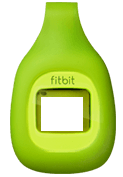 I have the Zip model which tracks your steps like a pedometer, translates those into miles and keeps a calorie count which has nothing to do with how much you eat just whether another day has dawned on the planet so every day my calorie count is about the same whether I have feasted on an oversize Thanksgiving meal or have fasted to protest the colonialist travesty which is Thanksgiving.
More sophisticated tools can do all of this, of course, but I worry that the insurance companies are capturing all this information and my lazy napping days are being recorded in some big file and when I claim to be an active senior citizen, the Fitbit may betray me. Maybe, I am just a bit paranoid. Last week, the NSA came to my house to ask me I was walking by that house on Broad Street where someone who was binge watching Homeland the week before. Did I suspect anything? I guess some patterns of TV watching are significantly suspicious to those paid to be worrying on our behalf.
The Fitbit is truly interested in our welfare, I suppose. It imposes a ruthless regimen; it wants you to take10, 000 steps a day. It doesn’t care if you do this at one mile per hour or twelve. It doesn’t matter if you do this in a meditative trance or if you are breaking a world record for power walking. 10,000 steps is 10;000 steps to the Fitbit. You can imagine my surprise when I received my annual report and found I had walked over two and a half million steps or 1100 miles. If I had been more strategic, all these steps could have taken me from my home in Rhode Island to St. John’s, New Brunswick in Canada (where I have a friend actually) instead of just around my block and across campus to teach over and over again. Now that I see all those steps taken in such a small space, I feel I lack ambition and big thinking.
The Fitbit also reported that my most active day of the year was in mid-March (I think I was on vacation or doing a stress test at the doctors) and the least active day was at the end of January when I hospitalized. I feel that I owe the Fitbit an explanation about my activity levels: I don’t want it to be unnecessarily worrying or thinking that somehow the Fitbit is at fault. I do worry that if I walk 10,000 steps every day that eventually the Fitbit will want more from me and I am afraid to disappoint it. At age 65, I am wondering how to calculate how far I have walked all my life without the Fitbit calculating my steps and thinking about some serious sitting down for a while, except that the Fitbit has other plans for me.
Like so many of us, the Fitbit can be distracted and restless. I come back after a hard run on the treadmill and it chirps, just 3,000 steps to go to reach your target. At 11:00 p.m. undressing for bed, it reminds me, just 2603 steps to go. Seriously? Can you tell that I have my pajamas on, Fitbit? Where the heck I am going to walk in the next hour, around my bed, like a dog spinning in circles before he lies down? Are even if that is the best possible strategy to log on steps, do we really want to encourage that sort of behavior?
I mean I understand the technology and I understand the principles of behavior management here as well. I am all for it. I like to be reminded but I don’t like to be nagged. This is the reason why we ask Fitbit to keep track of our steps and not our spouses. With the success of Fitbit, I have thought of several other possible applications. In this “innovate or die” culture, I want to be at the cutting edge. So, here are my suggestions for the next generation of Fitbit-like devices.
Fit-to-be-with-bit
This little device would indicate to the wearer that they are such a bad mood that they ought to stay in their room. Maybe meditate or medicate (depending on one’s treatment philosophy.)

This could be done with a little jolt or vibration or maybe a whining noise that would grow louder as the wearer nears others. Better yet, it would wail if the provoker of that bad mood comes into the room, asking what’s for dinner. It is the sort of gift you want to give others actually but that would need to be done carefully.
Throw-a-fit-bit (or more commonly known, as Snit-bit)
There is a school of thought that proposes we are spending entirely too much time on our screens. This app directly addresses this issue. Throw-a-fit bit allows us to take the little device and when we are mad enough to toss it wherever you’d like. Of course, as we’d tell our children, don’t hurl this in the direction of innocent others.
 This app will measure the length and force of your throw and mark the where the device lands when you toss it so you can find it and throw it again, if you would like. Thanks to a sophisticated algorithm, the app reports how angry you are based on projectile velocity and force and calculates how this compares to your records last week when your partner was such a jerk about the holidays. It also manages chance encounters with other toss throw-a-fits so that you and another user don’t fight over whose device belongs to whom.
Nitwit-bit
Designed especially for those of us who are susceptible to whacky ideas and get-rich-quick or reversing-aging scams, this app is the perfect complement to late night TV watching or to spending time with your sketchy in-laws.  For this to work successfully, all you have to do is send those emails and phone calls you get from Nigerian princes, Ukrainian marriage brokers, penis enlargers, your brother-in-law and other questionable sources to this site, and the app will separate out the wheat from the scams. If, however, there is a great idea among the charlatan proposed offer, Nitwit-bit will take a small percentage of the killing you will make. The app does not work with proposals made by politicians, which brings to the next app, Mittbit.
Mittbit
For every one of us on the planet, we reach a point where our civic responsibility to be an informed citizen eventually drives us to drink and worse. Here is where MittBit comes in. Based on your TV viewing habits, your age and gender, whether you have stickers on your car bumper, your voting record, your GI (gullibility index), your AFATT score (All Fox All The Time news watching)
 which measures how welcome you are to new ideas, the MittBit blocks all messages that it knows you will ignore because you have heard them for a million times, because the message is so patently a lie or because there is no way that this message will do anything to advance world peace. In other words, the Mittbit assures that you won’t change your conviction the world is made up of givers and takers and that you are in the first group and detest the second.
Sitbit
Sitbit is perhaps the perfect app for the meditation set. A few times a day, this app would remind you that you haven’t given an iota of thought or sliver of attention to the cosmic truths of the universe, to the wonder that is you. Once you activate Sitbit, it will start breathing deeply. It will keep this up, growing louder and louder until you join in. If you begin to ma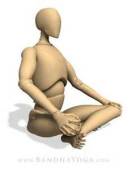 ke your way quickly to Starbucks for a three shots of espresso and a RedBull, it will stop you dead (not exactly dead) in your tracks by sending out a little digital shock. Sitbit wants you to relax, to calm down, not speed up. It wants you to do less, not more. Other features of the Sitbit include the Stress Manager which shuts down all your other apps and communications and erases contacts and emails that seem to be troubling to you. Sitbit can also be placed in trance mode inducing hypnotic tones, new age music and a simulated scent of those gauzy Indian shops wherever thing smells like the shop owners are trying to mask the smell of marijuana.
Quitbit
Most of us have habits we want to dump (cigarettes, nail biting, singing out loud when we don’t mean to, swearing in front of our saintly grandmother.) Many of us have partners we need to leave (discretion leaves this point undeveloped.) Quitbit is the perfect app. It tells us when things should end by carefully listening to our conversations on the phone, scanning our photos, reviewing our texts and considering our Facebook postings and friends. And, not only does it understand when the end should be near, its helps hasten that end. It  posts things for you, like announcing the end of a relationship. It will clean up your language and make it impossible for you to pay for another bottle of vodka with your credit or debit card. It will play the least popular song on iTunes at full volume if it finds you lighting up, even if you are in a non-smoking area.
As the app becomes more popular, it will identify for you, people in your circle of friends and contacts who are dying to dump you as well. It will also find people who will pay you to quit your lousy habits. A note of caution: It offers no help at all when you find yourself in a situation like the lovers in Broke Back Mountain, when Jack said. “I wish I knew how to quit you, Ennis.” The Quit Bit is clearly outmatched here.
Nitpickbit
For several years, human resource departments have offered a half-day workshop called something like, “Dealing with Difficult People.” It was quite a daring offering. Suppose the most difficult person in the company showed up for this workshop along with all of his hapless victims? You can also imagine that this person, let’s call him Ernest, found everyone else in the office immeasurably dull-witted and thin-skinned. He found this as difficult as other people found him. A situation like this leads to my final idea.
 Nitpickbit reminds that we are constantly driving other people (most likely our partners and other family members) crazy by our need to make things perfectly clear and orderly. Those of us who have a bit more power over others are especially prone to this behavior, as are older siblings. The Nitpickbit can be adjusted for several occasions and multiple relationships. For example, you may notice that you have brought to husband’s attention that his favorite shirt is missing two buttons and has stained underarms for about 100 times. Or you may have corrected your adult child’s use of ‘irregardless’ on many occasions in speech and writing. (Irregardless is not really a word, the Oxford dictionary says so; no matter how often George Bush says it in a speech and no matter if that child has an MFA from a fine university.)
Or you may grow frustrated at hearing the same tedious story from your best friend about the challenges of filling a prescription over the phone from someone she swears is a deaf Pakistani robot. Every time she tells this story, you remind her that she has already related this remarkable tale. After years of this careful guidance on your part, you finally reach the apt conclusion that none of this nagging does any good. Your husband has put that old shirt in his private safety deposit box to keep your hands off it. Your child refuses to speak with you except in monosyllabic phases. Even news about your grandchildren arrives in an Instagram message with an inscrutable text. And, your best friend accuses you of trying to put her in an Alzheimer’s unit with all your harping about her memory.
Nitpickbit addresses all of these issues. It disables your brain’s auto-correct function; it lets things be. It puts a smile on your face, no matter how untidy, unkempt, unswept, or uninformed your family and friends are. It makes you, in many respects, a much more pleasant person to be around, although somewhat of a dimwit. Like the Fit-to-be-with-bit, you may want to think carefully about gifting this app to others.
All the apps that fit-bit
In the new economy, we are all supposed to be our own creative geniuses. We are supposed to be buddying up with personal coaches and developing a life plan. We are urged to self-publish, grow our own food, be our own person, be hypnotized by our own mantra. So, I see clearly that I cannot in good conscience just suggest these as good ideas without developing them myself. I need to do some market research, code and test these apps, sell them on the App store and see how much money I can make. I need to find an App to help me with all that.
 ‘the boy who turns to the light,’
 ‘the boy whose feet don’t freeze,’

 three beautiful young girls who seem to do all his work in class,
 ho a few days into the semester present you with a note that they have mononucleosis, which they inform you, as if you’ve never encountered it before, is very contagious. They follow that with a big achy swallow and a giant cough. They are eager to shake hands and bid you farewell. Sometimes, they tell you they don’t when they will ever be able to return to class. Can you email them to let them know if they miss anything in class?





 Delight/ Awe and other things