At sixty-nine years old, a person has few new experiences—unless she plans for them, deliberatively living a new pro-active, pro-aging lifestyle. I am all for that and if I was thirty years younger, I would plunge right in. But, earlier in the week, in the middle of the night, despite security systems and standard precautions, I was attacked in my bed, without provocation, by streptococcus. I woke up sometime during the attack, my autonomic nervous system raising to the call, pushing me to a 103 degree fever, inflamed throat, night sweats, extreme fatigue, stabbing headache, swollen lymph nodes and body aches from head to toe and across the bow, as well. I imagined my immune response system as tiny figures mounting a battle, as first responders courageously and selflessly, running to battle. My response to this response was the result of seeing too many Pixar movies.
I went to the doctor the next day for a diagnosis and while I waiting for my appointment I fell asleep on the examining table. I woke struggling to understand where I was and regretted that I hadn’t brought along witnesses to testify on my behalf because at this point, I also had strep fog. Strep fog is a symptom I have added to the regular list of symptoms to signify the sense that you are too sick to really speak about how sick you are. And, not as well known, there is also strep existential despair, the profound question that arises from that moment of peak fever when you ask, “How can I feel so sick when this will all be over in a few days?” or “What evolutionary benefit can there be in visiting upon the normally healthy an array of symptoms that pushes them to look into getting their final affairs in order?” Surely, I exaggerate a bit. But, I have had major surgeries, weeks of recovery, unaddressed broken bones and more—and I don’t think I have ever encountered the woes of strep throat. In fact, if the doctor had suggested opioids to treat my pain, I may have agreed to taken them for the first time of my life. If asked, I would have also put strep on the list of criteria of reasons to not resuscitate me.
After a few days with penicillin, I began to feel better although it was a long slog. It took me two days to even think that chicken soup was a good idea.
Several days later I decided, after meditating about my bout with strep and my reaction to it, to face my demons. I was wondering what the bacterium looked like. Could I look it in the eye? Could I just appreciate the power of the structure by looking at it? So like everything, I looked for a Google image. While I was at it, I thought I would also explore those who have perished at the hands of strep, making some connection with greatness and their suffering. Maybe, a poet had left some words of wisdom.
So first, images of streptococcus. Could this be less interesting? Really. This felled me? This is dangerous? Doesn’t this look like a figure from an introductory psychology clas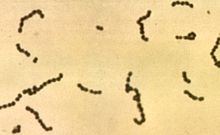 s when the professor asks you what you see in the picture? For me, I see a smiling sheep or an elephant showing off his tusks in Paris. But, I certainly don’t see a bacteria that almost killed me.
So I looked for another image, a 3-D image. At least this one is purple and looks like a threatening pearl necklace that could strangle you. However, it still looks playful in some way. And in the the Pixarification of our lives which lets us see trees smiling at us, makes us fond of rats and ants and cars, and pushes us to grow appreciative of dirty old toys, this could be a friendly tropical worm just getting organized.

So if an image of a bacterium wouldn’t do it to help me confront this enemy, I would have to rely on stories of other humans who have also suffered from strep. Maybe, I would learn something from their experiences.
Two stories are important here. In my research, the most important person to die of strep is Mozart who died at 35 years old. In this picture, he does sort of look feverish. He was diagnosed with “heated military fever” and died quickly after falling ill. It appears that the infection led to kidney failure. Some accounts say that he infected many other people before he finally fell really ill. Had penicillin been available, may be Mozart would have survived.
Jim Henson, creator of the Muppets, also died of strep, although he should have been saved by antibiotics. However, he had genes that predisposed him to very serious infection called toxic shock syndrome. I avoided that outcome but the world lost a wonderful man with Henson passed away.
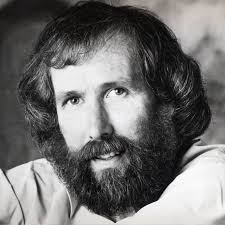
A small percentage of people that get strep will get very seriously ill. So, my encounter was perfectly average misery. That is not much comfort, of course. But, the wonder of being so easily saved from a serious illness and possibly death, is the real news here. So, I can look at the bacterium with deep respect and worship the inventor of penicillin and other everyday miracle. When something happens so regularly, I suppose it is really not a miracle. But like flying at 30,000 feet, it certainly would seem like a miracle 100 years ago.
 Delight/ Awe and other things