This blog includes essays about life, aging, humor, inspiration and creativity. These things capture my attention and I hope are worthy of yours. Sandra Enos.
The rest of his made world must have had a vexing week
Waiting for things to begin
When he crafted a vast universe
Then cast upon the world
An uncountable galaxy of time.
But to dream and imagine
If I had all the time in the world at my dispensation
(Had God taken the day off and I stepped in his stead)
I would have a busy day
Spending my time in an inspired frenzy.
Taking time from here and placing it there
Until the world was set on a schedule that seemed to me
Better.
Some harsh judgments
Some kind gestures
And like God’s version of the universe
Neither fair not just
Perhaps, not for the best.
But in my mind, better enough.
I would take eons from the years in takes to decay nuclear material and
Add them to the years of dogs’ lives so we would have them as life long companions.
I would tack on years to the lives of poor children who needlessly die from diseases a rich child knows how to cure and
Deduct the years spent on our planet by over-privileged individuals who have taken more than their share of the planet’s riches.
I would delay on the arrival of homo sapiens on our planet another 100,000 years hoping that the other animals can develop better defenses to our domination.
I would extend the lives of butterflies and dragonflies and
Bring to an early end the mountains of disposables
Whose use is momentary and whose legacy is centuries long.
I would add time to the lives of species going extinct and
Send to its death that most dangerous of all ideas
That because we pass by this way once
We can be ignorant of what comes next.
That our obligations don’t exceed our vision.
In my own tiny life, I would underline with arias and symphonic movements
All those moments when others had been deeply generous and kind to me and
I much less so.
The rapture of the cello and the high soprano slowing moments down
So I can take full measure of those gifts.
Fully alive in mind that our lives that are short.
We need to do what’s right when the occasion presents itself.
I would bless myself with the magic feeling of the summer’s start
Ten years old
The season stretched out
Time without end
Of untimed swims and bike rides
And discovery and play
And stories in books
With late nights, capturing lightning bugs in jars
Releasing them just before a deep child’s sleep
When time disappears into another world.
I would add moments to the lives of people who have passed away so I could tell them the story of how much of themselves they have left behind
Ripples of being echoing forward.
I would interrupt time so that I could ask questions of those who have passed resolving for me great mysteries in my own life.
And I would step back almost finished with my work and
Imagine a trial run where I see an evolving planet
The world made manifest in orchestral form.
Our beautiful tumultuous planet
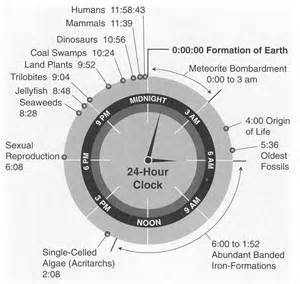
Four billion years
Laid forth in a grand four movement symphonic gesture.
All wonderfully paced
First a single microbe
Alone here for three billion years
In our symphony
This accounts for three quiet one note one beat movements.
Now in our final movement, the algae emerge
Followed by multicellular organisms
This, the Cambrian period, explodes into millions of species
Swimming in our seas
(Sound the cymbals: rouse the entire orchestra)
Then a mass extinction
(Quiet the horns and woodwinds: a solo for the cello.)
Plants emerge on land
Amphibians follow.
Great diversity in plants emerge
Another extinction.
We are half-way through our last movement
245 million to 65 millions years ago
The parade of reptiles
Mammals
Dinosaurs
Birds
Primates
Speed up to seven million years ago
The apes are walking upright
Our complex family tree includes all life
The last stanza occurs in our last 15-minute movement in a matter of seconds
We will have the orchestra play this as fast as their talents allow them.
And the music in its final movement
Gliding to the end, when the universe work is about to finish
With just seconds left
A recent 13,000 years ago, the humans arrive
Civilizations arise.
Political organization
Religions.
The printing press.
Science.
The Industrial Revolution.
The great Wars.
Globalization of the world economy.
I enter–a millisecond of a note
One of five billion at the time of my birth
106 billion of us once occupying the planet.
All this perfectly played in time.
All the time in the world to reconsider another plan.
Faced with budget cuts and a rapidly changing landscape in higher education, I have made the painful decision to lay off, to outsource and to redeploy, my entire imaginary staff. As the leader of myself, I have to show a good example. A college professor, I am aligning key resources with a refurbished messaging strategy. Understanding that my most valuable resources–my three-pound brain–needs to be positioned to take maximal advantage of emerging opportunities in the sector, I aim to make those tough decisions to guarantee that my inflection point does not drain anticipated resources in the final quarter of the reporting period. Relying on the guidance and management principles that served many well, I can point to the scholar who wrote, “I just stopped in to see what condition my condition was in” as my dashboard measure here.
In an effort to enhance transparency, I am announcing the following realignment of my pretend staff and faux advisors. There has been plenty of carping and snarky comments about my assistants and advisors so let it be known today that these staff members are being realigned, maybe more consistent with their horoscopes.
Complaints and criticisms about grading, my mood, my haircut, my expectations, and administrative responses to my response to unreasonable demands will no longer be fielded by my Special Assistant for Grievances. Instead, these will be outsourced to our regional office in a far away land taking advantage of the fact that well educated people will work for pennies if they have to.
Appointments, conferences, meetings, Skyping, Instant Messaging, Instragramming, Tweeting and all the rest will be managed by the Roomba robot, which will be assigned in a dual appointment to vacuum my office floor as well. This eliminates my Special Assistant for Filling Time.
The Special Projects Office will also be eliminated. This, as you may remember, was the unit assigned to keep our division on a clear path to strategic distinctiveness. These duties—formulating mission statements, zeroing in on strategic directions, creating actionable acts, fashioning wordy words— are being reassigned to the Ministry of Future where promises are made and deadlines forgotten.
The impact of so much administrative change in a non-existent staff will be harder for some to adjust than others. Jettisoning levels of mid-level managers means that underlings can make many bad decisions on their own without the interference from above. This will allow me, Professor Decider, to manage my own time and resources in a more efficient effective way.
My door is always open to you, of course, but I most likely will not be in my office. No need.
I started my life as a Baby Boomer member of a working-class family in a mixed class neighborhood in a factory town in New England. Through fortuitous circumstances, few of my own doing, I entered the white-collar class soon after graduating from college. I was the first in my family to graduate from high school and college. With that degree, I no longer worked factory and waitressing jobs that I held in high school and during college summers. I moved into low-level jobs in organizations where my brain was occasionally put to use. Through a series of positions in nonprofits, public service and the tech world, I was able to buy a house, a car and save for retirement. A late in life PhD. allowed me to earn a better salary as I neared retirement.
Somewhere along the way, I had accumulated stocks and bonds into a portfolio, where my savings were invested by my financial advisor. I am putting these words in italics because they still seem so foreign to me. When I was in the seventh grade, my father advised me to start saving for a house as soon as I could and to never ever put any money into the stock market. “The stock market is a rich man’s game”, he argued. “It is no place for people like us.” He also warned me against getting rich or wanting to. “Nothing good can come from that,” he cautioned. I still think my father was right about the stock market and the desire for wealth but with an economic system that simply doesn’t reward savings in a bank account any longer, I opted for the tools available to me. Thankfully, every job I had that came with a retirement plan; there was no way to escape investing in the markets.
So now, over seventy years old, I am faced with figuring out what happens to my portfolio should I die before my modest fortune disappears. I have the chance to bequeath money to my heirs (I don’t have children of my own, but I do have relatives and beloved friends that could benefit from these funds, I am sure). If I pass along wealth to my family, those assets join whatever wealth they already have. Although neither of my siblings is wealthy, we are all comfortable. So maybe some of my fortune could go to nieces and nephews who in their thirties and forties could use an infusion of cash for a house or a car or their own retirement and college planning.
Alternatively, I could donate money to worthwhile charities or create some fund to distribute those dollars after I pass away. If I donate them carefully, maybe I could share the wealth with others who didn’t have the advantages I and my family enjoyed during our careers. As I have been thinking about all of this, I recognize that I am not the only one with this challenge. To understand just how important these decisions are we can look at some larger trends.
Research shows that the passing of the Baby Boomers will lead to the greatest intergenerational transfer of wealth we have ever seen. No generation has been wealthier than the Boomers. Between 2018 and 2042, members of this generation will transfer $70 trillion dollars of their wealth, approximately $61 trillion to their children and grandchildren and the rest to charity. That passing on this great wealth can’t help but contribute to growing inequality. We have never before seen more wealth concentration in this country than the present moment. Estate taxes are virtually zero for most Americans and those with sizable assets are usually armed with accountants and financial planners that work to preserve assets. Perhaps, this transfer of wealth will generate great innovation and entrepreneurship. However, we do have some data that shows that giving wealthy folks more money, like we do with tax cuts, doesn’t necessarily lead to creation of new jobs or social betterment. In fact, it may encourage more second homes, exclusive educations, cooler cars, expensive hobbies, moon shots, along with increased concentration of political and economic power, and other mischief.
As I consider this intergenerational passing on of wealth to our children, I am also thinking about the impact all of this wealth creation has had on the planet. I believe the term externality as used by economists can be helpful here. Externalities are impacts created by producing energy, for example, that is not reflected in price charged for that good. Externalities are also borne by third parties. In this case, it could be environmental degradation. Neither the producer nor the consumer pays the price of this instead it is passed along to the local community, or maybe to the larger society in terms of unhealthy air and water. What externalities have been created by virtue of our accumulating wealth?
If accumulated wealth is what we have earned while on the planet, what unpaid debts can we incurred? What sorts of impact have we had living on the earth, making our living, enjoying ourselves, and raising our children? We can assume that this impact is great if we live in an advanced economy. Research shows the big economies, like the U.S, Europe, and Japan have contributed by far the greatest amount of greenhouses gases to degrading the environment, but those other economies, like India, China and Brazil are catching up. And while these nations are the chief contributors to climate change, it is highly likely that the poorest nations will bear the great burden from these changes. On a more personal level, we can also assume that if we are middle- to upper-income that our impact on the planet is greater than if we were lower income, because we are able to travel more, consume more, have larger houses, demand more products and services, and more.
Oxfam estimates that the world’s richest 10 percent of people have carbon footprints that are 60 times higher as the poorest 10 percent. Any estimation that generalizes large populations is difficult to make, but researchers at Oxfam also estimate that the emissions of the world’s richest 1 percent create an even larger emissions gap: the 1 percent could emit 30 times more than the poorest 50 percent and 175 times more than the poorest 10 percent.
So, imagine as we near the end of our lives, we could calculate the debt we owe to the planet. Suppose when we died, a report issued that measured our environmental impact over the course of our lives. That would include our lives as individuals on the planet, in our households, at our jobs, as we traveled and consumed. It would also take account of the waste we have generated and left behind in landfills, as well as the impact of our investments, and more. Imagine if we can all the water, gasoline, plastic, minerals, food, and other resources that we have consumed or that have been consumed on our behalf.
What if there was a reckoning at the end of our lives based on a valid and reliable calculation of our environmental footprint? Smart economists could determine a monetary value for this. This could be presented at the reading of your will by your executor. First, there would be a statement of your wealth at your death, a total count of your assets and obligations, all set forth and ready for distribution to your lucky heirs and a few selected charities. Second, there will be a fair accounting of your environmental footprint which your children will be obligated to pay off in terms of taxes and other assessments. If they don’t pay it off, it gets passed down to the next generation, just like accumulated wealth. Perhaps knowing that own descendants will be responsible for own environmental impact would lead some of us to care more about the environment than we do now. We would be incentivized to avoid passing down what would be onerous burdens to our children. Those families with parents who had the greatest impact on the environment would pass on their children the greatest burden of accounting for their parents’ impact. It would be likely that those with the largest inheritances would also be those with the largest environmental burdens.
On the other hand, those who trod softly on the earth, who used less than their share, who lived in less resource-intensive economies would pass on credits to their children. Similarly, those who were the victims of environmental harms caused by others, would also receive credits. Those with debits and credits could settle up in some marketplace yet to be devised.
This proposal is way too radical to work, I imagine, but it is a good exercise to begin to take account of the fact that those of us with “portfolios” haven’t earned them out of thin air. We do have an obligation to leave the world a better place than we found it. For the Baby Boomers, I think our time is running out.
As the Gifter-in-Chief at Giving Beyond the Box, LLC, I hear from a lot of people who want our help in giving a gift that really matters to a loved one. That means it has to matter to the person giving the gift and the one receiving it. And, in our case, it also has to do good in the world. I love these calls and emails because I can tell from how much the person I am communicating with loves and cares about the other person. A gift after all is a vector of love and appreciation.
You can imagine my surprise when Santa Claus called just the week before Christmas, our busiest time of the year. Santa sounded defeated and overwhelmed. To use a term that is popular right now, Santa sounded like he was languishing. He put aside that jolly “Ho! Ho! Ho!” pretense and spoke frankly.
As he was speaking, I was remembering how much Santa meant to me as a child and recalling that special magic that Santa made. I was late giving him up and resisting not believing in Santa for as long as I could but, I hadn’t really ever thought about the challenges and pressures that face him every year. What follows is my summary of what I am calling the Lamentations of Santa. This is what is keeping Santa up late at night. I am writing this both to document the situation and to appeal to my readers for help on Santa’s behalf.
Worries about the workforce. According to Santa, it is getting harder and harder to keep a dedicated and talented workforce of elves. Some young elves from families who have been in the elf business for generations are no longer interested in these careers. They want to go out and explore the world. That is understandable, of course. And in a moment of hard self-reflection, Santa has also come to recognize that there really is not much of a career path for elves. No elf has ever in the history of the world ever been a Santa. A critical elf recently told Santa that he ran his operation like a monarchy, not like a well-tuned modern organization where employees are treasured and given the flexibility and support to be, to be anything they wanted. So, like everyone, the North Pole is experiencing the Great Resignation, as well, with lots of elves becoming life coaches and baristas. How to replace that workforce remains a big challenge.
Concerns about sustainability. There is no place more affected by climate than the polar ice caps where Santa lives. If the ice completely disappears, Santa’s Home is in danger to being wiped out. And, after planning his 2021 Christmas route, Santa calculated his carbon footprint and was horrified to learn what impact his travels all over the planet in one frenzied night had on the climate. He has concluded that this long-term practice of distributing gifts is simply no longer sustainable. Alternatives must be found which get us to our next issue.
The cage-free, free-range reindeer movement. As we all know, reindeer have pulled Santa’s sleigh since Santa first pioneered this whole gift-giving industry. However, with each passing year, Santa becomes more and more aware that his reindeer really belong out in the wild, not confined to his workshop, even though he treats them well and kindly. (He was slammed a few years ago by PITA but it is hard to keep them happy.) So, in the spring of 2022, Santa is releasing his herd of reindeer and replacing them with all-electric sleighs. Better for the reindeer and better for the environment, as well.
Moving Diversity, Equity and Inclusion into the heart of operations. After attending some sensitivity trainings with other cultural icons, like the Easter Bunny, and Davy Crockett, Santa is having a moment of wokeness. Here is a direct quotation that really expresses his thinking here,
Whatever let me think that I, a white cisgendered man living in the global north, could really imagine what children all over the world really wanted for Christmas. This hegemonic approach truly reflects my unearned privilege in this position. It is way past time for me to share the limelight here and champion a whole new generation of Santas that reflect our diverse community and experiences.
Santa has established a small advisory group, exploring regional distribution centers with culturally competent Santas. More to come here, for certain. We could be looking forward to Santas that upend our traditional model of what Santa should be. We may in fact see a wholescale revolution! The Lose-the-Lap Campaign popular on some social media sites is an early indication of changes we can anticipate.
Mission drift and the commercialization of Christmas. While all these issues were important, the one that took up most of our conversation was about the true meaning of the holiday. Here, Santa was nearly in tears, regretting his role in making Christmas a delivery system for late-stage capitalism and the deification of corporate power. He argued that by asking children what they wanted for Christmas, he was simply falling into the hands of marketers, training children to be aggressive consumers from the first moment they sat on Santa’s lap to their dying wishes. The Santa brand was in serious trouble, he worried, in danger of becoming just another Ronald McDonald or Tony the Tiger or Kim Kardashian, a shill for big business and worthless products. So, Santa is working to reclaim the true meaning of the holiday in a campaign next year where he is refusing to deliver Amazon gift cards, overpriced toys, fast fashion, cocaine, and more. (You can read about the Santa’s Naughty List and can suggest other items to exclude on Santa’s webpage.) Santa wants you to shop local small businesses, to make some of your own gifts, and to truly share some of your wealth not with the already wealthy people but with others who could use your help. That would make Santa happy.
So, in summary, Santa has lots on his plate. If you have ideas for him or would like to help in some way, please be in touch. You know that he reads your letters. Your own childhood proved that to be the case. Merry Christmas!
I don’t mark my birthdays, even the big ones, with any élan or flash but I do note other occasions like anniversaries of when I met my partner or when I joined VISTA or when my parents passed away. One event that I have recently celebrated was the first anniversary with my Fitbit. We have been together for one year; it has been a wonderful relationship—a little one-sided but I think I speak for both of us when I come to this conclusion. I have the Zip model which tracks your steps like a pedometer, translates those into miles and keeps a calorie count which has nothing to do with how much you eat. In its simple way, it reports whether another day has dawned on the planet so every day my calorie count is about the same whether I have feasted on an oversize Thanksgiving meal or have fasted to protest the colonialist travesty that is Thanksgiving.
More sophisticated tools can do all of this, of course, but I worry that the insurance companies are capturing all this information and my lazy napping days are being recorded in some big file and when I claim to be an active senior citizen, the Fitbit may betray me. Maybe, I am just a bit paranoid. Last week, the NSA came to my house to ask me I was walking by that house on Broad Street where someone who was binge watching Homeland the week before. Did I suspect anything? I guess some patterns of TV watching are significantly suspicious to those paid to be worrying on our behalf.
The Fitbit is truly interested in our welfare, I suppose. It imposes a ruthless regimen; it wants you to take 10, 000 steps a day. It doesn’t care if you do this at one mile per hour or twelve. It doesn’t matter if you do this in a meditative trance or if you are breaking a world record for power walking. 10,000 steps is 10;000 steps to the Fitbit. You can imagine my surprise when I received my annual report and found I had walked over two and a half million steps or 1100 miles. If I had been more strategic, all these steps could have taken me from my home in Rhode Island to St. John’s, New Brunswick in Canada (where I have a friend actually) instead of just around my block and across campus to teach over and over again. Now that I see all those steps taken in such a small space, I feel I lack ambition and big thinking.
The Fitbit also reported that my most active day of the year was in mid-March (I think I was on vacation or doing a stress test at the doctors) and the least active day was at the end of January when I hospitalized. I feel that I owe the Fitbit an explanation about my activity levels: I don’t want it to be unnecessarily worrying or thinking that somehow the Fitbit is at fault. I do worry that if I walk 10,000 steps every day that eventually the Fitbit will want more from me and I am afraid to disappoint it. At age 65, I am wondering how to calculate how far I have walked all my life without the Fitbit calculating my steps and thinking about some serious sitting down for a while, except that the Fitbit has other plans for me.
Like so many of us, the Fitbit can be distracted and restless. I come back after a hard run on the treadmill and it chirps, just 3,000 steps to go to reach your target. At 11:00 p.m. undressing for bed, it reminds me, just 2603 steps to go. Seriously? Can’t you tell that I have my pajamas on, Fitbit? Where the heck I am going to walk in the next hour, around my bed, like a dog spinning in circles before he lies down? Are even if that is the best possible strategy to log on steps, do we really want to encourage that sort of behavior?
I mean I understand the technology and I understand the principles of behavior management here as well. I am all for it. I like to be reminded but I don’t like to be nagged. This is the reason why we ask Fitbit to keep track of our steps and not our spouses. With the success of Fitbit, I have thought of several other possible applications. In this “innovate or die” culture, I want to be at the cutting edge. So, here are my suggestions for the next generation of Fitbit-like devices.
Fit-to-be-with-bit
This little device would indicate to the wearer that they are such a bad mood that they ought to stay in their room. Maybe meditate or medicate (depending on one’s treatment philosophy.)
This could be done with a little jolt or vibration or maybe a whining noise that would grow louder as the wearer nears others. Better yet, it would wail if the provoker of that bad mood comes into the room, asking what’s for dinner. It is the sort of gift you want to give others actually but that would need to be done carefully.
Throw-a-fit-bit (or more commonly known, as Snit-bit)
There is a school of thought that proposes we are spending entirely too much time on our screens. This app directly addresses this issue. Throw-a-fit bit allows us to take the little device and when we are mad enough to toss it wherever you’d like. Of course, as we’d tell our children, don’t hurl this in the direction of innocent others.
This app will measure the length and force of your throw and mark the where the device lands when you toss it so you can find it and throw it again, if you would like. Thanks to a sophisticated algorithm, the app reports how angry you are based on projectile velocity and force and calculates how this compares to your records last week when your partner was such ajerk about the holidays. It also manages chance encounters with other toss throw-a-fits so that you and another user don’t fight over whose device belongs to whom.
Nitwit-bit
Designed especially for those of us who are susceptible to whacky ideas and get-rich-quick or reversing-aging scams, this app is the perfect complement to late night TV watching or to spending time with your sketchy in-laws.
For this to work successfully, all you have to do is send those emails and phone calls you get from Nigerian princes, Ukrainian marriage brokers, penis enlargers, your brother-in-law and other questionable sources to this site, and the app will separate out the wheat from the scams. If, however, there is a great idea among the charlatan proposed offer, Nitwit-bit will take a small percentage of the killing you will make. The app does not work with proposals made by politicians, which brings to the next app, Mittbit.
Mittbit
For every one of us on the planet, we reach a point where our civic responsibility to be an informed citizen eventually drives us to drink and worse. Here is where MittBit comes in. Based on your TV viewing habits, your age and gender, whether you have stickers on your car bumper, your voting record, your GI (gullibility index), your AFATT score (All Fox All The Time news watching) which measures how welcome you are to new ideas, the MittBit blocks all messages that it knows you will ignore because you have heard them for a million times, because the message is so patently a lie or because there is no way that this message will do anything to advance world peace. In other words, the Mittbit assures that you won’t change your conviction the world is made up of givers and takers and that you are in the first group and detest the second.
Sitbit
Sitbit is perhaps the perfect app for the meditation set. A few times a day, this app would remind you that you haven’t given an iota of thought or sliver of attention to the cosmic truths of the universe, to the wonder that is you. Once you activate Sitbit, it will start breathing deeply. It will keep this up, growing louder and louder until you join in. If you begin to make your way quickly to Starbucks for a three shots of espresso and a RedBull, it will stop you dead (not exactly dead) in your tracks by sending out a little digital shock. Sitbit wants you to relax, to calm down, not speed up. It wants you to do less, not more. Other features of the Sitbit include the Stress Manager which shuts down all your other apps and communications and erases contacts and emails that seem to be troubling to you. Sitbit can also be placed in trance mode inducing hypnotic tones, new age music and a simulated scent of those gauzy Indian shops wherever thing smells like the shop owners are trying to mask the smell of marijuana.
Quitbit
Most of us have habits we want to dump (cigarettes, nail biting, singing out loud when we don’t mean to, swearing in front of our saintly grandmother.) Many of us have partners we need to leave (discretion leaves this point undeveloped.) Quitbit is the perfect app. It tells us when things should end by carefully listening to our conversations on the phone, scanning our photos, reviewing our texts and considering our Facebook postings and friends. And, not only does it understand when the end should be near, its helps hasten that end. It
posts things for you, like announcing the end of a relationship. It will clean up your language and make it impossible for you to pay for another bottle of vodka with your credit or debit card. It will play the least popular song on iTunes at full volume if it finds you lighting up, even if you are in a non-smoking area.
As the app becomes more popular, it will identify for you, people in your circle of friends and contacts who are dying to dump you as well. It will also find people who will pay you to quit your lousy habits. A note of caution: It offers no help at all when you find yourself in a situation like the lovers in Broke Back Mountain, when Jack said. “I wish I knew how to quit you, Ennis.” The Quit Bit is clearly outmatched here.
Nitpickbit
For several years, human resource departments have offered a half-day workshop called something like, “Dealing with Difficult People.” It was quite a daring offering. Suppose the most difficult person in the company showed up for this workshop along with all of his hapless victims? You can also imagine that this person, let’s call him Ernest, found everyone else in the office immeasurably dull-witted and thin-skinned. He found this as difficult as other people found him. A situation like this leads to my final idea.
Nitpickbit reminds that we are constantly driving other people (most likely our partners and other family members) crazy by our need to make things perfectly clear and orderly. Those of us who have a bit more power over others are especially prone to this behavior, as are older siblings. The Nitpickbit can be adjusted for several occasions and multiple relationships. For example, you may notice that you have brought to husband’s attention that his favorite shirt is missing two buttons and has stained underarms for about 100 times. Or you may have corrected your adult child’s use of ‘irregardless’ on many occasions in speech and writing. (Irregardless is not really a word, the Oxford dictionary says so; no matter how often George Bush says it in a speech and no matter if that child has an MFA from a fine university.)
Or you may grow frustrated at hearing the same tedious story from your best friend about the challenges of filling a prescription over the phone from someone she swears is a deaf Pakistani robot. Every time she tells this story, you remind her that she has already related this remarkable tale. After years of this careful guidance on your part, you finally reach the apt conclusion that none of this nagging does any good. Your husband has put that old shirt in his private safety deposit box to keep your hands off it. Your child refuses to speak with you except in monosyllabic phases. Even news about your grandchildren arrives in an Instagram message with an inscrutable text. And, your best friend accuses you of trying to put her in an Alzheimer’s unit with all your harping about her memory.
Nitpickbit addresses all of these issues. It disables your brain’s auto-correct function; it lets things be. It puts a smile on your face, no matter how untidy, unkempt, unswept, or uninformed your family and friends are. It makes you, in many respects, a much more pleasant person to be around, although somewhat of a dimwit. Like the Fit-to-be-with-bit, you may want to think carefully about gifting this app to others.
All the apps that fit-bit
In the new economy, we are all supposed to be our own creative geniuses. We are supposed to be buddying up with personal coaches and developing a life plan. We are urged to self-publish, grow our own food, be our own person, be hypnotized by our own mantra. So, I see clearly that I cannot in good conscience just suggest these as good ideas without developing them myself. I need to do some market research, code and test these apps, sell them on the App store and see how much money I can make. I need to find an App to help me with all that.




 not drain anticipated resources in the final quarter of the reporting period. Relying on the guidance and management principles that served many well, I can point to the scholar who wrote, “I just stopped in to see what condition my condition was in” as my dashboard measure here.

 What if there was a reckoning at the end of our lives based on a valid and reliable calculation of our environmental footprint? Smart economists could determine a monetary value for this. This could be presented at the reading of your will by your executor. First, there would be a statement of your wealth at your death, a total count of your assets and obligations, all set forth and ready for distribution to your lucky heirs and a few selected charities. Second, there will be a fair accounting of your environmental footprint which your children will be obligated to pay off in terms of taxes and other assessments. If they don’t pay it off, it gets passed down to the next generation, just like accumulated wealth. Perhaps knowing that own descendants will be responsible for own environmental impact would lead some of us to care more about the environment than we do now. We would be incentivized to avoid passing down what would be onerous burdens to our children. Those families with parents who had the greatest impact on the environment would pass on their children the greatest burden of accounting for their parents’ impact. It would be likely that those with the largest inheritances would also be those with the largest environmental burdens.
 More sophisticated tools can do all of this, of course, but I worry that the insurance companies are capturing all this information and my lazy napping days are being recorded in some big file and when I claim to be an active senior citizen, the Fitbit may betray me. Maybe, I am just a bit paranoid. Last week, the NSA came to my house to ask me I was walking by that house on Broad Street where someone who was binge watching Homeland the week before. Did I suspect anything? I guess some patterns of TV watching are significantly suspicious to those paid to be worrying on our behalf.
 This app will measure the length and force of your throw and mark the where the device lands when you toss it so you can find it and throw it again, if you would like. Thanks to a sophisticated algorithm, the app reports how angry you are based on projectile velocity and force and calculates how this compares to your records last week when your partner was such a jerk about the holidays. It also manages chance encounters with other toss throw-a-fits so that you and another user don’t fight over whose device belongs to whom.
 because there is no way that this message will do anything to advance world peace. In other words, the Mittbit assures that you won’t change your conviction the world is made up of givers and takers and that you are in the first group and detest the second.
 posts things for you, like announcing the end of a relationship. It will clean up your language and make it impossible for you to pay for another bottle of vodka with your credit or debit card. It will play the least popular song on iTunes at full volume if it finds you lighting up, even if you are in a non-smoking area.
  Or you may grow frustrated at hearing the same tedious story from your best friend about the challenges of filling a prescription over the phone from someone she swears is a deaf Pakistani robot. Every time she tells this story, you remind her that she has already related this remarkable tale. After years of this careful guidance on your part, you finally reach the apt conclusion that none of this nagging does any good. Your husband has put that old shirt in his private safety deposit box to keep your hands off it. Your child refuses to speak with you except in monosyllabic phases. Even news about your grandchildren arrives in an Instagram message with an inscrutable text. And, your best friend accuses you of trying to put her in an Alzheimer’s unit with all your harping about her memory.
  Delight/ Awe and other things