I was at a perfect age when I wrote my first eulogy, just a few months after I officiated at my first wedding. I was just sixty years old, the oldest in my family of three children, just old enough to understand my mother as a mature adult, beginning my own aging journey. For the first time in our shared history, I could see her life from a larger more generous perspective. If you are blessed with some wisdom, you understand that understanding your mother is not all about you. She has her own history, of which you are only a tiny part, perhaps. If I had been younger, I would have missed much of this and written a good enough eulogy, but not one so deeply felt. If she had lived longer, I might have done better.
I wrote that eulogy for my mother and conducted that marriage ceremony for two former students. For a brief period, it felt like I was doing so much officiating that I should look into becoming a minister. I had developed a nice demeanor and a warm appropriate manner, according to those attending these ceremonies. It is a lovely feeling to be of comfort or to be a handmaiden of joy and commitment.
My mother died soon after falling in her apartment: she never recovered. In a short two weeks, she was hospitalized and went to a nursing home where she picked up an aggressive infection. We were planning for her return to independent living, but things took a different turn. She failed fast, not eating, or communicating. I think she died of exhaustion, loneliness, loss, and fatigue. The moments in her life that felt full to her were dwindling, like they do for so many older people. She was tired of living. At my age now, mid-seventies, I completely understand that. I am losing my life-long friends, not because of betrayal or disinterest, but because their lives have ended. Somehow, I never expected that one of us would die before the other. And if I had imagined it all, I would have me dead first. That appealed to me as tragically just right.
I took on the assignment to write and deliver my mother’s eulogy by default and by design. I had grown to be the closest to my mother, seeing her every week, sometimes twice. My brother was busy with his family; my sister lived a thousand miles away. I was the writer in my family, although any of us could have done the deed, each in our own way. In fact, I believe that I could have written versions of what I would have imagined by brother and sister would have said about our mother. Siblings experience their parents quite differently and I presented my eulogy as my own, not speaking on behalf of the family, except to express our thanks to everyone in attendance who cared for her, as a friend, and a relative.
Her Mass was at the church near where she lived in an elderly high-rise. I accompanied her to Mass on holidays and special occasions so knew the pastor there. When we were arranging her funeral, I asked if I could share some remarks. He said that I could, after the end of Mass. I had three minutes no longer.
I loved doing that eulogy. It gave me an opportunity to set the record straight, to tell those gathered that snowy morning, how funny, how smart, how underestimated she’d always been. I got to claim some territory for her that she had ceded to us children. I don’t think I have ever met anyone who was as humble. Even after she raised three children on her own after my father died at fourteen, she was convinced that we raised ourselves. There is something about wanting to be nearly invisible because of anxiety that puts that person into a place where they can’t feel their impact on others. That was my Mom; it took me way too long to understand her. I sometimes think if she had been born a generation or two later, that she would have found some refuge and respite in therapy or maybe some better friends or a more accepting community.
Eleven years later, I delivered my second eulogy for a very close friend, Marion. She was dying of a terminal pulmonary disease, and I was visiting weekly. I asked if there was anything on her mind that I could attend to on her behalf.
“Well, I have to write my eulogy. Could you do that for me?”
I was stunned. She handed me this assignment which I said I’d be honored to do. I wasn’t really thinking that she was near death. We never talked about it again. But, it was the most that any friend had ever asked of me – the most important mission of my life as a friend. However, because of the error every living person makes – thinking we had more time together — I never asked the questions that I should have.
“Marion, my dear friend, how do you wish to be remembered? What would you like me to say? What quotations should I recite? What message would you like to pass along? Do you need to set the record straight? Is there a secret you’d like to reveal now? What would you like people to know about you that you haven’t quite gotten around to telling us yet?”
So, none of that got asked or answered. I didn’t even properly tell her how much I loved her. Over the course of our fifty-year friendship, we pledged our fidelity to our truth- and beauty-seeking over and over again. That intense interest in each other’s mind was our deep love. She was such a treasure in my life. I am always reading something or writing that I want to show her. I want to know what she’s reading and thinking. I want to be filled with all the love and attention she poured into me. If you know and love someone deeply enough, they simply can’t be replaced; there is no one else. We often forget that is true about our closest friends and family members is also true for us, as well. We will be missed when we pass on.
Of course, my heart was broken when she died so quickly but one’s pain in the loss doesn’t make for a real eulogy. The standard ritual of a funeral may serve as the perfect balm for some. The familiar cadence of the Mass. The prescribed readings from the Psalms and the Gospel. The final anointing and blessing of the soul to be reunited with God as he welcomes her in the everlasting glory of the chosen with Him. But that doesn’t serve all of us well. A eulogy begs for something different.
A eulogy is a tribute. My friend was a published writer and an English teacher at an all-girls high school. She was brilliant and beloved. The tributes that were posted about her were glorious.
She changed my life.
She opened me to literature.
I became a teacher because of her.
She really saw me., like no one else.
She helped me see the beauty of stories.
I so wanted to be just like her – smart and funny and kind.
My friend was a brilliant conversationalist. She found almost everything interesting, except small talk and narrow people. She wanted your mind to fly like hers did, so you could explore together and wonder and then wonder some more.
She had a hard childhood but she never wore that damage. It simply made her curious about families and love and attachment. Later in her life, she explored her roots and her father, especially in his service in the Canadian army.
When you spend all of your adult years with a friend, you watch them grow and change. If you are lucky, the qualities you loved about them are there for the duration. They don’t grow bitter or self-pitying. They allow you to grow with them. You see all the passions and interests that once absorbed you both float along like that Buddhist cloud that contains fleeting thoughts and feelings. You grew together step by step along a journey that you don’t realize until later in life is one we all take. I see this more and more clearly as I watch my elders and juniors all with their generationally-specific concerns and anxieties and challenges. We change so much over a lifetime that we are barely recognizable to ourselves when we look back and wonder how we raised three kids under the age of six or got our Ph.D. part-time over ten years or hitchhiked across the country or drove too fast one night and nearly killed our little brother. It is all in the memory; it is just hard to see that it is us sometimes.
So when you are writing a eulogy, you are also writing your own history, as you consider what your life would have been like without this friend. And often that is unimaginable, not because the imagined emptiness is so sad but instead because your mind has been so shaped by this individual, your ideas so intertwined with hers, that you really can’t separate them. It would be like observing just the water in the brook, trying to block out the rocks, the movement of the water, the sand at the bottom, the banks at the side. It is just impossible; it is all of one piece.
I think this is what makes writing a eulogy so challenging. I consulted with Marion’s friends about what made her so special to them. These were a handful of people who visited with her during her last months of life. Long-term friends. Work colleagues. Former students. Several themes surfaced but it was clear that Marion was not just a treasure to me. She was a treasure to many people. We were caught up in a circle of her love but didn’t know each other, like planets governed by gravitational pull and not aware of that force. I wanted to write a eulogy that would be unmistakably hers. No one in the audience could say, “Oh yes! That sounds just like my friend, Margaret” if I did my job correctly. I wanted to plot out exactly the size, dimension, character, and nature of my loss. Something impossible to fill; someone impossible to replace.
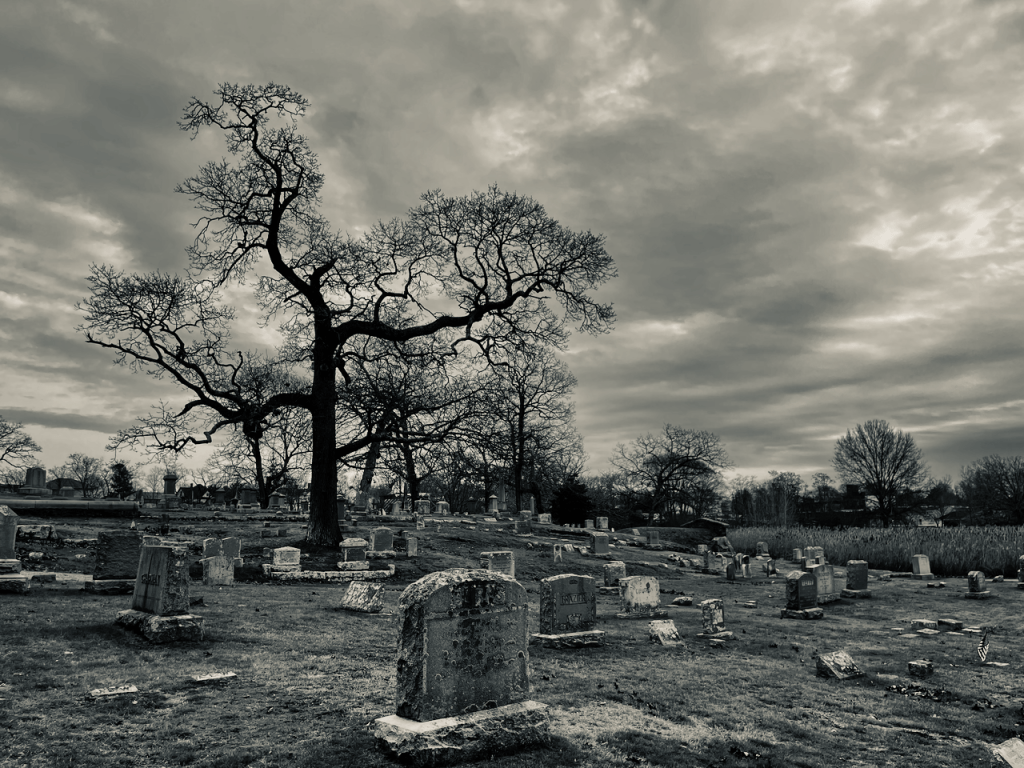
Writing a eulogy is the very start of facing your undeniable loss. Your entry into a lifelong process of missing your friend, remembering at so many turns of their absence. Sitting down to write them a letter and aching for the notes they used to send along. Because their place in your world was so unique, there is no filling that void. It remains a hole in your heart. And the eulogy delivered with tears and grace reminds you as well that others are feeling the same or even greater loss than yours. And that you are connected with all of those who have suffered similar losses. I walk once a week through the cemetery just off the bike path and I pay more attention to the names and dates on the graves, marking all those lives that have come before, loved and buried, with some memories still echoing. Each tombstone its own sliver of a eulogy.
 Delight/ Awe and other things