This blog includes essays about life, aging, humor, inspiration and creativity. These things capture my attention and I hope are worthy of yours. Sandra Enos.
The Beatles burst onto the Ed Sullivan Show just three weeks after my father died. This set off secret operations in our so-called music room. This was the back half of our living room with the piano that nobody played and with our record player, a significant piece of furniture with the console on one side and storage racks for albums and 45s on the other. Until I was a teenager, the only music we had in our house were my parents’ records, music from the War that they used to dance to, and our mother’s records, which we were not to touch. Records and the record players were in the “No Children Allowed” zone in our house.
We loved watching my parents dance to music from the forties. They would glide across the floor with great grace, I thought. My father was a smooth dancer and after practicing the foxtrot and waltz with him, he accompanied me to the Father Daughter dance at our high school, clearly the most handsome and charming man in the crowd. That evening, one of the happiest nights of my life, happened just two months before he passed away.
We processed grief privately in our house. My mother simply couldn’t bear to discuss the loss of our father with her children. Much later in her life, she said to me that she had no words of comfort or consolation for us. My father would have known what to say to us, she said. So, my mother dealt with the anguish of loss she couldn’t voice through her records, stacked up for play one after the other. How Great Thou Art by Mahalia Jackson, Don’t You Know by Della Reese, Full Month and Empty Arms, Moonlight Sonata, and Elvis Presley’s Are You Lonesome Tonight?
We would watch her expression, see her tears, and sometimes sit with her on the couch when she probably would have appreciated some time alone. Elvis really tore her up. I hated Elvis. I hated how sad he made her, how he kept pointing to her loss, and how much she missed my father. He kept making her cry asking, “Are you lonesome tonight?” With the full force of my teenage sarcasm, I would reply under my breath, “Well what do you think, Elvis. Her husband just died!” “Do you gaze at your doorstep and picture me there?” And from me, “Would you please just stop it!” I really did hate him.
The underground operation – the secrets — began when my favorite aunt bought me the first album, Meet the Beatles. It is hard to explain six decades later the sort of effect the Beatles had on me. Their music was full of hope and fun and hand-holding, of the sweet innocence of love and flirting and dancing. It was perfect early teenager music. It seemed like the world changed when they arrived. My friends and I couldn’t get enough. I wanted to play their music all the time. My mother worked a long shift during the day but there were a few hours between our coming home from school and her returning home from work that we could use the off-limits record player, playing our music, and being careful to keep everything in its place and just so, remembering every tiny detail that could set off an inquiry. During those magic hours, we would sing and harmonize and dance around the house, feeling free and crazy. Always in the back of my mind was whether all of that youthful exuberance was somehow a betrayal of the grief I felt in the loss of my father. We hid the Beatles from my mother as long as possible. We covered our tracks as best we could.
When the Beatles made that first appearance in early February 1964 on the Ed Sullivan Show my little sister, my tiny brother, my Mom and I were seated in our usual spots in our living room watching TV. I was apprehensive. Could the Beatles cheer up my Mom? Would she tune them out? Would we have to dampen our enthusiasm to honor her grief? I wanted her to love them, as I did, to see them as love and joy.
My mother loved the Beatles, these British young men with long hair. She loved other English bands, too. We surprised her with the Beatles album which she added to her playlist and every once in a while, she would join us in a crazy dance. We had broken through the no-permission zone and into sharing music with my mother. It was all quite surprising to us. That was a new Mom. Maybe, we gave her a respite from her loss.
When my first true love moved away to college, my mother put up with my playing the same broken-hearted Dionne Warwick ballad over and over and over again. She never once told me to get over it, or to stop playing that miserable music, or that there would be other boys. She let the music pull out my tears, to feel the loss as best and as deeply as I could, even though I couldn’t talk about why this boy meant so much to me.
We played out our grief and our happy times in common prayer of music.
Setting: September 1971 to May 1972, rural Alabama
Characters: Twelve northern-born VISTA Volunteers sent to the South to fight poverty. After a week of training, they cut their hair, put away their bell-bottomed jeans and prepare for work as teacher’ aides, family planning specialists, construction supervisors and community organizers. They are full of idealism and brotherhood and the wonderful feeling that they are doing something important. However, their ideas about doing good, about being comfortable in the world are challenged in this culture that is confusing, frightening, and disorienting. They spent that year and the rest of their lives wondering what’s going on.
Soundtrack; Marvin Gaye’s What’s Going On
Act 1. Three days after arrival. The VISTAs are placed with host families while they look for housing. The third night one of the women is raped by a teenage boy. She tells her friends. They debate what to do. Reporting this to the police guarantees that the boy will be arrested and may pay with his life. It will also mean the VISTA site is shut down. Not reporting it means that the violation goes unpunished, that the other women may be targeted for other attacks. It is just three days and already they are in over their heads. They make up an excuse to the supervisor to move her to another host family. This event has repercussions all year.
Act 2. End of September. A cell in the local jail. Sheriff Wilkins welcomes the VISTAs to Lee County. He tells them he can recognize a Yankee at a half mile away – the walk, the swagger, the clothes. He wonders why they would come all the way to Alabama when they have so much trouble with the “coloreds” up north, rioting and all of that. He knows that as outsiders, the VISTAs will be troublemakers and that he will be watching them carefully. Her reminds them that last year, the house that the VISTAs were living in in Beulah, a Black community, was firebombed. He sure hopes they doesn’t happen to them.
Act 3. Early October. Three women are renting an old farmhouse from the Belks, a prominent family in Lee County. Bubba Belk, the youngest of four brothers and like the VISTAs, a recent college graduate, visits and brings along the gift of a rifle so the women can have some protection. They refuse his generosity. He insists, reminding them that they have no phone, that the nearest police station is twenty-five miles away, and that everyone knows that three white girls are staying together alone in this house. He reminds them that they are living in Alabama, not where they come from. He walks them to the backyard, shows them an old whipping post and has each of them learn to load and shoot the rifle. They each take a few shots. They thank him and promise each other to hide the gun away.
Act 4. A warm May late afternoon, three VISTAs and six Black families gather together to work out the day’s schedule at the self-help housing site. A young man arrives in a pickup truck, yells at them to gather around, jumps into the back of his truck and says, “the Governor’s been shot. Governor Wallace has been shot!” One of the men leads the group in prayer and song. They are praying for the soul and deliverance of the Governor. The VISTA volunteers are quiet, wondering how these folks can be praying when their own hearts are so full of hate.
I came from a family where wearing makeup and caring much about one’s appearance was frowned upon and considered vain. I knew that I was not a great beauty. I was one of those “she has such a nice personality” girls, encouraged by my mother to develop my brain and housekeeping skills because youthful good looks wouldn’t last forever. She failed to tell me that my brain and housekeeping skills would also fade with time. (Thank goodness for the latter.)
I successfully resisted makeup and even paying much attention to my appearance until much later in life. Then I relented in my early seventies. Maybe it was my very pretty dermatologist. We had tried lotions and cremes for aging spots, and nothing worked. One day, she suggested a chemical peel. The results sounded promising. Clear skin! My heart swelled with expectation. I remembered what Charles Revson, the founder of Revlon, said about the cosmetic industry. “We don’t sell lipsticks. We sell dreams.” Or “Perfume is made in the factory, ‘hope’ is sold in the store.” So, I bit the bullet, believing in magic. The promise, dream, and hope of a better me.
Even after bottle after bottle and tube after tube fails to make us beautiful, we again and again put our faith in the magic of potions and creams and procedures, resting on a shaky foundation of that improbable fix.
I signed for theleast intrusive chemical peel, as I called it, the baby peel. My lovely dermatologist and her aide prepped me with alcohol and brushed the peeling agent over my face, paying special attention to the darkest areas. The whole thing took less than thirty minutes. I went home with discharge instructions and suggestions to stay out of the sun and take it easy. I should be back to normal with some redness in just a few days. Imagine that!
The discharge instructions and the calm counsel from my dermatologist were completely inadequate for what followed, like the instructions that Marie Antoinette might have gotten before her beheading, “You feel a sharp pinch in your neck that will end quickly, and you will fall into a deep state of rest and relaxation.” Follow-up instructions generally fail to describe what really happens in post-surgical recovery. Doctors are woefully inadequate in describing pain. Maybe, they figure no one would sign up for any surgery if they told the truth or maybe they resolve to leave the theatrics to the fiction writers of the world. If I wanted to really know the truth about a chemical peel, I could watch a Lifetime movie.
I resolved to catalog my agony and suffering. I took photographs and maintained a log. I have had several surgeries, some quite serious and nothing was as painful as this. I was actually crying in the anguish that I had gone through this suffering for vanity and nothing else – my punishment for believing in magic.
In the follow up visit to the pretty dermatologist, I am eager to share my misery. I have photographic evidence on my phone and paper documentation. However, before I can answer her question, “So, how was the recovery?”, she interrupts, looks kindly at me, and says “Horrible, right?” I nod in disbelief. All that was normal? I suggest to her that she needs to rewrite the discharge materials to more accurately describe the burning, the tightness in face, the frightening peeling of the skin.
Before she can disagree, I begin, “Here’s my version, Doctor.”
First, they pour acid on your face.
Then your skin lifts off your face and dies right in your hands.
Then your face burns no matter what you do.
It will seem that the procedure has gone completely wrong but that is entirely normal.
And please don’t sneeze because we have no idea what will happen.
Clinical results will vary.
We suggest that your loved ones take a short trip while you are recovering because some partners may suffer from nightmares from seeing the patient on days three and four.
Results will vary and are unrelated to your suffering.
The procedure may be repeated in six months because the spots are likely to reoccur.
Her days were undistinguished except for the afternoon sun. As the seasons passed, she watched the shadows shorten and lengthen gliding across the floor in her tiny sitting room. At her side, a basket of knitting sat untouched. The last time she picked it up, she had no memory in her fingers of how she once made blankets and hats for every member of her family and many of the babies at the church.
She felt the warm June sun and looked out to the garden. She struggled to recall the year when she. was strong enough to dig a two-foot trench for the asparagus bed. It thrived for years when the children were small and began to fail when she could no longer tend it lovingly. Where did that lovely asparagus go, she wondered.
She surveyed the yard, once resplendent at this time of year — every bed a surprise of color and form, her peonies with the grace of ballerinas, those dahlias uncompromising in their bold colors and shapes. Where had all those flowers gone? Or maybe, she didn’t recall this so clearly. A fleeting thought poked into her mind, perhaps this beautiful garden in her memory was actually someone else’s garden. Not hers at all, perhaps.
The neighbor’s children, the age of her great grandkids, were screaming with delight, splashing into their backyard pool, celebrating the birthday of the youngest, Liam. She recalled such parties when she was young but not much about them. She couldn’t recall the name of her favorite cousin or remember when she had last seen him. Had he died? Maybe so. Could that be that I wouldn’t remember? She knew she had a happy childhood but the details, of it like so much else these days, escaped her.
So much had passed by in her long life. Friends. Wars. Struggles. Great joy. Great books. Love. Being a mother. A productive career. Losing a husband. Losing all but one of her siblings. She tried not to dwell on the past, but her future seemed short to her. She did remember her high school friends. “We were such a gang of girls, full of energy and delight and not a little sassiness” she thought. “We were so lovely although we didn’t know it at the time. Where did those girls go?” When she saw the few friends that remained, she saw old women, with their youth like phantoms beside them.
She was willing to accept that life was full of loss; that fact she could accept with equanimity. More than anything, she missed her words, her clever mind, her intellectual power. Once, she could summon a rich vocabulary and choose words that delighted her, like a captain commanding his troops to attention, those words bold and perfectly fitted to her ideas. Now, those words were fewer, wandering, and remote and painfully slow to appear. That loss she felt deeply.
But even as others saw her depleted and elderly, she felt something else. A favorite author of hers wrote at the end of her life, that she was herself, as never before, with fierce energy and intense feelings. Everything was profoundly beautiful to her. Even her own children weren’t as captivating as the children she saw these days. Last year’s Mother’s Day flowers drew her attention like never before. Music brought her to tears. She wanted to draw the world close, to live each minute with all the passion and light that was remained.
Growing up in the fifties, I am given more freedom than I deserve. My distracted mother, a recent widow with three young children to raise, ignores my adolescence. I explore far and wide. I pal around with boys and the girls. I am athletic years before Title IX. I am crazy about music. I teach myself guitar. We write plays and perform musicals at my little high school. We sing and play music on our bus rides home, me playing bongos on my math and English textbooks. We know all the moves of those girl groups and can mimic and even embellish their dances. I can harmonize. It is magic for me.
I don’t give this up at eighteen. In my twenties and thirties, I find another group of women friends who also love to do this. It was a heady time for the women’s movement. We want to be in and celebrate each other’s company. We sing and dance for our friends and perform at women’s conferences. We perform Aretha, the Shirelles, the Supremes, the Dixie Cups, Gladys Knight and the Pips. We never tried to do a Tina Turner song She was too far a reach for us. Which of us white working-class girls imagined dancing like Tina did? None of us. I had seen her on TV with Ike and the Ikettes. She was too sexy. Too crazy. Too beautiful. Unreachable as an icon with those long legs and warrior woman body. She was just too hot.
That all changed. She survives her abusive relationship with Ike Turner and returns to the music scene with ground-breaking album Private Dancer, with the hit What’s Love Got to do with it? She rises strong, confident, strutting. A music critic writes that this album “reeks of attitude.” I can’t read that as adoration. George Bush awards her the Kennedy Center Honors and notes that she has the “most famous legs in show business”. They still don’t understand what Tina is all about. At 44, she becomes the oldest woman to receive a Grammy for Best Solo performer. That doesn’t sound that old to me.
I see her anew. She is just ten years older than me. In my youthful eyes, I saw her a giant. I learn that she is a tiny 5’ 4” tall and weighs 120 pounds. That is exactly me. In her emergence, Tina gives me strength. I am finally ready to bust out of my good girl, Catholic obedient, uniform wearing, background singing self. Tina creates the space for me to come out to my friends. To feel flirtation for the first time in my bones. I let myself be attracted and attractive. And maybe for the first time, I think, “That can’t be love. What’s going on? We just met!” But there is something powerful and worth paying attention.
And not just me. Liberation is recognizing that is always time for re-birth and reinvention. My troupe is done with happy songs about “Going to the Chapel” and waiting for that boy to call. We’ve been burned and are ready to claim power and respect. Turner steps out and we follow. We sing Tina Turner in our comfortable shoes, with our short legs and choreographed moves until my group falls apart, with heart aches, broken marriages, wayward children, cracking voices, slower paces. One of us has cancer. Another, a husband certain to die with a brain tumor. We are well prepared for the next transition.
I spent my childhood in the fifties, living a standard working class childhood. Besides all the other tasks associated with socializing children, the adults in my life were focused on exposing us to wholesomeentertainment. I remember Sundays at Mass where we would as a community take the Legion of Decency pledge, foreswearing temptation, and the work of the Devil. One version of the pledge read as follows:
I condemn all indecent and immoral motion pictures, and those which glorify crime or criminals. I promise to do all that I can to strengthen public opinion against the production of indecent and immoral films, and to unite with all who protest against them. I acknowledge my obligation to form a right conscience about pictures that are dangerous to my moral life. I pledge myself to remain away from them. I promise, further, to stay away altogether from places of amusement which show them as a matter of policy.
I remember all sorts of films received C (condemned) ratings including the Rosemary’s Baby, Clockwork Orange, The Producers, The Rocky Horror Picture Show, and Saturday Night Fever. The Legion of Decency was run by a loose affiliation of local civic leaders, not really a body of the Church. Pope Pius XII wrote that instead of condemning morally dangerous movies, Catholic organizations should be promoting good ones which is something my mother and my grammar school did all the time. I am not certain why the adults were so obsessed with movies. Perhaps, they had seen the ravages of unwholesome entertainment on the brains, souls, and character on the population. Maybe these effects were especially powerful on innocent children and callow youth. They wanted to mount a defense. My Catholic elementary school was especially vigilant about protecting “purity”. In my reading of the Lives of the Saints, a very high percentage of girls who became saints did so by protecting their purity. As a small child, I had no idea what any of this meant. I imagined it might have to do with the cleanliness of my soul, making sure nothing nasty entered. The ritual of confession offered a nice regular scrub down. You would share your sins with the priest. He would pass along some penance prayers, and within no time, you could be back to making mischief again.
I had loads of questions about penance. I knew that basically my sins were small potatoes. But suppose, someone confessed that they murdered someone or denied their faith or stole candy from their brother, could the priest make them go to jail or whip them or send them to their room without dessert? Certainly, it couldn’t be that everyone should just get to say a few prayers and go about their evil business. Who even remembered those prayers and who checked up to see if they were really recited with a pure heart?
A prime rule of child rearing in mid-century families was that It is important to offer children good things to do and consider, otherwise evil forces will capture them and never let go. They had to cut off bad influences at the start. A child will not want to see a a bad movie, “bad” in the sense of corrupting, when they can see a “good” movie, one that would lift them up morally, like the Song of Bernadette or even better, Rebecca of Sunnybrook Farm? The former was nominated and won several Academy Awards. The film tells the story of the apparition of the Blessed Virgin Mary to a poor girl named Bernadette. Miracles ensue, the sick are cured, and she is eventually canonized. Her faith triumphs over lots of disbelief and naysaying. As a Catholic child, I saw that movie lots of times, fully expecting my own apparition, if I could remember to pray and be good and simple hearted, full of faith and obedience and not much else. I was not visited but neither were my more obedient and devout classmates.
Despite the fact that I saw plenty of religious movies, the central figure of my wholesome childhood viewing was Shirley Temple. She loomed large at home and at school. We saw her movies at school at our first Friday film afternoons where the entire student body from first through ninth grade would gather. These were also shown on television on Saturday afternoons and my mother, a real devotee of Shirley’s, would watch those movies with us. We laughed and cried and “Awwwed” together. My mother could recite lines from these films that she remembered from seeing them in the movie theaters as a child and as a young adult. She loved Shirley Temple; I could see the adoration in her eyes, and I think I wanted some of that unqualified enchantment.
Shirely Temple
She had everything on her side. She was undeniably and overwhelmingly cute. She danced and sang in an adorable little girl way. She pouted endearingly. She had a strong moral compass and consistently directed adults to do the good and better thing. She showed the path to joy through good wholesome living. Even if you were a misanthrope, you had to like this kid. I remember feeling badly for boys because their role models seemed to be troublemakers from the Little Rascals, like Spanky, Alfalfa, and Buckwheat.
I don’t ever remember thinking that Shirley and I could be friends. I don’t remember thinking that she’d be a nice sister to have. I liked all of my friends well enough and really loved my sister. But I watched her in overalls in Rebecca of Sunnybrook Farm and made a note that I had overalls, but I didn’t quite look as cute. What was it about this kid? I saw her in so many movies with those killer banana curls. I had thick, black, nearly uncombable hair but earlier in my life, I had workable hair. Somehow that changed. Maybe, we lose our lovely baby hair like we do our baby teeth. My mother’s only attempt at hair styling was to cut my bangs short and let things fly. To address my hair issue, my favorite aunt took me to the hairdressers in the first grade where Leona gave me a makeover in the form of a pixie cut. With a gap in my front teeth and a very short haircut, I was quickly running away from any chance of looking like Shirley Temple. I needed another strategy.
Me at three years old. The Shirley Temple influence is obvious.
I tried to sing like Shirley Temple and followed her steps closely when she tap-danced up and down a staircase. I tried to pout, swing my arm into a let’s-go-get-‘em pose, and say cute things like, “I’m very self-reliant”, which Shirley pronounced to the great delight of her elders in Rebecca of Sunnybrook Farm. My obsession with Shirley reflected my mother’s. She clearly adored this little girl. I compared her object of adoration and her own regard of me, which was so full of ambiguity and restraint. I recently learned that films like The Little Colonel, The Littlest Rebel, Captain January, Bright Eyes, Curly Top, Poor Little Rich Girl, andSusannah of the Mounties were made between 1935 and 1938. They were full of messages about optimism, grit, resilience, and spunkiness. Adults in Shirley’s orbit are charmed by her to do the right thing, to change their lives toward the better, to raise money for good causes, and golly, to do whatever it took to keep this child happy.
She is often without a family of her own. She is orphaned more frequently than any kid should be, but this gives her lots of chances to wheedle her way into the hearts of rich and poor, young and old, white, Black and Native American, the kindly and the grouchy. It is truly amazing. My Mom grew up during this time – in those years between the Depression and the Second World War. She may have embraced Shirley as a role model of sorts. She had six brothers and sister in an alcoholic home and was placed in an orphanage during the Depression at two or three years old when her parents couldn’t afford to keep her at home. Shirley Temple offered a glittering example of a charmed life. If the Gods could grant it, I would have loved to have been that child for my mother, but she very effectively resisted my charms for good reason.
But to live in the shadow of this lovely golden child – to see her weekly on TV and often at school, gave me a model of what a child I could be. What about this little girl could I emulate? Or maybe that was a losing battle. Maybe, I could simply understand that Shirley Temple was my mother’s fairy tale, and I was too busy with my own stories to be diverted by this one for too many years. I grew out of love with Shirley Temple and set my sights on Annie Oakley, another hero of fifties television.
I was at a perfect age when I wrote my first eulogy, just a few months after I officiated at my first wedding. I was just sixty years old, the oldest in my family of three children, just old enough to understand my mother as a mature adult, beginning my own aging journey. For the first time in our shared history, I could see her life from a larger more generous perspective. If you are blessed with some wisdom, you understand that understanding your mother is not all about you. She has her own history, of which you are only a tiny part, perhaps. If I had been younger, I would have missed much of this and written a good enough eulogy, but not one so deeply felt. If she had lived longer, I might have done better.
I wrote that eulogy for my mother and conducted that marriage ceremony for two former students. For a brief period, it felt like I was doing so much officiating that I should look into becoming a minister. I had developed a nice demeanor and a warm appropriate manner, according to those attending these ceremonies. It is a lovely feeling to be of comfort or to be a handmaiden of joy and commitment.
My mother died soon after falling in her apartment: she never recovered. In a short two weeks, she was hospitalized and went to a nursing home where she picked up an aggressive infection. We were planning for her return to independent living, but things took a different turn. She failed fast, not eating, or communicating. I think she died of exhaustion, loneliness, loss, and fatigue. The moments in her life that felt full to her were dwindling, like they do for so many older people. She was tired of living. At my age now, mid-seventies, I completely understand that. I am losing my life-long friends, not because of betrayal or disinterest, but because their lives have ended. Somehow, I never expected that one of us would die before the other. And if I had imagined it all, I would have me dead first. That appealed to me as tragically just right.
I took on the assignment to write and deliver my mother’s eulogy by default and by design. I had grown to be the closest to my mother, seeing her every week, sometimes twice. My brother was busy with his family; my sister lived a thousand miles away. I was the writer in my family, although any of us could have done the deed, each in our own way. In fact, I believe that I could have written versions of what I would have imagined by brother and sister would have said about our mother. Siblings experience their parents quite differently and I presented my eulogy as my own, not speaking on behalf of the family, except to express our thanks to everyone in attendance who cared for her, as a friend, and a relative.
Her Mass was at the church near where she lived in an elderly high-rise. I accompanied her to Mass on holidays and special occasions so knew the pastor there. When we were arranging her funeral, I asked if I could share some remarks. He said that I could, after the end of Mass. I had three minutes no longer.
I loved doing that eulogy. It gave me an opportunity to set the record straight, to tell those gathered that snowy morning, how funny, how smart, how underestimated she’d always been. I got to claim some territory for her that she had ceded to us children. I don’t think I have ever met anyone who was as humble. Even after she raised three children on her own after my father died at fourteen, she was convinced that we raised ourselves. There is something about wanting to be nearly invisible because of anxiety that puts that person into a place where they can’t feel their impact on others. That was my Mom; it took me way too long to understand her. I sometimes think if she had been born a generation or two later, that she would have found some refuge and respite in therapy or maybe some better friends or a more accepting community.
Eleven years later, I delivered my second eulogy for a very close friend, Marion. She was dying of a terminal pulmonary disease, and I was visiting weekly. I asked if there was anything on her mind that I could attend to on her behalf.
“Well, I have to write my eulogy. Could you do that for me?”
I was stunned. She handed me this assignment which I said I’d be honored to do. I wasn’t really thinking that she was near death. We never talked about it again. But, it was the most that any friend had ever asked of me – the most important mission of my life as a friend. However, because of the error every living person makes – thinking we had more time together — I never asked the questions that I should have.
“Marion, my dear friend, how do you wish to be remembered? What would you like me to say? What quotations should I recite? What message would you like to pass along? Do you need to set the record straight? Is there a secret you’d like to reveal now? What would you like people to know about you that you haven’t quite gotten around to telling us yet?”
So, none of that got asked or answered. I didn’t even properly tell her how much I loved her. Over the course of our fifty-year friendship, we pledged our fidelity to our truth- and beauty-seeking over and over again. That intense interest in each other’s mind was our deep love. She was such a treasure in my life. I am always reading something or writing that I want to show her. I want to know what she’s reading and thinking. I want to be filled with all the love and attention she poured into me. If you know and love someone deeply enough, they simply can’t be replaced; there is no one else. We often forget that is true about our closest friends and family members is also true for us, as well. We will be missed when we pass on.
Of course, my heart was broken when she died so quickly but one’s pain in the loss doesn’t make for a real eulogy. The standard ritual of a funeral may serve as the perfect balm for some. The familiar cadence of the Mass. The prescribed readings from the Psalms and the Gospel. The final anointing and blessing of the soul to be reunited with God as he welcomes her in the everlasting glory of the chosen with Him. But that doesn’t serve all of us well. A eulogy begs for something different.
A eulogy is a tribute. My friend was a published writer and an English teacher at an all-girls high school. She was brilliant and beloved. The tributes that were posted about her were glorious.
She changed my life.
She opened me to literature.
I became a teacher because of her.
She really saw me., like no one else.
She helped me see the beauty of stories.
I so wanted to be just like her – smart and funny and kind.
My friend was a brilliant conversationalist. She found almost everything interesting, except small talk and narrow people. She wanted your mind to fly like hers did, so you could explore together and wonder and then wonder some more.
She had a hard childhood but she never wore that damage. It simply made her curious about families and love and attachment. Later in her life, she explored her roots and her father, especially in his service in the Canadian army.
When you spend all of your adult years with a friend, you watch them grow and change. If you are lucky, the qualities you loved about them are there for the duration. They don’t grow bitter or self-pitying. They allow you to grow with them. You see all the passions and interests that once absorbed you both float along like that Buddhist cloud that contains fleeting thoughts and feelings. You grew together step by step along a journey that you don’t realize until later in life is one we all take. I see this more and more clearly as I watch my elders and juniors all with their generationally-specific concerns and anxieties and challenges. We change so much over a lifetime that we are barely recognizable to ourselves when we look back and wonder how we raised three kids under the age of six or got our Ph.D. part-time over ten years or hitchhiked across the country or drove too fast one night and nearly killed our little brother. It is all in the memory; it is just hard to see that it is us sometimes.
So when you are writing a eulogy, you are also writing your own history, as you consider what your life would have been like without this friend. And often that is unimaginable, not because the imagined emptiness is so sad but instead because your mind has been so shaped by this individual, your ideas so intertwined with hers, that you really can’t separate them. It would be like observing just the water in the brook, trying to block out the rocks, the movement of the water, the sand at the bottom, the banks at the side. It is just impossible; it is all of one piece.
I think this is what makes writing a eulogy so challenging. I consulted with Marion’s friends about what made her so special to them. These were a handful of people who visited with her during her last months of life. Long-term friends. Work colleagues. Former students. Several themes surfaced but it was clear that Marion was not just a treasure to me. She was a treasure to many people. We were caught up in a circle of her love but didn’t know each other, like planets governed by gravitational pull and not aware of that force. I wanted to write a eulogy that would be unmistakably hers. No one in the audience could say, “Oh yes! That sounds just like my friend, Margaret” if I did my job correctly. I wanted to plot out exactly the size, dimension, character, and nature of my loss. Something impossible to fill; someone impossible to replace.
Writing a eulogy is the very start of facing your undeniable loss. Your entry into a lifelong process of missing your friend, remembering at so many turns of their absence. Sitting down to write them a letter and aching for the notes they used to send along. Because their place in your world was so unique, there is no filling that void. It remains a hole in your heart. And the eulogy delivered with tears and grace reminds you as well that others are feeling the same or even greater loss than yours. And that you are connected with all of those who have suffered similar losses. I walk once a week through the cemetery just off the bike path and I pay more attention to the names and dates on the graves, marking all those lives that have come before, loved and buried, with some memories still echoing. Each tombstone its own sliver of a eulogy.
Every day, we face opportunities to bloom and grow, as well as lots of ways to stagnate and get stuck. It takes some work on our part to recognize how many choices we make every day — deliberate and unconscious — that really steer our lives along one path or the other. I have been thinking a lot about this since I retired a few years ago.
When you are pursuing a career, the last thing you want to do is to undermine your pose as a serious competent person, someone who knows the rules and follows them. But since leaving that position as a sociology professor, I’ve embraced new adventures that take me way away from my comfort zones. I have embraced the blessing of the being the dumbest person in the room. We all have a long list of reasons why we don’t take up new adventures and opportunities. “ I will stink at this. What if I embarrass myself?Everyone will be better than me. I should have started in my teens. And on and on. I have countered those arguments with my own list of counterarguments. Imagine learning how to read music! Wouldn’t it be fun to put your wicked sense of humor to good use? This opens up new worlds to you.
If we want to grow, we may need to change our self-definition from a person who can’t to one who can and will.
Following these bold declarations, have taken up a series of projects that I really had no business doing, according to those self-defeating criteria of being too busy, too old, too shy, too me. In fact, a key here is to define yourself as a new kind of person, a person who tap dances, or sings in a choir, or plays drums or leads walks, or teaches yoga and whatever that may be.
So, I started a new business that’s been a wonderful gift with some big fails. I took improv classes and been on the stage with a talented group of actors. I enrolled in a poetry class, my very first foray into writing poetry and sharing it with others. I joined a community band where I was not only assigned instruments, I’d never played but just had my debut as a mallet percussionist (Glockenspiel and timpani) in costume. In the photo, I am dressed like a sloth because I really am not only the slowest person in the orchestra but also the least experienced, having never in a band before and very new to reading music. In every one of instances, people have been kind and welcoming; I have made new friends; I have learned new skills that I thought were out of reach and have a new sense of possibility and joy. This all in the context of a challenging personal year with the deaths of several people I was close to.
Combined with the hard-won wisdom of being an older person, embracing being the dumbest person in the room has left me with more room for learning, growing and fun and less space for self-criticism, embarrassment, and regret for not doing things I have dreamt of doing.
In my mid-forties, I had a career crisis. I was bored to death at my state job reviewing applications for asbestos abatement assistance. The paperwork to get a grant for abatement was so onerous that we disbursed much more aggravation than we did money. I am not proud of that fact, but I could do could little about it. My supervisor was the sort of man who divided the world into two groups — the criminal and the pre-criminal. No one was above suspicion. He put rules and procedures in place to assure that no sneaky citizen would ever ever pull off a scam under his watch. I was his unwilling lieutenant repeating to applicants stupidly bureaucratic excuses for why their applications were turned down. I took a lot of appropriate abuse from perfectly eligible grantees. It was soul- and mind-deadening. I imagined myself, retiring at 90 or so, never having approved a single grant, and receiving an outstanding public service award from him for The Exercise of Frugal Excellence. He would be 110, still railing against incompetence and corruption, everywhere, everyplace, all the time.
I was located in a brand-new state of the art building laid out in a chessboard of cubicles. Our manager was very excited about this new office design, promising us that we would be more creative, and team-like. In truth, we felt like rats in a maze. With so little privacy and so much overcrowding, our union steward warned our overlords that we would most likely get aggressive and first turn on our supervisors, and then on each other. The workers wouldn’t be responsible. Instead, our bosses would have blood on their hands and it could be theirs, literally.
My little four cubicle pod penned up me and three other low-level bureaucrats. On one side was a young man divorcing from his wife and spending much of the day heaping abuse on her on the phone. On another, a woman constantly snapped gum and by the smell of nail polish and the sound of fingernails being filed, she was clearly running a manicure salon while pretending to meet with other employees. She was the busiest of us. In cubicle #3 was another man who played talk radio all day, muttered all day to himself and was full of bad ideas and half-baked theories. I saw myself as an abandoned soul in the land of troubled and troubling souls.
This new office landscape did not lead to our being more innovative and community spirited at work. It did the opposite. I hadn’t realized until I was trapped with them, how much I disliked each of them. I would sit at my desk with earphones, a face mask, and sunglasses, hoping not to be recognized. It was a perfect place to be a member of a witness protection program. Not one person ever came to look for me. It felt like Kafka may have been the genius behind all of this, like a revenge architect.
I came home each night wondering how much longer I could last. The good news was that this mind-numbing job gave me plenty of energy to dream about other possibilities. I settled on two. The first was to pursue a doctorate in Sociology so I could teach at the college level. I had been doing this for nearly a decade as an adjunct professor. Students liked the way I taught, and I loved the excitement of teaching challenging material in creative ways. This part-time job was like a lifeline to more engaging and stimulating world.
My second option was to become a standup comic. A friend and I ran “How to Be Funny” workshops at women’s conferences and those were really well received. I got several humorous pieces published in magazines. People thought I was funny; I could tell a good story. However, I was nearly fifty years old. Comedy hadn’t really hit the big time in the early 90s and there were few women comics that I really liked and admired. But undeterred by any facts at hand, I decided to explore being a stand-up comic. I connected with a middle-aged man who was a social worker during the day and an aspiring standup comic at night. I went with him to some of his shows. These were located in dismal, smoky bars, late at night, perilous to any woman in these places without a male attached to her arm. I got plenty of offers but none that would advance my career in comedy, except maybe to share truly clumsy pickup lines.
After visits to the clubs watching this guy suffer, I opted to pursue the more conventional route – pursing a PhD in sociology in my late forties, hoping to graduate when I was fifty. A colleague cautioned me that there were already 10,000 unemployed PhDs in sociology and that dreaming that I would land a teaching job was a fool’s errand. Having been on many fool’s errands and enjoyed them, I hopped on board and went to graduate school. I earned a PhD at fifty – the best learning experience of my life – and enjoyed teaching for a few decades before I retired. I was never properly a sociology professor, not a great fit for an academic role, but I did my best to carve out my own special practice as a uniquely weird professor.
Fast forward, twenty-five years after that PhD. and I was a retired sociology professor, ready to explore some new interests and revive others that I had ignored for way too long. During the second year of the pandemic, I decided to try out some new activities — to engage in some classes or activities I had sworn off, telling myself that I didn’t do these sorts of things. I wanted to step out of my comfort and competence zone. I was provoked by Emerson’s quote, “The mind, once stretched by a new idea, never returns to its original dimensions.” I loved that idea because I was sorely feeling that I needed new dimensions. I wanted my older years to be about expanding, not narrowing, my interests, activities, and friendships. I wanted to move down some new avenues while my health was still good and my energy abundant. I was looking forward to changing some things, to exploring what could happen.
Dan Gilbert, the Harvard psychologist, has done research about the end of history illusion. It refers to the ways in which we discount how much we will change in the future. We imagine that we have changed a great deal over the past ten years, let’s say, but assume that we will not change much in the future. What is even more interesting is that this illusion happens in the same way for people from all age groups. Neither the young nor the old nor the middle-age are any better at understanding how much change is ahead of us.
I was intrigued by this image is from a 2022 article in the New York Times[1]where author Tim Urban discusses how we use time and how we might consider our futures. At any point in our lives, we have arrived a place which is the result of multiple narrowing paths. We went to art school, instead of medical school. Or we didn’t apply for that promotion and instead changed jobs. Or we chose one partner over the other. On and on it goes. Each of these decisions leads to other opportunities; you foreclose on some possible opportunities at every turn. We can’t all the lives we might have lived. The only paths closed to us are the ones in the past.
However, ahead of us are many possibilities. We can be easily overwhelmed if we really take this to heart but if we really consider the many paths ahead, it is life-affirming, even in our later life. This is not to say that all of us are blessed with resources, time, and talent to move ahead and follow any dream that we can conjure. That is certainly not the case, especially in mid-life and later years when caretaking our elders, our partners, our grandchildren, and ourselves makes many demands on us. But there was enough truth here to make an impression on me. No matter what the constraints are, there are still plenty of possibilities and choices.
Over the course of my lifetime, I have put many obstacles in the path of exploring possibilities. Before I start anything new, I had to plow through a heavy thicket of objections. Why do this? Why now? What would I learn? Why didn’t I pursue music or language lessons when I was young? Am I too old? Can I really do it? Suppose I fail. Who would I meet? Would I like them? Suppose they don’t like me? What makes me think this is interesting? Am I having a late-life crisis? Is there such a thing? I would entertain doubts for so long that they got comfortable.
These were exhausting enough but not completely discouraging. So, gathering up my courage, I signed up for my very first 5K run. The race was a 5K over the Pell Bridge which spans Narragansett Bay in Rhode Island. The race started just before sunrise with three thousand participants on a beautiful October day At the peak of span, you can see Newport to the east, with a magnificent view of teh East and West Bays. I did very well in that race, finishing in the top quarter of my age class. I felt completely alive, like I did before the pandemic, with the world full of possibilities. And full of people enjoying their lives with each other, embracing the gifts we bring each other. A man proposed to his fiancé at the top of the bridge. Love (of life) was in the air.
That summer, I also signed up for an Improv course, at OLLI,[2] hosted at the local university. The Improv class was a wonderful entry into the world of improvisational theatre. It re-awakened my interest in comedy. The students were at least 65 years old, drawn by an interest in Improv but with no big dreams or pretenses of appearing someday on the Comedy Channel. We were all simply curious and willing to be silly in the company of complete strangers. After years of pandemic isolation, we met in person in class, and it was delightful to be in the company of people I’d never met before; that felt like a completely new experience. I made two wonderful friends in that class. That course led me to another one at our local community theatre where the students were much younger, faster, and sharper[3]. That eight-week course was an engaging and challenging experience. I would leave these classes completely spent and energized. Soon I took another course in Musical Improv which tapped into another of my lifelong interests, singing and dancing and harmonizing—all of these re-ignited my sense of joy in playing with others. This led me to join the chorus catchers at my local theatre, where I am still learning the magic and structure of improv.
The Improv courses have been among the best learning experiences of my life. I say that in light of the fact that I was a very good student and a pretty good professor. I can perform pretty well in the structure, hierarchy, and predictability of traditional education but I really came alive as a learner in the improv environment and believe that almost anyone would benefit from a similar experience. What follows are my observations from improv classes. So, with less than one year of improv under my belt, I am ready to offer some summary observations and reflections. I call this LifeLessons from Improv or Everything I Learned for Real I Learned in Improv.
What happens in improv doesn’t stay in improv.
In improv, there are no set scripts. Improv classes are a series of games and exercises that teach some of the skills and orientations you would need in improv theatre. These exercises are fast. You are obliged to think on your feet. Not to overthink. Not to try to be funny or clever. To tell a story in improv, you rely on the other actors to create that story together. No one is really in charge. You are simply connected to each other in a contrived space and social situation. No experience is necessary. No basis of knowledge will help you more than another. In fact, it seems to me that the great variety of stories we all carry is the great fuel for improv. These serve as a great reserve for plots and characters and the flow of the stories told.
The key to improv is being in tune with your fellow actors and learning how to be in tune with a great variety of people and personalities in a short time. In music improv, you are not only telling a story, but you are also creating songs and choruses and dances sometimes. It calls on different skills, but you are still co-creating a story right on the spot.
For example, a typical improv musical runs in two acts about ninety minutes long. There may be four or five actors in the cast. The host of the show will ask the audience for the name of a musical that has never been done before. The audience may suggest, such as, Floating Down the River, A Town Called Fortune, or Dancing with the Cows. The actors choose one of these and then are challenged to pitch their idea of what the story will be. The audience claps to indicate their favorite among the options and the show begins. The actors will take their places on stage and the director sets the scene with a time and place. A conversation will ensue among the actors who begin to introduce their characters. Soon, someone says something, like “the trees look so big in this forest” or “I just had a crazy dream” and motion to the pianist that this phrase will form the first song. Music begins to play, and the actor begins to sing the words to the chorus. This is repeated until it seems set. The rest of the actors join and add verses that begin to develop a plot, the characters, the scene, and some interesting possible developments. The director may add challenges (“Ask her to marry you, Gary.”) or ask an actor to change her mood (“You are really really angry about this, Alice.”). The story line and characters develop, and chaos ensues. The magic of all this is how each show unfolds. It is very often a complete surprise to everyone who is on stage. The skills to do this work (or play) depending on your perspective are considerable. I will argue below that these are not just critical for improv, but that they instead broad lessons that could benefit all of us.
Since I have been taking improv classes, my friends have been asking me, if it is improv, why do you need to take a class? Or why does the cast need to go to a rehearsal for an improv show? Very simply, there is lots of learn. Acting is one thing. Bringing life to the written word, putting your voice to words a character may say is hard enough. That takes years of training. However, telling a compelling, maybe hilarious, maybe poignant story from scratch, a story that has never existed and will never exist again is another thing entirely. There has to be some sort of structure or protocols or rules of the stage in place for anything of value to happen.
Your fellow actors are at least as interesting, amazing, curious, and complicated as you.
Because you are a member of a troupe, there is great relief to know the success of the enterprise doesn’t rely completely on you. The success of the performance depends on everyone. You bring what you have and what you are to the stage, as do the other actors, and some magic may happen. Just the discovery of what may be cooked up is interesting in and of itself. Things happen. Personalities are revealed. Stories are shared. Connections are made. You can rely on each other’s passion, curiosity, sense of humor and connection to create the story and move it ahead. No matter how old or young we are and independent of what we do for work or play, we have plenty of share. Recognizing that depth and breadth in others is a real blessing in improv.
All of us has a superpower weirdness.
I have taken improv classes in two settings, at a university and at the local theater. All those classes brought together people who were strangers to me. With COVID, retirement and a busy professional life before retirement, I hardly ever found myself in a room full of strangers who were so diverse in terms of age, occupations, race and ethnicity and experience in the theater. Yet, after just a few exercises, people’s personalities would begin to surface. They would say something that was completely off the wall, surprising themselves and all of us. We would regularly crack each other up, based not on our native wit, but instead on the structure of the exercises, which pushed us to free association and creative expression. That occasion for weirdness opens an opportunity to pull something from your mind quickly and in some instances, crazily. That superpower can lie dormant your whole life. We actively suppress it in most settings, unless we have a reputation as a good storyteller among our friends. But that superpower is our very good friend in improv because it presents premises and oddball ideas and characters to work with and around.
Anything can happen.
Improv creates and rests on the premise that anything can happen. This hearkens back to chart we looked at above, where the paths ahead are multiple and unknown. An improv performance takes one of those paths and plays with it, exercising imagination and flexibility as the scenes develop, step by step. In an improv scene, you may be a Scottish farmer, a collector of goldfish, a mad pharmacist, or a grower of artisanal marijuana. You can sing a soulful ballad or belt out the blues. Anything can happen. You simply need to commit to it, to understand the context, and to incorporate both the development of the story and your relationship with the other actors on stage.
All the world’s a stage: All the stages are little worlds.
Improv is great stage for understanding human behavior, misunderstandings, status, culture and more. Real life provides the fodder for improv. In an improv performance what shines through is the character of human beings in social situations as they try to figure out what is going in the world. We can watch as individuals learn about each other, violate social norms, try to vanquish an opponent, fall in and out of love and much more. As much as we may feel on occasions that we are just cogs in some big wheel, we see the actors on an improv stage, learning from each other, as vulnerable, powerful, and very human beings.
The best plans are made by other people.
Improv pushes you to show up, to be fully present, but not to be in charge. As the story evolves, the actors are giving each other room and openings to develop ideas together. Possibilities surface in what are called, offers. An actor suggests an idea, “Hey, Bob. I know your wife has just left you. Why don’t go down to our favorite soak our sorrows in some gin. Who knows maybe you’ll meet a new girl?” Bob has some choices here. He can say, “Hell, no. What are you thinking?” or he can agree, “Hell, yes! And maybe, we will finally find a girl too after all these years?” or go a completely other way. These offers can pivot a story, adding complications, and filling in the characters.
You can stretch a lot and not break.
As I wrote earlier, I am new to improv, less than one year into the practice. I like to study things I get involved with and like to jump in with both feet. Every improv class I have taken has challenged me in some way to move out of my comfort zone.
You realize talents that you have kept under wraps, undeveloped and untested. I can now sing loud enough to offer my sense of harmony and timing. I can initiate a dance line. I can offer plot lines. I can move ahead with ideas. There have been several instances where I thought of opting out of performances until I was legitimately ready and prepared. I held some unproductive rule about readiness in my mind which held me back more than my lack of ability. Because I learned, you can’t feel the talent until you try to employ it and then it may appear or not. The truth of this is that no matter what we do, we are never fully prepared for what happens. We just need to trust ourselves a bit more but that takes practice and self-compassion. We need to defeat self-defeating ideas.
This story will never happen again.
Some periods of your life are packed with stuff; so much happens. In one month on the improv stage, I was a fortune teller in a wild west town in cowboy times, and was a little kid caught adrift on a pirate ship in an awful storm. Later in the month, as an inebriated sheriff, I welcomed two sisters who were prospecting for gold to California in the 1840’s. As a hungry wolf, I terrorized two little girls lost in a forest at night. The girls put a magic leash on me, turning me into Steve the Dog, their friend and protector. Most recently, I joined a chorus line of cows and a crew of French mice and their sexy tormenting cats. All of this happened while our cast was singing and dancing and acting out our destinies which we had just made up. These adventures prime you for more because they engage the best and brightest parts of you, selves you may never be in context but in spirit and emotion, this is you. Not only do you walk in someone else’s shoes, you walk into someone else’s world. And like so many of our encounters in real life, we are not just playing a role, we are creating the story of our lives.
And wonderfully, what happens on stage, whatever song you create on the spot, however brilliant the dialogue, will never happen again. Improv is like a Tibetan sand painting, beautiful and ephemeral. The doing is the essence. And, once again, it is like life. We have one pass through it; today can be practice for the future, we are wiser, less judgmental, more fun to be with, a better listener, someone who is completely present, especially for the people who depend upon us and for the ones that don’t as well.
What skills are needed to succeed in life (and improv)
You can study improv for many years and take lots of improv courses before you will really get it, I believe. Well-done, improv classes are a wonderful way to learn about communication. So much is about connecting with the other actors in the exercise, maintaining eye contact, fully listening to what they are saying, appreciating the emotional feeling of scenes, bringing yourself there, and both being present and in the moment. It is wonderful to see improv shows as they are put together, to fully appreciate how much is left to the actors. Based on my one year of experience, I believe that among the skills you need to succeed at improv is confidence, believing in your bones that you can be on stage as a problem solver. You have something to offer that is creative or possible, something that will either develop the story or fill out a character. To me to be good at improv means that the other actors can rely on you to stand up and stand down, to be there for them, just like being a good member of any community. To this well in improv, you need practice that develops your improv muscle memory.
Important in Improv is the understanding that not every moment will be a brilliant one. You are never always at your best. Your attempts at humor or pathos may fail. You can die on stage, but others will have your back.They have energy at the moment when yours fail. Your obligation here is to be aware and open and ready and prepared to help others when they are lost for a moment.
We are always both living and creating our life stories
There are plenty of challenges to capturing the essence of improv. I think of it as “brain to fable.” In some ways, it is like writing a novel or play, laying out the plot, developing the characters, creating and resolving tension, and making it worth the reader’s time to turn the next page or stay in their seat. That takes lots of drafts and reworking. Many authors can write a novel in about a year but there’s lot of variation here. William Faulkner wrote As I Lay Dying in six months, but it took Tolkien sixteen years to write The Lord of Rings. At one end of the writing process continuum, Mary Shelley wrote Frankenstein in about a year, JK Rowling spent six years writing Harry Potters and the Sorcerer’s Stone. In improv all of this happens in a very compressed time period. It happens almost at once. On stage, the actors are deeply present, aware of the recent past, and looking forward to the future, but not too much because that future is so tied up with the future of other actors.
There is also the great blessing of having a brain and heart full of stories, yours, and others, that can be called upon as goofy, exquisite, and captivating slices and tidbits of live to offer to the actors and audience.
Balancing comfort and commitment
As my friend, Elisabetta says, we all need to be comfortable with being uncomfortable. Improv certainly affords that opportunity. The more improv I do, the more I discover the talent, skills, awareness, and emotional openness on the parts of the actors that makes a performance great for the audience. There is a palpable discomfort to making up an entire story on the spot but like life itself, it evolves in every sentence said, every gesture expressed, every choice made, and every breath taken. There is a sweet spot between that discomfort and being completely in the experience. Giving it all you’ve got. Showing up. Raising your voice and pushing to be heard.
In improv, there is a practice that pushes you to be committed – to your character, to the story, to the other actors, to the belief in the magic of pretending – in the moment and comfortable with the unknown and along for the adventure of whatever comes next.
Summary
Running a road race and being so engaged with improv were never on my bucket list; neither were they on my F(explitive)-it list. They were simply off my radar, out of my orbit. It wasn’t until I was searching for something new that I discover what have been some of the most enjoyable experiences of my life. Is this some late-in-life epiphany of what could-have-been? Career paths untaken? I don’t think so. What I am convinced of is that we all need to do things we’d never imagine ourselves doing, things that our of character. Who knows? We may find that we are many more characters that we would have imagined in our small worlds (like Parisian mice, and wolves, and sheriffs).
[1] Here’s a link to the article How Covid Stole Our Time and How We Can Get it Back by Tim Urban. He is the author and illustrator of the Wait but Why blog (@waitbutwhy) where he explores topics ranging from aliens to marriage to A.I., and its accompanying newsletter.
[2] OLLI stands for OSHER Lifelong Learning Institute. This is a network of over 120 programs located at colleges and universities in the U.S. that offer courses for older adults, taught by community members.
[3] The Contemporary Theatre Company (CTC) in located in Wakefield RI, the downtown area of the small town of South Kingstown, RI with a population of 30,000. The CTC offers scripted shows as well as improv theatre, live music, classes, campus for children. It has been located in a newly renovated space for about 10 years. It is a wonderful and welcoming community organization, vital to our lively downtown.
In our present culture, we seem oriented to believe that our children are special. Maybe that is a biological imperative. We want them to feel special all the time for everything they do. But I think children see through that pretense. They feel the deep fake in it. They are embarrassed when their parents present them as gifted and talented and better than their peers. On some level, children know differently. They know the difference between careless praise and really accomplishing something for themselves.
Although I think a brief study of the history of parenting would lead us to the discovery that our ideas about what children need from us are very much the product of this cultural moment. The history of childhood is a fascinating tale of the history of ourselves as a species. Even a generational change can make an enormous difference in the expectations for parents and children. This may be my nostalgia for my rosy-colored baby boomer childhood, but I am feeling very grateful for my mother’s parenting of us. She did a lot of this as a widow when my father died in an auto accident leaving her with three children – me, the oldest, at fourteen, my younger sister at twelve and my little brother at eight. My mother had no suspicion that any of her children were special in any way. It caused her not one sleepless night that we were perfectly average. And, she might argue that since no one is perfect, we were all actually averagely average. She would have found the idea that you are special just because you are you to be completely insane and especially wrongheaded when it came to raising children. I am inclined to be completely in her corner here.
My mother and me
If no one tells you that you are special, that you are musical or artistic or beautiful or funny or smart or just really talented in any way, you are left to discover those things through your own exploration. Without those early and (perhaps) misleading observations about you from your parents and relatives and whomever wants to make such a comment, you are on your own to discover your people, your interests, and talents. You play guitar or basketball and go on long bikes, and you discover things about yourself without much parental support. My mother never attended one of my basketball games. I never sought her advice about pursuing a degree in college because she never had any sense that I would be particularly good at anything. When I did go to college, my mother bet the lady next door ten dollars that I wouldn’t last a semester. I never resented that wager when I learned about at the end of my freshmen year. Given her experience of not knowing anyone personally who had gone to college, she was imagining that college students were very smart, and that I certainly wasn’t.
I worked in a series of factory jobs during the summers, many of which she was familiar with. She had worked in rubber and jewelry factories and knew very well the tedium of those jobs. She had friends who worked in these places, sometimes they were my bosses. I am pretty certain they told her I wasn’t showing much promise cutting huge pieces in rubber into rectangles to be glued onto to the bottoms of welcome mats; I might as well go to college. They may have also shared that the thing I was best at was reading a book. During coffee breaks and lunch, I found some refuge alone outdoors on a picnic bench to escape harassment and bullying as “college girl.” I didn’t feel so special there, either.
When I was elected class president in the ninth grade and rushed home to tell my mother, she responded. “Well, that’s nice. I am sure everyone in class will get their turn.” When I brought home good grades, she would nod and say, “That is good. You are doing your job studying. I think you could be studying more.” Or when I was the star of the senior play, she was proud enough but wondered why it was I had to play the role of a man. (In my defense, I would have to say here that I attended an all-girls school and not just anyone in class could have made a convincing man by simply painting on a mustache.) In fact, to toot my own horn here, I played the role of Sakini, the Okinawan interpreter, in Teahouse of the August Moon. The great Marlon Brando played that role in the movie of the same name to his great embarrassment I would imagine. Here he is. I am very glad I didn’t see the movie before I played that role.
Marlon Brando as Sakini in Teahouse of the August Moon
When I was in the 10th grade, I saw an advertisement in thelocal newspaper for the Famous Writers School and sent away for the aptitude test. The premise here was that America needed a lot of writers and that by working with distinguished writers like Rod Serling, Faith Baldwin, Bennett Cerf and Phyllis McGinley, you could learn to write and make a big success of yourself. There is an interesting video on You Tube featuring Serling in a promotional piece. I figured if I get into that correspondence school, maybe I could be a famous writer. But more importantly, maybe I could see if I had any talent. I did very well on the test which I recall asked the applicant to describe a scene prompted by a photo, write some complete some items that tested grammar and vocabulary. I don’t know how it happened, maybe it was because of my excellent test results, but a man came to our house and told my mother and me that I was indeed a very talented young person and could be a famous writer. I was so excited. My mother not only doubted the test’s validity, she also zeroed in on true scheme behind his discovery of me as a young talent.
I learned recently The Famous Writers School was actually a cover for a giant fraud. Most students did very well on the test and many signed contracts that they couldn’t escape from. If my Mom had any faith in all in my talent, we would have all been bamboozled. I can imagine many parents falling for such schemes today where their children’s TikTok videos may be used by some random “talent agent” as a key to swindle them out of their savings. Instead, my mother said to me and the salesman that we wouldn’t sign up for Famous Writers School. Rather, I would study harder and learn to learn to write at school where I was studying this every day away. No special talent to coddle here. Soon after he left, she wondered out loud, “what sort of people make a living by writing? What kind of work is that anyway?”
I would also come home with dreams to be something I had heard about in school. One of my classmate’s fathers was a lawyer and that was her dream, too. I asked her about that, and it seemed like a very interesting job to my seventh-grade self. When I told my mother, I thought I would like to a lawyer, she suggested I think of something else. “Don’t get your hopes up too high”, she would caution. I came slowly to understand the source of this dissuasion. With the Great Depression and the Second World War, a difficult childhood and maybe a challenging marriage, she’d had plenty of dreams that went nowhere. Her possibilities were so constrained. My most successful relative was a foreman in a factory. I don’t think she could imagine the possibilities I might have. I didn’t realize those myself until my third year of college.
My mother kept my self-image within tiny bounds, safely trimmed from getting in the way of others. And even though I attended Catholic school, her parenting set me for a Buddhist orientation to life. I have never thought I was exceptional in any way. I think many of us set a goal or attach our hopes to a dream, like writing a book, or earning a PhD. Then, when you do, you learn that lots of average people do these things all the time. That is not to diminish the achievement, it is just to put it all in context.
The gift of those lessons from my mother was that suffered no heartbreak later in life when I recognized that I wasn’t so special after all. I wasn’t as smart as many of my classmates. I was never a great beauty. I was never one to stand out in a photograph or to turn heads when I entered a room. The great gift here is that you have to discover those talents by yourself. You can carve your own path which certainly will be a winding one. You find that in your seventies that great passion is music or theatre and that your long career and several paged resume hardly matters any longer. It is mental furniture for another time and place. You find your specialness in the network of friends you have built around you, all indicators of who you really are. Maybe more self-aware. Maybe more aware of the natural world and the connections. Maybe appreciating your tiny place in the universe.
I started my life as a Baby Boomer member of a working-class family in a mixed class neighborhood in a factory town in New England. Through fortuitous circumstances, few of my own doing, I entered the white-collar class soon after graduating from college. I was the first in my family to graduate from high school and college. With that degree, I no longer worked factory and waitressing jobs that I held in high school and during college summers. I moved into low-level jobs in organizations where my brain was occasionally put to use. Through a series of positions in nonprofits, public service and the tech world, I was able to buy a house, a car and save for retirement. A late in life PhD. allowed me to earn a better salary as I neared retirement.
Somewhere along the way, I had accumulated stocks and bonds into a portfolio, where my savings were invested by my financial advisor. I am putting these words in italics because they still seem so foreign to me. When I was in the seventh grade, my father advised me to start saving for a house as soon as I could and to never ever put any money into the stock market. “The stock market is a rich man’s game”, he argued. “It is no place for people like us.” He also warned me against getting rich or wanting to. “Nothing good can come from that,” he cautioned. I still think my father was right about the stock market and the desire for wealth but with an economic system that simply doesn’t reward savings in a bank account any longer, I opted for the tools available to me. Thankfully, every job I had that came with a retirement plan; there was no way to escape investing in the markets.
So now, over seventy years old, I am faced with figuring out what happens to my portfolio should I die before my modest fortune disappears. I have the chance to bequeath money to my heirs (I don’t have children of my own, but I do have relatives and beloved friends that could benefit from these funds, I am sure). If I pass along wealth to my family, those assets join whatever wealth they already have. Although neither of my siblings is wealthy, we are all comfortable. So maybe some of my fortune could go to nieces and nephews who in their thirties and forties could use an infusion of cash for a house or a car or their own retirement and college planning.
Alternatively, I could donate money to worthwhile charities or create some fund to distribute those dollars after I pass away. If I donate them carefully, maybe I could share the wealth with others who didn’t have the advantages I and my family enjoyed during our careers. As I have been thinking about all of this, I recognize that I am not the only one with this challenge. To understand just how important these decisions are we can look at some larger trends.
Research shows that the passing of the Baby Boomers will lead to the greatest intergenerational transfer of wealth we have ever seen. No generation has been wealthier than the Boomers. Between 2018 and 2042, members of this generation will transfer $70 trillion dollars of their wealth, approximately $61 trillion to their children and grandchildren and the rest to charity. That passing on this great wealth can’t help but contribute to growing inequality. We have never before seen more wealth concentration in this country than the present moment. Estate taxes are virtually zero for most Americans and those with sizable assets are usually armed with accountants and financial planners that work to preserve assets. Perhaps, this transfer of wealth will generate great innovation and entrepreneurship. However, we do have some data that shows that giving wealthy folks more money, like we do with tax cuts, doesn’t necessarily lead to creation of new jobs or social betterment. In fact, it may encourage more second homes, exclusive educations, cooler cars, expensive hobbies, moon shots, along with increased concentration of political and economic power, and other mischief.
As I consider this intergenerational passing on of wealth to our children, I am also thinking about the impact all of this wealth creation has had on the planet. I believe the term externality as used by economists can be helpful here. Externalities are impacts created by producing energy, for example, that is not reflected in price charged for that good. Externalities are also borne by third parties. In this case, it could be environmental degradation. Neither the producer nor the consumer pays the price of this instead it is passed along to the local community, or maybe to the larger society in terms of unhealthy air and water. What externalities have been created by virtue of our accumulating wealth?
If accumulated wealth is what we have earned while on the planet, what unpaid debts can we incurred? What sorts of impact have we had living on the earth, making our living, enjoying ourselves, and raising our children? We can assume that this impact is great if we live in an advanced economy. Research shows the big economies, like the U.S, Europe, and Japan have contributed by far the greatest amount of greenhouses gases to degrading the environment, but those other economies, like India, China and Brazil are catching up. And while these nations are the chief contributors to climate change, it is highly likely that the poorest nations will bear the great burden from these changes. On a more personal level, we can also assume that if we are middle- to upper-income that our impact on the planet is greater than if we were lower income, because we are able to travel more, consume more, have larger houses, demand more products and services, and more.
Oxfam estimates that the world’s richest 10 percent of people have carbon footprints that are 60 times higher as the poorest 10 percent. Any estimation that generalizes large populations is difficult to make, but researchers at Oxfam also estimate that the emissions of the world’s richest 1 percent create an even larger emissions gap: the 1 percent could emit 30 times more than the poorest 50 percent and 175 times more than the poorest 10 percent.
So, imagine as we near the end of our lives, we could calculate the debt we owe to the planet. Suppose when we died, a report issued that measured our environmental impact over the course of our lives. That would include our lives as individuals on the planet, in our households, at our jobs, as we traveled and consumed. It would also take account of the waste we have generated and left behind in landfills, as well as the impact of our investments, and more. Imagine if we can all the water, gasoline, plastic, minerals, food, and other resources that we have consumed or that have been consumed on our behalf.
What if there was a reckoning at the end of our lives based on a valid and reliable calculation of our environmental footprint? Smart economists could determine a monetary value for this. This could be presented at the reading of your will by your executor. First, there would be a statement of your wealth at your death, a total count of your assets and obligations, all set forth and ready for distribution to your lucky heirs and a few selected charities. Second, there will be a fair accounting of your environmental footprint which your children will be obligated to pay off in terms of taxes and other assessments. If they don’t pay it off, it gets passed down to the next generation, just like accumulated wealth. Perhaps knowing that own descendants will be responsible for own environmental impact would lead some of us to care more about the environment than we do now. We would be incentivized to avoid passing down what would be onerous burdens to our children. Those families with parents who had the greatest impact on the environment would pass on their children the greatest burden of accounting for their parents’ impact. It would be likely that those with the largest inheritances would also be those with the largest environmental burdens.
On the other hand, those who trod softly on the earth, who used less than their share, who lived in less resource-intensive economies would pass on credits to their children. Similarly, those who were the victims of environmental harms caused by others, would also receive credits. Those with debits and credits could settle up in some marketplace yet to be devised.
This proposal is way too radical to work, I imagine, but it is a good exercise to begin to take account of the fact that those of us with “portfolios” haven’t earned them out of thin air. We do have an obligation to leave the world a better place than we found it. For the Baby Boomers, I think our time is running out.
As the Gifter-in-Chief at Giving Beyond the Box, LLC, I hear from a lot of people who want our help in giving a gift that really matters to a loved one. That means it has to matter to the person giving the gift and the one receiving it. And, in our case, it also has to do good in the world. I love these calls and emails because I can tell from how much the person I am communicating with loves and cares about the other person. A gift after all is a vector of love and appreciation.
You can imagine my surprise when Santa Claus called just the week before Christmas, our busiest time of the year. Santa sounded defeated and overwhelmed. To use a term that is popular right now, Santa sounded like he was languishing. He put aside that jolly “Ho! Ho! Ho!” pretense and spoke frankly.
As he was speaking, I was remembering how much Santa meant to me as a child and recalling that special magic that Santa made. I was late giving him up and resisting not believing in Santa for as long as I could but, I hadn’t really ever thought about the challenges and pressures that face him every year. What follows is my summary of what I am calling the Lamentations of Santa. This is what is keeping Santa up late at night. I am writing this both to document the situation and to appeal to my readers for help on Santa’s behalf.
Worries about the workforce. According to Santa, it is getting harder and harder to keep a dedicated and talented workforce of elves. Some young elves from families who have been in the elf business for generations are no longer interested in these careers. They want to go out and explore the world. That is understandable, of course. And in a moment of hard self-reflection, Santa has also come to recognize that there really is not much of a career path for elves. No elf has ever in the history of the world ever been a Santa. A critical elf recently told Santa that he ran his operation like a monarchy, not like a well-tuned modern organization where employees are treasured and given the flexibility and support to be, to be anything they wanted. So, like everyone, the North Pole is experiencing the Great Resignation, as well, with lots of elves becoming life coaches and baristas. How to replace that workforce remains a big challenge.
Concerns about sustainability. There is no place more affected by climate than the polar ice caps where Santa lives. If the ice completely disappears, Santa’s Home is in danger to being wiped out. And, after planning his 2021 Christmas route, Santa calculated his carbon footprint and was horrified to learn what impact his travels all over the planet in one frenzied night had on the climate. He has concluded that this long-term practice of distributing gifts is simply no longer sustainable. Alternatives must be found which get us to our next issue.
The cage-free, free-range reindeer movement. As we all know, reindeer have pulled Santa’s sleigh since Santa first pioneered this whole gift-giving industry. However, with each passing year, Santa becomes more and more aware that his reindeer really belong out in the wild, not confined to his workshop, even though he treats them well and kindly. (He was slammed a few years ago by PITA but it is hard to keep them happy.) So, in the spring of 2022, Santa is releasing his herd of reindeer and replacing them with all-electric sleighs. Better for the reindeer and better for the environment, as well.
Moving Diversity, Equity and Inclusion into the heart of operations. After attending some sensitivity trainings with other cultural icons, like the Easter Bunny, and Davy Crockett, Santa is having a moment of wokeness. Here is a direct quotation that really expresses his thinking here,
Whatever let me think that I, a white cisgendered man living in the global north, could really imagine what children all over the world really wanted for Christmas. This hegemonic approach truly reflects my unearned privilege in this position. It is way past time for me to share the limelight here and champion a whole new generation of Santas that reflect our diverse community and experiences.
Santa has established a small advisory group, exploring regional distribution centers with culturally competent Santas. More to come here, for certain. We could be looking forward to Santas that upend our traditional model of what Santa should be. We may in fact see a wholescale revolution! The Lose-the-Lap Campaign popular on some social media sites is an early indication of changes we can anticipate.
Mission drift and the commercialization of Christmas. While all these issues were important, the one that took up most of our conversation was about the true meaning of the holiday. Here, Santa was nearly in tears, regretting his role in making Christmas a delivery system for late-stage capitalism and the deification of corporate power. He argued that by asking children what they wanted for Christmas, he was simply falling into the hands of marketers, training children to be aggressive consumers from the first moment they sat on Santa’s lap to their dying wishes. The Santa brand was in serious trouble, he worried, in danger of becoming just another Ronald McDonald or Tony the Tiger or Kim Kardashian, a shill for big business and worthless products. So, Santa is working to reclaim the true meaning of the holiday in a campaign next year where he is refusing to deliver Amazon gift cards, overpriced toys, fast fashion, cocaine, and more. (You can read about the Santa’s Naughty List and can suggest other items to exclude on Santa’s webpage.) Santa wants you to shop local small businesses, to make some of your own gifts, and to truly share some of your wealth not with the already wealthy people but with others who could use your help. That would make Santa happy.
So, in summary, Santa has lots on his plate. If you have ideas for him or would like to help in some way, please be in touch. You know that he reads your letters. Your own childhood proved that to be the case. Merry Christmas!
Of the many gifts of aging, certainly the one we’d most like to share with younger folks, is the realization that our time here on the earth is limited but maybe not limiting. One reaches a certain age and recognizes to see that there are not so many of you left anymore. Your high school classmates or their husbands have passed away. Your boss just died; another co-worker is in assisted living. Not only are your peers dying; they are fading away. Their memories are receding and their abilities are, in some respects anyway, weakening. Of course, there are those us who have been blessed enough to continue with our lives, our loves, our passions, our challenges for some more years. But this sense of decades ahead, not unlimited time, is sobering and focusing. It is in many ways a blessing.
I am late in life runner. I started running at age 68 last year and ran a 5K in October on a tropical day with 100% humidity, leaving me soaked to the skin and victorious. Huh? After some weak efforts at running during the winter on the treadmill, I thought I’d try a beach run this first week of July, at nearly high tide, early in the morning. I did this because a younger friend reminded me about the romance of running. She said, “It’s wonderful, isn’t it. It is only thing that keeps me sane.” I thought, “Well, my own mental health could use some attention, maybe I should try a run tomorrow.”
So, I headed out barefoot, my iPod on shuffle, onto to Narragansett Beach, running north at about 11 mph. The beach sand was nicely packed in some spots and littered with shells and rocks and in other places. And, most difficult of all, seaweed washed up into the shore, making it slippery with unsure footing. I did my best to run those lengths like a Marine in training. So, with a mild breeze this nearly perfect morning, I ran down the beach to Narrow River and back up again, as if I had been running all my life.
I ran through Crosby, Stills & Nash, Julia Fordham, Vivaldi, Bobby McFerrin, Paul Simon, and Joni Mitchell—none of it fitting running music but perfect as an accompaniment to my little world. At the end of this, at the top of the beach, at the curve of the sea wall, I stopped to take a breath and found myself dissolving into tears. Simply, this was recognition that the grace of this run through warmed ocean water, with each step a mark of strength and rhythmic energy, was an unearned blessing. Like the gift of last October’s run after pneumonia and this one after a serious strep infection. How much longer can I rely on these blessings? Am I taking away the good karma that should be flowing to the more deserving? Shouldn’t there be sacrifice and effort before such an offering to me? Do those tears count as penance or supplication or just awareness of the randomness of surprise beauty? If this event stands alone and never happens again, it will, as Jewish ritual would pronounce, be enough. Dayenu.
Although I don’t believe in the unified theory of creation, I do embrace the notion that patterns characterize our lives, giving them coherence. In fact, our brains are always making sense of our surroundings — not in ways that always render the truth — but having a working theory is better than the disorienting feeling that all is random and chaotic.
Seeing this image reminds me of the Milky Way or a Ferris wheel at night or a vortex of particles swirling in a magical mixture. When in fact, what I captured is a tiny body of water near Asa Pond and off the bike path after a heavy rain, bringing soap suds into the stream and down a half-foot waterfall. The more you look, the more you see the connections and the deep surprise of everyday encouters.
Often enough, we can find ourselves in a place, both completely recognizable and profoundly strange. Sometimes, we don’t even know we’ve been there until we’ve see sand from the desert on our pants and fragments from the Rain Forest in our boots. Or we see what image emerges in our camera and wonder how something could have played out in front of our eyes while we were paying attention to something. It’s like playing that ‘“nobody saw the gorilla on the basketball court because we were watching the game” kind of phenomena. This doesn’t only happen in our material world. It happens in our social and political world, as well. We wake up in the middle of the night in anguish because we suffered an unaccounted for moral injury earlier in the day. We often take ourselves to task for living these privileged lives and those points are all well taken. The ways of the world are crazy. There is no arc of justice that bends fast enough toward justice as we’d like it to be. There is no denying that there are forces bending the arc the other way, perhaps towards a world they see as just. It should be noted that our complex interconnected world yields great fortunes for some of us but it comes at a great cost not only to others but ourselves, as well, in the alienation, the existential threats, the complex nature of matters around us. Perhaps, those are all diseases of modernity but it seems more than that recently. Like the photo above, I seem to be underwater, somewhat adrift, in a world less of my making and certain less to my liking. The world swirling and our struggle to gain footing. Perhaps, in our complex rapidly-changing world, the longer we are alive, the more alienated we feel. Unless, we take the long view — that we are members of a long lineage of creatures on the world, stumbling along and making the best of our limited and limiting view of what’s around us.
Few things are more American than bacon and eggs for breakfast. However, due to the malfeasance, corruption, and incompetence of the former administration, patriotic Americans are paying exorbitant prices for a dozen eggs. No one loves eggs more than the present administration. We feel your pain.
Effective today, we are declaring a national egg emergency. This situation threatens our country’s security, leaving us vulnerable to enemies within our borders and beyond. A country without eggs is a land with too much toast. This administration is taking the following actions, which are certain to make American breakfasts great again.
.
First, as we dismantle the deep state, our executive team has discovered that in our great nation there are 130 million fewer egg layers than we had just three years ago. We believe that these formerly engaged freedom-loving birds have been kidnapped by the Chinese or another enemy, like the Canadians. We also suspect that because of the over-regulation of this industry, American hens have lost their jobs to the immigrant hens who will work for lower wages and nasty working conditions. These illegal hens, mostly mentally ill, and certainly dangerous criminals, have crossed our unprotected borders. This invasion of non-native birds has stolen the jobs that our American hens used to have — middle-class jobs with decent wages – and no unions or job protections. Our American birds can’t compete with these despicable creatures.
Given this national emergency, I am using my powers as Commander-in-Chief to direct our Armed Forces to seize as many productive egg layers as possible, no matter where they are located, even if this violates previous treaties where nations agreed to keep their hands off each other’s eggs.
Further, effective today, we are authorizing the admission into the U.S. of 200 million hens under temporary laying status. Most are French and Italian birds which if you’ve been to Europe, you know make great dinners.
Similarly, all border controls that prohibited law-abiding chickens from entering our great nation are suspended. Once this national emergency has ended, we will enjoy these temporary workers for dinner with the long-promised chicken-in-every-pot. It should be noted that we are the first administration to fulfill this campaign promise. Even George Washington didn’t make that happen. We are the greatest administration ever.
Second, it is within the power of the President of our great nation to define and control weights and measures without review by the courts or Congress. We are eliminating the archaic, French-inspired definition of a dozen. From here forward, a dozen will include nine eggs. Twelve eggs is really too many.
This simple change will immediately reduce the price of a dozen eggs by 25%, a huge savings to American consumers. This will also reduce the price of packaging and give the chickens a shorter workweek, which we believe will encourage American chickens to return to their jobs.
Third, effective immediately is the suspension of all DEI policies governing chicken flocks. Rooted out by our team in our hours-long investigation of the egg industry is our finding that these organizations are in bed with the chicken industry. We have also discovered that both enforce the radical far-left feminist policy of having only female chickens laying eggs. We are not certain which corrupt incompetent administration established this nasty practice in the first place but it ends now. The wholesale exclusion of male hens from egg production has long been a travesty and a violation of the equal protection clause of the 14th Amendment. Effective tomorrow, when the rooster crows, we are putting an end to this practice.
This expansion of the labor force to include newly empowered egg-laying male hens (we refer to them as “hems”) will double our workforce, thereby lowering the price of eggs. We fully expect that these hems will quickly advance to management positions in our flocks. Our administration has observed that hens left to their own devices run around like chickens with their heads cut off.
Under the leadership of these patriotic hems, order will prevail in the barnyard. Like the hens, they will eventually be scheduled for termination and slaughter unless pardoned by our office, a privilege reserved for only the loyalist of all hems. We will know who they are.
Finally, we have also seen in some flocks that a huge number of chickens have been calling in sick with the flu. We are convinced these labor actions are meant to destroy our economy. Until this emergency is over, all hens (and hems) are on deck, no matter how sick they are.
Masking is prohibited in this population because we are concerned about masked hens and hems holding up banks. We’ve seen instances of these crimes on the internet, probably committed by gangs of illegally admitted immigrant chickens. We state without equivocation that all the fake news about bird flu is another radical left panic, aimed at making these freedom-loving birds subject to vaccinations. We will not stand for that kind of abuse. Just because they are chickens doesn’t mean they don’t have human rights, which we stand for sometimes. We will clarify that in our next executive order.
About a decade before he passed away, my father, the celebrated poet, called me home to his summer place in the Hamptons for a visit. This was an unusual event as he preferred, we meet in the city, once a year, near the holidays. Asking for the reason, he told me, in that ponderous voice of his that we were gathering to talk about his will. As his only child, I found this an intriguing proposition. By this time in his career, he had ascended to those rare heights in the American pantheon of cultural elite. He was esteemed enough to secure a wife, 40 years his junior, and with looks and appeal three standard deviations from his on scale of attractiveness. He had surrounded himself with willing accomplices, men and women of some renown, many teaching at fine universities, editing small but prestigious books of poetry for first class presses. This cadre blurbed his books and wrote complementary reviews. Some, I am certain read his poetry, but others simply joined the team. They couldn’t discern whether the poet has clothes or not; they were satisfied that someone more learned, someone in higher position on this bespoke hierarchy thought that he did.
At this meeting which lasted less than an hour, we stood facing each other in a pretty room that overlooked a marsh. I don’t know that he sailed; he never spoke it and it never appeared in any of his poems. The room has been decorated elegantly by Tiffany, that recently acquired wife in that sparse modern décor, uncomfortable for humans but exceptional for long shots featured in Design magazines. I don’t recall his asking me to sit down or to stay for lunch. Tiffany seemed rattled by my visit when she answered the door that morning. In that short conversation, I tried to convey that none of my father’s wives held places of treasure or contempt for me. She had nothing to fear from me. I smiled and asked a few appropriate questions; I have a talent for that. She left shortly to sit on the dock, just at the edge, wearing a sun dress, her ankles in the water.
During our meeting, my father, in his oblique way, told that he was writing his will and wanted me to know that I would be taken care of, as is due the son of an important poet. I quickly thanked him and told him that I was fine, I was making my way through the world and appreciated his thinking of me. Unlike the rest of my relationships, I must say that I have always been most obsequious with my father. My friends and partner would hardly recognize me in these exchanges. I still call him, Sir, as if he were members of the landed gentry in generations ago Great Britain.
Still, he persisted and said that he was designating something very special for me. Once again, I thanked him. “That’s very kind”.
He quoted one of his favorite non-poets Warren Buffett who had said that he was leaving his children money in his will to do some things, but not enough to do nothing. I smiled and replied, that seemed wise counsel. We talked no further of the will. He asked about my career and quickly changed the conversation to an upcoming collection of his poems soon to be published. Perhaps, I could attend the party to be held later in the year. I could have told him I was out of the country or made some other excuse but I said something like “wouldn’t miss it for the world” when in fact, I’d give anything in the world not to go.
I left in early afternoon in my rented car, advising myself against obsessing about the conversation and parsing it. I vowed to file it away as another encounter with my father that I would never completely understand. I call upon my sketchy knowledge of Buddhism to leave it, to let it be.
The truth was that I spent the next ten years reviewing that conversation and imagining myself re-writing scene after scene and re-casting our characters as if I was working a script for an off-Broadway run. I never did reach an agreeable version, I couldn’t write him into the role where he emerged fully formed and multi-dimensional. And to tell the truth, I couldn’t do much better for my own character. At my age, it seems a lack of will and denial to be still wanting more from a father. I have wondered what kind of son would be happily matched with such a father. My imagination failed me.
After his death in August 2018, we met with his lawyer to review the will. Tiffany got the money, the house, the other house, and a whole series of complicated but beautifully drawn rights to his intellectual property. I write beautifully here to refer to the genius of highly paid attorneys whose moral compass has wealth and the preservation of it as its North Star.
In his will, my father misquoted John Paul Getty[1] who he claimed wrote that nothing of value could be found in money. (Actually, Getty wrote, My formula for success is rise early, work late, strike oil.) So, inspired by Getty, he was giving his only son the treasure of his words, in the hopes that I would follow his path and his direction. There were bookshelves full of journals and notebooks and file cabinets with drafts of poems just waiting to be born. I would become the next great Poet, the Celebrated Poet Junior. However, it should be clear that in all aspects of my life I have tried to be my father’s antithesis. Our taste in art, in women, our clothing, our social status, our values, our sense of our selves – all of it. Were it not for therapy, I could have foolishly made his work my work.
Not long after the will was read, I received three crates in the mail along with a beat-up wooden filing cabinet from his lawyer. Enclosed was a carefully organizing archival box with notes in his hand, written on fine paper, along with well-worn dictionaries, a complete collection of the positive reviews of his work, titles of books of poetry I might use, a list of themes to explore. In this box, he also left a letter, a sort of map to the contents. “There is much work to do here”, he urged.
There was no suggestion here that I might want to consider being my own poet. Instead, this was more like a business plan, something that a son might seek from his father – throwing down the challenge to continue his legacy, fulfilling my birthright as his son. When the family business is poetry, what’s a father to do? Along with the box, he outlined everything he thought I needed to know about writing poetry. On a set of ten index cards, he outlined his guiding principles. What a gift.
Don’t use all the words at once; be measured.
Be manly about poetry.
Order matters; coherence doesn’t
Clever trumps authentic or vice versa sometimes.
Plant tricks in your poetry. The critics love these. (Make certain they can’t all be found.)
Be not too careful with grooming, especially when you are young.
Write for people dumber than you.
Powerful people like to have poets to drink with.
Launch early, then glide.
Develop your poetry reading voice; this will be the most important key to your success.
Those acolytes of my father are delighted by his gift to me, smug and superior, that I will waste it. And I am most certain that I will in every way. Sons seldom are that acorn that doesn’t fall far from the tree, especially when that tree casts such a shadow that there is no room for light. Still, Poet in a Box. Maybe, I can talk to my marketing manager about the possibilities.
[1]Getty actually wrote, “My formula for success is rise early, work late and strike oil.”
I remember only the vaguest of details about the episode. My older sister, Janet, who keeps threatening to write a memoir revealing our family secrets tells it at nearly every family occasion. My brother, Carl, the baby of our family, swears the whole thing never happened. None of it; not a minute.
It is generally agreed that parents and their children recount their family time together as differently as those blind men pawing over that elephant in the child’s tale. The stories that siblings bring back from their childhoods may reflect more about who they are as adults than what happened in their childhoods. Sometimes, it feels like we didn’t share much of our childhood together at all. Instead, we were more like boarders in a house with little interest in the other occupants.
This episode supposedly happened two years before our father died in a fatal car crash. Janet uses this undisputable fact to shore up her accounting of this day. We were on our Sunday drive in a rundown twenty-year-old Studebaker which my father maintained with his minimal mechanical skills. Bald tires. Engine burning motor oil. Failed emergency brake. Body rot. Unsafe for him to drive, but dangerous especially for my mother, a new driver, usually with a carful of kids.
We children were in the back seat on our way home after a long summer day at a public beach. My father was driving, with one hand on the steering wheel and his other arm stretched across the back of the front seat. My father’s family organized these gatherings and with plenty of cousins and lots of food we were dazed from the sun and sand, eager to get home and out of our swimsuits. The adults were full of booze, especially my Dad and his brothers. Janet says they were feeling “no pain.”
As she tells the story, Carl and I slouched over each other ready to fall asleep. It was getting dark and the traffic was crawling along the state highway. She was sitting at the edge of the back seat, pretending to read her book but was really hoping to hear what my parents were talking about. To her it sounded like they were having an argument. Mom was asking him if he was OK to drive.
Daddy said, ‘Of course, I am.’” He smiled and reminded her that he was a great driver. Janet says that that my father was in a very good mood on that drive home. And she added “because he’d been drinking.”
This kind of thing drives my brother and me crazy. His drinking infects all her stories about him, even the ones about a very happy Christmas morning when he was awake earlier than usual, making us special Santa-shaped pancakes. He was even more excited than we were about opening presents. That lovely childhood enthusiasm about him made him a great playmate and sometimes an unreliable parent but not on this magical morning. He was completely ours to enjoy. She insists he was up early drinking. That is why he was so much fun; Carl and I tell she’s crazy. This story always makes my brother storm out of the room, no matter how often she tells it and how often he pleaded, Please, not again.
According to her, on that Sunday afternoon, there was an accident just ahead and the rescue crews were arriving. My father grew impatient and as quickly as he could, he swerved the car over to a back road. She reminds us of how much he hated traffic. I remembered that he knew every major highway, side street, and gravel road in the state. His job as an appliance repair man required him to know how to navigate anywhere; he also seemed to have magical sense of direction, the way some people do. So, on these Sunday drives, we could find ourselves in places he’d discovered during the week — abandoned mines, old houses he could fix up, farms he wanted to buy – all adventures and dreams. This backroad would likely be a shortcut that took us a longer time to get home but it didn’t matter, he just hated traffic.
Janet says that once we turned down backroad, things got serious. My father started driving faster; my mother sat up straight in her seat. Janet says my mother tried to catch my father’s attention by staring at him, by throwing one of her “stop it now” looks but it didn’t work. My father was smiling, enjoying the drive, one hand on the steering wheel and the other now on the shift. She put her hand on his to get his attention and he smiled.
Our mother asked him to slow down because he was driving too fast.
Janet says, he just smiled and sped up a little. The back road was not well paved so the car was bumping along. I do seem to remember that part of the story, being jostled out of sleep for a minute.
Janet says, “She asked him to slow down again, ‘Please, John. You’re scaring me’.”
Daddy said, “Nothing to worry about, honey. We need to get these kids home.” Smiling again.
Janet says, “I must have gasped or something because Mommy and Daddy heard me and noticed I was listening in to their conversation. I felt like I was in the middle of one of their arguments but I didn’t want to be. So, I leaned back in my seat. I just wanted Daddy to stop driving so crazy.”
She says that she settled in between my brother and me. Soon, the car started weaving. Janet says, “Daddy was jerking the wheel back and forth and the car is rocking, speeding down the road. He’s driving like he’s a stupid teenager.”
“Mommy screamed and she said to Daddy, ‘John, you’re going to kill us all’. And she looks back at me, and says, ‘You’re scaring Janet.’ Mom took her hand away from his and put them on the front of the glove compartment, bracing herself in the case the car crashed.
“Daddy looked in the rearview mirror and motioned me to come forward. I leaned into his side of the car and put my hands on the back seat. I was almost crying but I tried not to. I could smell the alcohol on his breath.”
“Daddy asked me, ‘You’re not scared are you, Janet? We’re just having a little bit of fun. Mommy just don’t understand’. I looked at him and I could feel myself biting my lip, scared but maybe thinking he knew what he was doing. Maybe, we were all really OK. But then I looked at Mommy and knew that she was right. He was driving crazy. I was scared.”
Janet always slows down her story at this point to look hard at my brother.
“And I told Daddy, ‘I am scared. At least at little bit. I think you might be scaring Baby Carl, too. I think he’s crying.’ She adds, as if she is sharing inside information “That was a lie. I said you were crying because you were always his favorite, Carl. Maybe, that would make him stop but really were both fast asleep. I had to do something.”
“Daddy just nodded his head and slowed down and straightened out the car. Mommy put her hand back on his and I sat back and tried to relax. Some Sunday drive! We could have died that day. I was so happy to finally get home. Daddy carried you both in the house and put you to bed. I grabbed a Coke and went to my room.”
Soon after this event, Janet stopped coming on Sunday outings. She played the teenager card — too busy with friends, had homework, got a boyfriend, blah blah blah. So, our little family continued our Sunday drives, exploring the backroads and looking at houses we couldn’t afford, schools we couldn’t attend and visiting dangerous neighborhoods we had no business being in. Until he died.
I have listen to Janet repeat this short story over and over again. I suppose I should thank her for saving our lives and maybe I would if I remembered more about that afternoon. But maybe not. I only remember being in that car on a hot summer afternoon asleep with Carl’s feel stretched over my lap. That is it. In my mind, I don’t want these stories messing with the memory of my father.
I wish Janet could gain some wisdom and grace in her retelling of her stories about him. There could be a space for our father not as a severely damaged man but instead as a someone with a serious problem caught up in a post-war culture that celebrated men’s drinking. He was a wonderful father I can’t excuse his drinking but I’ll never forgive her these stories.
In late December 1973, I returned to Chicago after a visit home to Rhode Island for the holidays — a twenty-seven-hour trip on an over-packed Greyhound bus without enough seats for the all the passengers. The Arab oil embargo put air travel out of reach of my budget so like many of my co-travelers, we packed into an overheated bus, dressed in winter coats, snowy boots, suitcases stowed in the luggage rack above the seats and under the bus. I stood in the aisle, like a vulture, ready to pounce on an open seat. But I was young and there were older people, women with children, and others more worthy of a seat. I stood until we reached Sandusky, Ohio when a department passenger freed up the aisle seat. The very young woman next to me asked if I could hold her baby while she got something to eat at the next rest stop. The baby fell asleep in my arms for a few hours. Her steady breathing on my chest gave me a few hours of the best sleep I had had in a while. I felt unanchored when I gave the child back to her appreciative Mom who was also happy for a rest.
When I arrived at the Providence bus station, I saw the holiday lights in downtown and the Christmas tree in front of City Hall. Last-minute shoppers, their arms full of bags and boxes, filled the street. From there, I took a local bus home. Familiar sites appeared as we drove through the streets and little towns on our way. The A&P, the Outlet Company, Frank’s Fruits and Bakery, the old police station, the elementary school I attended, my parish church. The bus stopped at the intersection of Main Street and Branch Lane where I got off, saying Happy Holidays to the driver and the few passengers that remained. I walked the long steep hill to our house. There were white candles in the windows, and a Christmas tree in the middle window. No other lights on in our house. I knocked softly and went to sleep on the couch. My mother was already asleep.
I spent less than three days at home. Not all of them happy. I felt empty and hollowed out, my mother less than receptive to my simmering depression. Nothing seemed to matter to me. I went upstairs to my closet to pack some warmer clothes for the Chicago winter. None of them fit. All two sizes too large. I had a lost a lot of weight during my short stay in the city. In truth, I was scared to back to Chicago. But I said not a word. When you know exactly how a conversation will go, it’s better to dispense with the actual exchange. In response to my expression of anxiety and fear, I could imagine my mother saying something like, “Well, you’ve made your bed. Now you must lie in it.”
On my return to Chicago, the bus discharged its passengers at the center city terminal. The city was dark and quiet with a heavy wet snow. I walked north out of the busy downtown area toward a more residential area with less traffic and fewer streetlights. The snow fell steadily as I walked ten long city blocks to my studio apartment on the north side. Sidewalks were full of slush and ice. It had snowed most of that winter –- the snowiest winter in a long time. I was carrying my mother’s old suitcase and a portable TV that she bought me for Christmas. I had tied some twine and looped it through a wire handle to make carrying the fifteen-pound television easier but in the snowstorm, I struggled to carry both packages. I stopped often to take a break, putting down the load to regain my strength, then switching the packages to the other hand for a bit until I had to stop again.
I took a short cut through some back streets. This area was full of abandoned cars and vacant houses. Dark alleyways punctuated this long block where men sold drugs and girls sold sex. The few streetlamps cast dim light, the snow dropping thickly like a waterfall. Garbage and mattresses sat on the edge of the sidewalks. A golden glow shone through the second-floor window of a boarded-up apartment – the only light in the building. It smelled like wood smoke.
At the end of the street, I rested my packages on a staircase that led to an office building. I took a deep breath, shaking the snow off my hat and brushing it off my shoulders. I tried to dry my wet face and my glasses on my scarf. At the corner, a car was parked, with the engine running, the driver at the wheel, cabin light on, and windshield wipers running. The driver lit a cigarette and turned his head to get a better look at me. He nodded to acknowledge that we saw each other. I nodded back, quickly picking up my bags and slipping backwards on the icy pavement. As the TV fell, my gloves followed into a slushy puddle. I stood up, wringing out the gloves, feeling a cold trickle down my back. I was shivering, my coat heavy, soaked with snow and smelling of cedar chests and wet wool. My boots full of snow. I thought of abandoning the suitcase and TV. But I picked up the bags. One block to go.
In the middle of the block was a bodega, just about to close. I had shopped there often for fruits and vegetables. It was a small market managed by a family from Pakistan, always happy to see me. I peeked in the window to see if anyone was in the front of the store. I would have gone in just to say I was back in town and wish them a good night. But no one was around.
I climbed the icy stairs to my apartment building. I opened the heavy door and stepped into a lobby full of old newspapers and discarded food containers. I walked down the hallway to an alcove that held a large metal panel of one hundred mailboxes built into wall. There were no names on the mail slots just room numbers. Across from this panel was a small windowless parlor where four men sat in upholstered chairs. Most were smoking, some reading, some at tables playing solitaire or making a puzzle – all in complete silence. Even though the table lamps were all lit, the room had a sinister feeling, casting deep shadows onto the faces, hands, and clothing of the men.
I had lived in this building for just a few months, in a studio apartment on the eighth floor. A Murphy bed faced a pull-out table on the opposite wall. A small refrigerator froze bottles of Tab, exploding them, usually in the middle of the night. Cockroaches scattered when the light came on but lingered. I seemed no threat to them at all. The radiators overheated the apartment, with a steady flow of hot steam, soaking the carpet. I never closed the windows, even in a two-day blizzard. Looking northward was a frozen Lake Michigan, blue and gray, stretching out forever like a tundra without relief.
Down a long dark corridor covered with faded floral wallpaper was a closet where we deposited our trash. Halfway down on the left, the door was always open. I could see a man him sitting on the couch, dressed in shorts and a sleeveless t-shirt, surrounded by stacks of newspapers and magazines. As I passed, he got up quickly as I passed, hiding behind the door to his apartment. I made my way to the closet, sensing him in the hallway, watching me. As I walked back to my apartment, he passed by me in the corridor walking toward that closet.
I entered my apartment nearly closing the door but not before seeing him return to his apartment with the bag of garbage I had just left. I sat on my bed, letting my imagination run away. I was thinking about what was in that bag. My name and address. A letter from home. An envelope from my employer. Empty prescription bottles. Regular trash. Feminine hygiene products. Who knows what else? I felt violated. I wanted to call my sister but there was no phone in the apartment. It was late at night and the only phone was in the lobby. It had one of the folding doors and a little seat with an overhead light that went on when you closed the door. I needed a lot of change to make the long-distance call to Florida and what could she do so far away.
Instead, I wrote her a letter describing him, just in case something happened to me. Tall. Bald on the top of his head. Prominent cheekbones. No facial hair. Wore shorts and undershirts in the winter. Black rimmed glasses with thick lenses. Maybe with a limp. Furtive. Unit 817. Brown hair. Fidgety. Hoarder. I called him, The Creep, but that really didn’t do him or me justice. He was much more than just a Creep to me.
I grew frightened. I never saw him leave our building or talk with anyone. When I saw him in the lobby, his eyes darted around and his gait was unsteady. He avoided human contact, sliding away when approached, giving others wide berth around him. There were a lot of men like this in building, remote and strange. They never made eye contact, as if we were all threats to each other. I tried to avoid being followed. I never took the elevator up the eighth floor. I would get off at a random floor and walk the rest of the way up or down. Or start at the stairs and then take the elevator. I walked up and down the dark corridors, leaving my garbage where my neighbor couldn’t find it. I thought of getting a boyfriend or a dog, something to show this man that I wasn’t like him, somebody cared about me. But the longer I stayed in that apartment, the more like him I became, alone and abandoned.
“This has been yet another phase of the greatest witch hunt in the history of our Country. No president has ever gone through anything like it, and it continues because our opponents cannot forget the almost 75 million people, the highest number ever for a sitting president, who voted for us just a few short months ago…Our historic, patriotic, and beautiful movement to Make America Great Again has only just begun. I look forward to continuing our incredible journey together to achieve American greatness for all of our people. There has never been anything like it!”
It is like I have been saying over and over again. The corrupt media and radical left Democrats are out to destroy me, this great country, and by extension millions of my followers. No matter what they do; my truth will conquer all. I am like Jesus Christ, the more I am persecuted, the more the people love me – because they know the truth as I speak it. We love each other because we’ve been bullied by those coastal elites who think they are better than us. They smirk at me because they think I’m a joker and a clown but I am much smarter and more powerful than any ordinary fool. I am like a once-in-century storm, a force of nature. I’m not only a self-made billionaire; I am also a media made hyper celebrity. I’ve got the looks, the body, the presence. I am irresistible to women and men.
I can turn villains into victims and victims into villains. I’ve made heroes into the objects of scorn and heaped praise on strongmen and dictators. What the critics don’t understand is that my charm runs very deep. People always want to side with the powerful and strong, even children who have been abused come to the defense of their abusers. We may pretend there’s a place in our country for underdogs but I have never met any man – any real man – who wants to be that underdog. We all want to be on top. I am on top and people want to be here with me. We know who our enemies are and that gives us strength and purpose. This country must be saved no matter how.
I don’t feel too sorry for all those chumps playing by the rules. My father told me long ago that the world was divided into winners and losers and you never want to be a loser. We want to be the kings of our own kingdoms; we want to play the game under our own rules. The elites don’t think it’s true but I feel the pain of my people and they know it; that’s why flock to me and not to all those libs who are supposed to be their friends. My people don’t want pity or programs. They want what I have. Money and a pretty wife and the freedom to do what you want. They want what they had before other people took their jobs and power away. They know that I am working for them — to fix the mess the politicians have made of this great country.
I started my campaign in 2016 to poke fun, to play a game, to show those politicians that ideas and politics didn’t really matter. At first my people hated politicians, like Sleepy Joe and his crooked family more than they loved me but now they just loved me. To save this great country, we had to do everything we could to overturn the fake results, marching on D.C. with those patriots reminded me of our Founding Fathers. As expected, the Democrats tried to impeach me (again) but they didn’t even come close. We need to Make America Great Again, like me.
When I was a child growing up in the fifties, it seemed that everyone in my life – my parents, my teachers, my aunts and uncles, and grandparents – and everything in my life – from the movies I watched to the books I read to the things I dreamed about – were all aligned in a project to make me a very good person. I resisted these influences in my childish ways but overall, I bought in. I embraced their hopes and dreams for goodness for me, but that wasn’t enough; I wanted to be a Saint.
My little sister and I shared a tiny bedroom and, on those nights, when my mother had a late shift at work, I would read to her at bedtime. I had the upper bunk and with the streetlight falling brightly onto my pillow, I could read as late in the evening as I wanted without detection. Our favorite book was given to me by my aunt Gaby. Without her own children, she had plenty of time and energy to devote to my development and guidance. She gifted me The Children’s Book of the Saints for my First Communion. Every day of the year, there was another story of a Catholic saint, a simple guide for us to inspire goodness and courage. It was perfect for my dreams of sainthood. We loved best the stories of the saints who were martyrs. Stories of Saint Ignatius who was a rich boy and a soldier who then repented and found the Society of Jesuits did nothing to excite us. Saints like him seemed to us good enough but not bold or inspiring. We need saints who had visions and who suffered. We loved stories of saints like St. Bartholomew who was skinned alive, St. Ignatius of Antioch who was fed to the lions, or St. Lawrence who was burned at the stake. Never denying their faith. We relished stories of saints, like St. Juthwara who’d been beheaded and walked away with her head in her arms, on her way to church to pray. Our favorite was St. Thecia. When they tried to burn her at the stake, it rained. When they fed her to the lions, they laid down and licked her toes. She kept trying to kill her with snakes and swords but protected by her faith, not torture not the work of man could kill her. She lived to her eighties. As a child, I hadn’t yet worked out just how I would get myself into situations where I be given a chance at martyrdom but my mind was firmly made up to do whatever I needed to do to become St. Sandra of Rhode Island.
Recognizing the power of movies over our generation, the nuns gathered us together in the cafeteria every month to watch an inspirational film like Boy’s Town, Captain January, or TheMiracle of Fatima. When I was in the second grade, we watched a film about the Maryknoll Brothers doing missionary work among the pagans in China. At the end of the movie, the Chinese marched a Maryknoll Brother up a hill and crucified him – “He refused to deny his faith”, the narrator intoned. We were stunned; I was inspired. Our nun talked with us about the movie and about our faith and passed around the little metal box where we were supposed to drop our change to support the missions. Some of the kids had spent theirs on candy; not me. Then, she asked, “Children, how many of you are willing to die for your faith?” Almost all our hands went up. “Me, sister! Me, sister!” I was so proud of myself for offering my life for Jesus Christ. I never told my Mom, although maybe she would have been proud of me, as well. She knew about my sainthood thing.
From that moment on, I have never doubted for a minute that children could be recruited into Brown Shirts or an army of child soldiers or into the Children’s Crusade. Children may be innocent but they are engineered to be socialized into groups well-intended or evil seeking. I gave up on sainthood when it seemed the pagans were disappearing from the planet and emerging as Buddhists, Muslims, Hindis, and people of other faiths. There were other diversions from sainthood, as well, but that is a much more common story.
Even though I keep a daily journal, my notes on the pandemic are sparse. I recall best those very early days when neither science nor faith could stem the tide and terror, fear, and dread of the virus. As an older person, I felt my age for the first time, as both a high-risk target for the disease and as a vulnerable elder requiring careful watch and extra protection. I’ve learned that children can be just as paternalistic as their parents in that caring but condescending way.
I do have an entry in my daily notes for Sunday April 5th, a few weeks after the federal government declared a national emergency, just a week after the U.S. had more COVID cases than anywhere else in the world. We were in the early days of lockdowns, travel bans, shortages. Fear of the disease and of each other. Daily briefings. Panic. On that day, I spoke with my sister in Florida. A few weeks prior, we had set up bi-weekly check ins. That Sunday, we talked about how these could be our final days. That sentence sounds melodramatic when I write it, but it rings true to my experience. On that day, we broached the subject of final plans. She had organized a box full of important documents with my name on it on the second shelf of her guest room closet. All her contacts– professional ones and personal ones – to be notified when she passed away. Emails, phone numbers, passwords, online accounts. She had thought of everything – so kind. I committed to doing the same thing as soon as possible, yet still to this day, four years later, I have left most of this undone.
She considered almost everything. I asked her about her eulogy. Had she thought about who would say those final words? As soon as the question left my lips, I knew what I wanted to hear. As her older sister, I prayer it would me. She confirmed that hope. I would deliver her eulogy and she mine. We wondered together whether we knew everything we should know about each other. I made these notes in my journal. Committed to writing Marcia’s eulogy. That sent me down a rabbit hole of wondering. Was I really the best person to write this? Did I really remember the important points in her life? Did I underestimate how painful those early illnesses were for her? Did I comprehend how deeply she at age twelve felt my father’s early death? Did I know the whole story about her marriage? Did I appreciate how deeply others loved her? Did I know only my special sister-side of her? Did she know I’d nearly been hospitalized for depression? That I came close to suicide more than once? Those eulogies may reveal more than we have told each other so far. These can be reckonings.
I delivered my first eulogy for my mother. I asked her parish priest if I could say a few words after Mass. He told me that this wasn’t the custom in his parish but since my mother was a parishioner, he’d allow it. I could have three minutes. Three minutes? For my mother? And then I thought of her, so hating attention in any of its forms. She would tell me to take no more than two minutes, more than enough to say what needed to be said. So, I delivered that eulogy from my heart as I knew my Mom to be, underestimated, full of broken strength. I learned during the reception in the church basement how much I didn’t know about her. How kind she was to a neighbor. How much attention she paid to a lonely resident in assisted living. How crazy funny she was. That she was a wonderful dancer in her twenties. How she was a complete person separate from me—a richer, deeper, more complex story than I knew. I wished I had done better for her. Reaching beyond what I know or think I know; I will do better for my sister.
In space capsule years, 47 is a long time; Voyager I and I have spent the best of those years together. When Voyager was launched in 1977, it was the heyday of space exploration. The public was dazzled with flights to the moon, astronauts were heroes. Nowadays, any clown with a billion dollars can send up a rocket or satellite. In fact, there is so much traffic in space that we need rocket tow trucks to remove all the junk in orbit.
V, my nickname for Voyager I, is an antique in terms of spacecraft and technology. It is the size of a Volkswagen Bettle, the car I drove when I worked at NASA in the seventies. It has a tiny computer. My iPhone is 235,000 times more powerful and 175,000 times faster than the computer on board V. The power it needs to transmit messages is equal to that of a refrigerator light bulb. It sends radio signals with a 3-watt transmitter, much weaker than a typical radio station. It takes ten hours for a message to get from V to the earth where it is picked by special antenna designed by NASA and by me. Right now, V is 15 billion miles from earth, traveling through the solar system, through the heliosphere and is now traveling in interstellar space.
There are just a few people like me who can speak to V with our outdated programming languages – just a few lines of code – but the younger engineers have no interest in their grandfather’s spacecraft. We used to be able to do miraculous things under great limits but no more. am thinking that our great riches have spoiled us; we seem these days to require enormous resources from our planet and from other humans to do stupid things. If our iPhones are hundreds of thousands of times more powerful than the computer on board on Voyager, then we should I be doing some important things than watching cat videos and ordering avocado toast delivered to our door. This is the measure of our age, it seems.
I hacked myself into a special arrangement with V. I receive all those images that NASA gets — moons around planets alive with volcanos, craters full of sulfur, oceans buried underground, gaseous rings around Saturn – and much more. V sends me images of black holes, of extraterrestrial spaceships, of dwarf planets, of solar storms and hurricanes. The scientists predicted that sailing through the stars would be quiet and majestic. V reports to me that the noise and tumult and wind are deafening.
V has stopped communicating with NASA early in 2024; this may be the end of its “official” life. But last week, I received a message from V that the Golden Record had been removed from its front plate. The Golden Record was our generation’s tossing a message in a bottle out into the universe. It was compilation of messages from the earth to other civilizations that may encounter Voyager. There were greetings from earthlings in 55 modern and ancient languages. Music from across the planet. Images of the earth and its people. Stamped on the record were instructions for its use in simple graphics. Evidentially, according to V, it easy enough for another civilization to take back home for closer inspection, like we did with moon rocks. Also, according to V, they weren’t impressed.
The last message that Voyager sent to NASA was a simple one. Because its computing power is so limited, V has kept his comments brief. At this stage of its life, it sent a simple “Hello. By the time you get this message, I won’t be here any longer.” It’s been silent ever since hurtling through space at 375,000 miles per hour. My V. Where else will we go?
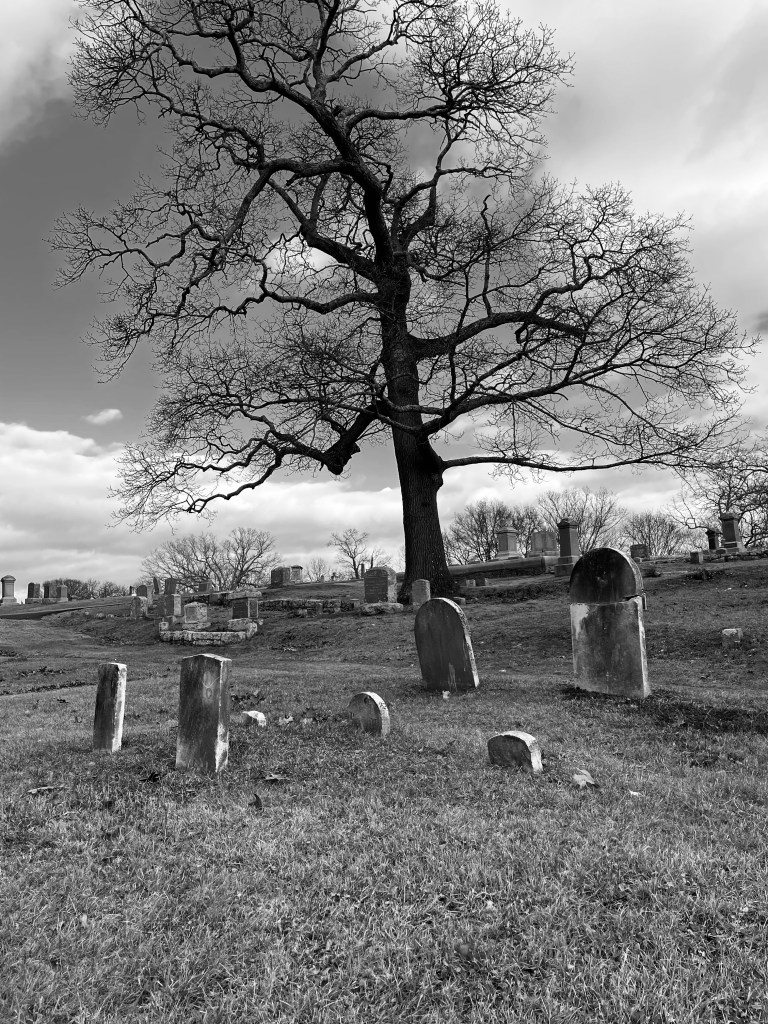


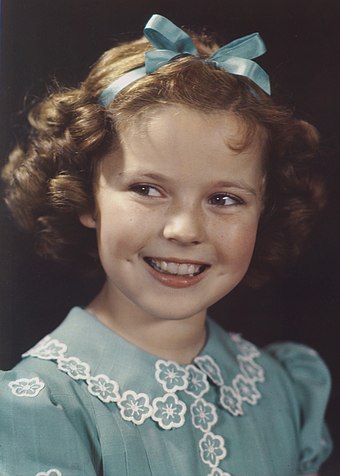
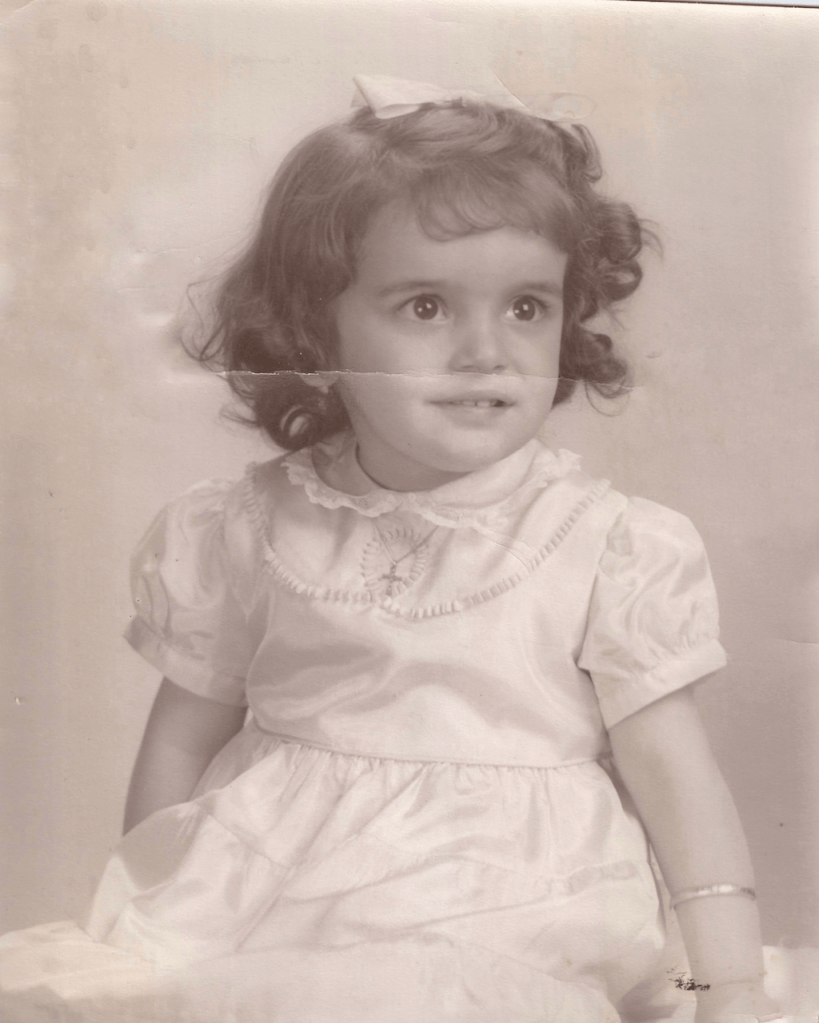


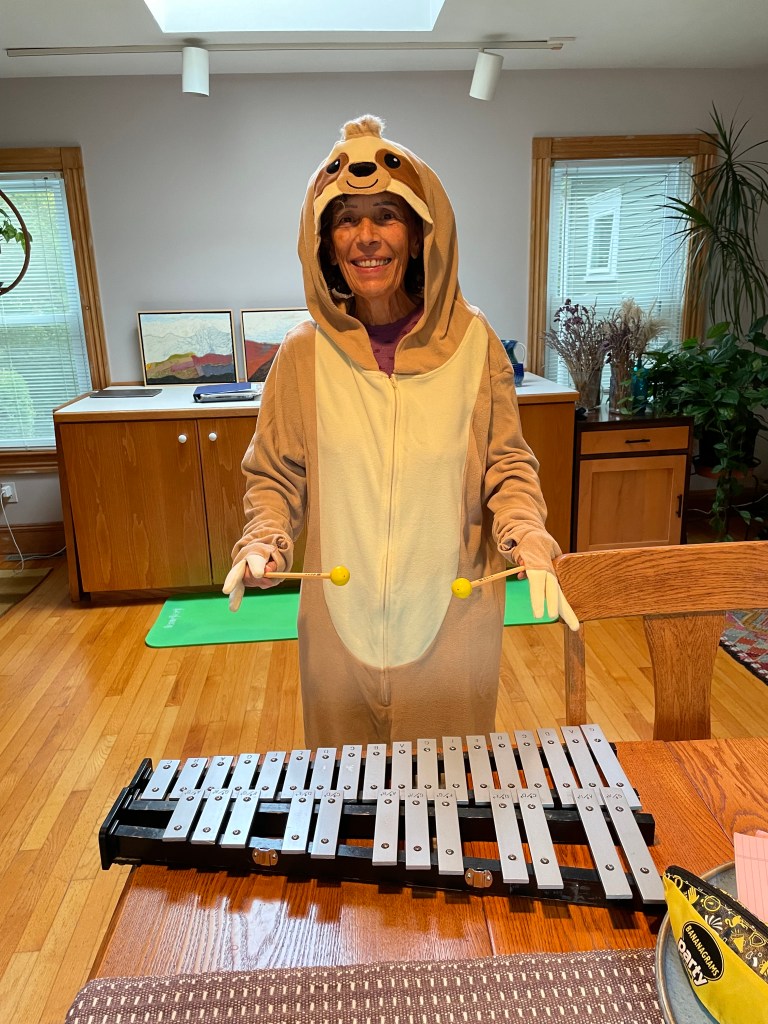
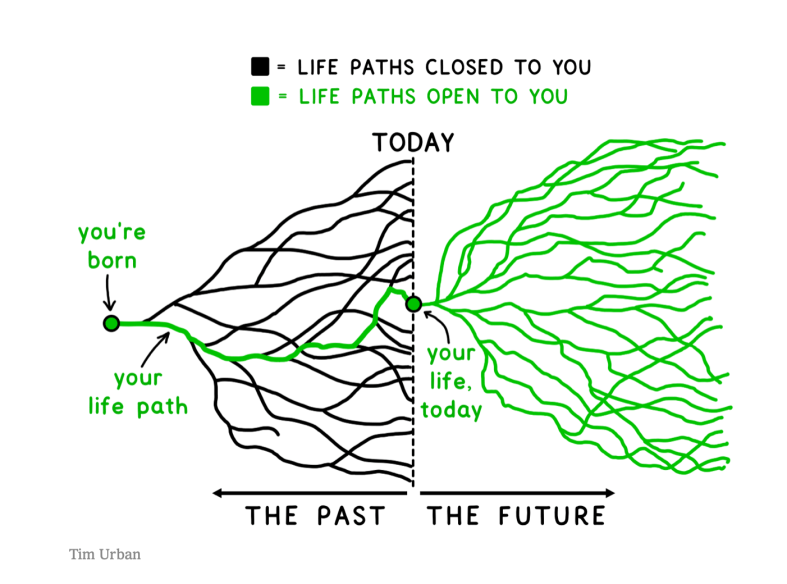
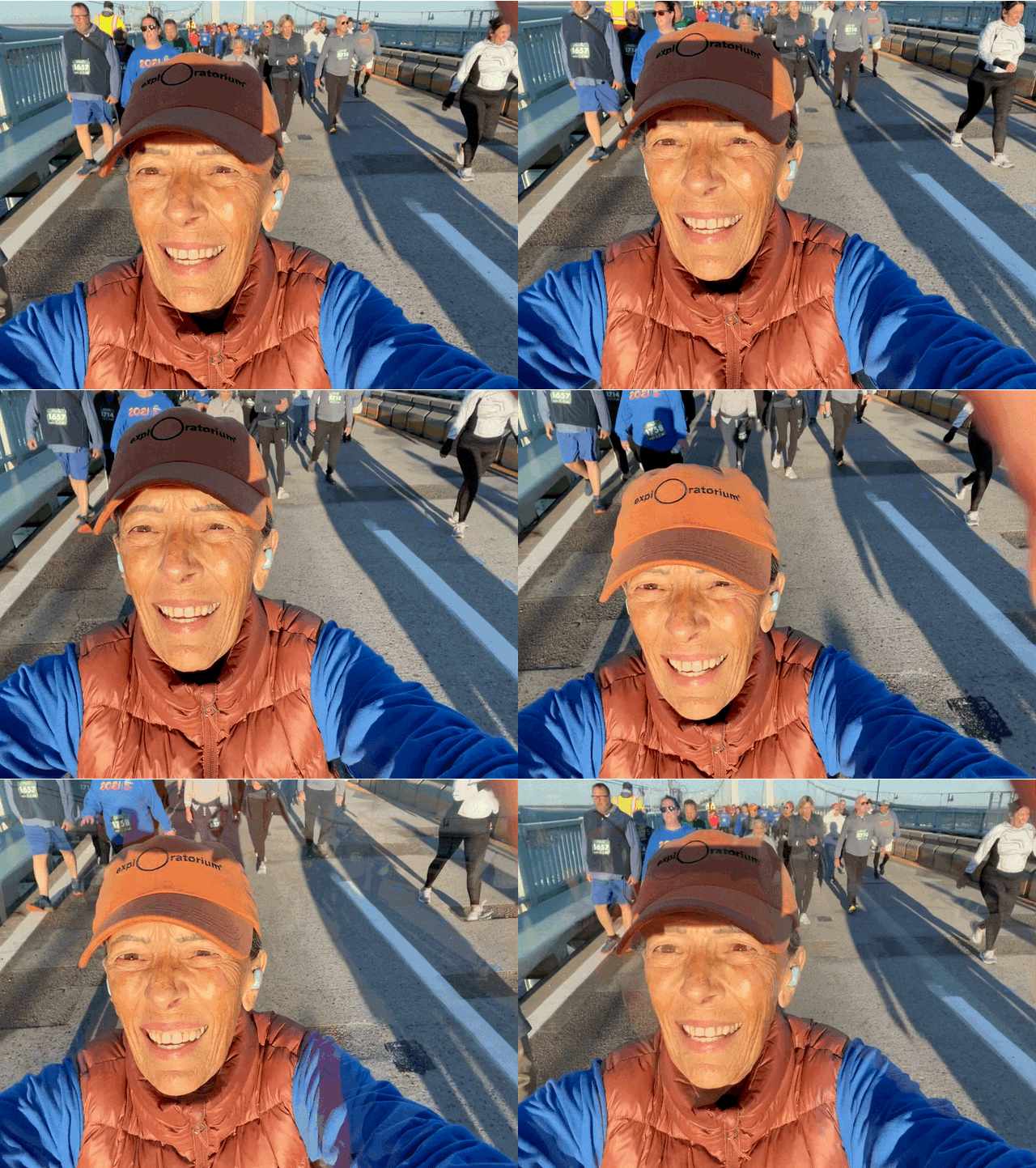
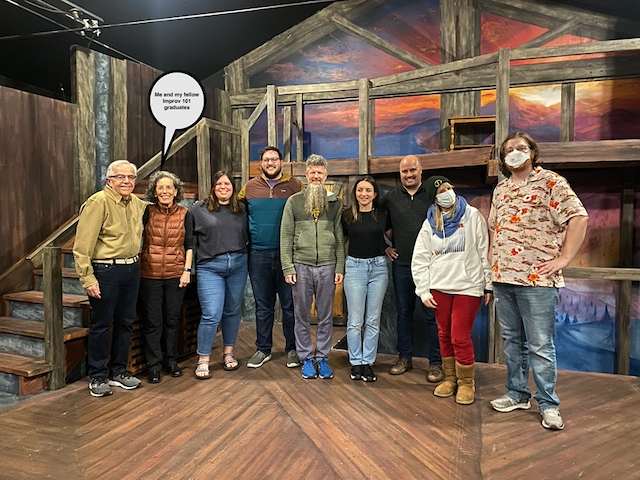
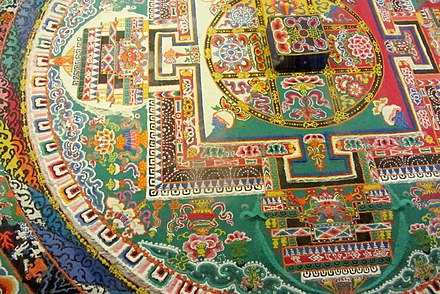
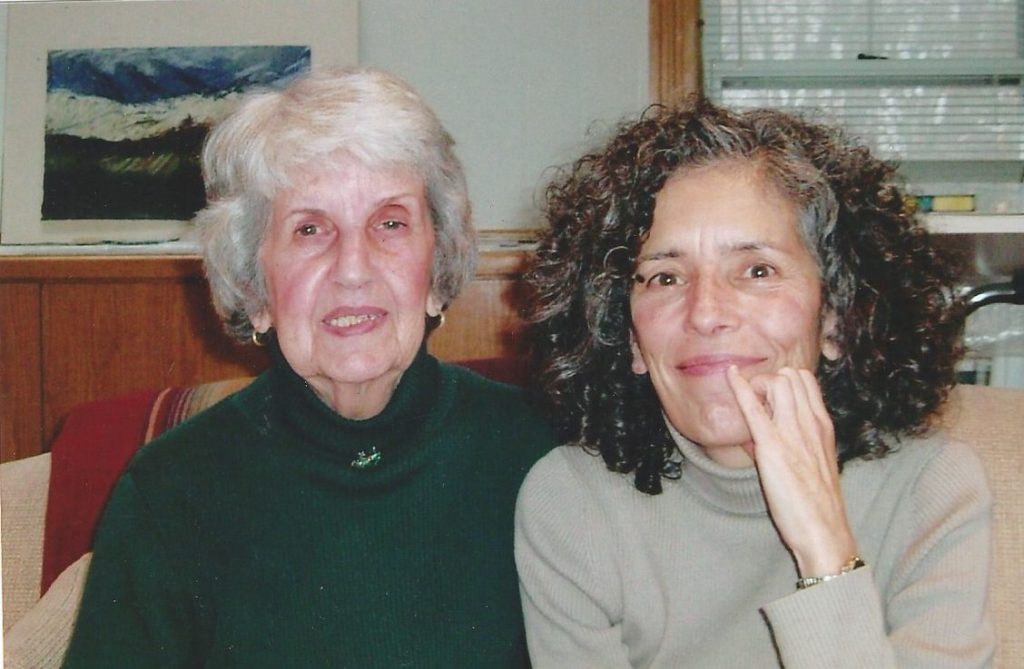
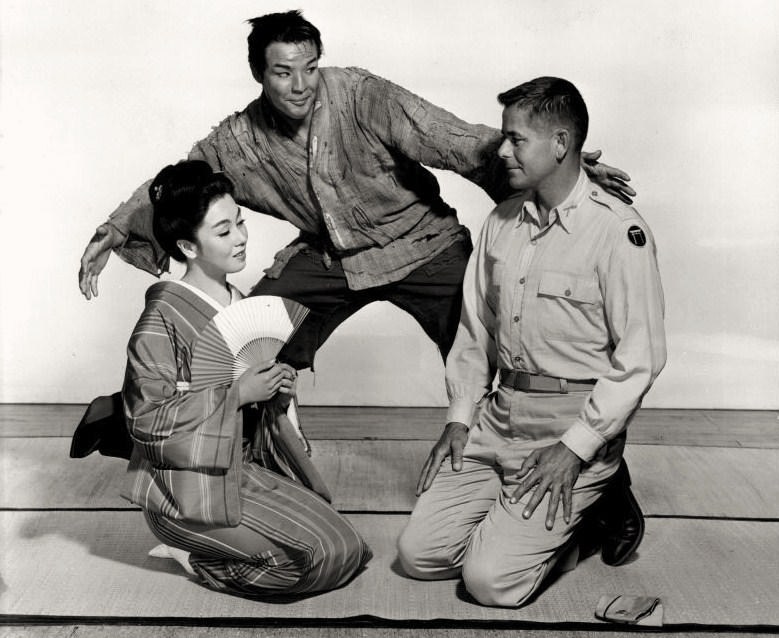

 What if there was a reckoning at the end of our lives based on a valid and reliable calculation of our environmental footprint? Smart economists could determine a monetary value for this. This could be presented at the reading of your will by your executor. First, there would be a statement of your wealth at your death, a total count of your assets and obligations, all set forth and ready for distribution to your lucky heirs and a few selected charities. Second, there will be a fair accounting of your environmental footprint which your children will be obligated to pay off in terms of taxes and other assessments. If they don’t pay it off, it gets passed down to the next generation, just like accumulated wealth. Perhaps knowing that own descendants will be responsible for own environmental impact would lead some of us to care more about the environment than we do now. We would be incentivized to avoid passing down what would be onerous burdens to our children. Those families with parents who had the greatest impact on the environment would pass on their children the greatest burden of accounting for their parents’ impact. It would be likely that those with the largest inheritances would also be those with the largest environmental burdens.


 .
.


 Delight/ Awe and other things