Dear President Trump

Before I get down to matters of substance, let me first review the ways in which you can assault my character, identity, appearance and politics. This way before you call me any names in a tweet, we can just stipulate that I already know all of this. So, your response can address matters of political theory, social conventions, the ideals of the American democracy and current fashions. I come in friendship.

So, to start off, let me just say that I am not an attractive woman based on any of the conventional measures. For gosh sakes, I am almost as old as you and I know in many people’s books that already assigns me to the trash heap of beauty discards. Also, I have dark hair; It is clear that you prefer blondes—Betsy DeVos, Kelly Ann Conway, Kirstjen Nielson, some of your wives, Stormy Daniels—maybe there are others. I also have some grey hair. I know that your blonde mane suffers none of the assaults that many of us experience as we age. I also have curly hair, which as far I can tell is under-represented in your administration. I don’t straighten it, as I should, because its natural tendencies remind me of my Portuguese ancestors but I assure you, I am a real American. I just look like an immigrant sometimes because of my coloring, my hair and my tendency to clean up after other people and do some landscaping around the yard.

It should also be admitted right here that I have short legs. I think you prefer women with model length legs. If I wanted to be a long jump distance athlete, I would have preferred long legs as well but so far, despite this disability and all the others I have listed, I do well enough. Statistically, speaking, I can state that I am a lightweight, tipping the scales at about 110 pounds. Still, I am heavier than that more famous lightweight, Ruth Bader Ginsberg, who can bench press her weight and do twenty pushups, which may challenge your own fitness chops. She is a Supreme Court Justice—the small one with the big glasses. I intend to take on her identity, sneaking into the Court to render decisions that she would have, if she becomes disabled or loses her superpowers.

I am also a Democrat, but I am the sort of Democrat who, like you, believes that the elite in this nation have greedily taken more than their share of the country’s wealth for themselves. Unlike you, however, my answer to this would not have been to see if giving more money with a tax cut would make them more generous, raising wages and making work better for more people. And, despite those Democratic credentials, I also believe that the American people can be great again. My version of that may be different from yours in major ways but I do think there is room to acknowledge that many people are suffering, and the fix is way beyond less regulations and more mischief by the powerful.

Another point–although not officially enrolled in any parish or congregation, I could pass as a Christian. I know the songs and the rituals. And by behavior and community spiritedness, I could probably pass through heaven’s gates faster and with less of a pat down than some of those who claim to be Christian but whose attitudes and demeanor would characterize them as Pharisees and Idolaters in the Biblical sense and as genuine varmints in the cowboy sense. I don’t claim here to speak for any faith here, of course, but my exposure to members of the clergy who administer to the marginalized teach me lessons about compassion that I just find lacking in other figures.

Finally, I can’t let it escape this sort of confession but to state that, my goodness, I am a lesbian.  I have a badge to prove this.  There are many of us around. You will find many of us in every walk of life, some of us are quite beautiful, funny, loyal and true; others less so. But, overall, we are quite unremarkable and now that many of us are out of the closet, we find that returning to the closet so we can be quiet and invisible impossible. I am certain that as a man who has suffered lots of bullying, you can understand what I am saying here.  It is hard to get used to freedom only to have it taken back; it is like backing out of a deal and I’ve read about your legendary deal making. You are a man of your word, as you have written.

Also, I understand completely what you mean about fake news when I see how the media have misrepresented women and their accomplishments, how they have misrepresented all black people as criminals, how much underserved positive press the land barons get—I understand all of that. In fact, I think the real challenge for you and me is to tell the difference between the true news, the fake news, the fake fake news and the true fake news. This may require you, as leader of our nation, to appoint a press secretary for each type of news so the public isn’t so confused and so the news media asks fewer questions. Those White House briefings are too long, unpleasant and noisy in their present state.

So, some personal advice. If you want people to like you more, you really need to be kinder. Ask them how they are. You have probably noticed how boring it is to speak with people who are self-centered and narcissistic —Kim Jong-un impresses me as being that way, as does Vladimir Putin and Rodrigo Duterte–and although you know them better than I do, I fear that they pretend to like you just because you have money and power. No one wants that kind of friend, as you know better than anyone. If I had to pick out a real friend for you, I think Angela Merkle would be a good start. She is smart and savvy and sometime who really “gets” you, if you know what I mean. The Dalai Lama has lots of good points, as well. He would earn you lots of “diversity” cred and if you are willing to try some meditation, I think you would find the practice would reduce your anxiety overall. I would suggest ditching Twitter for a while and taking up deep breathing and maybe even yoga. If you are worried that as President you always need to be watching over the nation, I will take that on for you, screen your calls and the media feeds. All will be well.

There is no question but that you have been doing too much. In the context of our friendship, I would urge you to stop playing around with loosening regulations. Take your foot off the fraying the safety net pedal. Let someone else build than damn wall; haven’t you already accomplished more in your presidency than anyone else? A less generous man would play more golf and as you near retirement age, you can take full accounting of your life, and just relax.

In closing, I hope this long letter of friendship serves to cement our bond. I will try better to keep in touch. The first two years of your presidency has been very busy for me.

Best wishes,

Sandra
Imagining my enemies

At sixty-nine years old, a person has few new experiences—unless she plans for them, deliberatively living a new pro-active, pro-aging lifestyle. I am all for that and if I was thirty years younger, I would plunge right in. But, earlier in the week, in the middle of the night, despite security systems and standard precautions, I was attacked in my bed, without provocation, by streptococcus. I woke up sometime during the attack, my autonomic nervous system raising to the call, pushing me to a 103 degree fever, inflamed throat, night sweats, extreme fatigue, stabbing headache, swollen lymph nodes and body aches from head to toe and across the bow, as well. I imagined my immune response system as tiny figures mounting a battle, as first responders courageously and selflessly, running to battle. My response to this response was the result of seeing too many Pixar movies.

I went to the doctor the next day for a diagnosis and while I waiting for my appointment I fell asleep on the examining table. I woke struggling to understand where I was and regretted that I hadn’t brought along witnesses to testify on my behalf because at this point, I also had strep fog. Strep fog is a symptom I have added to the regular list of symptoms to signify the sense that you are too sick to really speak about how sick you are. And, not as well known, there is also strep existential despair, the profound question that arises from that moment of peak fever when you ask, “How can I feel so sick when this will all be over in a few days?” or “What evolutionary benefit can there be in visiting upon the normally healthy an array of symptoms that pushes them to look into getting their final affairs in order?” Surely, I exaggerate a bit. But, I have had major surgeries, weeks of recovery, unaddressed broken bones and more—and I don’t think I have ever encountered the woes of strep throat. In fact, if the doctor had suggested opioids to treat my pain, I may have agreed to taken them for the first time of my life. If asked, I would have also put strep on the list of criteria of reasons to not resuscitate me.

After a few days with penicillin, I began to feel better although it was a long slog. It took me two days to even think that chicken soup was a good idea.

Several days later I decided, after meditating about my bout with strep and my reaction to it, to face my demons. I was wondering what the bacterium looked like. Could I look it in the eye? Could I just appreciate the power of the structure by looking at it? So like everything, I looked for a Google image. While I was at it, I thought I would also explore those who have perished at the hands of strep, making some connection with greatness and their suffering. Maybe, a poet had left some words of wisdom.

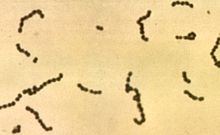
So first, images of streptococcus. Could this be less interesting? Really. This felled me? This is dangerous? Doesn’t this look like a figure from an introductory psychology clas220px-Streptococcis when the professor asks you what you see in the picture? For me, I see a smiling sheep or an elephant showing off his tusks in Paris. But, I certainly don’t see a bacteria that almost killed me.

 

So I looked for another image, a 3-D image. At least this one is purple and looks like a threatening pearl necklace that could strangle you. However, it still looks playful in some way. And in the the Pixarification of our lives which lets us see trees smiling at us, makes us fond of rats and ants and cars, and pushes us to grow appreciative of dirty old toys, this could be a friendly tropical worm just getting organized.

download

So if an image of a bacterium wouldn’t do it to help me confront this enemy, I would have to rely on stories of other humans who have also suffered from strep. Maybe, I would learn something from their experiences.

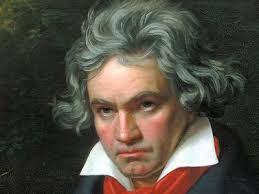
Two stories are important here. In my research, the most important person to die of strep is Mozart who died at 35 years old. In this picture, he does sort of look feverish. He was diagnosed with “heated military fever” and died quickly after falling ill. It appears that the infection led to kidney failure. Some accounts say that he infected many other people before he finally fell really ill. Had penicillin been available, mayimagesbe Mozart would have survived.


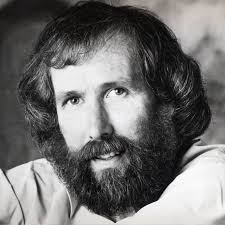
Jim Henson, creator of the Muppets, also died of strep, although he should have been saved by antibiotics. However, he had genes that predisposed him to very serious infection called toxic shock syndrome. I avoided that outcome but the world lost a wonderful man with Henson passed away.

download-1


A small percentage of people that get strep will get very seriously ill. So, my encounter was perfectly average misery. That is not much comfort, of course. But, the wonder of being so easily saved from a serious illness and possibly death, is the real news here. So, I can look at the bacterium with deep respect and worship the inventor of penicillin and other everyday miracle. When something happens so regularly, I suppose it is really not a miracle. But like flying at 30,000 feet, it certainly would seem like a miracle 100 years ago.

There is no present like this time

In a world as fast paced as this, we still only have the moments that every man and woman and every creature on the planet have in experience. Whether your time on earth was a short thirty years in pre-historic time or those same thirty years in the middle of the Dark Ages, still those moments of your life come and go. All those presents are past. And when we live in constant expectation, hope and anxiety about the future, we are only partially dwelling in this present. Similarly, our minds and selves are invested and placed in the past—for good or ill—we are just residing in the present but not open to it. With so many things to occupy the mind in twenty-first century, we are blessed to have any moment where we can be present to ourselves. Other forces command our attention and some of us are easily led. We are constantly entertained but that must distract us from the original nature of ourselves on this planet. This is not to showcase the singular quality of heroes and geniuses; it is simply to note that our places in time and place and family and fortune and tribe give us perspectives that can contribute to a dialogue about what it means to live at this particular moment. It is elusive because it is background of our lives, unless we stop, take a breath and make measure.


We may never know this particular moment for several reasons. We delude ourselves into thinking that this particular moment is just like its sister moment before and after. This one moment will predictably lead to the next. But, in fact, this may be a singular moment; one where everything changes. Where both the past and future are re-cast and re-calibrated. But this singularity is dependent on our showing up, which few of us really do. We may be able to divide the human race into large categories by where their orientation rests—to the past, to the future, to the present.


So, each moment is a gift but like many gifts, we don’t acknowledge the gift or the giver. In fact, we may pass along the present because we are not ready to receive it. Maybe, to be present, one needs to meditate deeply, to be centered, to wrap oneself against the onslaught of the noise around us and most importantly, the din within.


I do also think that being in the presence of others in conversation or prayer can help us embrace the moment. We know when this happens because these moments are memorable. We slow down time and focus here and now. Our need to connect overrides the noise and chaos, the worry about yesterday and the troubles of tomorrow.


There was today

This evening

This sunset

This moment before twilight

Just when the osprey returned to the nest to feed her chicks.

That moment.

That present.

That gift.

Lessons my father would have taught me had he lived

I thought about writing this essay as I was trying to figure out some mechanical problem. At home, I happily tackle nearly every problem—plumbing, electrical, digital–despite not ever knowing what I am doing. This attitude distinguishes this part of my life from most of my other experiences where I don’t try my hand unless I am nearly an expert. I think I picked this up from academic training where you learn to deny your interest in anything but your own area. Friends ask my opinion about all sorts of things and I can always defer, “I am sorry to say that is really outside my area.” This doesn’t work when we are trying to figure where to go for dinner but it works in lots of other areas, especially with other academics.


In hacking the repair of a broken ceiling fan, I was thinking about all the wisdom and know-how that my father may have passed on if he lived past the age of 45. When he died, I was 14 years of age and he was right in the middle of teaching me to be a caring respectful and contributing adult. For me, his oldest daughter, he held high expectations for my character. He could have cared less about other things I could have achieved. I wonder if I would have held the same ideals in place for my own children.

Lesson #1 Fix things
So, my willingness to tackle these projects can be traced, I think, to playing around in our cellar where my father’s tools were randomly gathered. He never had any nicely arrayed selection of screwdrivers, saws and hammers. In fact, I don’t think we ever asked permission to use his tools, or take odd pieces of pipe and plywood. We were never asked to put things back where we found them as well and I am imagining that my father must have run over plenty of these tools when he was mowing the lawn. But certainly as I think about it, had he lived and had I asked, I am quite certain he would have taught me how to fix a washing machine agitator. He already taught me how to build a motor and to understand the armature and the magnetism of the electric current through the metal bars.
He has also taught us how to mount an old lawn mower motor on a chassis so we could make a go-cart. I remember playing with the spark plug. This was all great fun. I don’t remember my mother ever warning my father that we could hurt (Our first go-cart didn’t have brakes.) This all makes me think that I would have been miserable under this current regime of parenting.
We also build a miniature golf course, digging up holes in the lawn and adding sand traps and water features. We used saws and hammers and nail and string and whatever we could find. We would regularly send divots sailing through the air, borrowing my father’s clubs and ripping up the lawn, Once again; he seemed not to mind at all—the lawn or the golf clubs. It was as if we could do anything we wanted as long as we were busy and learning things and not just hanging around. He was at the heart of him, a hacker. Someone who would apply a temporary fix and be happy with it. So from him in observation and in instruction, I learned to work with my hands and to fix things that I could. Part of this, I am certain, were the requirements of being working class. Calling in a repairman to fix the toilet is out of the question. It compromises your manhood and working class resilience.

Lesson #2 Being a man

My father was a veteran of World War II. He was a lace weaver early in this working life. I recently learned from the Census data that his birth year was estimated to be 1919. We thought it was 1917 or 1918 and his birthdate the 17th or 18th of August. It seems odd to me that much of this is unconfirmed. As a man who married late (30 years or so) maybe because of the war, maybe because he didn’t want to settle down, he was a father quickly About eleven months after they married I was born, a baby girl, when maybe a boy would have been more welcome, although I never felt like that. I think in his expectations for his children, my father couldn’t tell his sons from his daughters. We could all play baseball and drive the go-cart. He could all be good in school. We could all be crazy and silly.

My father taught me how to be a man. I considered that he was out in the world, doing things and fixing things and helping people and making money and I wanted that. I had no interest in cooking and sewing and being in the house when all the action was outside. He was to me what people in the fifties would call a “stand-up” guy, the sort of man who did the right thing, who honored his obligations and kept his word. I wanted that, too. I didn’t want to be liked in school but I did want to do the right thing. From an immigrant family with a tradition of working the fields, he distrusted money made in other ways. He urged me to save my money to buy a house as quickly as I could and to avoid the rigged rich man’s game—the stock market. He was constantly busy. I never recall him sitting with a book, except when we were on his lap and he was reading a story. As a man, he was different from any of the men on our block. He obviously loved children, loved their play, and admired their imagination. That went for all kids. While it may have been a manly thing to assign all of this to older siblings or to the women, my father dove right it. What kind of man did that? When I think about his tools, his golf clubs, his ceremonial sword from the Philippines, a cellar full of the body of washing machines, tubes of mercury and vials of oils and grease—all were available to us. In retrospect, I think, my gosh what a generous adult. What an embrace of our creativity and curiosity.  What sort of dangers did he leave for us to discover? Did we need more protection?


Lesson #3 Being a stand-up guy

And, he was the rare individual who could find a lonely person in a crowd and seek them out for company. Even though, he could be the life of the party and the center of attention—which he never sought. In this part of this personality, he was everything I wanted to be. A few months before he died, we went to the 9th grade father-daughter dance and he made a point of dancing with all the girls whose fathers were sitting things out. I asked him about this and he told me—in a moment that I still see in my mind’s eye, that like him, I could spot loneliness and sadness and when I did (and because I could) I was obligated to do something to ease that pain. I don’t know how his friends regarded him but I know he was a good man, always willing to lend a hand. I see much of him in my brother and his generosity and in this kindness to his children and to people in general. I remember as well how many times aunts and uncles would tell how much I would miss him and how much he loved us. Maybe, that is what one says to children whose father has passed away suddenly. I read it, however, as a sincere concern because he made it clear how much we loved us.

Lesson #4 The excitement of the tiny

I cannot look back and take an honest look at our income and expenses. I really don’t know how much my parents struggled over money. I know that my mother would have imposed a budget on my father’s spending and drinking if she could have. We lived in a house that they owned but it constantly needed repair. That wore on her; he was more relaxed about that and everything else. I share his tendency to put off addressing issues until I have to and her anxiety about things precipitously falling apart. He dreamed of living on a farm and for a while he had rabbits. I think he had other dreams for us as well. My mother, I think, dreamed of not having so much to attend to and not carrying so much of the burden of feeling not up to any of the tasks that presented themselves. Whenever we asked her what she wanted for Mother’s Day or Christmas, she always said, “Peace and quiet,” which we could never give her.

But the dreams of a farm, the possibility of a great vacation, like trips for ice cream—everything was more fun when my father was around. We would bring us snacks when he came home from the bar he used to frequent. He would be inordinately excited about this. He would buy the latest toy and happily try it out with us. I am doing my best to remember that lesson. With aging and aging friends and anticipating the next few decades, I find my mind more occupied by my mother’s perspectives than my fathers—more about loss and anxiety and less about fun and possibilities and living for today.


Lessons #5 Lessons about lessons

One could note that all of these lessons may be seen through rose-colored glasses. Maybe, I would have fought with him. Maybe, he would have placed obstacles in the path of college or VISTA or graduate school. Maybe, my coming out in my thirties would have been delayed until he passed away. None of this is knowable, of course. So, I do my best to piece this all together with remnants of memories, like any storyteller, fashioning one plot or the other. It seems that we would all be better off if parents would write letters to their children to answer questions that the children won’t raise until after they are dead. This wouldn’t have to be long detailed accountings of their lives but they would set forth the big questions and the big answers. To know so little about our parents and their parents is to showcase the unfortunate and existential fact of generational developments. We can hardly make sense of the present and can scarcely understand the generation that follows us, even though we were just so recently in their shoes—in the midst of building a career, carving out an identity, obsessed with raising children.

So these lessons that I am taking from my father are my own markings of his legacy. I am quite that there is plenty left on the cutting room floor and even more that I have so incorporated into my core identity that I can tell his influence apart from my own thoughts.

Can an old dog teach new tricks?

It remains a question whether someone who has taught successfully (as measured by student evaluations and peer assessments) at the undergraduate level can teach students of her/his own age. After all, a skilled kindergarten teacher may be out of place and skill-set in high school science or maybe not. Maybe, the meta-talent of teaching (deep understanding of content, profound comprehension of where students are, the ability to change tone, accent and appeal, the meeting of where students are with the challenge of where they will be after an encounter with the material) rests far above the content and specifics of teaching physical science or English. Maybe, some of us are master teachers, who are not only good in specific classrooms and subjects, we can also think about the process of teaching broadly and deeply. Some gifted teachers may be able to teach almost anything to anyone.

The actual genius and mastery of teaching is in itself a rare thing. Despite fifteen years of college-level teaching, I am nowhere near being that exceptional teacher but if an interest in self-improvement and a commitment to engaging teaching were half the formula, I would be well on my way. To teach the transferability of my teaching chops, I decided to teach a course at our local lifelong program housed at the local university. Typically, these programs are geared to adults sixty years and over and are peer led. No tests, no credit, no stress—just the joy of learning. Courses include history, arts, wellness, creative expression and others as well as travel and special interest groups. My plan was to teach one concept in sociology (the sociological imagination) and have older students apply this to their lives. The sociological imagination suggests that we cannot understand our own lives without understanding the social, historical, political and cultural environments of the time. This concepts fights against our tendency to believe that we are self-made women and men and points us to an examination of generational differences, changes in norms and values, changes in material conditions and much more. The students were challenged to write short autobiographies and then translate these into creative projects, fashioning sociologically informed stories of their lives. The class was to meet for three sessions in early December 2017.

The challenge of the comfort zone

As the time of the class drew near, self-doubt and panic began to set in. Could I take an exercise that worked with undergraduates to a classroom where students ranged from their mid-sixties to their late-eighties? Could I interest students in sociological ideas? Would they be willing to share their observations about their lives in a setting like this? Could I reasonably expect students to create class projects in such a short time? And, could I do this in three weeks of classes that were 90 minutes long? And, most importantly, after teaching undergraduates for such a long time, what made me think I could teach people my own age and above? As I wrote earlier, are those teaching skills really transferable?

I have to admit to suffering a nightmare before each of the first two classes. These were completely typical anxiety dreams, the first about not being able to get to my classroom because the elevator had disappeared and left in its place was a drawbridge that was up. The second involved teaching a classroom full of mustache wearing lumberjacks in a room with twelve doors, all opening in rapid succession. When I followed a noisy marching band to quiet down, I got lost in my own college in the toy department and couldn’t find my classroom again. Completely normal. That I still suffer from these after teaching so long is a topic for another essay. Let’s just stipulate that I did not imagine that teaching students my own age would be a walk in the park.

However, I must say that I very much enjoyed working with older adults. It is a wonderful experience to share the benefits of the learning one has done, as an older teacher and as an older student. Because I have been working with these ideas for so long, I have distilled the essence and promise of them. My version of sociology may be pretty far from versions held by other sociologists. I suppose this is the case for poets, as well. I may oversimplify the ideas that are core to the discipline. But, for me, these concepts and theories are profoundly helpful for people to understand who they are in the world. And, because, older adults have an opportunity to look back and reflect on their lives, the sociological imagination allows us to see both broad strokes of history as well as the contingent natures of our life paths.

Organization of the class

The course met three times. During the first class, we discussed the sociological imagination and the ideas of sociologist, C. Wright Mills. I asked each of the students to tell the class about his/her career and the paths not taken—careers that, in retrospect, they may have pursued had circumstances been different. In a class of sixteen, only one man would have followed the same career path. I also asked the students to identify five historical events that happened during their lifetimes that they believed had the greatest impact on them. With a twenty-year difference between the youngest and oldest student in the class, we readily identified the differences between growing up as a child of the depression and experiencing childhood as a member of the baby boom generation. The impact of these differences could be readily traced to the older students’ life courses. For the second class meeting, students were tasked with writing a three-paragraph autobiography, which they would share with other students in class.

In the second meeting, students exchanged their stories in small groups, where I asked them to identify common themes and differences. Out of these conversations emerged several points of agreement and common understandings. In this class, I offered a number of resources where students could research their histories.

For the third session, students were asked to begin to think about a creative way to tell their life story or to focus on a transformational event. Not all students were prepared to do this assignment. However, a few were and these were insightful expressions. Many students noted that they had never thought about the historical context of their lives; others said this assignment prompted them to begin chronicling their life story for their children and grandchildren. Still, others reported that they began to better understand their life course after doing some research on historical events. Students who took up the challenge of doing the creative project used the metaphor of life as a great unveiling, as a bookshelf with stories to be told and as a spreadsheet with pluses and minuses and large fields of undetermined outcomes. In this final class, I also distributed The Summoned Self by David Brooks, the columnist for the New York Times, an essay that explores the contingency of careers and life plans which I thought would resonate with a number of the students.

In my undergraduate teaching, I always do this assignment along with the students in my class. On one occasion, I create a three dimensional board game with Chutes-and-Ladders-like paths signifying unearned good luck and undeserved bad luck all winding through historical events and personal mileposts. Because I have spent most of the past twenty years as a PhD sociologist, I sometimes imagine that I have already examined every facet of my life worth examining. However, in the assignment, I focused on my year as a VISTA Volunteer and realized for the first time how profound that experience had been. In fact, I ended up dividing my life into Before VISTA and After VISTA. I got to include Parables, little books where events of that year taught me lessons I am still processing and missing photographs where images of people and events that were key are missing from my scrapbooks. This exercise took research—fact checking and memory checking— to make the story complete. I found it incredibly rewarding, despite the fact that I thought I had already covered this territory of my personal autobiography. Having the opportunity to discuss this project in the comfort of a classroom of my peers made all the difference for me.

The next round

With few exceptions, the students recommended that the course be taught again, offered in five or six sessions instead of just three. Most observed that they would continue working on the project they began in class. Students also observed that the course included just enough sociology. I know that from the experience of teaching this course that older students like small group work. They also appreciate a speaker who speaks loudly and clearly and who writes carefully on the board. Some are interested in more reading related to the topic; other less so.

I aim to think more clearly about the learning styles and approaches of the older student. Many have wonderful experiences that would readily be the subject of some compelling story-telling. If in the next round of this course, we can build up sufficient trust among the members of the class, I would like to showcase these stories in a public setting. With two semesters left to teach at my university, I am also more sensitive and aware than ever of the importance of understanding the students in front of me, from their generational membership to their culture to the ways in which the world manifests itself to them. What I most interested in is what I can learn from them in the limited time we have together.


Dodging silver and other bullets

Today, I nearly walked into the path of a car that was entering traffic from a parking lot. The driver was edging into the road and had carefully scoped out his exit. I am certain that he had looked up the street and down. I was the surprise—a blind spot—in his field of vision. He was moving south; I was headed east. One half-second earlier and I would have gone sailing over the hood. I am a small woman, somewhat fit and maybe athletic. I saw myself arcing in a gymnastic tumble, except, unlike those tiny bouncy teenagers who would land on their tiptoes, I imagine that my head would have hit the pavement first, a non-sanctioned Olympic move called The Double Concussion Flip and Fall. Moby’s Wait for Me was playing in my earphones and I was over-dressed on this sixty degree spring day.

To break my fall, I stretched out my hands. This failed and my chest hit the hood of the car; my head whiplashed back. I tried to resettle myself: What was I doing before I slammed onto the hood of this car? Where were my thoughts?

The driver waved his hands in apology; I waved back. It was like a silent movie. All gestures, no talk. I wanted to dance a bit, maybe skip in front of the car as I left the scene, just like Charlie Champlin would have. It was a magic moment. A minute before we had been invisible to each other; now we separate with a little memory, a shared story, and maybe a wee lesson, depending on our temperaments.

This encounter put my mind on the path of other near misses—a series of events that could have led to some serious trouble. I have sped through a stop sign late at night, distracted and tired. I have twice driven the wrong way down a busy street at twilight.. Earlier in that day, I would have without doubt faced a series of quickly moving cars, zooming up the hill. I would have been like a little cat facing the running of the bulls. We could all have been seriously hurt.

I have been in cars that have spun out, flipping on their heads in slick Alabama clay. I have been held up in Texas on a little walk in the good part of town. The man who did this looked upset enough to hurt me. I have dodged so many medical scares, that I am pretty certain that my health insurance company thinks that I messing with their premium calculation algorithm. I have had so many tests and been diagnosed with so many wrongly accused major illnesses,there must be a office pool somewhere betting on my demise. I could go on and on here but it seems with every incident I recount here, I am feeling both dizzier and bolder. With so much good fortune, a karmic calculation would have me dead pretty soon. As they say, I may be running out of good luck. Or maybe in that cosmic computation, or my good fortune comes at the costs of another’s unearned bad turn of chance.

Which gets me into the meat of what is really on my mind. Earned and unearned good fortune. the movie Funny Girl when Fanny Brice finds early renown, she says to her lover and supporter that she can’t be famous yet because she hasn’t suffered enough. I understand this feeling. It is that sentiment that much of what we have is unearned. I have unearned good health, undeserved energy, unnatural optimism. I don’t know if others feel this way about the gifts they have. I think we mainly focus on what’s missing.

It seems to me that most of us have experienced good fortune we have neither earned nor merited and of course, the reverse is true. The Just World hypothesis suggests just the opposite, that what we get is what we have earned. People are rich for good reasons, not trumped up excuses. People suffer in poverty because of bad choices. When we think about who is rich and who is poor, who enjoys good health and who falls to early disease, we frequently resort to this idea. We typically see great justice in the way of the world. It is comforting and somewhat cruel to believe that we get what we deserve. This is especially true if we believe in the power of individuals more than we do that of systems and structures. If we believe that through individual pluck and drive that the poorest child who has gone through worst schools can make it to Harvard and lead the world, we tend to be judgmental when they don’t. If we cannot see the advantage that birth and family and neighborhood bring to us, we probably believe that we are playing on a level playing field.

Twentieth century philosopher, John Rawls, suggested that in considering systems of justice, we imagine that we don’t know where in a social system we may stand. When we are making rules for running the world, we should evaluate them outside of our own interests. We should create systems that don’t favor or disfavor individuals because of race, gender, social class, national origin, cultural differences and so so. If a thought experiment like this were possible and if it could influence social policy, we would have be to convinced that we actually could stand in someone else’s shoes and represent their position fairly and respectfully. Hale doubts this can be done because of what he calls the veil of opulence—the blindness that we all have to the privileges of birth and position. We fall victim to the comfort of believing that if we fell on hard times, we would work our way out of it. The veil of opulence works like the Just World Hypothesis. It creates that delusional narrative that we are self-made, deserving human beings whose unearned good fortune insulates from caring more deeply from others who we see as not as worthy or deserving of what we have. Lots of us dodge bullets thinking we are lucky and blessed; not imaging that the cards are stacked in our favor.

Jews, Jesus and encounters at the front door

Sociologists and political scientists are worried about us—all of us and some of us a lot more. Part of their compensation package is based on how many people they can convince to share the same worry. And, if that worry turns into a social movement, that is even better and actually miraculous. As a few of them might conclude about such a development, such progress would be “an unanticipated and not well predicted outcome given the variables under consideration and the logic model imposed upon the data.” Huh?

 In any case, they are worried about the way we live our lives, especially compared to our previous settlements and interactions. For example, they report that our children used to play with the neighbor’s children; now children are matched up with like-minded and like-classed others and sent far away to the develop their talents, no matter how weak those gifts really are.  Play dates are increasingly like arranged marriages.

 They also note that where we live—our address in a specific community—has fallen victim to the “big sort.”  If on Memorial Day weekend, we look to houses on the right and to the left, chances are everyone is cooking on the same type of grill and eating the same menu. We are organized by social class and hardly meet or interact with others who are living other circumstances. When I was growing up very working class, the dentist next door would always borrow our lawn mower, not because he couldn’t afford one but because my father was more “handy around the house” than he was and could keep a lawn mower running no matter what the challenge was. This allowed us to trade that favor into pretty good dental care.  In academic circles, this is referred to as “social capital” and is as valuable as other forms of capital, only harder to commodify and certainly nearly impossible to put in your wallet.

 They also complain that we are increasingly isolated and privatized.  We don’t visit with our neighbors. We don’t drop in at each other’s houses.  The world is so digitized and segmented and that the old days of people coming to your door without a pre-arranged mission are long gone. You could with great justification greet someone at your door these days with a salutation like “Did you NOT check my online calendar? Did I seem ready to accept visitors?”  Now, when the doorbell rings it is for a special function—the UPS man, the cable guy, or people you’ve invited for a dinner you’ve Doodling, texting and Googling about for weeks on end. When those earnest signature collectors come from Clean Water Action is an exception. They are too young to know they are breaking some big rule.  And, of course, there are the Jehovah’s Witnesses who must have special training to employ rejection as a source of connection to salvation. I admire their inability to know where they are not welcome.

 Two weeks ago, on a busy Saturday morning (another observation by the sociologists—even our leisure time is way over-programmed) the doorbell rang. When I first heard it, I thought, “Do I have a text?” “Is the laundry done? “Is the smoke alarm battery calling in to let me know its days are numbered?” Yet another observation by another researcher, the average American adult hears 150 beeps/blurps/chirps/bings every hour, most of which he ignores, just as he should. Some days, when my electronic devices seem to all call out as if it is their mating season, I feel like a dog in a Skinner experiment, raising my little ears and salivating for no good reason. These days, like mothers of yore, our smart phones rings and we can call out “That’s my phone; I’d recognize its ring tone anywhere!” I think all primates, birds and even worms recognize these calls for attention.

So, the doorbell rang I made my way downstairs We don’t have any way in our house of checking out who’s on the front stoop except by running outside and seeing, which really blows your cover. So, I simply opened the door to find an elderly man and a younger one. I deduced that they were together by their outfits, neither dressed like the FedEx man. Initially, I thought, “Encyclopedia salesmen” but then I remembered there were no more encyclopedias and selling Wikipedias door to door seems sketchy. And, besides these men were more Fuller Brush than Face Book types. I gave them a quick look over and thought they posed no terrorist threat, so I opened the screen door as well and gave them a little smile and asked, “Can I help you?” 

 “Well, good morning, Ma’am. Isn’t it a lovely spring morning!” 

 I stuck my head out the door, looked around and agreed that it was.

 “Ma’am, I am minister Bradford from the Calvary Baptist Church up the street and this is a parishioner from my church, Petey.” Petey couldn’t stop smiling and raising his eyebrows.  They seemed nice enough so I let him continue his introductions.

“Ma’am, do you know Jesus as your personal savior?”

 Gosh, the swarm of snarky replies that swept into my conscious brain was almost overwhelming. I have never ingested a really serious illegal drug but I imagined this was like that rush. Part of the problem of being a professor is the employment of quibbification as a tool of combat and partee. Quibbification, as defined the Professor’s Handbook, is the tendency to question every word and argue as long as breath will allow to answer questions that no one but you and another remotely quoted scholar has raised. So, when this nice man asked this question, I wanted to jump into a discourse about the disappearance of mainstream churches, the attraction of me-centered theology, the development of drive-in churches, God as a merchandising brand and so on.  My brain spun on.

“I don’t know Jesus as my personal savior but I bet you don’t know Megan, my personal trainer or Siri, my personal assistant, either” was my second thought. That sounded like it evened the score but it had a taste of meanness to it. My third possible response followed.

“I don’t know Jesus as my personal savior; our relationship is more spiritual. I consider Him less a friend and more of a benevolent overload. Sort of like one of the heads of the Hogwarts school, but with an appeal process.”  That kind of reply sounded like it could have launched a long conversation about schisms in the church and the changing character of religious faith. This pastor may have read the same sociological journals as I did and given his seriousness of purpose may have known the literature a lot better.  So, I passed on that response, as well.

I simply replied, “Actually Reverend Bradford, this is a Jewish household.” 

A light fell over his face, like rapture.

“My gosh, we love the Jews!” He nodded to his colleague, “Don’t we, Petey?” I think Petey nodded but mostly I think he was surprised at the turn the conversation took. Or maybe, he could just read my mind.

Then, he rolled out in quick order all the reasons why Jews such a gift to him.

“Ma’am, did you know that Jesus was a Jew?”

I am thinking, “Well, that’s the way the story goes but why was his last name, Christ?” I let it go.

 “And all the apostles were Jews.”  I nodded my head; I did know that.

 “And, the Jews gave us the Old Testament.”  Quibbification raises its head.  “Gave?” I wondered. Maybe not exactly gave. Maybe, left it hanging around like a library book that gets read by lots of people. And, I didn’t want to get into the complications here with authorial attribution and the lost Gospels and the DaVinci code, so I let that go, as well.

 I smiled in recognition of his kindness and openness to me and my faith. Of course, it should be said right here that I was raised a Catholic and live with a partner who is Jewish. So, quibbling again, we are not exactly a Jewish household but my claim to him that we were seemed like an easy enough way to not have a long conversation on the steps. I wanted to be kind and respectful.

 “Well. Reverend, in this household we embrace all faith traditions and respect yours, of course.” I thought, gosh, it is so easy to sound inauthentic.

 “I hope you have a good day and best wishes in your ministry.” I shook their hands and they left with a little wave or maybe that was a blessing.

To me or not to me.rev 3

Me.rev.3

I am learning the lessons of social media. Not only do I have a time-limited embodied life that keeps me busy enough—respiring, digesting, ambulating, interacting with others in real time and real places, and other tasks—I need to have a digital presence. As the young digital acolytes warned in a social media workshop I was made to attend by my employer, “If you are not on the web, you don’t exist.” I am not certain that these social media types are the students who majored in Philosophy; that seems like a different crowd but I am taking their advice to heart, however, fickle that heart is. If Rene Descartes were living today, instead of writing “Je pense, donc je suis” or “I think, therefore I am”, he might have penned, “Je clic, dons je suis” or “I click, therefore I am.” Or being French, he may have simply enjoyed a glass of Beaujolais and waited for this new fad to pass.

Being way too American and old enough to feel that I better keep up with the newest technologies lest I betray my age and foggeyness, I launched into an intensive self-improvement plan. So, the first step was to assess my digital presence. Who was I? What traces was I leaving? If I Googled or Binged myself, who would I find? The first results were a little shocking. Googling my somewhat unusual name (Sandra Enos, Ethnic Azorean, simplified at the border when we migrated here), I found lots of matches. I found myself as professor (good news for me) and I also learned that another me had recently died in Vermont and yet another me had been indicted in Virginia. You can imagine my confusion and dismay. Because I am so new to the etiquette of the web, if there is such a thing, I didn’t know if I was expected to send a note to the deceased and a cease and desist order to my felonious namesake. Suppose some remote contact was trying to find me on the web and didn’t have enough information to discern among the multiple me’s? I mean how is one to approach these things? Lots of indelicate situations can arise; I am certain of it.

Googling for web hits was one thing. I could also birddog my presence in photos and videos. Again, sort of shocking. I found images of myself that I never posted and didn’t recognize. I don’t have a press agent or a publicity team so I am not certain who is making me famous. In fact, I may not want a digital presence. Shouldn’t we have some rights to not have our bad pictures posted? This whole experience reminded me of that awful day when the high school yearbook came out and you learned two pieces of very bad news. First, you are so unattractive that other people cannot tell a flattering picture of you from an awful one. One photograph looks as unappealing as the other to the editor of the yearbook. Second, among all the stupid photos, inside jokes and lame stories, your pithy comments and brilliant insights about your fellow students didn’t make the final cut after all. The web seemed like that day in high school. I was stuck with two uncomfortable feelings—a disconcerting sense of loss of control and a bitter taste of revenge—just like in high school.

Given these early experiences, I was committed to setting things right. I figured that my web presence should be very much a matter of my invention. I wanted to be creative, cutting edge, entrepreneurial, integrated, all natural—whatever would make my digital presence cooler than my real presence. I mean creativity and innovation are all the rage now; they are the cat’s pajamas which given our recent over-the-top seduction by our house pets sounds like a perfect niche to explore. (Gosh, I am already feeling entrepreneurial.)  So, my webself will be taller, more clever, more generous, more flexible, and more centered. And as a distinguishing marketing pitch, I will also suggest that while many twenty-year olds can multitask, that I can uni-task–do one only thing at a time and get it done.  A uni-tasker is like a unicyclist. We don’t win races; we have amazing balance and we can do our tricks on a tightrope. Try that you thumb wielding texter, you!

If I understand the workshop leaders correctly, I needed to take charge and manage by web self.   I need to Tweet. I need to Facebook. I needed to Reddit. I needed to blog and reblog. I need to Instagram. I need to do things that aren’t even popular yet. I need to be an influencer. I need to be an aggregator. I needed to have a webpage with a clear compelling design. Most importantly, the workshop leader insisted that I needed to drive eyeballs my way. Sounds like a cattle drive to me with cowboys and reluctant cows. It is brings up one of those creepy drawings of

One important question that the workshop leader failed to address at all, a deeply existential one to my way of thinking. What if your digital presence and your real self begin to drift apart from each other? What if they go their separate ways? What if your digital self finds better work? What if your digital self gets beaten up and bullied on the web, which I know is a real danger? How much does your real self feel that pain?  I am thinking a great deal which I think may mean doubling the cost for therapy but maybe not for medication.

My diminishing superpowers, mattering and the summoned life

In an earlier blog post, I wrote about my transformation into Tech Girl, a mature woman who would swoop in to rescue digitally challenged elders who were being attacked by electronic personal assistants and harassed by poorly designed log in routines.  And, while I am still looking forward to that superhero assignment once I retire and have the time I need to become a proper superhero–wardrobe, branding, licensing and insurance coverage—I am increasingly concerned that I am actually losing other superpowers.  Actually, what seems to be to be superpowers at age 66 were talents I took for granted a few decades ago. These seem to be simple enough tasks but it should be remembered that even a genius like Siri can’t do these things very easily so I should give myself a break as well and not be too concerned with these changes.

These superpowers once in hand no longer easily accessed include:

The Begats.  Keeping the names and the progeny of friends and family members straight and remembering without effort who gave birth to whom and in what order. Like the Old Testament in Genesis with all those begats. This contemporary version is harder because it seems back then everyone had his own name and you didn’t have to keep straight all the many Mallorys, Melanies, Melissas and Madison who are in your life.

Old dogs: no tricks. Adults are often surprised beyond reason when they hear a toddler speak perfect French. Well, maybe not like the French majors at the Sorbonne but French that is better than mine despite years of adult effort. While learning algebra or verb tenses seemed to be a normal part of growing up, learning some things grows harder as you age. It seems the memorizing part of your brain diminishes and the area of your brain some idiot designed for forgetting swells up. This is like saving something special in the refrigerator for lunch and having your partner pitch it in the trash (over and over again.)

Disappearing acts. In my earlier days, I could cavalierly reject the advice from Benjamin Franklin or Felix Unger—a place for everything and everything in its place. I could find things no matter I misplaced them. I had a great memory. My bathing suit? At the bottom of the swimming pool. My driver’s license? In that pair of pants I wore last summer. My keys? Somewhere in the house. None of these things were really missing. Just temporarily not in my possession. Now, I am seriously constrained. I spend way too much time putting things where they belong. The ease of the spontaneity has gone. Now, I have a Container Store mentality—I can’t not worry about storage and filing and I hate it. Now, when I lose things, I know right away that they are seriously lost. There is no mystery or hope or wonder.

Mindlessness. There is a lot written about the brain’s executive function. As I understand it, this is your brain’s control center. Like an air traffic manager, this function manages thoughts in and out; it lines up activities. It is a big to-do list maker, directing everything from brushing your teeth to ordering your bigger priorities. I used to leave this function to operate itself. I was confident in the management of my brain. In fact, I would be happy to give it a outsized salary and stock options; it was that high-performing. However, after a decade of disappointing results, I mounted a hostile takeover of operations. Never mind, I grumbled, I’ll do it myself. Now, I spend more time managing things—to do lists everywhere in every format. I write them over and over again. It is weird, no doubt. It is like ordering yourself to do work, like a memo from a manager who doesn’t want to deal with you face-to-face. I have moved from the pleasure of automatic pilot to to-do list automaton. I miss the mindless me.

A tale thrice (or more) told. There is no question but that I was blessed with a reliable memory. Not only could I remember a personal story, I could also recall when and with whom I had shared the tale. Now, when I am about to make a point with that story, I preface the presentation with, “I may have said this to you before” only to have the other party nod as quickly as they can so they don’t have to sit through another rendering. Not only is this embarrassing because it appears you have no recollection of this important conversation you had with your colleague, it is also makes it virtually impossible to lie effectively. To be a great liar, you have to keep track of your tracks and if you can’t do that, you need to be careful with your truth. Maybe, that is why the very young find their grandparents so lovely. Children sense that these elders are not as scheming as their parents because they can’t be. They don’t have good enough memories to cook up an airtight tale. They do, however, have enormous powers to make up things because the facticity of things seems to matter less.

In any case, all these powers came very easily to me in an earlier version of myself and now that they don’t, I am thinking I should make plans to cover my deficits and move onto to some important work legacy-like work. And, in fact, I think the powers that I will discuss below are sufficient compensation for any of the superpowers that I have lost.

I am thinking about the next stage of my life and what I need to leave behind. Erikson’s theories of development suggest that in the last two stages of development that adults are first directed to fashion accomplishments that will outlast them. These efforts are often directed to some work or activities that result in a positive impact for others. The final stage of life is a reflective one where a feeling of fulfillment and contentment may surface if one feels satisfaction from earlier stages.

To guide me in this important work, I draw upon two reservoirs of wisdom: first, the theory of mattering and second, the idea of the summoned life. Mattering is a social psychological concept developed and tested by Professor Gregg Elliott at Brown University. Of all the reading I have done in this field, the appeal of mattering stands out in its power and simplicity. Elliott’s work focuses on adolescent development and mattering explains much in a few empirically tested premises. Three elements are at play here. First, does this child feel that it matters to others that he shows up? Or does he feel invisible when he enters a room? Second, does she feel that other people are invested in her success? Do they indicate that they are on her team? Will they take an extra step for her? Will she feel that she is the object of their special attention? And finally, does the child understand that others can rely on her? That they depend on her to take care of them in some way? Does she appreciate those qualities that she has that others recognize but may be invisible to her?

In my read, mattering works in two dimensions: Am I important to them and are they important to me? Elliott proposed that for children, the former can balance out an absence of the latter. In other words, a child can be neglected by his parents (or the opposite—subject to the object of too much of the wrong kind of attention) yet feel as if he matters if he feels his little brother is relying on him for protection, if his aunt can trust with him to complete his chores, or if a teacher understands that this child will protect more vulnerable children and the child acknowledges that her faith in his goodness.

Although designed to help us understand the treacherous waters of adolescence, mattering has significant practical appeal at each stage of our lives. As an older adult and faculty member, I use every opportunity to help my students understand that they matter. I offer investments and interest–Can I write you a letter of recommendation? I missed you in class on Monday; are you OK? I help them to recognize their strengths, as I understand them. You have such strong analytical abilities, I say. Have you thought about graduate school? Or, I saw how upset you seemed by that comment from that other student. You showed great restraint and did a wonderful job returning our class discussion to a more productive exchange. That takes real emotional maturity. We are lucky to have you in this class.

 I think about a younger generation of colleagues and the challenges they face in moving up and finding their place in the world. For someone with my career trajectory—finding my calling at age fifty—I am a good example of someone who has led a life of experimentation and ‘try and see’. But things seem much more serious for this generation I consider all the messages they receive about how to value their lives. E.E. Cummings once wrote, “To be nobody-but-yourself—in a world which is doing its best, night and day, to make you everybody else—means to fight the hardest battle which any human being can fight; and never stop fighting.”

That sense of constantly working towards who we are is a profound recognition of the second source of wisdom, lessons about the summoned life to use the term coined by David Brooks. On the surface of it, the summoned life appears to stand in direct opposition to living to execute one’s passion. Brooks suggests that there are two paths of living one’s life. The first is to drill down and find one’s passion and direct one’s energy toward fulfilling. This path seems to be the chief and only commandment adopted by career guidance services and admissions offices in colleges. We will help you put your passion into practice. You will never be happy until your passion aligns with your actions. But, the truth of is that we can move through many stages of development in our lives and that the individual who knows his passion early on may be the rare case.

The alternative path is the summoned life where contingencies and circumstances call you to action. We may be without a driving dream but we do have an integrity that is so strong that others seek to engage it. We may lack passion because we are divided among multiple interests but someone sees that we find connections they elude others. We are the sort of people who integrate ideas not dice them into tiny bits.

Like being inspired by mattering, I am likewise energized by this idea of the summoned life and the sort of work I want to engage people in. I would like to create flight plans for enrolling others in the summoned life and in embracing daily practices of mattering. I believe these are important tools for legacy making, not in grand gestures but in generously and lovingly passing along our belief and confidence in generations to come. Both help us understand and activate Erikson’s concept of generativity—the concern for making a mark, for co-creating a desirable future, and for making a sense of optimism about the future grounded in purpose. Maybe, these are super-powers that can only be granted if we are willing and able to forego others.

Bibliography

Brooks, David. “The Summoned Self.” New York Times, August 2, 2010.

Elliott, Gregory, Suzanne Kao, and Ann-Marie Grant. “Mattering: Empirical Validation of a Social Psychological Concept.” Self & Identity 3 (2004): 339-354.