At the beach without my poet

The second morning walk
You were on my mind.

If you were here, we would toss out lovely names.
Our words taking aim for the truth and the moment.

I would say,
“Look, how the tern folds and unfolds his wings,
He sails and pivots
An origami bird.”

th

And you, the poet, would say
“Exactly. So perfect.”

And, you watching the sea shift and balance itself would whisper
“See, hear, how its heart beats.”
And I, your friend, would nod smiling satisfied.

The exhale and inhale of waves
The wash of water at our feet

And, we would kneel in veneration
Place our ears to the beach
And, listen for the profound timing of this place.

And the poet would add another keyhole to this universe.
Our place.

The courage of children

My pretty enough mother was always worried that we, her children, would have large noses. She would point to her own and my father’s as examples of noses that were simply too big. It seemed, however, that with sufficient and sturdy conviction, she and we could will these away. And, as fate and faith would have it, my sister, brother, and I are blessed with average, nearly admirable noses.

She also despised the color of her eyes, calling them yellow––“Cat’s eyes, they are.” I would stare at her as long as I comfortably could to get a good look but she would catch me and I’d have to quickly swing away my gaze. When I did sneak a look, I didn’t see the yellow at all. I saw brown which was the only color those nice people at Motor Vehicles would let her put on her driver’s license. To this day, I don’t know where she got this idea.

My mother was a devoted fan of blue eyes. She could list a whole series of notable and smart people she knew with blue eyes and for a while I thought that we would be blessed with these someday, as well. I thought this despite the fact that all my cousins, my aunts and uncles––all of them with very few exceptions––had dark brown eyes. I just suspected that if we prayed hard enough, the treasure of blue eyes would be ours.

Our parents sent us to an Irish Catholic grammar school even though we were descended from French-Canadian and Portuguese-Azorean stock. My sister and I have talked about this, about how strange we felt in this school. We were dark-skinned compared to our little Irish friends in this school which took its Irishness seriously. A child did not have to be Irish to attend this school. A devout Catholic family or a family that was headed in that direction was all that was required. My mother made it clear to the principal that she wouldn’t mind being Irish herself. This was decades before a child could be proud of her ethnicity and could demand accommodations for culture, language and customs. This was an era where we child considered the foods we ate at home and the festivals their parents dragged us to an embarrassment. At St. James, we sang Irish songs, spent a week celebrating St. Patrick’s Day, learned the jig, and brought home Irish culture–whatever that was. In the mid-1950s, it was as good as any other heritage and as disposable, for the most part. Our parents laid their Americaness like a thick blanket over their nationalities––intending to suffocate it for good. My father fought in World War II and taught us the lessons he learned from that conflict. American people were heroic. As Americans, it was in our nature to know and do the good and noble thing. We were blessed to be American and doubly blessed to be Catholic and American.

These were the chief lessons of our eight years at St. James. The blessed good fortune of all this was weighed heavily with the awesome responsibility of being a good Catholic uniformschild. Even now, four decades later, the language of this formation–grace, blessings, contrition, penance–remains like scaffolding in my brain and in vocabularly, even though I have attempted to destroy and expunge it many times. A good Catholic child lived in two places­­––in the real world full of temptation and in the temple of the Holy Spirit. We children easily comprehended the architecture of faith, enormously difficult for men of God to explain. We learned all this complexity easily, the way French children breeze their way through verb tenses that elude college graduates.

We learned this arcanum readily because it provided a clear way to understand the world. Children seek clarity and order. They struggle against it, of course, by asking questions to see if this adult-given explanation makes sense and is compatible with their own developing stories about the world. But, as they bang their wills against the rules, they learn the boundaries of their adventures and just how far adults will let them go. The 1950s in the Catholic Church were a stark testament to this fact. Without benefit of referred journals, supported research, conferences, government grants or other artifacts, our teachers––all nuns. Sisters of Mercy––created an intact, tightly woven, bullet proof method of teaching us things that we would remember forever.

Of course, the habits they wore made them both strange and fearsome, as well as comforting and familiar. Long black robes, rosary beads worn like large necklaces, black shoes and stockings. Their faces were completely framed by a starched wimple at their foreheads, which wrapped around their heads, set off with a stiff bib that stretched over their bodices, nearly reaching their waists. We learned to read a subtle body language. It wasn’t much beyond second grade when we knew what they were all about. But, their real power spun around their knowledge of what we children we all about. Our mothers th-1 warned us against wrongdoing, as all mothers will and used as ammunition the fact that no matter where we were, what we were doing, they would know. We could get away with nothing. This served as a magnificent check on our behavior, especially for the girls. But, even more powerful that our mothers’ omnipresence was the specter of the nuns as representatives of God who was truly all being, all seeing, all there and everywhere. And the Sisters, as his lookouts and lieutenants, could not only see around corners and under desktops, but could detect a whisper when you didn’t even know you were talking. They could not only see, hear, and smell what you could be sensed––they could also peer into our beings, see our wretched little souls and examine the sins we might be entertaining in our lack of grace and prayer.

Although we were very young, only six or seven years old, we were sorely tested by the devil and his workers. We faced daily temptations like calling each other bad names, dishonoring our parents, failing to bow our heads and recite the requisite prayers, and having impure thoughts. But being good was only half of the challenge. Important as the commandments and Catechism was a duty to suffer for our faith.

On selected Friday afternoons, we watched films in the school basement. The older students set up rows of folding chairs and we sat with our classmates in our assigned seats. We were led quietly downstairs and were not to speak with each other or with members of other classes. We paid a small fee to see movies like Cheaper by the Dozen, Rebecca of Sunnybrook Farm, Heidi, and the like. We also watched religious movies about the miracle at Fatima and the stories of saints. We were supposed to pick up lessons from these movies. It was a new media-savvy way to reach the young barbarians.

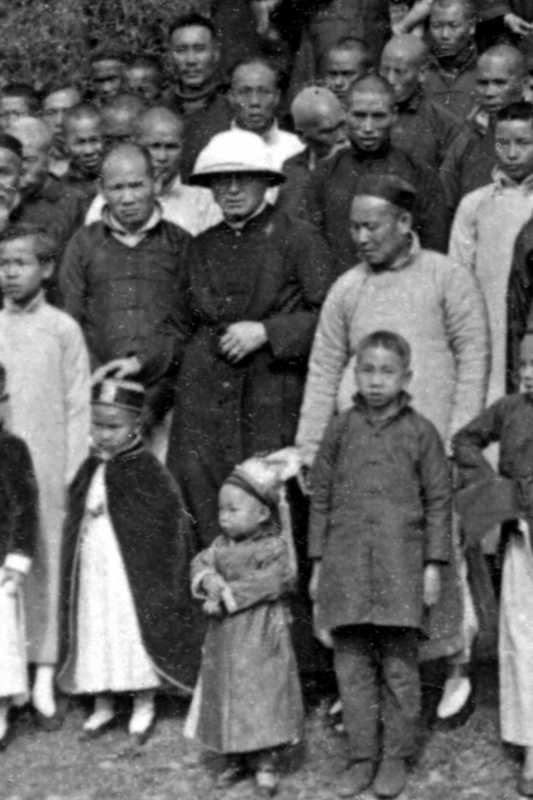
During missionary season when the parish was visited by a priest, brother or nun who had been converting the heathens in poor countries, we would watch black and white films of the missionaries at work. I clearly remember a movie about a Maryknoll brother and the work he was doing he was doing to bring Christ to the pagans in China. In this movie, an army of Chinese peasants surrounded a tall, strong, dark-haired Maryknoll in a black cassock. They carried sticks, waving them angrily above their heads. and marching CO-FOUNDER OF MARYKNOLL FATHERS AND BROTHERS PICTURED IN CHINA IN 1918in a circle around the priest on a dusty barren hilltop. His head was bowed and his hands were tied behind him. The film was very grainy and the camera seemed to jump around. The narrator spoke deliberately about the priest and his devotion to God, how he had not betrayed his faith despite being tortured to renounce Jesus. The crowd led him up the hill where a wooden cross stood. I cannot remember if the film showed the priest on the cross but to the mind of a second grade, it seemed like this would be next step in the story.  I remember that we were terrified and that some of us were crying.

We walked back to our second grade classroom saddened and silent, filing quietly into our seats. When Sister Frances stood at her desk, she placed the small tin missionary box on a student’s desk. On these Fridays, we were told to bring in a donation for the missions. The children who had spent their money on candy and treats at lunch sunk in their seats, their souls stained with the sin of greed and filled with regret. They quickly passed the can over a shoulder without looking at it. Children, who had saved their money, shook the can, loudly clanged in their nickels and passed it back with a smug look of victory on their faces. We were warned against this sin, a demonstration of pride, but some of us could not help ourselves. The nun pretended not to notice all this and busied herself with an attendance chart or something on her desk. After the bank made its way around the room, we placed our hands on our desk in anticipation of the last lesson of the day and homework for the weekend. Instead, she spoke about the film and about the beautiful sacrifice that was only available to God’s chosen people. She told us about courage and the importance of living our lives as children in Christ. “Denying the Lord is the very worst sin you can commit, children. You have been blessed to be born in the Faith.” We had heard this many times and took it seriously.

Then she asked, “How many of you are willing to die for your faith?” Our hands shot up as fast as they could. The boys yelled out, “Me, Sister! Me, Sister”, competing with each other to be the first to be sacrificed. The girls were quieter, polite, stretching our arms, waving them to catch her attention. She had us. We were all going to be martyrs and saints!

No child hesitated and said, “Excuse me, Sister, I will have to ask my parents.” No child asked, “Can you tell me when I will die and if it will hurt a lot?”

We were ready to go, happy to, in fact. Today, I try to put myself in that teacher’s place and I think, “Oh, my God, they are ready to go wherever we will take them! Do they know what they are saying? Do I know what I am asking?” And, I think, “What kind of game is this nun playing? What a crazy insane thing to ask a child!”

I also consider other parts of this scene. I think about being in the first row, third seat down, a member of the top reading group, looking at the other students so eager to die for Christ, feeling very grown up. I was proud of making this courageous and correct decision on my own. This was my way to certain sainthood. There were other paths, of course, but this was offered in a manner that we could understand. It was compelling and seductive. Being slaughtered by a pagan because we refused to renounce the Holy, Catholic, and Apostolic Church seemed noble and good. I don’t remember a second of doubt. I filed away this promise to die for my faith expecting that the good Sister would inform the proper authorities when the time came for me to go, to be crucified, burned at the stake, buried alive or otherwise disposed of in the most gruesome manner.

Perhaps, children at that time were more susceptible to adult direction. Perhaps, adults were less careful about the terrors they willingly placed in the paths of children. Perhaps, both contributed to our growing up terrified, not of the man next door, or the predator down the street, or the gun toting madman at the fast food restaurant––but of large, mysterious things, like the heathen anti-Christs, communism, and polio.

And, of course, we were frightened by the atomic bomb. We did exercises in school, practicing in the event of an attack by the Russians. Sirens would go off and we would file into the fallout shelter at school. We asked the nuns where our parents would go when the bomb went off and they comforted us by reminding us that our parents could take care of themselves. I worried that my father who drove a service truck around the state would not be able to remember the location of each and every fallout shelter when the bomb fell. It seemed to me that he was always in danger.

At the distance of almost fifty years, I can see clearly how children are trapped by the fears of they adults they grow up with. Our own terrors create demons for them to avoid. Children can put off some of these fears to parental weirdness, but others resonate for a long time. When the whole culture creates and animates these bogeymen, children must take heed. They must take cover and run.

In addition to warning us away from big noses and wishing us blue eyes and lighter skin, my mother also guarded us against profligacy, against pride and gloating, against being too pretty, too smart, too anything, lest this draw the attention of God and engage his punishments. Sometimes, I wonder what terrors and frights I would have instilled in my own children had I given birth.

It seems that children survive childhood by creating play and joy to counter the admonitions and fears visited upon them by their parents and teachers. Sometimes they do this deliberately. They cannot figure out why adults are not happier than they are. So, they act silly. They giggle. They try to entertain and distract us. At least for a time, children face their parents without fear, with abiding trust, with the assumption that they are loved and lovable. Although we adults think we are amusing and comforting our children, it is, in fact, the exact reverse. The truth is that children assure us as their caretakers. Children enter a world that we have created and they begin to build it again, weighing all that we have taught them and tossing off what seems wrong headed and mean spirited. And so, a seven-year old can pledge her faith in afternoon, take her teaspoon of cod liver oil at night, bite her tongue when someone calls her a bad name, and still sneak a book to bed at night when she is supposed to be asleep. She can read this book of stories about St. Dom Bosco, who juggled for Jesus, and about Saint Theresa, the Little Flower, who would rather die than entertain impure thoughts. She can try to make sense of those tales of childhood heroics. And, she can struggle to be a model of virtue while scheming to avoid detection and punishment from vigilant adults.

And in these conflicts, children work things out. They soon understand that there is the world that adults would like them to fashion, where you as a child are kinder, more forgiving, more tender, and wiser than the adults guiding you. And, very quickly, children take their own counsel and assemble their own views of the world, their own stories that set them apart from the place their parents know the world to be.

Let’s name names

Let’s name names

I have long been fascinated with memory. Thirty years ago (or was it longer than that?) I wrote a piece about forgetfulness, foreshadowing my current disability by decades. Maybe, it was all those knocks to the head I suffered as a young tomboy with more energy than grace, when I repeatedly fell off my bike, or ran into walls, or slipped on the ice, or got knocked out in some touch football game with boys twice my size. I did know enough algebra and physics to understand that other bodies carried more mass and volume than I did and that a two hundred and fifty pound boy could easily fling a 105 lb. girl into the trees with a simple wave of a big paddle-shaped hand. In any case, this memory loss falls hard upon me as I take my place at the top of the pyramid, not the class pyramid. No, just the little hierarchy and pecking order in my job and in my family. There is no one left to take charge but me. My job as a professor puts me right in the crosshairs of the slings and arrows of the young and the impatient.

As a college professor, I am in the classroom with seventy or more new students each semester. Research shows that this is important that you remember their students’ names as soon as possible even they still don’t know yours at the end of the year. So, I pledge to myself that I will learn their names as soon as I can. Not only for courtesy’s sake, but so that I can call on them even when they don’t want to be called on. Maybe, as they are in the middle of imagining eating a nice juicy burger for lunch or thinking about taking a nap or just about to grab their smart phone to distract them from what’s going on in the classroom. So, names are important to me, as well. It is embarrassing to refer to them by other descriptors like, “You there. Yes, you—the young woman who’s paying attention to me. Yes, nod your head. Good. Please, poke the student next to you and ask her to climb back into the classroom. That’s right! Thanks.”

Last week, two weeks into the term, I called on two students using wrong names. The class thought this was very funny. Not like joke-funny, more like, “we are so embarrassed for YOU” funny. Like roll-your-eyes-funny. I quickly recovered and pulled their correct names out of memory. (I called Kristin “Karen” and Katie “Kristin”—I didn’t think that so bad. Bad would have been calling Kristen “Kenneth” and calling Katie “Kim Kardashian.”) My brain was at least in the correct mnemonic space. There are semesters when I have had three young men in my class—all named Kyle, all about 5’ 10”, all wearing campus gear, all dark haired with a little beard, all in the back row. How to keep them separate in my mind?

More challenging is another case. I have a girl (Madison) in my introductory sociology class who wants to be called Steve because another girl named Mariah wants to be called Monica. She was explaining to another student that Mariah is her slave name; she wanted me to accommodate her request, which led to a series of similar requests by other students. Give them an inch on issues like this and pretty soon, they all want to be called Harry Potter, and then you really can’t figure out who deserves which grades because Harry has earned A’s, B’s, C’s and F’s on his exam.

So, to address this problem with learning student names, I am thinking perhaps, that I should ditch their given names and tag these students myself using my own assessment of their qualities and my own creative spin on their characters. What is nice about this scheme is that these names can be used each semester since from one semester to the next, there’s quite a bit of consistency in their behaviors and appearance.

For that student who keeps looking out the window,

windowatcher  ‘the boy who turns to the light,’


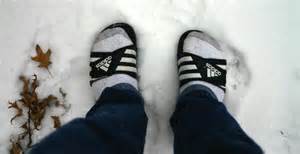
For the boy who wears flip flops in the winter,

sandals‘the boy whose feet don’t freeze,’


For the girl who complains each time I give an assignment, ‘the girl who whines without rest,’

For the boy whose baseball cap is way too big, ‘the boy with hat like a tent,’

For the third boy who is named Kyle in my class (see the discussion above) ‘the one who is named like the other two,’

For the boy who is always late, ‘he who arrives on the tortoise,

For the boy who nods off in class, ‘the  one for whom sleeps comes during lectures’

sleepingstudent

For the girl who never reads the material and seems satisfied to pretend she has by making up answers that are wrong, ‘the storyteller with the false tongue,’


For the girl who brings neither book, nor paper nor pen to class, ‘she who bets on hope,’

clueless_girl__open__by_shiraikimizuno-d4x9bbm

For the boy with longish hair and big dimples, who seems always to be in the company of

lazyguythree beautiful young girls who seem to do all his work in class,

‘the coed whisperer,’


For the young woman in the first row who keeps texting during class despite my warnings and harsh looks ‘she who raises my blood pressure’

And for the male athletes who are too big for the classroom furniture, ‘the boys whose knees climb the desks,’

little chair

Also in class are

‘yawning boy,’ ‘the girl with jewels in her nose,’ and ‘shiny blue nails.’

And, because of divine intervention and good luck, each semester, in my classroom, I find my favorite student, ‘the girl who smiles at the wit of her elders.’


From Penguin to Oblivion

This essay was written at the end of June 2013 as the culmination of a course in creativity and play for professors at my university. As faculty development seminars go, this was certainly longer and much more engaging. If ever there was a teachable moment, this was it.

From the Penguin to Oblivion:
A Journey through the Creative Process

Introduction

Wherever you are, there is somewhere further you can go.” Ingold

In this essay, I will redraw the path I took during the academic year (2012-2013) tracing a journey from teaching to play to creativity and back again. As Ingold (2007) observes, some journeys don’t simply take the traveler from point A to point B. Indeed, this story tracks a wayfaring walk where the sites along the way tell the tale as much as does the wayfarer’s scripted walk. This is not a journey limned by a GPS device. In fact, it is much the opposite. It is a walk that doesn’t map clearly or coherently. Until the end, perhaps, when the hero (me) understands the purpose and portent of the trip in the first place which is to take a different journey the next time and to have my students along for the walk. We could take the car or the bus with a guide setting out on a prescribed tour but that would be a different journey with another professor.

This is also a journey of discovery as a professor. Renowned educational philosopher, Parker Palmer, argues that we cannot teach without courage (Palmer 1998). In The Courage to Teach, he argues convincingly that professors need the courage to be ourselves in our teaching–no more, no less–but deeply ourselves. In taking up this challenge, he asks the most important question, “Who is the self that teaches?” He notes that many of us who choose to teach carry in our minds’ eye the image of “the” professor we wish to become—a brilliant lecturer, a compelling storyteller, the captivating theoretician, or the Socratic genius. However, as Tompkins (1990) notes, a focus on performance is on what sociologists call impression management can get in the way of student learning. Balancing those images with the mandate to be truly ourselves can set us on a journey of creative self-making and refashioning. It is hard enough to appear in front of a class of thirty young men and women, who are tamped down in the expectation of “another boring class,” determined to be more confident, competent and well-organized. To be more alive, more mindful, more fully realized, more authentically ourselves–maybe, that’s just too much to expect. As she writes,

The classroom is a microcosm of the world; it is the chance we have to practice whatever ideals we may cherish. The kind of classroom situation one creates is the acid test of what it is one really stands for (Tompkins 1990, 656).

I am a late career academic, joining the professoriate as a sociology professor in my fifth decade. I have a lifetime of experience in the so-called “real world” behind me, but not really behind but rather infused in direct and indirect ways. These influence my teaching and research, of course. As Florida Scott-Maxwell writes in The Measure of My Days,

You need only claim the events of your life to make yourself yours. When you truly possess all you have been and done…you are fierce with reality (as cited in Palmer, 1998).

Like many things done later in life, I have found learning to be a professor a steep curve. During this last academic year, I have taken the challenge—to bring my creative side to my classroom. This means making deeper and more inspired connections between the work I do off campus in music, photography, creative writing, community engagement, and other pursuits with my teaching, research and service.

As I will discuss later in this essay, I have long tolerated a division between my left-brain and right-brain orientations to the world and have found this a useful conceptualization of how one understands and approaches the world (Edwards 1979; Pink 2006). In the past academic year, I had decided to be divided no longer. Like Whitman’s Song to Myself where he rejects “resistance to the brain that divides,” (cited in Hyde, 211). I am seeking a way to bring a richer way of encountering teaching and the world I teach into the classroom.

In my application to join the Faculty Creative Fellows project, I suggested that I would be good candidate because I considered myself a creative person and was eager to meet with other faculty members to talk about how to be more creative in my teaching. I also wanted to work on a new course in the sociology of creativity, a long interest of mine. Finally, I was interested in developing a proposal to the administration at Bryant University for a commencement award that recognized creative expression, the first such award in the institution’s history. I jumped into this faculty development opportunity without much concern about the design or content of the yearlong commitment. I trusted our leaders, Bob Shea, Director of Faculty Development and Terri Hasseler, Professor of English and Cultural Studies, and imagined that the experience would be productive and enriching.

Jumping into play with one toe in the water
I can summarize my thoughts coming into the Creative Fellows course—happy anticipation. The course presented for me a way to use play and creativity to build a bridge from my creative side to my teaching side and back again. I must admit I have been hesitant to do this in any deliberate or well-considered way prior to this opportunity. My initial definition of play and creativity equated this with stepping out of my routines, my planned day, my left-sphere dominated brain and to let play evolve slowly perhaps, and steadily, or maybe, not at all. I see play and creativity as my counter weight to boredom and repetition, on and off campus. Buddha said that we cannot walk into the same river twice because of the nature of impermanence in our world and in our lives and I believe that this is the case for teaching, as well. I cannot to teach the same class twice—the students are different from last semester’s class; we are living in the world together and have common, yet different experiences; I may have just read an article that has me reconsidering my understanding of school reform, for example; I may be weighing the impact of some new research. I always aim to change the script but increasingly, I am interested in changing my role and my character. In wading through the daily business of our lives, we can play out our roles, superficially and alienated, as if the act of teaching was indeed a performance. Ask anyone who is pretending to be doing something in a half engaged spirit–like teaching–and it is easy (and painful) to feel deadened by a lack of imagination, energy and creativity. The drive to do something new and more authentic may take us back to play as inspiration.

As I participated in the seminar, these themes of divisions, categories, and tensions have reverberated through much of my work created for the course. As I trace my life’s path, I see multiple forks in the road. A sharp turn toward one direction, which in good time and order, sends me back the other way, usually by way of a long meandering, and not wholly conscious choice. In my career, I have had many jobs with few consistent themes. My life mirrors what Mary Catherine Bateson (1989) proposed reflected the lives of women—a composed life, not a straight line stretching from point A to Point B, but rather one knitted together with themes, where each age echoes another. I do see those themes in my creative work and my professional work but my mapping out of these developments suggests nests, networks, cul-de-sacs, dead ends, and tendrils—a far stretch from a planful, left-brained path where one step is a necessary and sufficient precursor to the next stage.

During my career and personal life, I have always been blessed by creative ideas, by flashes of work I want to do, of ideas I wish to pursue. In the creative exercises we been assigned, I had no end of ideas but I was always challenged to execute these in a shape that follows my early vision. This play-work to me is similar to the back- and forthingness of any endeavor. One takes a step, is blessed with an insight, sees how one thing leads to another or away from it, and waits for a shout of inspiration while deeply engaged in something else. The essential genius of the Creative Fellows project was that it has presented challenges to us to create something that wasn’t there before—not manifested anyway. Stephen Johnson (2010) writes about the long hunch—the slow evolution of ideas that seem to emerge one day fully formed when, in fact, the mind has been crafting and tooling those ideas on a slow course of development. With the “adjacent possible,” creativity comes with connections and communities, with broadly seeking inspiration and putting one’s toes and eyes in places where the unfamiliar is encountered. This is exactly where the Creative Fellows project brought me.

I loved the purposelessness that was part and parcel of the instructional design in this course and found myself turning toward the projects that Professor Hasseler assigned as a meditative practice—to clear my mind in order to create something that the noise and busyness of faculty work in a complex organization typically drown out. Now, my challenge is turning a richer focus toward teaching and writing. STOP

The source of these ideas has been a lifelong tug of war for me between what some would characterize as right vs. left brain dominance, as intuition vs. rational analysis, as divergent vs. convergent thinking, as expansive thinking vs. more narrow working through. Play and creativity have always been for me a way to fashion projects for myself—inside the classroom and beyond it–that are both creative and intellectually challenging. Play creates the ideas and the insights and the work to get the project organized and moving ahead moves into another dimension.

A few years ago, I became a more serious photographer taking pictures of seaweed that had washed up after southeasterly storms on Narragansett beach. The images were lovelier and more stunning than I had imagined they would be. I decided to make a structured study of the seaweed, researching the genus of seaweed, identifying their characteristics, studying the geology of the sand, the shape of the tides, the lines and whorls of the water at the edge of the beach and writing about the history of seaweed on the southern New England coast. This all come together in self-published books using Blurb software. What was interesting to me was that taking the images AND researching their vocabulary added on a dimension to my experience of walking the beach that made it a richer, more compelling experience. So, although I walked the same walk for twenty-three years, it was by no means the same walk any longer. Experiences like this left me open and excited about play and creativity.

Seeing the forest and the trees
Like most non-artists or even artists who decide to move into another medium, I had a great fear and trepidation of making art. Reframing this as play made this work easier. I see some direct connections between play and creativity and productivity, not in the sense of efficient production of work but instead in the fomenting of ideas I am interested in pursuing. So, the obstacles that I can typically put in my way of doing the work I should be doing can be readily enough managed if I allow myself the place and time for the joy of play.
One obstacle for me is that I seek novelty. I love to learn new things and explore doing something new, with or without guidance, usually without, so I seldom move to a place of mastery in these fields. I like to improvise, to move along my own path of exploration. While I have been playing music for nearly fifty years, I am just now taking music lessons but I am realizing the power of a teacher to guide me through. That is embarrassing for a teacher to admit, I imagine.
Besides the time and place to create, I would add courage, not so much to make, but to share what has been made. Recently, I have shared some writing I have done with colleagues. The courage to fail, or to succeed, is less essential when one is committed to the private making of things and ideas. I think these concerns surface as real obstacles to building creativity into my daily routine. The sharing with a safe community would be a blessing. I know that I have certain creative strengths and struggle to be recognized for those; I also know that my personality keeps me modest and safe and not willing to grab attention for achievements.

Learning a new language to think about process
The projects we did in the course created opportunities to provoke thinking about presenting ideas and concepts. Through the mapping and genealogy exercises, I struggled with using new media (new to me) to tell stories I have telling myself for years. However, with these new challenges, I discovered important insights that hadn’t surfaced previously. My aim in The Begats was to create a structure of lines around objects and people that would knit together a divided self. I have often thought of this with me a central figure framed by two figures that represent that divided self—somewhat linked together with lines of attribution—sort of like an annotated paper doll. I did find to my great surprise that when I went to my collection of photographs for this project, I found huge holes—key events and turning points with no photographic trace.

The exercises we did in class–whether it was making pottery or drawing mandalos or map-making or genealogy–really stretched me. I understand that I was more “successful” in some exercises than I was in others. In some, I didn’t understand the instructions as well as I could have; in others, I was hesitant about my ability to draw or add color. The lessons here for me were profound with a link to Vygotsky’s work (1978) on the zone of proximal development work and its implications for scaffolding in teaching. I understand more clearly why and how hard it is for students to understand directions for projects they have never done before. I thought of the craft of learning my discipline of sociology and how so much goes on in learning vocabularies and conceptual organization of ideas. I also learned here that like me, students are afraid to fail. Finally, in terms of my own work with the exercises, I recognized that I create the idea of what I want to do and find it frustrating to understand how I am going to bring that vision to reality. My talent fails me, unless I work it over and over again. Perhaps, we don’t as mature professors and adults believe that we can reach out to new fields of endeavor, experiment, and go beyond our comfort zone, fail, and try something else. And perhaps, in our traditional teaching, we have passed on that unfortunate premise to students, as well.

The courage to change back to me
It is hard to make art when there is so much in one’s mind about the process and the product. This class has pushed me to carefully consider the “monkey mind” and the act of work and play. I have taken several classes on memoir writing and have tried to teach myself to draw, as well. For a while, I was writing humorous pieces and getting them published here and there. I have also recently taken up the mandolin—the first time in my life that I am taking music lessons—and will join an ensemble this summer—screwing up my courage here to show what I have learned and can do.

In the creative process, I work hard to mold and re-mold. I love creative insight when no march down a linear path would have gotten you where you wanted to be—someplace new. As a result of this course, I have more confidence in my creative energy and interests—not necessarily my talent–but instead a deeper focus on the questions and practice around the creative process, not only as it applies to my creative work—poetry, photography, social problem solving–outside of the classroom, but in the classroom, as well.

The whole nature of play with other faculty members was enormously engaging for me. When I had the chance to listen to other faculty talk about their fears of failure, of performance anxiety, it helped me to understand the nature of my own hesitancy to create, think, and act outside the boxes we typically create to manage our self-images as professors, as experts in our disciplines, and as creators of learning opportunities.

The wayfaring way forward
I intend to use a new course (The Sociology of Innovation and Creativity) that I am designing as a touchstone for the lessons I have taken away from this experience. This course will explore how ideas and innovation emerge in social settings examining some texts that trace the conditions that lead to great periods of innovation and creativity. We will also examine the characteristics of groups and organizations that frustrate or enhance creativity and problem solving. Students will develop a creative portfolio, examining how their skills, orientations and dispositions to creative problem solving change over the semester.

As a teacher who considers herself creative, I know I can do more in the classroom to encourage students to be more creative by scaffolding ways for them to develop their “creative” muscles.

I will be applying for a Faculty Innovation Grant to support a new project that develops toys for poor children to address the issue of “toy deserts” (Bellafante 2012). This project can readily adapted to use in my courses, to build creative problem solving skills in students. Finally, I hope that the Creative Fellows can work with other faculty to further build and sustain this work on campus. Can we create some supports on campus that celebrate and push our creative selves? Can we develop a community of practice? A flash mob? A pick-up band? An informal group of faculty that can work across disciplinary boundaries and come together around projects of common interests and new ones, as well? As Ingold noted as the start of this essay, no matter where you are, you can go further. That is the key lesson here for pedagogy and practice that emerges for me in this creative adventure.

Works Cited
Bateson, Mary Catherine. Composing a Life. New York: Grove Press, 1989.
Bellafante, Ginia. New York Times, 2012 8-December.
Edwards, Betty. Drawing on the Right Side of the Brain: A Course in Enhancing Creativity and Artistic Confidence. Los Angeles, CA: J. P. Tracher, 1979.
Hyde, Lewis. The Gift: Creativity and the Artist in the Modern World. 2nd edition. New York: Random House, 2007.
Ingold, Tim. Lines: A Brief History. New York: Routledge, 2007.
Johnson, Stephen L. Where Good Ideas Come From: The Natural History of Innovation. New York: Penguin Group, 2010.
Palmer, Parker J. The Courage to Teach: Exploring the Inner Landscape of a Teacher’s Life. San Francisco, CA: Jossey-Bass, 1998.
Pink, Daniel H. A Whole New Mind: Why Right-Brainers Will Rule the Future. New York: Riverhead Press, 2006.
Scott-Maxwell, Florida. The Measure of My Days. New York: Penguin Books, 1983.
Tompkins, Jane. “Pedagogy of the Distressed.” College English 52, no. 6 (October 1990): 653-663.
Vygotsky, Lev. Mind and society: The development of higher psychological processes. Cambridge, MA: Harvard University Press, 1978.