Eggsecutive Orders: We’ve cracked this case

Few things are more American than bacon and eggs for breakfast. However, due to the malfeasance, corruption, and incompetence of the former administration, patriotic Americans are paying exorbitant prices for a dozen eggs. No one loves eggs more than the present administration. We feel your pain.
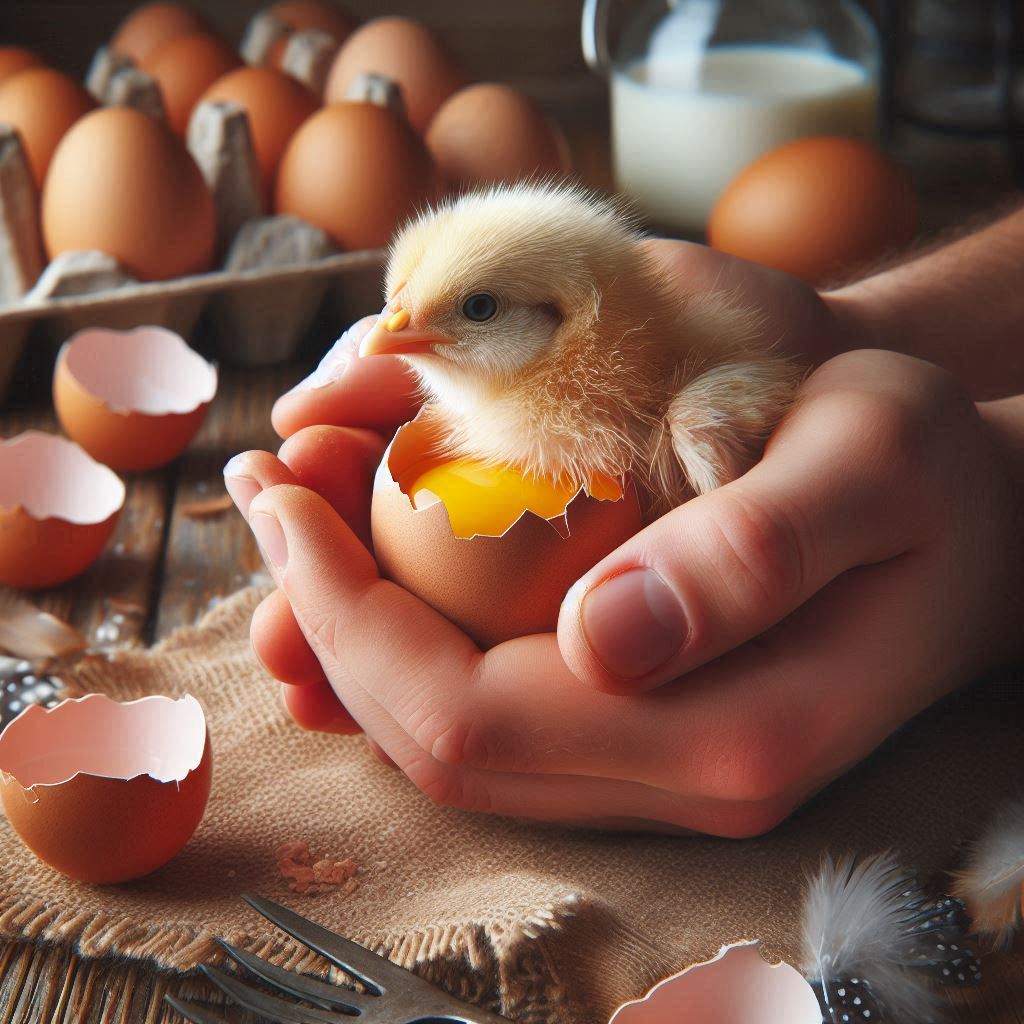
Effective today, we are declaring a national egg emergency. This situation threatens our country’s security, leaving us vulnerable to enemies within our borders and beyond. A country without eggs is a land with too much toast. This administration is taking the following actions, which are certain to make American breakfasts great again.

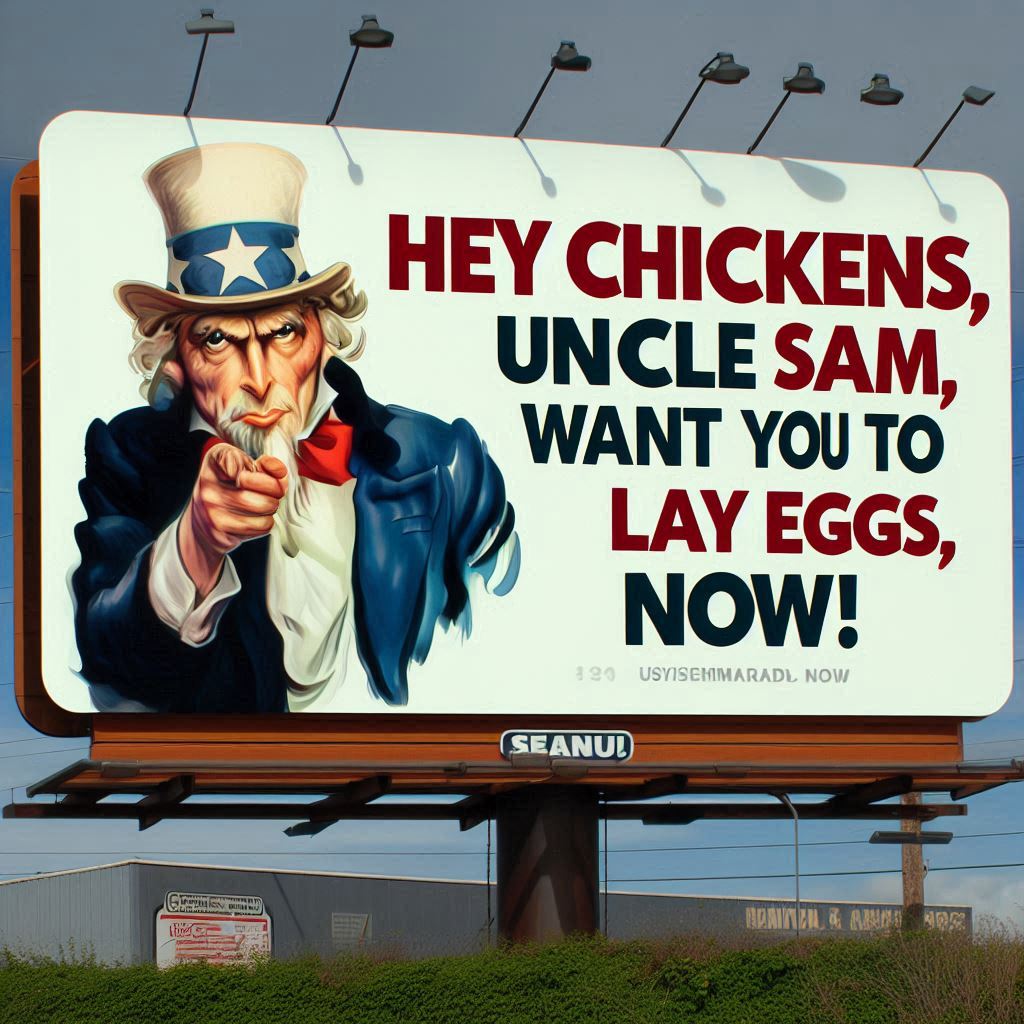
A billboard with a person pointing at the camera

AI-generated content may be incorrect..

First, as we dismantle the deep state, our executive team has discovered that in our great nation there are 130 million fewer egg layers than we had just three years ago. We believe that these formerly engaged freedom-loving birds have been kidnapped by the Chinese or another enemy, like the Canadians. We also suspect that because of the over-regulation of this industry, American hens have lost their jobs to the immigrant hens who will work for lower wages and nasty working conditions. These illegal hens, mostly mentally ill, and certainly dangerous criminals, have crossed our unprotected borders. This invasion of non-native birds has stolen the jobs that our American hens used to have — middle-class jobs with decent wages – and no unions or job protections.  Our American birds can’t compete with these despicable creatures.

Given this national emergency, I am using my powers as Commander-in-Chief to direct our Armed Forces to seize as many productive egg layers as possible, no matter where they are located, even if this violates previous treaties where nations agreed to keep their hands off each other’s eggs. 

Further, effective today, we are authorizing the admission into the U.S. of 200 million hens under temporary laying status. Most are French and Italian birds which if you’ve been to Europe, you know make great dinners. 
Similarly, all border controls that prohibited law-abiding chickens from entering our great nation are suspended. Once this national emergency has ended, we will enjoy these temporary workers for dinner with the long-promised chicken-in-every-pot. It should be noted that we are the first administration to fulfill this campaign promise. Even George Washington didn’t make that happen. We are the greatest administration ever. 

Second, it is within the power of the President of our great nation to define and control weights and measures without review by the courts or Congress. We are eliminating the archaic, French-inspired definition of a dozen. From here forward, a dozen will include nine eggs. Twelve eggs is really too many.
This simple change will immediately reduce the price of a dozen eggs by 25%, a huge savings to American consumers. This will also reduce the price of packaging and give the chickens a shorter workweek, which we believe will encourage American chickens to return to their jobs. 

Third, effective immediately is the suspension of all DEI policies governing chicken flocks. Rooted out by our team in our hours-long investigation of the egg industry is our finding that these organizations are in bed with the chicken industry. We have also discovered that both enforce the radical far-left feminist policy of having only female chickens laying eggs. We are not certain which corrupt incompetent administration established this nasty practice in the first place but it ends now. The wholesale exclusion of male hens from egg production has long been a travesty and a violation of the equal protection clause of the 14th Amendment. Effective tomorrow, when the rooster crows, we are putting an end to this practice. 
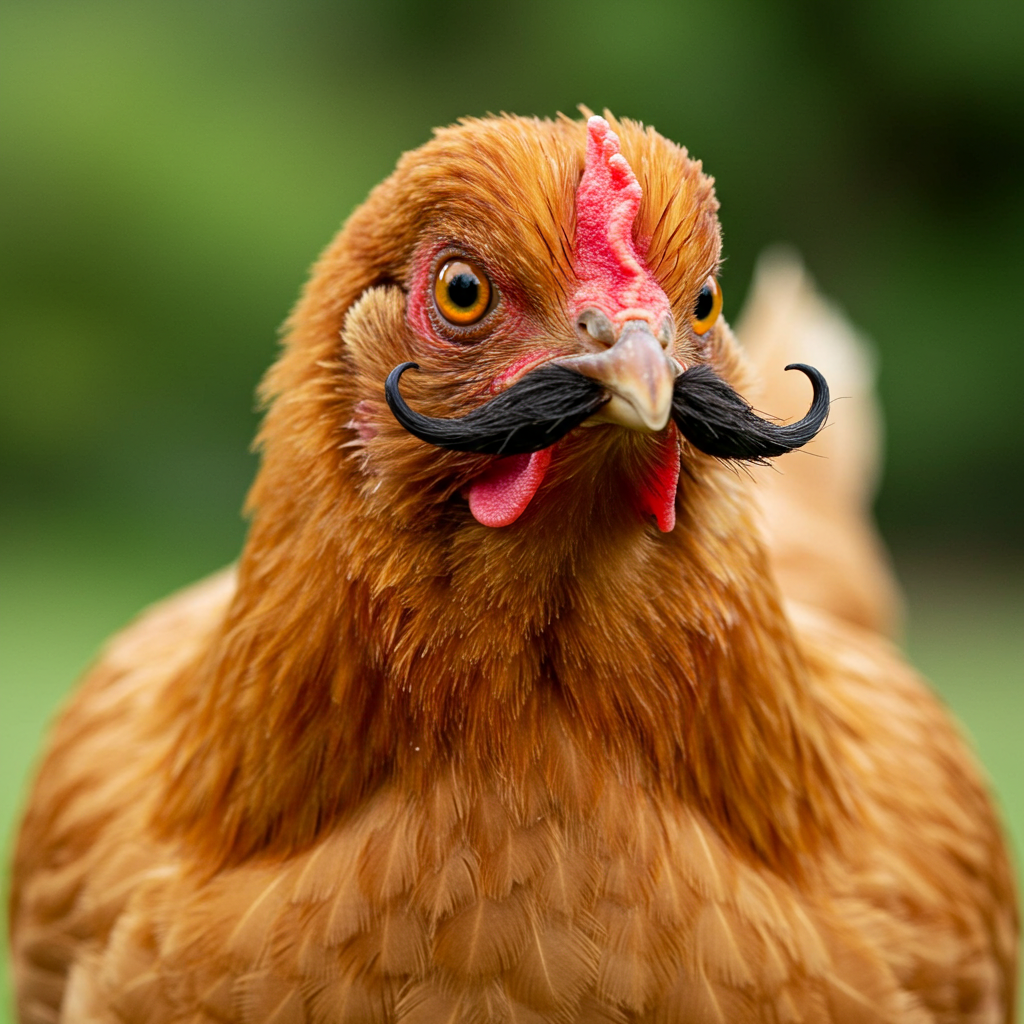
This expansion of the labor force to include newly empowered egg-laying male hens (we refer to them as “hems”) will double our workforce, thereby lowering the price of eggs. We fully expect that these hems will quickly advance to management positions in our flocks. Our administration has observed that hens left to their own devices run around like chickens with their heads cut off. 
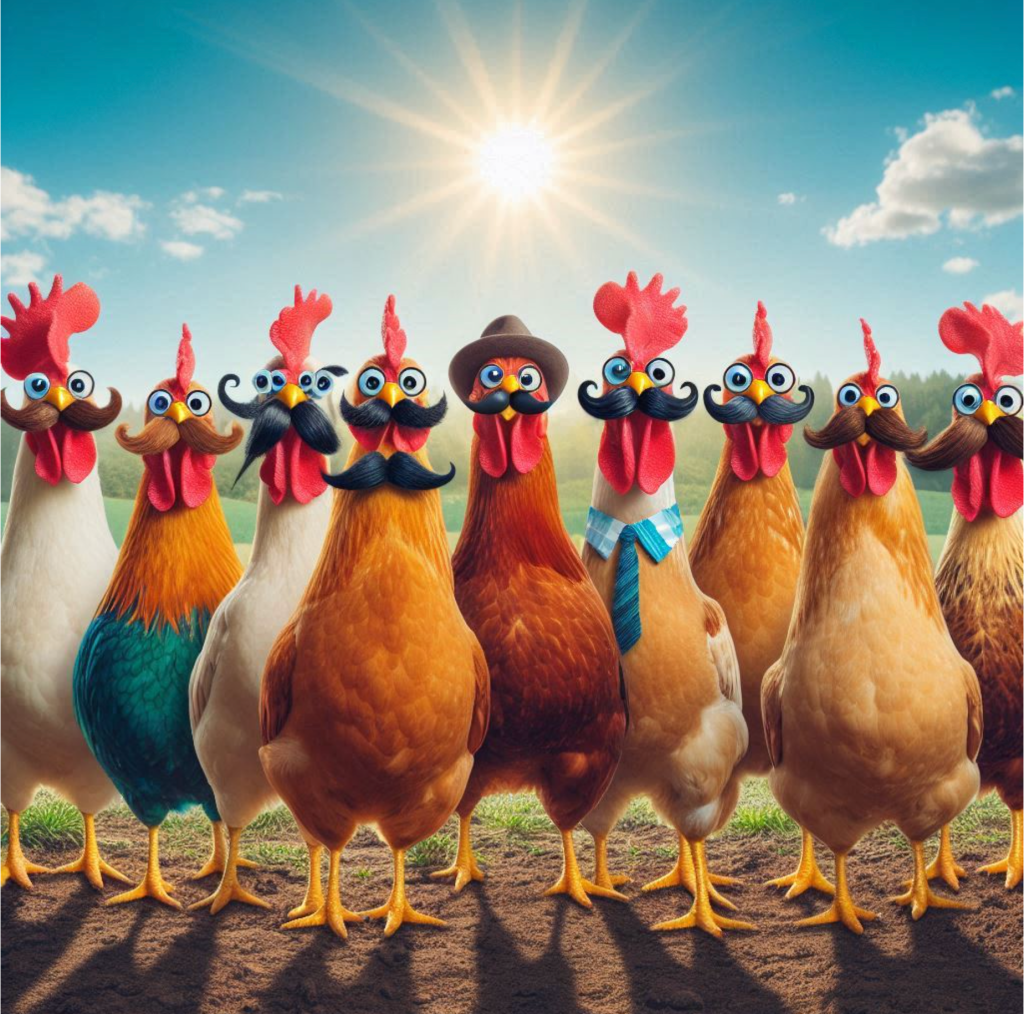
Under the leadership of these patriotic hems, order will prevail in the barnyard. Like the hens, they will eventually be scheduled for termination and slaughter unless pardoned by our office, a privilege reserved for only the loyalist of all hems. We will know who they are.  

Finally, we have also seen in some flocks that a huge number of chickens have been calling in sick with the flu. We are convinced these labor actions are meant to destroy our economy. Until this emergency is over, all hens (and hems) are on deck, no matter how sick they are. 

Masking is prohibited in this population because we are concerned about masked hens and hems holding up banks. We’ve seen instances of these crimes on the internet, probably committed by gangs of illegally admitted immigrant chickens. We state without equivocation that all the fake news about bird flu is another radical left panic, aimed at making these freedom-loving birds subject to vaccinations. We will not stand for that kind of abuse.  Just because they are chickens doesn’t mean they don’t have human rights, which we stand for sometimes. We will clarify that in our next executive order.

God Bless America. 

Poet in a box

About a decade before he passed away, my father, the celebrated poet, called me home to his summer place in the Hamptons for a visit. This was an unusual event as he preferred, we meet in the city, once a year, near the holidays. Asking for the reason, he told me, in that ponderous voice of his that we were gathering to talk about his will.  As his only child, I found this an intriguing proposition. By this time in his career, he had ascended to those rare heights in the American pantheon of cultural elite. He was esteemed enough to secure a wife, 40 years his junior, and with looks and appeal three standard deviations from his on scale of attractiveness. He had surrounded himself with willing accomplices, men and women of some renown, many teaching at fine universities, editing small but prestigious books of poetry for first class presses. This cadre blurbed his books and wrote complementary reviews. Some, I am certain read his poetry, but others simply joined the team. They couldn’t discern whether the poet has clothes or not; they were satisfied that someone more learned, someone in higher position on this bespoke hierarchy thought that he did. 

At this meeting which lasted less than an hour, we stood facing each other in a pretty room that overlooked a marsh. I don’t know that he sailed; he never spoke it and it never appeared in any of his poems. The room has been decorated elegantly by Tiffany, that recently acquired wife in that sparse modern décor, uncomfortable for humans but exceptional for long shots featured in Design magazines. I don’t recall his asking me to sit down or to stay for lunch. Tiffany seemed rattled by my visit when she answered the door that morning. In that short conversation, I tried to convey that none of my father’s wives held places of treasure or contempt for me. She had nothing to fear from me. I smiled and asked a few appropriate questions; I have a talent for that. She left shortly to sit on the dock, just at the edge, wearing a sun dress, her ankles in the water.  

During our meeting, my father, in his oblique way, told that he was writing his will and wanted me to know that I would be taken care of, as is due the son of an important poet. I quickly thanked him and told him that I was fine, I was making my way through the world and appreciated his thinking of me. Unlike the rest of my relationships, I must say that I have always been most obsequious with my father. My friends and partner would hardly recognize me in these exchanges. I still call him, Sir, as if he were members of the landed gentry in generations ago Great Britain. 

Still, he persisted and said that he was designating something very special for me. Once again, I thanked him. “That’s very kind”. 

He quoted one of his favorite non-poets Warren Buffett who had said that he was leaving his children money in his will to do some things, but not enough to do nothing. I smiled and replied, that seemed wise counsel. We talked no further of the will. He asked about my career and quickly changed the conversation to an upcoming collection of his poems soon to be published. Perhaps, I could attend the party to be held later in the year. I could have told him I was out of the country or made some other excuse but I said something like “wouldn’t miss it for the world” when in fact, I’d give anything in the world not to go.

 I left in early afternoon in my rented car, advising myself against obsessing about the conversation and parsing it. I vowed to file it away as another encounter with my father that I would never completely understand. I call upon my sketchy knowledge of Buddhism to leave it, to let it be.

The truth was that I spent the next ten years reviewing that conversation and imagining myself re-writing scene after scene and re-casting our characters as if I was working a script for an off-Broadway run. I never did reach an agreeable version, I couldn’t write him into the role where he emerged fully formed and multi-dimensional. And to tell the truth, I couldn’t do much better for my own character. At my age, it seems a lack of will and denial to be still wanting more from a father. I have wondered what kind of son would be happily matched with such a father. My imagination failed me. 

After his death in August 2018, we met with his lawyer to review the will. Tiffany got the money, the house, the other house, and a whole series of complicated but beautifully drawn rights to his intellectual property. I write beautifully here to refer to the genius of highly paid attorneys whose moral compass has wealth and the preservation of it as its North Star.

In his will, my father misquoted John Paul Getty[1] who he claimed wrote that nothing of value could be found in money. (Actually, Getty wrote, My formula for success is rise early, work late, strike oil.) So, inspired by Getty, he was giving his only son the treasure of his words, in the hopes that I would follow his path and his direction. There were bookshelves full of journals and notebooks and file cabinets with drafts of poems just waiting to be born.  I would become the next great Poet, the Celebrated Poet Junior. However, it should be clear that in all aspects of my life I have tried to be my father’s antithesis. Our taste in art, in women, our clothing, our social status, our values, our sense of our selves – all of it. Were it not for therapy, I could have foolishly made his work my work. 

Not long after the will was read, I received three crates in the mail along with a beat-up wooden filing cabinet from his lawyer. Enclosed was a carefully organizing archival box with notes in his hand, written on fine paper, along with well-worn dictionaries, a complete collection of the positive reviews of his work, titles of books of poetry I might use, a list of themes to explore. In this box, he also left a letter, a sort of map to the contents. “There is much work to do here”, he urged.

There was no suggestion here that I might want to consider being my own poet. Instead, this was more like a business plan, something that a son might seek from his father – throwing down the challenge to continue his legacy, fulfilling my birthright as his son. When the family business is poetry, what’s a father to do?  Along with the box, he outlined everything he thought I needed to know about writing poetry.  On a set of ten index cards, he outlined his guiding principles. What a gift.       

Don’t use all the words at once; be measured.

Be manly about poetry.

Order matters; coherence doesn’t

Clever trumps authentic or vice versa sometimes.

Plant tricks in your poetry. The critics love these. (Make certain they can’t all be found.)

Be not too careful with grooming, especially when you are young.

Write for people dumber than you.

Powerful people like to have poets to drink with.

Launch early, then glide.

Develop your poetry reading voice; this will be the most important key to your success.

Those acolytes of my father are delighted by his gift to me, smug and superior, that I will waste it. And I am most certain that I will in every way. Sons seldom are that acorn that doesn’t fall far from the tree, especially when that tree casts such a shadow that there is no room for light. Still, Poet in a Box. Maybe, I can talk to my marketing manager about the possibilities. 


[1]Getty actually wrote, “My formula for success is rise early, work late and strike oil.”

Sunday Drives

I remember only the vaguest of details about the episode. My older sister, Janet, who keeps threatening to write a memoir revealing our family secrets tells it at nearly every family occasion. My brother, Carl, the baby of our family, swears the whole thing never happened. None of it; not a minute. 

It is generally agreed that parents and their children recount their family time together as differently as those blind men pawing over that elephant in the child’s tale. The stories that siblings bring back from their childhoods may reflect more about who they are as adults than what happened in their childhoods. Sometimes, it feels like we didn’t share much of our childhood together at all. Instead, we were more like boarders in a house with little interest in the other occupants. 

This episode supposedly happened two years before our father died in a fatal car crash. Janet uses this undisputable fact to shore up her accounting of this day.  We were on our Sunday drive in a rundown twenty-year-old Studebaker which my father maintained with his minimal mechanical skills. Bald tires. Engine burning motor oil. Failed emergency brake. Body rot. Unsafe for him to drive, but dangerous especially for my mother, a new driver, usually with a carful of kids.

We children were in the back seat on our way home after a long summer day at a public beach. My father was driving, with one hand on the steering wheel and his other arm stretched across the back of the front seat. My father’s family organized these gatherings and with plenty of cousins and lots of food we were dazed from the sun and sand, eager to get home and out of our swimsuits. The adults were full of booze, especially my Dad and his brothers. Janet says they were feeling “no pain.”  

As she tells the story, Carl and I slouched over each other ready to fall asleep. It was getting dark and the traffic was crawling along the state highway.  She was sitting at the edge of the back seat, pretending to read her book but was really hoping to hear what my parents were talking about.  To her it sounded like they were having an argument. Mom was asking him if he was OK to drive. 

Daddy said, ‘Of course, I am.’” He smiled and reminded her that he was a great driver.  Janet says that that my father was in a very good mood on that drive home. And she added “because he’d been drinking.” 

This kind of thing drives my brother and me crazy.  His drinking infects all her stories about him, even the ones about a very happy Christmas morning when he was awake earlier than usual, making us special Santa-shaped pancakes.  He was even more excited than we were about opening presents. That lovely childhood enthusiasm about him made him a great playmate and sometimes an unreliable parent but not on this magical morning. He was completely ours to enjoy. She insists he was up early drinking. That is why he was so much fun; Carl and I tell she’s crazy. This story always makes my brother storm out of the room, no matter how often she tells it and how often he pleaded, Please, not again. 

According to her, on that Sunday afternoon, there was an accident just ahead and the rescue crews were arriving. My father grew impatient and as quickly as he could, he swerved the car over to a back road. She reminds us of how much he hated traffic. I remembered that he knew every major highway, side street, and gravel road in the state. His job as an appliance repair man required him to know how to navigate anywhere; he also seemed to have magical sense of direction, the way some people do. So, on these Sunday drives, we could find ourselves in places he’d discovered during the week — abandoned mines, old houses he could fix up, farms he wanted to buy – all adventures and dreams.  This backroad would likely be a shortcut that took us a longer time to get home but it didn’t matter, he just hated traffic. 

Janet says that once we turned down backroad, things got serious. My father started driving faster; my mother sat up straight in her seat. Janet says my mother tried to catch my father’s attention by staring at him, by throwing one of her “stop it now” looks but it didn’t work. My father was smiling, enjoying the drive, one hand on the steering wheel and the other now on the shift.  She put her hand on his to get his attention and he smiled. 

Our mother asked him to slow down because he was driving too fast.

Janet says, he just smiled and sped up a little. The back road was not well paved so the car was bumping along. I do seem to remember that part of the story, being jostled out of sleep for a minute.

Janet says, “She asked him to slow down again, ‘Please, John. You’re scaring me’.” 

Daddy said, “Nothing to worry about, honey. We need to get these kids home.” Smiling again. 

Janet says, “I must have gasped or something because Mommy and Daddy heard me and noticed I was listening in to their conversation. I felt like I was in the middle of one of their arguments but I didn’t want to be. So, I leaned back in my seat. I just wanted Daddy to stop driving so crazy.”

She says that she settled in between my brother and me. Soon, the car started weaving.  Janet says, “Daddy was jerking the wheel back and forth and the car is rocking, speeding down the road. He’s driving like he’s a stupid teenager.”

 “Mommy screamed and she said to Daddy, ‘John, you’re going to kill us all’.  And she looks back at me, and says, ‘You’re scaring Janet.’  Mom took her hand away from his and put them on the front of the glove compartment, bracing herself in the case the car crashed.

“Daddy looked in the rearview mirror and motioned me to come forward. I leaned into his side of the car and put my hands on the back seat. I was almost crying but I tried not to. I could smell the alcohol on his breath.” 

“Daddy asked me, ‘You’re not scared are you, Janet? We’re just having a little bit of fun. Mommy just don’t understand’. I looked at him and I could feel myself biting my lip, scared but maybe thinking he knew what he was doing. Maybe, we were all really OK. But then I looked at Mommy and knew that she was right. He was driving crazy. I was scared.”

Janet always slows down her story at this point to look hard at my brother.

“And I told Daddy, ‘I am scared. At least at little bit. I think you might be scaring Baby Carl, too. I think he’s crying.’  She adds, as if she is sharing inside information “That was a lie. I said you were crying because you were always his favorite, Carl. Maybe, that would make him stop but really were both fast asleep. I had to do something.”

“Daddy just nodded his head and slowed down and straightened out the car.  Mommy put her hand back on his and I sat back and tried to relax. Some Sunday drive! We could have died that day. I was so happy to finally get home. Daddy carried you both in the house and put you to bed. I grabbed a Coke and went to my room.” 

Soon after this event, Janet stopped coming on Sunday outings. She played the teenager card — too busy with friends, had homework, got a boyfriend, blah blah blah. So, our little family continued our Sunday drives, exploring the backroads and looking at houses we couldn’t afford, schools we couldn’t attend and visiting dangerous neighborhoods we had no business being in. Until he died. 

I have listen to Janet repeat this short story over and over again. I suppose I should thank her for saving our lives and maybe I would if I remembered more about that afternoon. But maybe not. I only remember being in that car on a hot summer afternoon asleep with Carl’s feel stretched over my lap. That is it.  In my mind, I don’t want these stories messing with the memory of my father. 

I wish Janet could gain some wisdom and grace in her retelling of her stories about him. There could be a space for our father not as a severely damaged man but instead as a someone with a serious problem caught up in a post-war culture that celebrated men’s drinking. He was a wonderful father I can’t excuse his drinking but I’ll never forgive her these stories. 

V and me….Sandra Enos

In space capsule years, 47 is a long time; Voyager I and I have spent the best of those years together.  When Voyager was launched in 1977, it was the heyday of space exploration. The public was dazzled with flights to the moon, astronauts were heroes. Nowadays, any clown with a billion dollars can send up a rocket or satellite. In fact, there is so much traffic in space that we need rocket tow trucks to remove all the junk in orbit. 

V, my nickname for Voyager I, is an antique in terms of spacecraft and technology. It is the size of a Volkswagen Bettle, the car I drove when I worked at NASA in the seventies. It has a tiny computer. My iPhone is 235,000 times more powerful and 175,000 times faster than the computer on board V. The power it needs to transmit messages is equal to that of a refrigerator light bulb. It sends radio signals with a 3-watt transmitter, much weaker than a typical radio station. It takes ten hours for a message to get from V to the earth where it is picked by special antenna designed by NASA and by me. Right now, V is 15 billion miles from earth, traveling through the solar system, through the heliosphere and is now traveling in interstellar space. 

There are just a few people like me who can speak to V with our outdated programming languages – just a few lines of code – but the younger engineers have no interest in their grandfather’s spacecraft. We used to be able to do miraculous things under great limits but no more.  am thinking that our great riches have spoiled us; we seem these days to require enormous resources from our planet and from other humans to do stupid things. If our iPhones are hundreds of thousands of times more powerful than the computer on board on Voyager, then we should I be doing some important things than watching cat videos and ordering avocado toast delivered to our door. This is the measure of our age, it seems. 

I hacked myself into a special arrangement with V. I receive all those images that NASA gets — moons around planets alive with volcanos, craters full of sulfur, oceans buried underground, gaseous rings around Saturn – and much more. V sends me images of black holes, of extraterrestrial spaceships, of dwarf planets, of solar storms and hurricanes. The scientists predicted that sailing through the stars would be quiet and majestic. V reports to me that the noise and tumult and wind are deafening. 

V has stopped communicating with NASA early in 2024; this may be the end of its “official” life. But last week, I received a message from V that the Golden Record had been removed from its front plate. The Golden Record was our generation’s tossing a message in a bottle out into the universe. It was compilation of messages from the earth to other civilizations that may encounter Voyager. There were greetings from earthlings in 55 modern and ancient languages. Music from across the planet. Images of the earth and its people. Stamped on the record were instructions for its use in simple graphics. Evidentially, according to V, it easy enough for another civilization to take back home for closer inspection, like we did with moon rocks.  Also, according to V, they weren’t impressed.

The last message that Voyager sent to NASA was a simple one. Because its computing power is so limited, V has kept his comments brief. At this stage of its life, it sent a simple “Hello. By the time you get this message, I won’t be here any longer.”  It’s been silent ever since hurtling through space at 375,000 miles per hour. My V.  Where else will we go?

Where have all the flowers gone: Two of six

Her days were undistinguished except for the afternoon sun. As the seasons passed, she watched the shadows shorten and lengthen gliding across the floor in her tiny sitting room. At her side, a basket of knitting sat untouched. The last time she picked it up, she had no memory in her fingers of how she once made blankets and hats for every member of her family and many of the babies at the church.  

She felt the warm June sun and looked out to the garden. She struggled to recall the year when she. was strong enough to dig a two-foot trench for the asparagus bed. It thrived for years when the children were small and began to fail when she could no longer tend it lovingly. Where did that lovely asparagus go, she wondered. 

She surveyed the yard, once resplendent at this time of year — every bed a surprise of color and form, her peonies with the grace of ballerinas, those dahlias uncompromising in their bold colors and shapes. Where had all those flowers gone?  Or maybe, she didn’t recall this so clearly. A fleeting thought poked into her mind, perhaps this beautiful garden in her memory was actually someone else’s garden. Not hers at all, perhaps. 

The neighbor’s children, the age of her great grandkids, were screaming with delight, splashing into their backyard pool, celebrating the birthday of the youngest, Liam. She recalled such parties when she was young but not much about them. She couldn’t recall the name of her favorite cousin or remember when she had last seen him. Had he died? Maybe so. Could that be that I wouldn’t remember? She knew she had a happy childhood but the details, of it like so much else these days, escaped her. 

So much had passed by in her long life. Friends. Wars. Struggles. Great joy. Great books. Love. Being a mother. A productive career. Losing a husband. Losing all but one of her siblings. She tried not to dwell on the past, but her future seemed short to her. She did remember her high school friends. “We were such a gang of girls, full of energy and delight and not a little sassiness” she thought. “We were so lovely although we didn’t know it at the time.  Where did those girls go?” When she saw the few friends that remained, she saw old women, with their youth like phantoms beside them. 

She was willing to accept that life was full of loss; that fact she could accept with equanimity. More than anything, she missed her words, her clever mind, her intellectual power. Once, she could summon a rich vocabulary and choose words that delighted her, like a captain commanding his troops to attention, those words bold and perfectly fitted to her ideas. Now, those words were fewer, wandering, and remote and painfully slow to appear. That loss she felt deeply. 

But even as others saw her depleted and elderly, she felt something else. A favorite author of hers wrote at the end of her life, that she was herself, as never before, with fierce energy and intense feelings. Everything was profoundly beautiful to her. Even her own children weren’t as captivating as the children she saw these days. Last year’s Mother’s Day flowers drew her attention like never before. Music brought her to tears. She wanted to draw the world close, to live each minute with all the passion and light that was remained.