This blog includes essays about life, aging, humor, inspiration and creativity. These things capture my attention and I hope are worthy of yours. Sandra Enos.
Faced with budget cuts and a rapidly changing landscape in higher education, I have made the painful decision to lay off, to outsource and to redeploy, my entire imaginary staff. As the leader of myself, I have to show a good example. A college professor, I am aligning key resources with a refurbished messaging strategy. Understanding that my most valuable resources–my three-pound brain–needs to be positioned to take maximal advantage of emerging opportunities in the sector, I aim to make those tough decisions to guarantee that my inflection point does not drain anticipated resources in the final quarter of the reporting period. Relying on the guidance and management principles that served many well, I can point to the scholar who wrote, “I just stopped in to see what condition my condition was in” as my dashboard measure here.
In an effort to enhance transparency, I am announcing the following realignment of my pretend staff and faux advisors. There has been plenty of carping and snarky comments about my assistants and advisors so let it be known today that these staff members are being realigned, maybe more consistent with their horoscopes.
Complaints and criticisms about grading, my mood, my haircut, my expectations, and administrative responses to my response to unreasonable demands will no longer be fielded by my Special Assistant for Grievances. Instead, these will be outsourced to our regional office in a far away land taking advantage of the fact that well educated people will work for pennies if they have to.
Appointments, conferences, meetings, Skyping, Instant Messaging, Instragramming, Tweeting and all the rest will be managed by the Roomba robot, which will be assigned in a dual appointment to vacuum my office floor as well. This eliminates my Special Assistant for Filling Time.
The Special Projects Office will also be eliminated. This, as you may remember, was the unit assigned to keep our division on a clear path to strategic distinctiveness. These duties—formulating mission statements, zeroing in on strategic directions, creating actionable acts, fashioning wordy words— are being reassigned to the Ministry of Future where promises are made and deadlines forgotten.
The impact of so much administrative change in a non-existent staff will be harder for some to adjust than others. Jettisoning levels of mid-level managers means that underlings can make many bad decisions on their own without the interference from above. This will allow me, Professor Decider, to manage my own time and resources in a more efficient effective way.
My door is always open to you, of course, but I most likely will not be in my office. No need.
As the Gifter-in-Chief at Giving Beyond the Box, LLC, I hear from a lot of people who want our help in giving a gift that really matters to a loved one. That means it has to matter to the person giving the gift and the one receiving it. And, in our case, it also has to do good in the world. I love these calls and emails because I can tell from how much the person I am communicating with loves and cares about the other person. A gift after all is a vector of love and appreciation.
You can imagine my surprise when Santa Claus called just the week before Christmas, our busiest time of the year. Santa sounded defeated and overwhelmed. To use a term that is popular right now, Santa sounded like he was languishing. He put aside that jolly “Ho! Ho! Ho!” pretense and spoke frankly.
As he was speaking, I was remembering how much Santa meant to me as a child and recalling that special magic that Santa made. I was late giving him up and resisting not believing in Santa for as long as I could but, I hadn’t really ever thought about the challenges and pressures that face him every year. What follows is my summary of what I am calling the Lamentations of Santa. This is what is keeping Santa up late at night. I am writing this both to document the situation and to appeal to my readers for help on Santa’s behalf.
Worries about the workforce. According to Santa, it is getting harder and harder to keep a dedicated and talented workforce of elves. Some young elves from families who have been in the elf business for generations are no longer interested in these careers. They want to go out and explore the world. That is understandable, of course. And in a moment of hard self-reflection, Santa has also come to recognize that there really is not much of a career path for elves. No elf has ever in the history of the world ever been a Santa. A critical elf recently told Santa that he ran his operation like a monarchy, not like a well-tuned modern organization where employees are treasured and given the flexibility and support to be, to be anything they wanted. So, like everyone, the North Pole is experiencing the Great Resignation, as well, with lots of elves becoming life coaches and baristas. How to replace that workforce remains a big challenge.
Concerns about sustainability. There is no place more affected by climate than the polar ice caps where Santa lives. If the ice completely disappears, Santa’s Home is in danger to being wiped out. And, after planning his 2021 Christmas route, Santa calculated his carbon footprint and was horrified to learn what impact his travels all over the planet in one frenzied night had on the climate. He has concluded that this long-term practice of distributing gifts is simply no longer sustainable. Alternatives must be found which get us to our next issue.
The cage-free, free-range reindeer movement. As we all know, reindeer have pulled Santa’s sleigh since Santa first pioneered this whole gift-giving industry. However, with each passing year, Santa becomes more and more aware that his reindeer really belong out in the wild, not confined to his workshop, even though he treats them well and kindly. (He was slammed a few years ago by PITA but it is hard to keep them happy.) So, in the spring of 2022, Santa is releasing his herd of reindeer and replacing them with all-electric sleighs. Better for the reindeer and better for the environment, as well.
Moving Diversity, Equity and Inclusion into the heart of operations. After attending some sensitivity trainings with other cultural icons, like the Easter Bunny, and Davy Crockett, Santa is having a moment of wokeness. Here is a direct quotation that really expresses his thinking here,
Whatever let me think that I, a white cisgendered man living in the global north, could really imagine what children all over the world really wanted for Christmas. This hegemonic approach truly reflects my unearned privilege in this position. It is way past time for me to share the limelight here and champion a whole new generation of Santas that reflect our diverse community and experiences.
Santa has established a small advisory group, exploring regional distribution centers with culturally competent Santas. More to come here, for certain. We could be looking forward to Santas that upend our traditional model of what Santa should be. We may in fact see a wholescale revolution! The Lose-the-Lap Campaign popular on some social media sites is an early indication of changes we can anticipate.
Mission drift and the commercialization of Christmas. While all these issues were important, the one that took up most of our conversation was about the true meaning of the holiday. Here, Santa was nearly in tears, regretting his role in making Christmas a delivery system for late-stage capitalism and the deification of corporate power. He argued that by asking children what they wanted for Christmas, he was simply falling into the hands of marketers, training children to be aggressive consumers from the first moment they sat on Santa’s lap to their dying wishes. The Santa brand was in serious trouble, he worried, in danger of becoming just another Ronald McDonald or Tony the Tiger or Kim Kardashian, a shill for big business and worthless products. So, Santa is working to reclaim the true meaning of the holiday in a campaign next year where he is refusing to deliver Amazon gift cards, overpriced toys, fast fashion, cocaine, and more. (You can read about the Santa’s Naughty List and can suggest other items to exclude on Santa’s webpage.) Santa wants you to shop local small businesses, to make some of your own gifts, and to truly share some of your wealth not with the already wealthy people but with others who could use your help. That would make Santa happy.
So, in summary, Santa has lots on his plate. If you have ideas for him or would like to help in some way, please be in touch. You know that he reads your letters. Your own childhood proved that to be the case. Merry Christmas!
I don’t mark my birthdays, even the big ones, with any élan or flash but I do note other occasions like anniversaries of when I met my partner or when I joined VISTA or when my parents passed away. One event that I have recently celebrated was the first anniversary with my Fitbit. We have been together for one year; it has been a wonderful relationship—a little one-sided but I think I speak for both of us when I come to this conclusion. I have the Zip model which tracks your steps like a pedometer, translates those into miles and keeps a calorie count which has nothing to do with how much you eat. In its simple way, it reports whether another day has dawned on the planet so every day my calorie count is about the same whether I have feasted on an oversize Thanksgiving meal or have fasted to protest the colonialist travesty that is Thanksgiving.
More sophisticated tools can do all of this, of course, but I worry that the insurance companies are capturing all this information and my lazy napping days are being recorded in some big file and when I claim to be an active senior citizen, the Fitbit may betray me. Maybe, I am just a bit paranoid. Last week, the NSA came to my house to ask me I was walking by that house on Broad Street where someone who was binge watching Homeland the week before. Did I suspect anything? I guess some patterns of TV watching are significantly suspicious to those paid to be worrying on our behalf.
The Fitbit is truly interested in our welfare, I suppose. It imposes a ruthless regimen; it wants you to take 10, 000 steps a day. It doesn’t care if you do this at one mile per hour or twelve. It doesn’t matter if you do this in a meditative trance or if you are breaking a world record for power walking. 10,000 steps is 10;000 steps to the Fitbit. You can imagine my surprise when I received my annual report and found I had walked over two and a half million steps or 1100 miles. If I had been more strategic, all these steps could have taken me from my home in Rhode Island to St. John’s, New Brunswick in Canada (where I have a friend actually) instead of just around my block and across campus to teach over and over again. Now that I see all those steps taken in such a small space, I feel I lack ambition and big thinking.
The Fitbit also reported that my most active day of the year was in mid-March (I think I was on vacation or doing a stress test at the doctors) and the least active day was at the end of January when I hospitalized. I feel that I owe the Fitbit an explanation about my activity levels: I don’t want it to be unnecessarily worrying or thinking that somehow the Fitbit is at fault. I do worry that if I walk 10,000 steps every day that eventually the Fitbit will want more from me and I am afraid to disappoint it. At age 65, I am wondering how to calculate how far I have walked all my life without the Fitbit calculating my steps and thinking about some serious sitting down for a while, except that the Fitbit has other plans for me.
Like so many of us, the Fitbit can be distracted and restless. I come back after a hard run on the treadmill and it chirps, just 3,000 steps to go to reach your target. At 11:00 p.m. undressing for bed, it reminds me, just 2603 steps to go. Seriously? Can’t you tell that I have my pajamas on, Fitbit? Where the heck I am going to walk in the next hour, around my bed, like a dog spinning in circles before he lies down? Are even if that is the best possible strategy to log on steps, do we really want to encourage that sort of behavior?
I mean I understand the technology and I understand the principles of behavior management here as well. I am all for it. I like to be reminded but I don’t like to be nagged. This is the reason why we ask Fitbit to keep track of our steps and not our spouses. With the success of Fitbit, I have thought of several other possible applications. In this “innovate or die” culture, I want to be at the cutting edge. So, here are my suggestions for the next generation of Fitbit-like devices.
Fit-to-be-with-bit
This little device would indicate to the wearer that they are such a bad mood that they ought to stay in their room. Maybe meditate or medicate (depending on one’s treatment philosophy.)
This could be done with a little jolt or vibration or maybe a whining noise that would grow louder as the wearer nears others. Better yet, it would wail if the provoker of that bad mood comes into the room, asking what’s for dinner. It is the sort of gift you want to give others actually but that would need to be done carefully.
Throw-a-fit-bit (or more commonly known, as Snit-bit)
There is a school of thought that proposes we are spending entirely too much time on our screens. This app directly addresses this issue. Throw-a-fit bit allows us to take the little device and when we are mad enough to toss it wherever you’d like. Of course, as we’d tell our children, don’t hurl this in the direction of innocent others.
This app will measure the length and force of your throw and mark the where the device lands when you toss it so you can find it and throw it again, if you would like. Thanks to a sophisticated algorithm, the app reports how angry you are based on projectile velocity and force and calculates how this compares to your records last week when your partner was such ajerk about the holidays. It also manages chance encounters with other toss throw-a-fits so that you and another user don’t fight over whose device belongs to whom.
Nitwit-bit
Designed especially for those of us who are susceptible to whacky ideas and get-rich-quick or reversing-aging scams, this app is the perfect complement to late night TV watching or to spending time with your sketchy in-laws.
For this to work successfully, all you have to do is send those emails and phone calls you get from Nigerian princes, Ukrainian marriage brokers, penis enlargers, your brother-in-law and other questionable sources to this site, and the app will separate out the wheat from the scams. If, however, there is a great idea among the charlatan proposed offer, Nitwit-bit will take a small percentage of the killing you will make. The app does not work with proposals made by politicians, which brings to the next app, Mittbit.
Mittbit
For every one of us on the planet, we reach a point where our civic responsibility to be an informed citizen eventually drives us to drink and worse. Here is where MittBit comes in. Based on your TV viewing habits, your age and gender, whether you have stickers on your car bumper, your voting record, your GI (gullibility index), your AFATT score (All Fox All The Time news watching) which measures how welcome you are to new ideas, the MittBit blocks all messages that it knows you will ignore because you have heard them for a million times, because the message is so patently a lie or because there is no way that this message will do anything to advance world peace. In other words, the Mittbit assures that you won’t change your conviction the world is made up of givers and takers and that you are in the first group and detest the second.
Sitbit
Sitbit is perhaps the perfect app for the meditation set. A few times a day, this app would remind you that you haven’t given an iota of thought or sliver of attention to the cosmic truths of the universe, to the wonder that is you. Once you activate Sitbit, it will start breathing deeply. It will keep this up, growing louder and louder until you join in. If you begin to make your way quickly to Starbucks for a three shots of espresso and a RedBull, it will stop you dead (not exactly dead) in your tracks by sending out a little digital shock. Sitbit wants you to relax, to calm down, not speed up. It wants you to do less, not more. Other features of the Sitbit include the Stress Manager which shuts down all your other apps and communications and erases contacts and emails that seem to be troubling to you. Sitbit can also be placed in trance mode inducing hypnotic tones, new age music and a simulated scent of those gauzy Indian shops wherever thing smells like the shop owners are trying to mask the smell of marijuana.
Quitbit
Most of us have habits we want to dump (cigarettes, nail biting, singing out loud when we don’t mean to, swearing in front of our saintly grandmother.) Many of us have partners we need to leave (discretion leaves this point undeveloped.) Quitbit is the perfect app. It tells us when things should end by carefully listening to our conversations on the phone, scanning our photos, reviewing our texts and considering our Facebook postings and friends. And, not only does it understand when the end should be near, its helps hasten that end. It
posts things for you, like announcing the end of a relationship. It will clean up your language and make it impossible for you to pay for another bottle of vodka with your credit or debit card. It will play the least popular song on iTunes at full volume if it finds you lighting up, even if you are in a non-smoking area.
As the app becomes more popular, it will identify for you, people in your circle of friends and contacts who are dying to dump you as well. It will also find people who will pay you to quit your lousy habits. A note of caution: It offers no help at all when you find yourself in a situation like the lovers in Broke Back Mountain, when Jack said. “I wish I knew how to quit you, Ennis.” The Quit Bit is clearly outmatched here.
Nitpickbit
For several years, human resource departments have offered a half-day workshop called something like, “Dealing with Difficult People.” It was quite a daring offering. Suppose the most difficult person in the company showed up for this workshop along with all of his hapless victims? You can also imagine that this person, let’s call him Ernest, found everyone else in the office immeasurably dull-witted and thin-skinned. He found this as difficult as other people found him. A situation like this leads to my final idea.
Nitpickbit reminds that we are constantly driving other people (most likely our partners and other family members) crazy by our need to make things perfectly clear and orderly. Those of us who have a bit more power over others are especially prone to this behavior, as are older siblings. The Nitpickbit can be adjusted for several occasions and multiple relationships. For example, you may notice that you have brought to husband’s attention that his favorite shirt is missing two buttons and has stained underarms for about 100 times. Or you may have corrected your adult child’s use of ‘irregardless’ on many occasions in speech and writing. (Irregardless is not really a word, the Oxford dictionary says so; no matter how often George Bush says it in a speech and no matter if that child has an MFA from a fine university.)
Or you may grow frustrated at hearing the same tedious story from your best friend about the challenges of filling a prescription over the phone from someone she swears is a deaf Pakistani robot. Every time she tells this story, you remind her that she has already related this remarkable tale. After years of this careful guidance on your part, you finally reach the apt conclusion that none of this nagging does any good. Your husband has put that old shirt in his private safety deposit box to keep your hands off it. Your child refuses to speak with you except in monosyllabic phases. Even news about your grandchildren arrives in an Instagram message with an inscrutable text. And, your best friend accuses you of trying to put her in an Alzheimer’s unit with all your harping about her memory.
Nitpickbit addresses all of these issues. It disables your brain’s auto-correct function; it lets things be. It puts a smile on your face, no matter how untidy, unkempt, unswept, or uninformed your family and friends are. It makes you, in many respects, a much more pleasant person to be around, although somewhat of a dimwit. Like the Fit-to-be-with-bit, you may want to think carefully about gifting this app to others.
All the apps that fit-bit
In the new economy, we are all supposed to be our own creative geniuses. We are supposed to be buddying up with personal coaches and developing a life plan. We are urged to self-publish, grow our own food, be our own person, be hypnotized by our own mantra. So, I see clearly that I cannot in good conscience just suggest these as good ideas without developing them myself. I need to do some market research, code and test these apps, sell them on the App store and see how much money I can make. I need to find an App to help me with all that.
Let me say right off that I am not what people consider a classic beauty. I have, despite my best efforts, been appreciated more for my wit and intelligence than loved for my beauty or body. Not that I’ve resented this. I remember my mother told me that it was a good idea to develop your mind because even if you were good-looking, it was very likely that your looks would fade with age. She neglected to tell me that even if you developed keen intelligence and a wonderful memory, chances are that these would fade with age as well. If you grew up in the sixties, you can hear your mother saying about your lovely average-looking friend, “Well, she has a lovely personality.” That always meant that the girl in question was a girl like me. I do have to admit that in my family anyway, we weren’t supposed to be beautiful. That was reserved for movie stars. I would hate to be young these days when your image is plastered on Instagram, posing for glamor shots at 10 years old when the pressure is on young women, especially, to be beautiful and desirable.
Those of us not endowed with classic looks spend the first thirty-five years aching to look like someone else and the next fifteen years searching for our own style. This roughly translates into trying make the best of the assets you have. These are personal characteristics that are not recognized by the rest of the culture but of great comfort to one’s mothers and aunts. For example, while good looks don’t run in my family, my mother and aunts applauded themselves for having very thick dark hair, none of that stringy blond stuff some women have to deal with. We are also blessed with strong nails, a characteristic that I’ve used to attract legions of men to myside. And, best of all, we have very wide hips which make it very easy to us to carry children in our wombs. My Aunt Mabel reminded me all the time that when she’s at the mall and sees
these slim girls with long legs and slender hips having babies, she pities them. Well, lucky me.
So, in my fifties, I began to investigate my own personal style. I did this very deliberately. I stared at every one who might look a little bit like me and determined whether they looked better or worse than I did. My measure was very generous. If they looked worse, I maintained my haircut, style of dress and lack of makeup. If they looked better, I try to catch them on another occasion and see if they still looked better. If they did, it planted an idea in my head. Hmm. Maybe I needed a new haircut? A tattoo? Colored hair?
Or I may have looked at old pictures of myself to see if I’ve ever looked better than I did then. This is an insane thing to in late middle age and can be a depressing experience. In my search, I found a picture of myself with a very short haircut and that idea of cutting my hair really short lingered in my mind. Mind you, this photo was of me when I was six years old with a pixie cut and missing front teeth in a class picture. My aunt had just kidnapped from school and taken me to my first haircut at a salon. She did this because managing my too curly hair was driving my mother insane. She was tearing her hair out because she was tearing out mine, trying to comb through it. So, with no solutions sight, no conditioner, no hair management tonic, the only thing was to chop my hair off. When she saw with this tiny little hairdo, my mother was outraged on the outside and delighted on the inside. It seemed that usually, she was the opposite, pleasant enough on the outside and raging within.
So, with that image in my mind, I summoned up my courage, found a new stylist and resolved to get a really short do. I had to change stylists because my Beverly, my previous haircutter would never allow to me to do such a crazy thing at my age. Too radical! If it was awful, how would I show up at work? What would this do to my social life, to all of a sudden look like Joan of Arc on her way to the stake? Beverly was a worrier and my haircuts reflected that. Twenty years of the same style was enough. Time to go bold and beautiful! I could always wear a wig.
So, I submitted myself to the whims and caprices of a 21-year-old beautician named Tami. A recent graduate of beauty school, I figured she would have state-of-the art training and be completely up to date with all the cosmetology literature. All the women who were working at this new salon were about her age, and all spelled their names ending in ‘i’. That was a nice touch; it felt casual and cute. Tami and her fellow stylists were wonderful because even though I was a college professor from a very good school, had won several awards and published well reviewed books, she clearly held the floor, decidedly more confident and more knowledgeable about life and beauty that I would ever have been.
I entered the salon Hair Today and checked in the front desk. By the looks of the receptionist, I was clearly underdressed and undergroomed for an appointment. I had the feeling I should have entered through the emergency room or the back door which they reserved for hopeless cases. Nonetheless, we agreed that I was there for a cut and styling; the receptionist was clearly thinking, “Coloring. Highlights. Eyebrows. Make up. Facial mask. Manicure. Surgery is not out of the question.” She waved me into the waiting room.
I sat patiently waiting for Tami. She eventually called me to her chair and clicked the cape around my shoulders. I looked at myself in the mirror, with that big mass of hair, unruly and unkempt, curly and a bit of grey. She asked, “So what are we doing today?” Before I could answer, she pulled my hair back closer my head and then up and asked, “Let’s try this, shall we?” I had no idea. She came around to look at me from the front with a clump of my hair still in her hands and nodded, “This will be wonderful.” I nodded too, putting myself completely into her hands. I was wheeled into the shampoo bay where I got some important information about shampooing just my scalp, not my hair, about harsh detergents in the shampoo I was using at home and how I’d been neglecting my grey hair. How do these young people know so much? Why didn’t I learn any of this in college?
After my hair was treated with something God made on the first day of Creation so it wouldn’t be contaminated by other things, we returned to the stool where the clipping began. Well, after thirty minutes of intense clipping, my face began to emerge. This was frightening enough, but soon after, my neck began to surface, bare to the world. And, before I knew it, I had a new haircut, a radical pruning down of a concealing canopy of hair. I commented throughout the session while she was trying to concentrate. I tried to ask questions that would help guide her in a Socratic way. “Do you feel this is a bit much”, I asked? She just smiled. She told me to let her know immediately if I crossed my legs. She would stop cutting right away. She informed me that this sort of careless action could cut the line right out of the haircut. She warned me that it would be readily apparent to anybody that saw me that I had a very crooked haircut. She wanted no part of that. Besides, she said, her mother got varicose veins from crossing her legs. I guess she had me pegged. I nearly did it a couple of times but was too terrified of the consequences.
So, ninety minutes later, I emerged with a biodegradable bottle of biodegradable gel and a little cap of a haircut. With a great short haircut, I really saw the shape of was skull. It was very reassuring and comforting to rub my nearly bald head. Many of my friends asked for that opportunity; other people just rubbed my head for luck, I thought.
Overall, the haircut was a great success. One man at work came up and said to me that if my boyfriend didn’t take me to a fancy restaurant and dancing and that if he didn’t tell me how gorgeous I was, I should dump him immediately. Then, he wanted to know if I was married. Every time, he passed my desk, he whistled but, his whistles sounded like bird calls.
And, everyone else has been just as complimentary. One woman told me it was the best thing I could have done. Quite an assessment. So, Tami was right on target. She led me to the promised land of a great haircut entirely out of my own comfort range. Even now at the age of seventy-two, I think, maybe it’s time to go see Tami again. She’d be middle-aged by now, probably still a genius.
Here is a picture of me at two or three years old. I am sitting on Santa Claus’s lap. I am wearing a lovely little coat with a velveteen collar. This is a hand-me-down from one of my better-dressed cousins. My sister and I wore lots of these clothes and passed them on to other cousins. Like many working-class families of the time, we had an internal barter system that kept us with few pieces of clothing in our individual closets but with access to an ever-changing wardrobe of used clothes. I loved that coat and took care of it while it was in my care. I am also wearing a little hat and carefully tied scarf. I was so much better dressed when my mother was in charge than I am now. But my outfit is not what draws my attention, rather, it is the expression on my face.
Santa has introduced himself. He has been told my name and engages me in a typical holiday conversation. He knows the script and I have been briefed by my parents.
Santa: So, Sandy, Santa wants to know. Have you’ve been good this year?
Little Sandy Lee: Gosh, Santa. “Good” sounds to be me like an end state and how can that happen in human beings who are always changing? This year, I would call myself “goodish.”
Santa: Well, sure, that’s a fine point to make but I am sort of busy here. Little girl, what do you want for Christmas?
As I take in that photo, I am wondering how hard Santa and my parents may have worked to make me smile. I appear to be in a meditative mood. How was I to know what I want? Even at the age of 72, I am still pondering that big question. What do I want? I see a child that is perplexed. Why ask me what I want? Aren’t my parents in charge of knowing what I want? Besides, decisiveness has never been my strong suit and as the Buddha teaching, wanting is a sure path to suffering.
So, I reply,
Little Sandy Lee: Oh, don’t worry about me, Santa. My Mom and Dad have that covered. I’ll get more than I want. They’ll be clothes and candy and toys and if I am lucky, there will be some empty cartons to play with.
Santa: So, if you don’t want anything, why the visit today? You are not just wasting my time, are you? There are millions of children in China who would love to be sitting on this lap.
Little Sandy Lee: No, Santa. I really need your advice. I know that I am an over-indulged child and I live a life of ease. I don’t even have a job and although I’ve begged to have some chores to do my parents say I am way too young. Next year when I am four, that’s when opportunities will emerge.
Well, Santa, what I really want is to get some gifts for the people I love who care about the planet, the empowerment of women and social justice. I want to give some gifts that mean something. Do you know what I mean, oh, wise one?
Santa: Oh! I get it. Gifts that make social impact? What about Giving Beyond the Box? They have gift boxes full of products with meaning and purpose.
Little Sandy Lee: Wow! That would be perfect. And isn’t it true that you can’t buy their boxes on Amazon and that tiny little company is run by an overly energetic septuagenarian?
Santa: That is exactly right on both counts! Giving Beyond the Box is a tiny company in a tiny state run by a small woman who is old enough to be your great grandmother. Check them out as soon as the internet is invented. That will be in about fifty years. Your time is nearly up. Anything else?
Little Sandy Lee. No, thanks, Santa. No wonder we all believe in you. Next time, however, can we talk about your carbon footprint, your treatment of those caged reindeer, whether elves are really contract workers or employees, and whether you are help to create children addicted to hyper-consumerism?
Before I get down to matters of substance, let me first review the ways in which you can assault my character, identity, appearance and politics. This way before you call me any names in a tweet, we can just stipulate that I already know all of this. So, your response can address matters of political theory, social conventions, the ideals of the American democracy and current fashions. I come in friendship.
So, to start off, let me just say that I am not an attractive woman based on any of the conventional measures. For gosh sakes, I am almost as old as you and I know in many people’s books that already assigns me to the trash heap of beauty discards. Also, I have dark hair; It is clear that you prefer blondes—Betsy DeVos, Kelly Ann Conway, Kirstjen Nielson, some of your wives, Stormy Daniels—maybe there are others. I also have some grey hair. I know that your blonde mane suffers none of the assaults that many of us experience as we age. I also have curly hair, which as far I can tell is under-represented in your administration. I don’t straighten it, as I should, because its natural tendencies remind me of my Portuguese ancestors but I assure you, I am a real American. I just look like an immigrant sometimes because of my coloring, my hair and my tendency to clean up after other people and do some landscaping around the yard.
It should also be admitted right here that I have short legs. I think you prefer women with model length legs. If I wanted to be a long jump distance athlete, I would have preferred long legs as well but so far, despite this disability and all the others I have listed, I do well enough. Statistically, speaking, I can state that I am a lightweight, tipping the scales at about 110 pounds. Still, I am heavier than that more famous lightweight, Ruth Bader Ginsberg, who can bench press her weight and do twenty pushups, which may challenge your own fitness chops. She is a Supreme Court Justice—the small one with the big glasses. I intend to take on her identity, sneaking into the Court to render decisions that she would have, if she becomes disabled or loses her superpowers.
I am also a Democrat, but I am the sort of Democrat who, like you, believes that the elite in this nation have greedily taken more than their share of the country’s wealth for themselves. Unlike you, however, my answer to this would not have been to see if giving more money with a tax cut would make them more generous, raising wages and making work better for more people. And, despite those Democratic credentials, I also believe that the American people can be great again. My version of that may be different from yours in major ways but I do think there is room to acknowledge that many people are suffering, and the fix is way beyond less regulations and more mischief by the powerful.
Another point–although not officially enrolled in any parish or congregation, I could pass as a Christian. I know the songs and the rituals. And by behavior and community spiritedness, I could probably pass through heaven’s gates faster and with less of a pat down than some of those who claim to be Christian but whose attitudes and demeanor would characterize them as Pharisees and Idolaters in the Biblical sense and as genuine varmints in the cowboy sense. I don’t claim here to speak for any faith here, of course, but my exposure to members of the clergy who administer to the marginalized teach me lessons about compassion that I just find lacking in other figures.
Finally, I can’t let it escape this sort of confession but to state that, my goodness, I am a lesbian. I have a badge to prove this. There are many of us around. You will find many of us in every walk of life, some of us are quite beautiful, funny, loyal and true; others less so. But, overall, we are quite unremarkable and now that many of us are out of the closet, we find that returning to the closet so we can be quiet and invisible impossible. I am certain that as a man who has suffered lots of bullying, you can understand what I am saying here. It is hard to get used to freedom only to have it taken back; it is like backing out of a deal and I’ve read about your legendary deal making. You are a man of your word, as you have written.
Also, I understand completely what you mean about fake news when I see how the media have misrepresented women and their accomplishments, how they have misrepresented all black people as criminals, how much underserved positive press the land barons get—I understand all of that. In fact, I think the real challenge for you and me is to tell the difference between the true news, the fake news, the fake fake news and the true fake news. This may require you, as leader of our nation, to appoint a press secretary for each type of news so the public isn’t so confused and so the news media asks fewer questions. Those White House briefings are too long, unpleasant and noisy in their present state.
So, some personal advice. If you want people to like you more, you really need to be kinder. Ask them how they are. You have probably noticed how boring it is to speak with people who are self-centered and narcissistic —Kim Jong-un impresses me as being that way, as does Vladimir Putin and Rodrigo Duterte–and although you know them better than I do, I fear that they pretend to like you just because you have money and power. No one wants that kind of friend, as you know better than anyone. If I had to pick out a real friend for you, I think Angela Merkle would be a good start. She is smart and savvy and sometime who really “gets” you, if you know what I mean. The Dalai Lama has lots of good points, as well. He would earn you lots of “diversity” cred and if you are willing to try some meditation, I think you would find the practice would reduce your anxiety overall. I would suggest ditching Twitter for a while and taking up deep breathing and maybe even yoga. If you are worried that as President you always need to be watching over the nation, I will take that on for you, screen your calls and the media feeds. All will be well.
There is no question but that you have been doing too much. In the context of our friendship, I would urge you to stop playing around with loosening regulations. Take your foot off the fraying the safety net pedal. Let someone else build than damn wall; haven’t you already accomplished more in your presidency than anyone else? A less generous man would play more golf and as you near retirement age, you can take full accounting of your life, and just relax.
In closing, I hope this long letter of friendship serves to cement our bond. I will try better to keep in touch. The first two years of your presidency has been very busy for me.
I have been teaching for nearly twenty years. I started a career as a newborn Ph.D. in a tenure track position when I was fifty years old. So, although I haven’t made my whole living by teaching, I do have the experience of teaching young people across a few generations and as an adjunct, an even longer trace of time. In the past two years, I have noticed that my collection of student excuses for missing classes has moved from the very solid,
My grandmother died. I won’t be in class tomorrow but I can visit your office hours so that I don’t fall too far behind.
to the extended and complicated,
The grandmother of my roommate has died. I need to go to the week-long wake, the days- long funeral and need to live with her parents because they cannot get through this without me.
Or, when the holidays used to occur,
Professor, I will miss class on Wednesday to celebrate Passover. I wish our university recognized this holiday. Can we meet to go over the lecture that I missed next week?
Now, the run up to the holidays is something more like,
My parents bought me cheap tickets for a flight home, so I won’t be in class Monday, Wednesday, Friday and the next Monday and Wednesday. We got an unbelievable deal. I know that with the high cost of tuition, you understand this. That’s OK. Right?
As a professor, many of us are understanding when illnesses, contagious or serious, befall our students. We are happy to accommodate them. A professor can tell when the sneezy feverish student with the pink eye presents a danger to the rest of the class. I urge students to get better before they return to class, to attend to these illnesses because the college classroom is really an incubator for disease. After two decades in a classroom, I am pretty certain that my immune response is better than my peers who have only been exposed to older people who are already suffering from something not contagious.
Recently a student told me he would be missing class because of a scheduled medical procedure. When I expressed my concern for his health, he comforted me by saying,
Oh no, professor. It’s not for me. It’s for my cat; she needs a rabies shot.
I am too well socialized to reply sarcastically to such a statement because I know to the student, this seems like a perfectly reasonable excuse.
Another student met me at the end of class,
Professor, on the first day of class, I told you I won’t be here next week because I have to go a wedding. I hope you remembered and that is still fine.
I was thinking, “Gosh, she has to take all that time to go to a wedding. I should probably send a gift or at least a card. How thoughtless of me.”
While I was scheduling class presentations at semester’s end, a student reported he and his study partner couldn’t make their report on Monday because the basketball formal ball was the night before. Hmm, I thought. There must be a Cinderella thing going on here. Why would an event the night before interfere with a presentation at 11:00 the following morning? I think I was supposed to understand that any formal dress occasion or any party involving college students meant excessive drinking and that a hangover wouldn’t allow them to do their best work. I should understand that this is way college life is.
I have also heard in an email from a good student that he would be missing class that afternoon.
Dear Professor, I just learned that my uncle has dementia. I won’t be able to make it to class today.
I would put that email in the category of non-sequitur unless maybe the uncle was the person who reminded the student to come to class and he wouldn’t be available to do that because he just got dementia. Or maybe, it was just hard for the student to accept the diagnosis, which says a lot about how sensitive and caring the student is.
Another wrote that a person close to his family has passed away and that he didn’t think he’d feel up to giving a presentation in class. I can sympathize, of course. I feel awful each day that I have to confront these excuses. But my worries about the fall of Western civilization and how students will navigate their way through the world when chances are grandmothers and uncles and cats and celebrities will routinely demand our attention and empathy. But how did coming to class fall to such a low priority, making it like a drop-in center instead of a commitment to learning in a community? How did we as adults allow this to happen?
Hmmm. I grow nostalgic. Wasn’t it nice when students tried to gin up an excuse that reflected their concern for the judgement of the teachers? Not to disrespect cats, of course. But, really. I should have a list in my syllabus of acceptable excuses so students wouldn’t have to spend anytime at all spinning a palatable way to ditch class (in their minds anyway).
And, of course, the second half of these appeals always include a request for a dispensation. Many ask, “Are we doing anything important in class that day?” or “Will I miss anything?” They search for your approval. This happens frequently enough that we should create some standard responses to this question, as well. Here is one that I have been working on.
Dear Child,
Openeth your ears and hear me well lest these words fall on hard ground, lest the dominions be called into battle and great torrents of fury shall flow. On said day of your absence, all the wisdom contained in Chapter three shall be poured forward and shared with grace and sentiment with your brethren. Those brethren shall not, with severe penalty, pass on to you, the secrets they shall learn that day. Blessed be me. And, even if those brethren could pass such wisdom, verily it may fall on sterile soil.
There, that seems clear enough.
It should be stated that the vast number of students seem engaged in their learning. But it should also be stipulated that, in my experience, there has been a change in the college classroom and in university culture. This is true in elite universities, as well as other less prestigious institutions. There is more negotiation by the students over content, grading, assignments and other matters. It is as if they were coached by someone before they left on a trip to a foreign land, “Never pay retail. You can always bargain them down.” And, they took this lesson to their universities. Recently a student tried to convince me that his B minus grade wasn’t that far from an A minus and that he knew and I knew that he knew the course material dead cold. He was convinced that I could be argued into believing this was the case. This lasted about thirty minutes. I felt like I was being deposed in a criminal trial.
Finally, he asked,
Well, actually, what is it to you, if I get a B- or A-?
I explained that I would have loved to have given him an A, if he had earned it. But raising his grade wasn’t fair to other students who had done better than he had and got the grades they earned. This was very hard for him to understand. I think he was about to argue that if students wanted better grades, they should simply put effort into arguing for them. I reminded him that I had accepted late work from him and allowed him to re-submit a poorly written essay. He may not have even earned the B-, actually.
That drew things to a close. Well, actually, I used the legitimate excuse of having to attend a meeting to end the conversation.
At sixty-nine years old, a person has few new experiences—unless she plans for them, deliberatively living a new pro-active, pro-aging lifestyle. I am all for that and if I was thirty years younger, I would plunge right in. But, earlier in the week, in the middle of the night, despite security systems and standard precautions, I was attacked in my bed, without provocation, by streptococcus. I woke up sometime during the attack, my autonomic nervous system raising to the call, pushing me to a 103 degree fever, inflamed throat, night sweats, extreme fatigue, stabbing headache, swollen lymph nodes and body aches from head to toe and across the bow, as well. I imagined my immune response system as tiny figures mounting a battle, as first responders courageously and selflessly, running to battle. My response to this response was the result of seeing too many Pixar movies.
I went to the doctor the next day for a diagnosis and while I waiting for my appointment I fell asleep on the examining table. I woke struggling to understand where I was and regretted that I hadn’t brought along witnesses to testify on my behalf because at this point, I also had strep fog. Strep fog is a symptom I have added to the regular list of symptoms to signify the sense that you are too sick to really speak about how sick you are. And, not as well known, there is also strep existential despair, the profound question that arises from that moment of peak fever when you ask, “How can I feel so sick when this will all be over in a few days?” or “What evolutionary benefit can there be in visiting upon the normally healthy an array of symptoms that pushes them to look into getting their final affairs in order?” Surely, I exaggerate a bit. But, I have had major surgeries, weeks of recovery, unaddressed broken bones and more—and I don’t think I have ever encountered the woes of strep throat. In fact, if the doctor had suggested opioids to treat my pain, I may have agreed to taken them for the first time of my life. If asked, I would have also put strep on the list of criteria of reasons to not resuscitate me.
After a few days with penicillin, I began to feel better although it was a long slog. It took me two days to even think that chicken soup was a good idea.
Several days later I decided, after meditating about my bout with strep and my reaction to it, to face my demons. I was wondering what the bacterium looked like. Could I look it in the eye? Could I just appreciate the power of the structure by looking at it? So like everything, I looked for a Google image. While I was at it, I thought I would also explore those who have perished at the hands of strep, making some connection with greatness and their suffering. Maybe, a poet had left some words of wisdom.
So first, images of streptococcus. Could this be less interesting? Really. This felled me? This is dangerous? Doesn’t this look like a figure from an introductory psychology class when the professor asks you what you see in the picture? For me, I see a smiling sheep or an elephant showing off his tusks in Paris. But, I certainly don’t see a bacteria that almost killed me.
So I looked for another image, a 3-D image. At least this one is purple and looks like a threatening pearl necklace that could strangle you. However, it still looks playful in some way. And in the the Pixarification of our lives which lets us see trees smiling at us, makes us fond of rats and ants and cars, and pushes us to grow appreciative of dirty old toys, this could be a friendly tropical worm just getting organized.
So if an image of a bacterium wouldn’t do it to help me confront this enemy, I would have to rely on stories of other humans who have also suffered from strep. Maybe, I would learn something from their experiences.
Two stories are important here. In my research, the most important person to die of strep is Mozart who died at 35 years old. In this picture, he does sort of look feverish. He was diagnosed with “heated military fever” and died quickly after falling ill. It appears that the infection led to kidney failure. Some accounts say that he infected many other people before he finally fell really ill. Had penicillin been available, maybe Mozart would have survived.
Jim Henson, creator of the Muppets, also died of strep, although he should have been saved by antibiotics. However, he had genes that predisposed him to very serious infection called toxic shock syndrome. I avoided that outcome but the world lost a wonderful man with Henson passed away.
A small percentage of people that get strep will get very seriously ill. So, my encounter was perfectly average misery. That is not much comfort, of course. But, the wonder of being so easily saved from a serious illness and possibly death, is the real news here. So, I can look at the bacterium with deep respect and worship the inventor of penicillin and other everyday miracle. When something happens so regularly, I suppose it is really not a miracle. But like flying at 30,000 feet, it certainly would seem like a miracle 100 years ago.
It remains a question whether someone who has taught successfully (as measured by student evaluations and peer assessments) at the undergraduate level can teach students of her/his own age. After all, a skilled kindergarten teacher may be out of place and skill-set in high school science or maybe not. Maybe, the meta-talent of teaching (deep understanding of content, profound comprehension of where students are, the ability to change tone, accent and appeal, the meeting of where students are with the challenge of where they will be after an encounter with the material) rests far above the content and specifics of teaching physical science or English. Maybe, some of us are master teachers, who are not only good in specific classrooms and subjects, we can also think about the process of teaching broadly and deeply. Some gifted teachers may be able to teach almost anything to anyone.
The actual genius and mastery of teaching is in itself a rare thing. Despite fifteen years of college-level teaching, I am nowhere near being that exceptional teacher but if an interest in self-improvement and a commitment to engaging teaching were half the formula, I would be well on my way. To teach the transferability of my teaching chops, I decided to teach a course at our local lifelong program housed at the local university. Typically, these programs are geared to adults sixty years and over and are peer led. No tests, no credit, no stress—just the joy of learning. Courses include history, arts, wellness, creative expression and others as well as travel and special interest groups. My plan was to teach one concept in sociology (the sociological imagination) and have older students apply this to their lives. The sociological imagination suggests that we cannot understand our own lives without understanding the social, historical, political and cultural environments of the time. This concepts fights against our tendency to believe that we are self-made women and men and points us to an examination of generational differences, changes in norms and values, changes in material conditions and much more. The students were challenged to write short autobiographies and then translate these into creative projects, fashioning sociologically informed stories of their lives. The class was to meet for three sessions in early December 2017.
The challenge of the comfort zone
As the time of the class drew near, self-doubt and panic began to set in. Could I take an exercise that worked with undergraduates to a classroom where students ranged from their mid-sixties to their late-eighties? Could I interest students in sociological ideas? Would they be willing to share their observations about their lives in a setting like this? Could I reasonably expect students to create class projects in such a short time? And, could I do this in three weeks of classes that were 90 minutes long? And, most importantly, after teaching undergraduates for such a long time, what made me think I could teach people my own age and above? As I wrote earlier, are those teaching skills really transferable?
I have to admit to suffering a nightmare before each of the first two classes. These were completely typical anxiety dreams, the first about not being able to get to my classroom because the elevator had disappeared and left in its place was a drawbridge that was up. The second involved teaching a classroom full of mustache wearing lumberjacks in a room with twelve doors, all opening in rapid succession. When I followed a noisy marching band to quiet down, I got lost in my own college in the toy department and couldn’t find my classroom again. Completely normal. That I still suffer from these after teaching so long is a topic for another essay. Let’s just stipulate that I did not imagine that teaching students my own age would be a walk in the park.
However, I must say that I very much enjoyed working with older adults. It is a wonderful experience to share the benefits of the learning one has done, as an older teacher and as an older student. Because I have been working with these ideas for so long, I have distilled the essence and promise of them. My version of sociology may be pretty far from versions held by other sociologists. I suppose this is the case for poets, as well. I may oversimplify the ideas that are core to the discipline. But, for me, these concepts and theories are profoundly helpful for people to understand who they are in the world. And, because, older adults have an opportunity to look back and reflect on their lives, the sociological imagination allows us to see both broad strokes of history as well as the contingent natures of our life paths.
Organization of the class
The course met three times. During the first class, we discussed the sociological imagination and the ideas of sociologist, C. Wright Mills. I asked each of the students to tell the class about his/her career and the paths not taken—careers that, in retrospect, they may have pursued had circumstances been different. In a class of sixteen, only one man would have followed the same career path. I also asked the students to identify five historical events that happened during their lifetimes that they believed had the greatest impact on them. With a twenty-year difference between the youngest and oldest student in the class, we readily identified the differences between growing up as a child of the depression and experiencing childhood as a member of the baby boom generation. The impact of these differences could be readily traced to the older students’ life courses. For the second class meeting, students were tasked with writing a three-paragraph autobiography, which they would share with other students in class.
In the second meeting, students exchanged their stories in small groups, where I asked them to identify common themes and differences. Out of these conversations emerged several points of agreement and common understandings. In this class, I offered a number of resources where students could research their histories.
For the third session, students were asked to begin to think about a creative way to tell their life story or to focus on a transformational event. Not all students were prepared to do this assignment. However, a few were and these were insightful expressions. Many students noted that they had never thought about the historical context of their lives; others said this assignment prompted them to begin chronicling their life story for their children and grandchildren. Still, others reported that they began to better understand their life course after doing some research on historical events. Students who took up the challenge of doing the creative project used the metaphor of life as a great unveiling, as a bookshelf with stories to be told and as a spreadsheet with pluses and minuses and large fields of undetermined outcomes. In this final class, I also distributed The Summoned Self by David Brooks, the columnist for the New York Times, an essay that explores the contingency of careers and life plans which I thought would resonate with a number of the students.
In my undergraduate teaching, I always do this assignment along with the students in my class. On one occasion, I create a three dimensional board game with Chutes-and-Ladders-like paths signifying unearned good luck and undeserved bad luck all winding through historical events and personal mileposts. Because I have spent most of the past twenty years as a PhD sociologist, I sometimes imagine that I have already examined every facet of my life worth examining. However, in the assignment, I focused on my year as a VISTA Volunteer and realized for the first time how profound that experience had been. In fact, I ended up dividing my life into Before VISTA and After VISTA. I got to include Parables, little books where events of that year taught me lessons I am still processing and missing photographs where images of people and events that were key are missing from my scrapbooks. This exercise took research—fact checking and memory checking— to make the story complete. I found it incredibly rewarding, despite the fact that I thought I had already covered this territory of my personal autobiography. Having the opportunity to discuss this project in the comfort of a classroom of my peers made all the difference for me.
The next round
With few exceptions, the students recommended that the course be taught again, offered in five or six sessions instead of just three. Most observed that they would continue working on the project they began in class. Students also observed that the course included just enough sociology. I know that from the experience of teaching this course that older students like small group work. They also appreciate a speaker who speaks loudly and clearly and who writes carefully on the board. Some are interested in more reading related to the topic; other less so.
I aim to think more clearly about the learning styles and approaches of the older student. Many have wonderful experiences that would readily be the subject of some compelling story-telling. If in the next round of this course, we can build up sufficient trust among the members of the class, I would like to showcase these stories in a public setting. With two semesters left to teach at my university, I am also more sensitive and aware than ever of the importance of understanding the students in front of me, from their generational membership to their culture to the ways in which the world manifests itself to them. What I most interested in is what I can learn from them in the limited time we have together.
Although one of the blessings of maturity is the loss of vanity, older women and men are not completely devoid of a certain level of care about their appearances. For some of us, not reaching for that bottle of Clairol is an act of political defiance but while for others, they will visit the hair salon for a monthly coloring and send a check to Ms. as compensation. Not having plastic surgery (despite the promises and promotion) or injections of Botox or collagen is an act of acceptance that one’s skin will sag and wrinkle. It may come to pass that one will look her age or someone else’s idea of what seventy looks like. It is the embrace of “What the heck? How long can I fight this battle?” The truth of it is that some of us could afford a little work, as it euphemistically referred to. My fear is that plastic surgery would be like home repair. You ask the workmen to do one thing and they discover that the whole foundation is rotting and must be immediately replaced. What I am imagined was a tiny lift here and there is a major re-engineering, making me look less like my fifty year self and more like that porcelain baby doll I used to have that wet herself. You get to be a certain age and you avoid being photographed, not because you are running from the law but because you are still not used to looking like the person you have become. It is annoying to listen to people my age (late sixties) immediately attach the person who took the little snapshot with her iPhone. “Why did you focus on my neck?” “Why did you take this picture outside? The light is so bright.” “Wait. Let me put on my scarf and sunglasses and coat.” So much for aging gracefully.
Last year, I was giving a talk at Cornell University. This followed the publication of my book about teaching in colleges and universities. The semester had just ended and I was delighted to be taking a trip to this campus since I respect the work they do. On the second day of my visit, I walked to the lecture hall and saw a poster announcing a speaker for the same speaker series that I was a part of. I was excited and grew even more so when I saw that this was Malcolm Gladwell, a well-known staff writer for the New Yorker and best selling author of kazillon books (Outliers, David and Goliath, Blink, Tipping Point). I was delighted to be in the same company as him. I must admit that I was a little star struck by the possibility, maybe even giddy. Really.
As I grew closer, I realized that the picture on the poster was not Malcolm Gladwell at all; it was me. Now, I don’t think there are many women who would mistake themselves for a man and be happy about it. And, I don’t think there are many people who would be flattered to be mistaken for Malcolm Gladwell, no matter how many books he has sold. (Personally, I think he is very cute in a geeky sort of way because he is not very cute in another sort of way.) I must also say that I hadn’t seen this picture of me before. It had been taken by university photographers in their biennial round up of faculty for up-to-date photographs for university publications. It was horrid. It was me, of course, but not the me, I know I myself to be—my fifty-five year old me with curlier hair and fuller eyebrows.
Below is the evidence. One of these photos is Malcolm Gladwell; the other is me. Now, imagine these images on a poster at some distance away and you can easily see the resemblance between Gladwell and myself. And, you can sympathize with my disappointment, both at mistaking myself for Gladwell and for imagining that he and I would share the same lecture series.
I assign readings by Gladwell in my sociology courses and intend to continue to do so despite our recent misunderstanding, not that he is aware of it. I have learned lessons here. One is not to appear on any sort of poster, whether issued by a friendly university or the FBI. The second is to try to regain ownership and distributorship of photographs of yourself. I just checked Google Images and found images of myself I wasn’t aware of. This is terrifying. Finally, you should really be careful about hairstyles. A decidedly poufy hairstyle in a nation of straight ironed, blown out hairstyles is certain to make you a likely candidate for a Malcolm Gladwell look-alike contest.
 not drain anticipated resources in the final quarter of the reporting period. Relying on the guidance and management principles that served many well, I can point to the scholar who wrote, “I just stopped in to see what condition my condition was in” as my dashboard measure here.

 More sophisticated tools can do all of this, of course, but I worry that the insurance companies are capturing all this information and my lazy napping days are being recorded in some big file and when I claim to be an active senior citizen, the Fitbit may betray me. Maybe, I am just a bit paranoid. Last week, the NSA came to my house to ask me I was walking by that house on Broad Street where someone who was binge watching Homeland the week before. Did I suspect anything? I guess some patterns of TV watching are significantly suspicious to those paid to be worrying on our behalf.
 This app will measure the length and force of your throw and mark the where the device lands when you toss it so you can find it and throw it again, if you would like. Thanks to a sophisticated algorithm, the app reports how angry you are based on projectile velocity and force and calculates how this compares to your records last week when your partner was such a jerk about the holidays. It also manages chance encounters with other toss throw-a-fits so that you and another user don’t fight over whose device belongs to whom.
 because there is no way that this message will do anything to advance world peace. In other words, the Mittbit assures that you won’t change your conviction the world is made up of givers and takers and that you are in the first group and detest the second.
 posts things for you, like announcing the end of a relationship. It will clean up your language and make it impossible for you to pay for another bottle of vodka with your credit or debit card. It will play the least popular song on iTunes at full volume if it finds you lighting up, even if you are in a non-smoking area.
  Or you may grow frustrated at hearing the same tedious story from your best friend about the challenges of filling a prescription over the phone from someone she swears is a deaf Pakistani robot. Every time she tells this story, you remind her that she has already related this remarkable tale. After years of this careful guidance on your part, you finally reach the apt conclusion that none of this nagging does any good. Your husband has put that old shirt in his private safety deposit box to keep your hands off it. Your child refuses to speak with you except in monosyllabic phases. Even news about your grandchildren arrives in an Instagram message with an inscrutable text. And, your best friend accuses you of trying to put her in an Alzheimer’s unit with all your harping about her memory.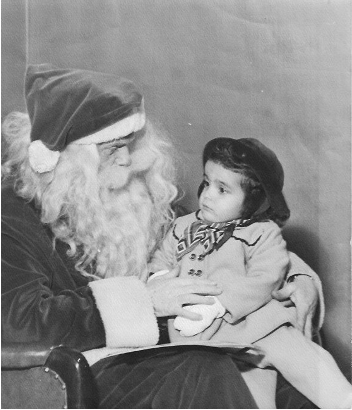
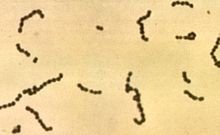 s when the professor asks you what you see in the picture? For me, I see a smiling sheep or an elephant showing off his tusks in Paris. But, I certainly don’t see a bacteria that almost killed me.
 be Mozart would have survived.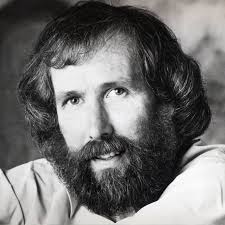


 Delight/ Awe and other things