Final plans

Like a good elder

I ‘ve been reviewing my final plans

Not for a European trip or a big family gathering

No instead, final plans for my death.  

By the way, just for the record

I hate the way our language dodges talking about death

As if it were contagious or the words carried evil spells.

For example, I despise the term pre-deceased. 

Aren’t we this very minute, all of us pre-deceased?

So,  my final plans.

After I get rid of my worldly possessions

I need to attend to my final disposal. 

What to do with me?

I’m thinking of maybe donating my body to the local medical school.

And my brain to the College Arts and Sciences at the local university

I’m hoping they can find a poet to do a humanities autopsy 

That would reveal if all the poetry and the beautiful things I’ve seen and read,

Has fashioned a brain worth passing along.

No coffin or burial for me. No cemetery.

Except that I would love to have a headstone that reads

Current resident.

And no cremation, either. That’s way too energy intensive. 

Hell, I don’t even like fireplaces.

No human composting. 

I’m way too full of microplastics and forever chemicals. 

Planting me in the ground under a magnificent oak tree 

In a beautiful national forest is just not fair to the worms and the bacteria

That work the earth to keep those forests healthy.

Nope none of that.

So, I’ve finally settled on being a ghost that inhabits Narragansett Beach. 

I’ll join all the other ghosts I met there for the decades.

Dottie, that 85-year-old woman, now three years dead who used to racewalk the beach.

Arms pumping, stopping for a round of push-ups to show off her good health.

And, Bill, ten years gone, hunting for sea glass and taking care of his wife 

Suffering from a wretched disease.

He hoped he could bring her to the beach one last time before she passed away.

And Kenneth, who sat cross-legged in a yoga pose while the fraternity boys played football around him — never breaking his meditative state. He died just this year.

And that ghost of a house that sat up on the dune

Washed away by a winter storm

Was that two years ago now?

I’ll stand there up on that little rise and watch the beach walkers and join them

As my dead father and my dead mother and my best friend the dead poet 

have walked with me any thoughts all these years.

I’ll rescue some toddlers who’ve gone rushing into the waves

Just out of the parents’ careful watch

And whisk the sand from their eyes.  

And help the elderly steady themselves in the waves feeling 

that lovely cool water around their ankles. 

Maybe for the last time

Remembering all those summers before. 

Their lovers and children and grandchildren – all of them happy and laughing.

And I’ll point out the treasure in every sunrise and sunset

Those who are moving too fast, deep in thought on the beach.

Eyes cast down, heart heavy.

I could all this from my watchtower in heaven

But I’m just not ready to leave.

I’m comfortable and a comfort to other ghosts. 

None of us is really ready to go. 
Cardboard War on Poverty

Ten of us arrived in Southern Alabama, late in 1971, freshly graduated from colleges up north. All VISTA Volunteers, that domestic version of President Kennedy’s beautiful dream of the Peace Corps. 

Before dispatching us to Alabama, our supervisors had us clean up to look more like southern young people. The boys got haircuts and we girls tied back our hair. We were a ragtag counter-culture bunch of northern kids fighting poverty in the deep South. What could go wrong? 

We slipped into the tiny town of Opelika, Alabama trying to not look like outside agitators, which we certainly were The premise behind the War of Poverty at that time was that people were poor because they weren’t exercising their rights. Our job as community organizers was to go into poor black communities and fire them up to demand better commodity food, better schools, transportation, welfare and tenant rights — all of it. To walk right up to that white old boy power structure and call them to account. Right on! 

So, we came to Alabama, puffed up and proud of our idealism, but no one – not my family, none of my friends, not the teachers that inspired me– no one thought this was a good idea for me. And the poor Black people we were meant to serve they were completely confused. We’d introduce ourselves with our northern accents, and they would tilt their heads and ask, 

“Ain’t you s’pose to get married after college? Get a job?”

“Don’t your people need you at home?” 

 “They must be payin’ you lots of money to come way down here to solve our problems.”

 Those weren’t the only questions.  When we gathered in the police station for our introduction to Sheriff Belk, he asked,

“Ain’t you Yankees got trouble with your Negroes back at home? Why the hell come here?”  

I did my best not to answer those questions. I’m still struggling with them today.

My first assignment was Lulu Harvey, the poorest old woman in Lee County. That’s saying something. Miss Harvey lived out in Shotwell with her grandbaby.  We arrived in the morning and called from the yard,

“Good morning, Miss Harvey. We’re here from Head Start.”

 That was our secret cover. The black people liked Head Start. 

She came to the door and let us in. I sat across from that child, a slant of light falling on her from the open door. Her eyes were dull, hunched over, not speaking, not moving. 

“She’s a good baby”, Miss Harvey said, “Two years old and not a word from her.” My heart broke. We looked around. We’d never been in a poor woman’s shack before. My heart broke again. Finally, we asked how we could help. 

Miss Harvey looked at us, maybe wondering, 

“What the hell do these little white girls think they can do?”

In truth, we had no idea, other than we’d try to do whatever she asked.  

Wisely, she said, 

“You know down at Sears on Tuesday they throw away all their cardboard.  Winter’s comin’. I sure could use some new cardboard for them windows.”

 “Yes, ma’am.” 

We were off on our poverty fighting mission. 

No campaign for racial justice. 

No overthrowing the capitalist class 

No end of oppression. 

Nope. Just cardboard! 

So, we brought her that cardboard and some firewood throughout the winter until we were chased off her property by her kinfolk who yelled at us to stay out of their damn business.

The wisdom of that old lady clings to me today.  She knew us better than we knew ourselves. We couldn’t save that baby, find her a decent house, get her the dignity she deserved. The lesson: Never ask a well-meaning fool for help. They have no idea. Ask them to do something simple, somebody that they can do. That makes everybody feel better.

Not my kind of Saint

When I was a child growing up in the fifties, it seemed that everyone in my life – my parents, my teachers, my aunts and uncles, and grandparents – and everything in my life – from the movies I watched to the books I read to the things I dreamed about – were all aligned in a project to make me a very good person. I resisted these influences in my childish ways but overall, I bought in. I embraced their hopes and dreams for goodness for me, but that wasn’t enough; I wanted to be a Saint.

My little sister and I shared a tiny bedroom and, on those nights, when my mother had a late shift at work, I would read to her at bedtime. I had the upper bunk and with the streetlight falling brightly onto my pillow, I could read as late in the evening as I wanted without detection. Our favorite book was given to me by my aunt Gaby. Without her own children, she had plenty of time and energy to devote to my development and guidance. She gifted me The Children’s Book of the Saints for my First Communion.  Every day of the year, there was another story of a Catholic saint, a simple guide for us to inspire goodness and courage. It was perfect for my dreams of sainthood. We loved best the stories of the saints who were martyrs. Stories of Saint Ignatius who was a rich boy and a soldier who then repented and found the Society of Jesuits did nothing to excite us. Saints like him seemed to us good enough but not bold or inspiring. We need saints who had visions and who suffered. We loved stories of saints like St. Bartholomew who was skinned alive, St. Ignatius of Antioch who was fed to the lions, or St. Lawrence who was burned at the stake. Never denying their faith. We relished stories of saints, like St. Juthwara who’d been beheaded and walked away with her head in her arms, on her way to church to pray. Our favorite was St. Thecia. When they tried to burn her at the stake, it rained. When they fed her to the lions, they laid down and licked her toes. She kept trying to kill her with snakes and swords but protected by her faith, not torture not the work of man could kill her. She lived to her eighties. As a child, I hadn’t yet worked out just how I would get myself into situations where I be given a chance at martyrdom but my mind was firmly made up to do whatever I needed to do to become St. Sandra of Rhode Island. 


Recognizing the power of movies over our generation, the nuns gathered us together in the cafeteria every month to watch an inspirational film like Boy’s Town, Captain January, or The Miracle of Fatima. When I was in the second grade, we watched a film about the Maryknoll Brothers doing missionary work among the pagans in China. At the end of the movie, the Chinese marched a Maryknoll Brother up a hill and crucified him – “He refused to deny his faith”, the narrator intoned.  We were stunned; I was inspired. Our nun talked with us about the movie and about our faith and passed around the little metal box where we were supposed to drop our change to support the missions. Some of the kids had spent theirs on candy; not me. Then, she asked, “Children, how many of you are willing to die for your faith?” Almost all our hands went up. “Me, sister! Me, sister!” I was so proud of myself for offering my life for Jesus Christ.  I never told my Mom, although maybe she would have been proud of me, as well. She knew about my sainthood thing.

From that moment on, I have never doubted for a minute that children could be recruited into Brown Shirts or an army of child soldiers or into the Children’s Crusade. Children may be innocent but they are engineered to be socialized into groups well-intended or evil seeking. I gave up on sainthood when it seemed the pagans were disappearing from the planet and emerging as Buddhists, Muslims, Hindis, and people of other faiths. There were other diversions from sainthood, as well, but that is a much more common story.

COVID Lessons

Even though I keep a daily journal, my notes on the pandemic are sparse. I recall best those very early days when neither science nor faith could stem the tide and terror, fear, and dread of the virus. As an older person, I felt my age for the first time, as both a high-risk target for the disease and as a vulnerable elder requiring careful watch and extra protection. I’ve learned that children can be just as paternalistic as their parents in that caring but condescending way. 

I do have an entry in my daily notes for Sunday April 5th, a few weeks after the federal government declared a national emergency, just a week after the U.S. had more COVID cases than anywhere else in the world. We were in the early days of lockdowns, travel bans, shortages. Fear of the disease and of each other. Daily briefings. Panic. On that day, I spoke with my sister in Florida.  A few weeks prior, we had set up bi-weekly check ins. That Sunday, we talked about how these could be our final days. That sentence sounds melodramatic when I write it, but it rings true to my experience. On that day, we broached the subject of final plans. She had organized a box full of important documents with my name on it on the second shelf of her guest room closet. All her contacts– professional ones and personal ones – to be notified when she passed away. Emails, phone numbers, passwords, online accounts. She had thought of everything – so kind. I committed to doing the same thing as soon as possible, yet still to this day, four years later, I have left most of this undone.

She considered almost everything. I asked her about her eulogy. Had she thought about who would say those final words? As soon as the question left my lips, I knew what I wanted to hear. As her older sister, I prayer it would me. She confirmed that hope. I would deliver her eulogy and she mine. We wondered together whether we knew everything we should know about each other. I made these notes in my journal. Committed to writing Marcia’s eulogy. That sent me down a rabbit hole of wondering. Was I really the best person to write this? Did I really remember the important points in her life?  Did I underestimate how painful those early illnesses were for her? Did I comprehend how deeply she at age twelve felt my father’s early death? Did I know the whole story about her marriage? Did I appreciate how deeply others loved her? Did I know only my special sister-side of her? Did she know I’d nearly been hospitalized for depression? That I came close to suicide more than once? Those eulogies may reveal more than we have told each other so far. These can be reckonings. 

I delivered my first eulogy for my mother. I asked her parish priest if I could say a few words after Mass. He told me that this wasn’t the custom in his parish but since my mother was a parishioner, he’d allow it. I could have three minutes. Three minutes? For my mother? And then I thought of her, so hating attention in any of its forms. She would tell me to take no more than two minutes, more than enough to say what needed to be said. So, I delivered that eulogy from my heart as I knew my Mom to be, underestimated, full of broken strength. I learned during the reception in the church basement how much I didn’t know about her. How kind she was to a neighbor. How much attention she paid to a lonely resident in assisted living. How crazy funny she was. That she was a wonderful dancer in her twenties. How she was a complete person separate from me—a richer, deeper, more complex story than I knew. I wished I had done better for her. Reaching beyond what I know or think I know; I will do better for my sister. 

Are you lonesome tonight: Assignment #5

The Beatles burst onto the Ed Sullivan Show just three weeks after my father died. This set off secret operations in our so-called music room. This was the back half of our living room with the piano that nobody played and with our record player, a significant piece of furniture with the console on one side and storage racks for albums and 45s on the other. Until I was a teenager, the only music we had in our house were my parents’ records, music from the War that they used to dance to, and our mother’s records, which we were not to touch. Records and the record players were in the “No Children Allowed” zone in our house. 

We loved watching my parents dance to music from the forties. They would glide across the floor with great grace, I thought. My father was a smooth dancer and after practicing the foxtrot and waltz with him, he accompanied me to the Father Daughter dance at our high school, clearly the most handsome and charming man in the crowd. That evening, one of the happiest nights of my life, happened just two months before he passed away.

We processed grief privately in our house. My mother simply couldn’t bear to discuss the loss of our father with her children. Much later in her life, she said to me that she had no words of comfort or consolation for us. My father would have known what to say to us, she said. So, my mother dealt with the anguish of loss she couldn’t voice through her records, stacked up for play one after the other.  How Great Thou Art by Mahalia Jackson, Don’t You Know by Della Reese, Full Month and Empty ArmsMoonlight Sonata, and Elvis Presley’s Are You Lonesome Tonight?

We would watch her expression, see her tears, and sometimes sit with her on the couch when she probably would have appreciated some time alone. Elvis really tore her up. I hated Elvis. I hated how sad he made her, how he kept pointing to her loss, and how much she missed my father. He kept making her cry asking, “Are you lonesome tonight?” With the full force of my teenage sarcasm, I would reply under my breath, “Well what do you think, Elvis. Her husband just died!” “Do you gaze at your doorstep and picture me there?” And from me, “Would you please just stop it!” I really did hate him. 

The underground operation – the secrets — began when my favorite aunt bought me the first album, Meet the Beatles. It is hard to explain six decades later the sort of effect the Beatles had on me. Their music was full of hope and fun and hand-holding, of the sweet innocence of love and flirting and dancing. It was perfect early teenager music. It seemed like the world changed when they arrived. My friends and I couldn’t get enough. I wanted to play their music all the time. My mother worked a long shift during the day but there were a few hours between our coming home from school and her returning home from work that we could use the off-limits record player, playing our music, and being careful to keep everything in its place and just so, remembering every tiny detail that could set off an inquiry.  During those magic hours, we would sing and harmonize and dance around the house, feeling free and crazy. Always in the back of my mind was whether all of that youthful exuberance was somehow a betrayal of the grief I felt in the loss of my father.  We hid the Beatles from my mother as long as possible. We covered our tracks as best we could. 

When the Beatles made that first appearance in early February 1964 on the Ed Sullivan Show my little sister, my tiny brother, my Mom and I were seated in our usual spots in our living room watching TV. I was apprehensive. Could the Beatles cheer up my Mom? Would she tune them out? Would we have to dampen our enthusiasm to honor her grief? I wanted her to love them, as I did, to see them as love and joy.

My mother loved the Beatles, these British young men with long hair.  She loved other English bands, too. We surprised her with the Beatles album which she added to her playlist and every once in a while, she would join us in a crazy dance. We had broken through the no-permission zone and into sharing music with my mother. It was all quite surprising to us. That was a new Mom. Maybe, we gave her a respite from her loss.

When my first true love moved away to college, my mother put up with my playing the same broken-hearted Dionne Warwick ballad over and over and over again. She never once told me to get over it, or to stop playing that miserable music, or that there would be other boys. She let the music pull out my tears, to feel the loss as best and as deeply as I could, even though I couldn’t talk about why this boy meant so much to me. 

We played out our grief and our happy times in common prayer of music.

What’s Going On: A play in four acts before intermission 3 of 6 assignments

Setting: September 1971 to May 1972, rural Alabama

Characters: Twelve northern-born VISTA Volunteers sent to the South to fight poverty. After a week of training, they cut their hair, put away their bell-bottomed jeans and prepare for work as teacher’ aides, family planning specialists, construction supervisors and community organizers. They are full of idealism and brotherhood and the wonderful feeling that they are doing something important. However, their ideas about doing good, about being comfortable in the world are challenged in this culture that is confusing, frightening, and disorienting. They spent that year and the rest of their lives wondering what’s going on.

Soundtrack; Marvin Gaye’s What’s Going On

Act 1. Three days after arrival. The VISTAs are placed with host families while they look for housing. The third night one of the women is raped by a teenage boy. She tells her friends. They debate what to do. Reporting this to the police guarantees that the boy will be arrested and may pay with his life. It will also mean the VISTA site is shut down. Not reporting it means that the violation goes unpunished, that the other women may be targeted for other attacks. It is just three days and already they are in over their heads. They make up an excuse to the supervisor to move her to another host family. This event has repercussions all year. 

Act 2. End of September. A cell in the local jail. Sheriff Wilkins welcomes the VISTAs to Lee County. He tells them he can recognize a Yankee at a half mile away – the walk, the swagger, the clothes. He wonders why they would come all the way to Alabama when they have so much trouble with the “coloreds” up north, rioting and all of that. He knows that as outsiders, the VISTAs will be troublemakers and that he will be watching them carefully. Her reminds them that last year, the house that the VISTAs were living in in Beulah, a Black community, was firebombed. He sure hopes they doesn’t happen to them. 

Act 3.  Early October. Three women are renting an old farmhouse from the Belks, a prominent family in Lee County. Bubba Belk, the youngest of four brothers and like the VISTAs, a recent college graduate, visits and brings along the gift of a rifle so the women can have some protection. They refuse his generosity. He insists, reminding them that they have no phone, that the nearest police station is twenty-five miles away, and that everyone knows that three white girls are staying together alone in this house. He reminds them that they are living in Alabama, not where they come from.  He walks them to the backyard, shows them an old whipping post and has each of them learn to load and shoot the rifle. They each take a few shots. They thank him and promise each other to hide the gun away. 

Act 4. A warm May late afternoon, three VISTAs and six Black families gather together to work out the day’s schedule at the self-help housing site. A young man arrives in a pickup truck, yells at them to gather around, jumps into the back of his truck and says, “the Governor’s been shot. Governor Wallace has been shot!” One of the men leads the group in prayer and song. They are praying for the soul and deliverance of the Governor. The VISTA volunteers are quiet, wondering how these folks can be praying when their own hearts are so full of hate.  

Where have all the flowers gone: Two of six

Her days were undistinguished except for the afternoon sun. As the seasons passed, she watched the shadows shorten and lengthen gliding across the floor in her tiny sitting room. At her side, a basket of knitting sat untouched. The last time she picked it up, she had no memory in her fingers of how she once made blankets and hats for every member of her family and many of the babies at the church.  

She felt the warm June sun and looked out to the garden. She struggled to recall the year when she. was strong enough to dig a two-foot trench for the asparagus bed. It thrived for years when the children were small and began to fail when she could no longer tend it lovingly. Where did that lovely asparagus go, she wondered. 

She surveyed the yard, once resplendent at this time of year — every bed a surprise of color and form, her peonies with the grace of ballerinas, those dahlias uncompromising in their bold colors and shapes. Where had all those flowers gone?  Or maybe, she didn’t recall this so clearly. A fleeting thought poked into her mind, perhaps this beautiful garden in her memory was actually someone else’s garden. Not hers at all, perhaps. 

The neighbor’s children, the age of her great grandkids, were screaming with delight, splashing into their backyard pool, celebrating the birthday of the youngest, Liam. She recalled such parties when she was young but not much about them. She couldn’t recall the name of her favorite cousin or remember when she had last seen him. Had he died? Maybe so. Could that be that I wouldn’t remember? She knew she had a happy childhood but the details, of it like so much else these days, escaped her. 

So much had passed by in her long life. Friends. Wars. Struggles. Great joy. Great books. Love. Being a mother. A productive career. Losing a husband. Losing all but one of her siblings. She tried not to dwell on the past, but her future seemed short to her. She did remember her high school friends. “We were such a gang of girls, full of energy and delight and not a little sassiness” she thought. “We were so lovely although we didn’t know it at the time.  Where did those girls go?” When she saw the few friends that remained, she saw old women, with their youth like phantoms beside them. 

She was willing to accept that life was full of loss; that fact she could accept with equanimity. More than anything, she missed her words, her clever mind, her intellectual power. Once, she could summon a rich vocabulary and choose words that delighted her, like a captain commanding his troops to attention, those words bold and perfectly fitted to her ideas. Now, those words were fewer, wandering, and remote and painfully slow to appear. That loss she felt deeply. 

But even as others saw her depleted and elderly, she felt something else. A favorite author of hers wrote at the end of her life, that she was herself, as never before, with fierce energy and intense feelings. Everything was profoundly beautiful to her. Even her own children weren’t as captivating as the children she saw these days. Last year’s Mother’s Day flowers drew her attention like never before. Music brought her to tears. She wanted to draw the world close, to live each minute with all the passion and light that was remained. 

What’s Tina Got to do with me? One of six assignments

Growing up in the fifties, I am given more freedom than I deserve. My distracted mother, a recent widow with three young children to raise, ignores my adolescence. I explore far and wide. I pal around with boys and the girls. I am athletic years before Title IX. I am crazy about music. I teach myself guitar. We write plays and perform musicals at my little high school. We sing and play music on our bus rides home, me playing bongos on my math and English textbooks. We know all the moves of those girl groups and can mimic and even embellish their dances. I can harmonize. It is magic for me. 

I don’t give this up at eighteen. In my twenties and thirties, I find another group of women friends who also love to do this. It was a heady time for the women’s movement. We want to be in and celebrate each other’s company. We sing and dance for our friends and perform at women’s conferences. We perform Aretha, the Shirelles, the Supremes, the Dixie Cups, Gladys Knight and the Pips. We never tried to do a Tina Turner song She was too far a reach for us. Which of us white working-class girls imagined dancing like Tina did? None of us. I had seen her on TV with Ike and the Ikettes. She was too sexy. Too crazy. Too beautiful. Unreachable as an icon with those long legs and warrior woman body. She was just too hot.

That all changed. She survives her abusive relationship with Ike Turner and returns to the music scene with ground-breaking album Private Dancer, with the hit What’s Love Got to do with it?  She rises strong, confident, strutting. A music critic writes that this album “reeks of attitude.” I can’t read that as adoration. George Bush awards her the Kennedy Center Honors and notes that she has the “most famous legs in show business”. They still don’t understand what Tina is all about. At 44, she becomes the oldest woman to receive a Grammy for Best Solo performer. That doesn’t sound that old to me. 

I see her anew. She is just ten years older than me. In my youthful eyes, I saw her a giant. I learn that she is a tiny 5’ 4” tall and weighs 120 pounds. That is exactly me. In her emergence, Tina gives me strength. I am finally ready to bust out of my good girl, Catholic obedient, uniform wearing, background singing self.  Tina creates the space for me to come out to my friends. To feel flirtation for the first time in my bones. I let myself be attracted and attractive. And maybe for the first time, I think, “That can’t be love. What’s going on? We just met!” But there is something powerful and worth paying attention. 

And not just me. Liberation is recognizing that is always time for re-birth and reinvention. My troupe is done with happy songs about “Going to the Chapel” and waiting for that boy to call. We’ve been burned and are ready to claim power and respect. Turner steps out and we follow. We sing Tina Turner in our comfortable shoes, with our short legs and choreographed moves until my group falls apart, with heart aches, broken marriages, wayward children, cracking voices, slower paces. One of us has cancer. Another, a husband certain to die with a brain tumor.  We are well prepared for the next transition. 

Finding Elizabeth

It was one of those days when everything is beautiful.

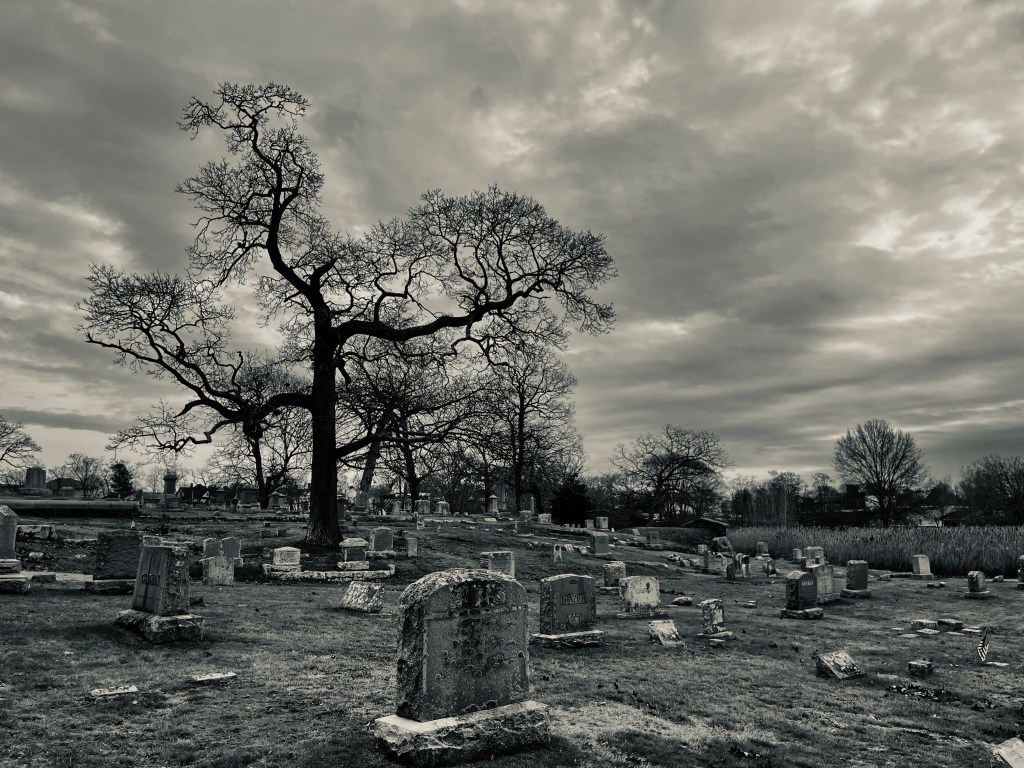
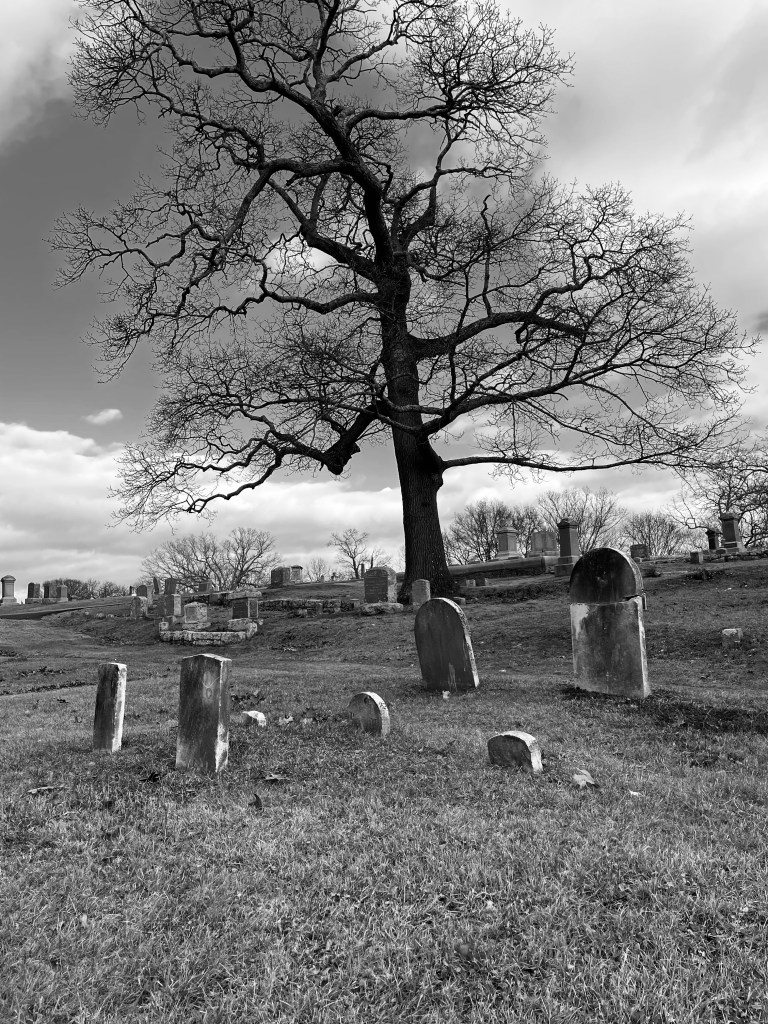
Our graveyard features tall spreading oaks.

Linking heaven and earth.

My daily walk along the bike path

Runs along the edge of that cemetery.

The path follows the one laid down

By a railroad that took passengers to the edge of the ocean.

It much quieter now without the traffic of the railroad.

Now the dead have the company of dogs and children.

And older walkers like me

Who make their way around the tombstones.

I used to walk here for my health.

The elderly should keep moving, the doctors advise.

But these days I greet the deceased

Not as ghosts but instead as

My interred neighbors.

Sharing our place on our earth together

If not our time.

Each gravestone tells a story.

I read their names and say them aloud.

And before I complete the word

An image comes together in my mind.

Ebenezer – Ah. To live with that name.

Mercy and her husband, Pardon. 

Elijah and his son, Elijah

Gideon

Anizetta

Freelove

Wager 

Phineas and his sister, Lillian

Minnie

“Kook”

Matilda

Caleb and older brother, Isaac.

Quickly, I am in a village and am walking in a community.

Perhaps, they know each other or know their families.

Maybe, they played cards or went to church last night. 

Maybe, they married the pretty girl next door.

All these names have disappeared.

Their flair and fashion and folly

A lost generation of characters

Down near the river are newer graves.

I see that the Mellors lost two children.

A baby and a toddler

I feel their sorrow.

Children died the years my siblings were born.

I find a memorial for another child.

Dead not more than two years.

The boy’s parents have made a shrine.

Of toy cars and little figures

Solar lights in each corner to keep the boy safe at night.

I find a large tombstone at the top of the hill

At the foot of the huge oak

A monument to Doctor Robinson

A great man it seems on this scale.

In bold letters, I see his birthday and birthplace.

I see as well the dates and place of his death.

I see that he served in the War.

Near the base of the stone I see

“Devoted wife” and beneath that

Eli……

Mud and grass have erased those traces of his wife.

Her name buried in the dirt.

Perhaps, if he had one less accomplishment

There would have been room for her.

Tomorrow I will bring a spade and reveal  

Her place and time to the world.

It matters to no one else this clearing

Away of mud and earth.

Neither does it matter to anyone else that I 

Have made these friends in the graveyard.

But to feel these connections means everything to me.

I have long renounced a cemetery plot of my own

Thinking about the burden of a grave for my loved ones

Maybe, they’d feel a need to visit. 

Just now, I am rethinking this resolution.

Allowing the idea to take root in my mind. 

I don’t need to be remembered but

I do need to rest with my neighbors and friends. 

Living in the shadow of Shirley Temple

I spent my childhood in the fifties, living a standard working class childhood. Besides all the other tasks associated with socializing children, the adults in my life were focused on exposing us to wholesomeentertainment. I remember Sundays at Mass where we would as a community take the Legion of Decency pledge, foreswearing temptation, and the work of the Devil. One version of the pledge read as follows:

I condemn all indecent and immoral motion pictures, and those which glorify crime or criminals. I promise to do all that I can to strengthen public opinion against the production of indecent and immoral films, and to unite with all who protest against them. I acknowledge my obligation to form a right conscience about pictures that are dangerous to my moral life. I pledge myself to remain away from them. I promise, further, to stay away altogether from places of amusement which show them as a matter of policy.

I remember all sorts of films received C (condemned) ratings including the Rosemary’s Baby, Clockwork Orange, The Producers, The Rocky Horror Picture Show, and Saturday Night Fever.  The Legion of Decency was run by a loose affiliation of local civic leaders, not really a body of the Church. Pope Pius XII wrote that instead of condemning morally dangerous movies, Catholic organizations should be promoting good ones which is something my mother and my grammar school did all the time. I am not certain why the adults were so obsessed with movies. Perhaps, they had seen the ravages of unwholesome entertainment on the brains, souls, and character on the population. Maybe these effects were especially powerful on innocent children and callow youth. They wanted to mount a defense. My Catholic elementary school was especially vigilant about protecting “purity”. In my reading of the Lives of the Saints, a very high percentage of girls who became saints did so by protecting their purity. As a small child, I had no idea what any of this meant.  I imagined it might have to do with the cleanliness of my soul, making sure nothing nasty entered.  The ritual of confession offered a nice regular scrub down. You would share your sins with the priest. He would pass along some penance prayers, and within no time, you could be back to making mischief again.

I had loads of questions about penance. I knew that basically my sins were small potatoes. But suppose, someone confessed that they murdered someone or denied their faith or stole candy from their brother, could the priest make them go to jail or whip them or send them to their room without dessert? Certainly, it couldn’t be that everyone should just get to say a few prayers and go about their evil business. Who even remembered those prayers and who checked up to see if they were really recited with a pure heart? 

A prime rule of child rearing in mid-century families was that It is important to offer children good things to do and consider, otherwise evil forces will capture them and never let go. They had to cut off bad influences at the start. A child will not want to see a a bad movie, “bad” in the sense of corrupting, when they can see a “good” movie, one that would lift them up morally, like the Song of Bernadette or even better, Rebecca of Sunnybrook Farm? The former was nominated and won several Academy Awards. The film tells the story of the apparition of the Blessed Virgin Mary to a poor girl named Bernadette.  Miracles ensue, the sick are cured, and she is eventually canonized. Her faith triumphs over lots of disbelief and naysaying. As a Catholic child, I saw that movie lots of times, fully expecting my own apparition, if I could remember to pray and be good and simple hearted, full of faith and obedience and not much else.  I was not visited but neither were my more obedient and devout classmates. 

Despite the fact that I saw plenty of religious movies, the central figure of my wholesome childhood viewing was Shirley Temple. She loomed large at home and at school. We saw her movies at school at our first Friday film afternoons where the entire student body from first through ninth grade would gather. These were also shown on television on Saturday afternoons and my mother, a real devotee of Shirley’s, would watch those movies with us. We laughed and cried and “Awwwed” together. My mother could recite lines from these films that she remembered from seeing them in the movie theaters as a child and as a young adult.  She loved Shirley Temple; I could see the adoration in her eyes, and I think I wanted some of that unqualified enchantment.

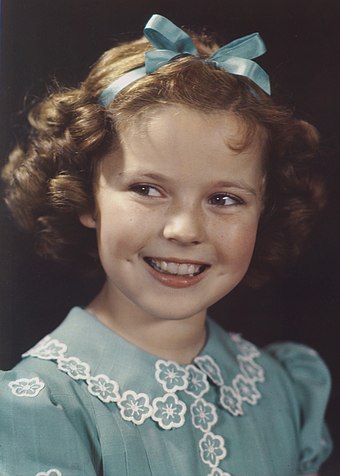
Shirely Temple

She had everything on her side. She was undeniably and overwhelmingly cute. She danced and sang in an adorable little girl way. She pouted endearingly. She had a strong moral compass and consistently directed adults to do the good and better thing. She showed the path to joy through good wholesome living. Even if you were a misanthrope, you had to like this kid.  I remember feeling badly for boys because their role models seemed to be troublemakers from the Little Rascals, like Spanky, Alfalfa, and Buckwheat. 

I don’t ever remember thinking that Shirley and I could be friends. I don’t remember thinking that she’d be a nice sister to have. I liked all of my friends well enough and really loved my sister. But I watched her in overalls in Rebecca of Sunnybrook Farm and made a note that I had overalls, but I didn’t quite look as cute. What was it about this kid?  I saw her in so many movies with those killer banana curls. I had thick, black, nearly uncombable hair but earlier in my life, I had workable hair. Somehow that changed. Maybe, we lose our lovely baby hair like we do our baby teeth. My mother’s only attempt at hair styling was to cut my bangs short and let things fly.  To address my hair issue, my favorite aunt took me to the hairdressers in the first grade where Leona gave me a makeover in the form of a pixie cut. With a gap in my front teeth and a very short haircut, I was quickly running away from any chance of looking like Shirley Temple. I needed another strategy.

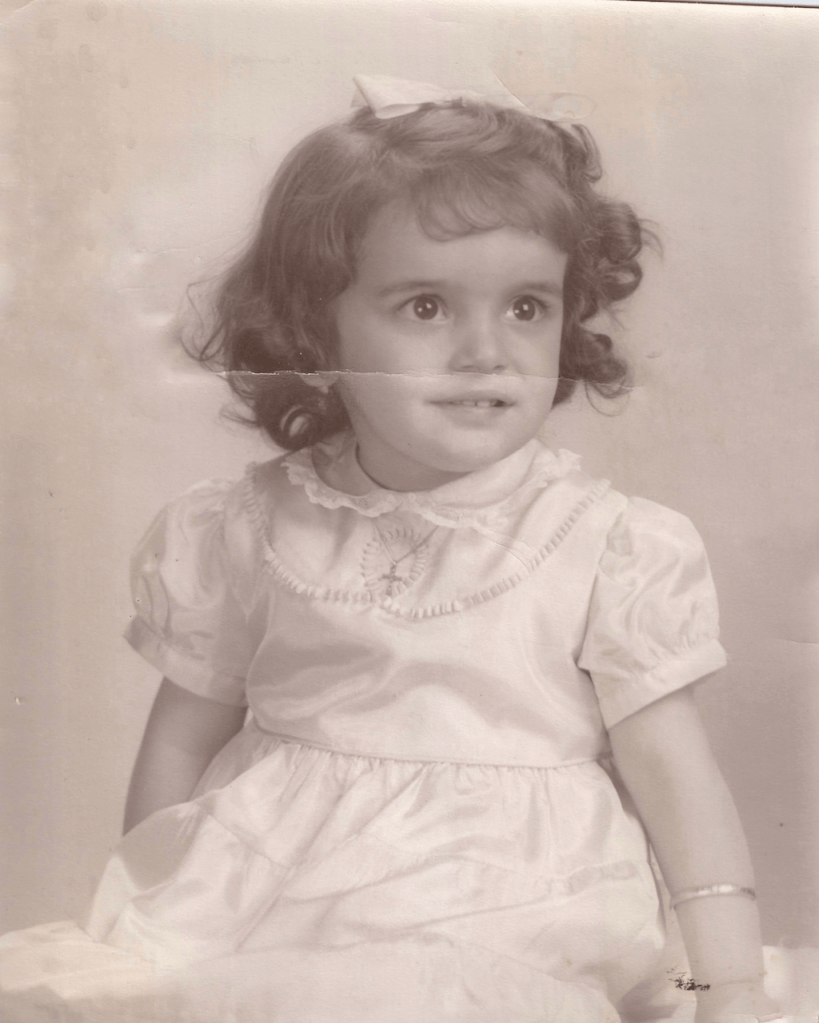
Me at three years old. The Shirley Temple influence is obvious.

I tried to sing like Shirley Temple and followed her steps closely when she tap-danced up and down a staircase. I tried to pout, swing my arm into a let’s-go-get-‘em pose, and say cute things like, “I’m very self-reliant”, which Shirley pronounced to the great delight of her elders in Rebecca of Sunnybrook Farm.  My obsession with Shirley reflected my mother’s. She clearly adored this little girl. I compared her object of adoration and her own regard of me, which was so full of ambiguity and restraint. I recently learned that films like The Little Colonel, The Littlest Rebel, Captain January, Bright Eyes, Curly Top, Poor Little Rich Girl, andSusannah of the Mounties were made between 1935 and 1938. They were full of messages about optimism, grit, resilience, and spunkiness. Adults in Shirley’s orbit are charmed by her to do the right thing, to change their lives toward the better, to raise money for good causes, and golly, to do whatever it took to keep this child happy.  

She is often without a family of her own. She is orphaned more frequently than any kid should be, but this gives her lots of chances to wheedle her way into the hearts of rich and poor, young and old, white, Black and Native American, the kindly and the grouchy. It is truly amazing. My Mom grew up during this time – in those years between the Depression and the Second World War. She may have embraced Shirley as a role model of sorts. She had six brothers and sister in an alcoholic home and was placed in an orphanage during the Depression at two or three years old when her parents couldn’t afford to keep her at home. Shirley Temple offered a glittering example of a charmed life. If the Gods could grant it, I would have loved to have been that child for my mother, but she very effectively resisted my charms for good reason. 

But to live in the shadow of this lovely golden child – to see her weekly on TV and often at school, gave me a model of what a child I could be. What about this little girl could I emulate? Or maybe that was a losing battle. Maybe, I could simply understand that Shirley Temple was my mother’s fairy tale, and I was too busy with my own stories to be diverted by this one for too many years. I grew out of love with Shirley Temple and set my sights on Annie Oakley, another hero of fifties television.