In our present culture, we seem oriented to believe that our children are special. Maybe that is a biological imperative. We want them to feel special all the time for everything they do. But I think children see through that pretense. They feel the deep fake in it. They are embarrassed when their parents present them as gifted and talented and better than their peers. On some level, children know differently. They know the difference between careless praise and really accomplishing something for themselves.
Although I think a brief study of the history of parenting would lead us to the discovery that our ideas about what children need from us are very much the product of this cultural moment. The history of childhood is a fascinating tale of the history of ourselves as a species. Even a generational change can make an enormous difference in the expectations for parents and children. This may be my nostalgia for my rosy-colored baby boomer childhood, but I am feeling very grateful for my mother’s parenting of us. She did a lot of this as a widow when my father died in an auto accident leaving her with three children – me, the oldest, at fourteen, my younger sister at twelve and my little brother at eight. My mother had no suspicion that any of her children were special in any way. It caused her not one sleepless night that we were perfectly average. And, she might argue that since no one is perfect, we were all actually averagely average. She would have found the idea that you are special just because you are you to be completely insane and especially wrongheaded when it came to raising children. I am inclined to be completely in her corner here.
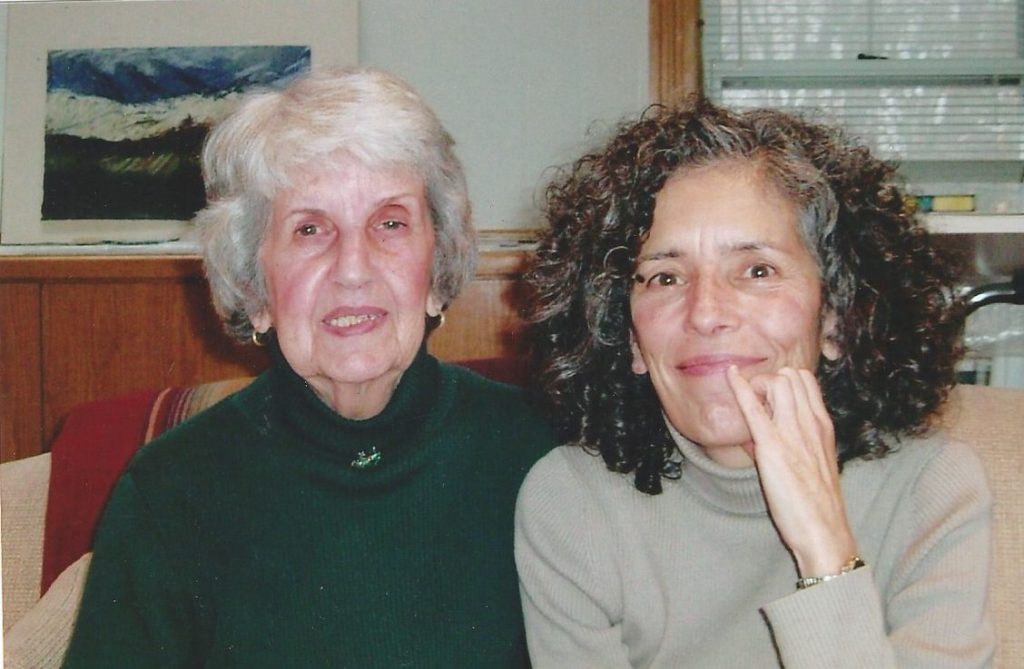
If no one tells you that you are special, that you are musical or artistic or beautiful or funny or smart or just really talented in any way, you are left to discover those things through your own exploration. Without those early and (perhaps) misleading observations about you from your parents and relatives and whomever wants to make such a comment, you are on your own to discover your people, your interests, and talents. You play guitar or basketball and go on long bikes, and you discover things about yourself without much parental support. My mother never attended one of my basketball games. I never sought her advice about pursuing a degree in college because she never had any sense that I would be particularly good at anything. When I did go to college, my mother bet the lady next door ten dollars that I wouldn’t last a semester. I never resented that wager when I learned about at the end of my freshmen year. Given her experience of not knowing anyone personally who had gone to college, she was imagining that college students were very smart, and that I certainly wasn’t.
I worked in a series of factory jobs during the summers, many of which she was familiar with. She had worked in rubber and jewelry factories and knew very well the tedium of those jobs. She had friends who worked in these places, sometimes they were my bosses. I am pretty certain they told her I wasn’t showing much promise cutting huge pieces in rubber into rectangles to be glued onto to the bottoms of welcome mats; I might as well go to college. They may have also shared that the thing I was best at was reading a book. During coffee breaks and lunch, I found some refuge alone outdoors on a picnic bench to escape harassment and bullying as “college girl.” I didn’t feel so special there, either.
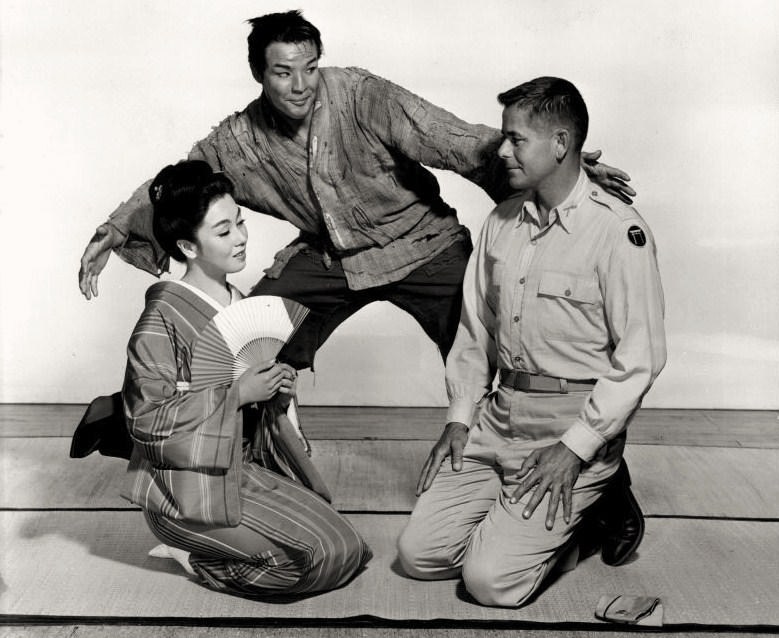
When I was elected class president in the ninth grade and rushed home to tell my mother, she responded. “Well, that’s nice. I am sure everyone in class will get their turn.” When I brought home good grades, she would nod and say, “That is good. You are doing your job studying. I think you could be studying more.” Or when I was the star of the senior play, she was proud enough but wondered why it was I had to play the role of a man. (In my defense, I would have to say here that I attended an all-girls school and not just anyone in class could have made a convincing man by simply painting on a mustache.) In fact, to toot my own horn here, I played the role of Sakini, the Okinawan interpreter, in Teahouse of the August Moon. The great Marlon Brando played that role in the movie of the same name to his great embarrassment I would imagine. Here he is. I am very glad I didn’t see the movie before I played that role.
When I was in the 10th grade, I saw an advertisement in thelocal newspaper for the Famous Writers School and sent away for the aptitude test. The premise here was that America needed a lot of writers and that by working with distinguished writers like Rod Serling, Faith Baldwin, Bennett Cerf and Phyllis McGinley, you could learn to write and make a big success of yourself. There is an interesting video on You Tube featuring Serling in a promotional piece. I figured if I get into that correspondence school, maybe I could be a famous writer. But more importantly, maybe I could see if I had any talent. I did very well on the test which I recall asked the applicant to describe a scene prompted by a photo, write some complete some items that tested grammar and vocabulary. I don’t know how it happened, maybe it was because of my excellent test results, but a man came to our house and told my mother and me that I was indeed a very talented young person and could be a famous writer. I was so excited. My mother not only doubted the test’s validity, she also zeroed in on true scheme behind his discovery of me as a young talent.
I learned recently The Famous Writers School was actually a cover for a giant fraud. Most students did very well on the test and many signed contracts that they couldn’t escape from. If my Mom had any faith in all in my talent, we would have all been bamboozled. I can imagine many parents falling for such schemes today where their children’s TikTok videos may be used by some random “talent agent” as a key to swindle them out of their savings. Instead, my mother said to me and the salesman that we wouldn’t sign up for Famous Writers School. Rather, I would study harder and learn to learn to write at school where I was studying this every day away. No special talent to coddle here. Soon after he left, she wondered out loud, “what sort of people make a living by writing? What kind of work is that anyway?”
I would also come home with dreams to be something I had heard about in school. One of my classmate’s fathers was a lawyer and that was her dream, too. I asked her about that, and it seemed like a very interesting job to my seventh-grade self. When I told my mother, I thought I would like to a lawyer, she suggested I think of something else. “Don’t get your hopes up too high”, she would caution. I came slowly to understand the source of this dissuasion. With the Great Depression and the Second World War, a difficult childhood and maybe a challenging marriage, she’d had plenty of dreams that went nowhere. Her possibilities were so constrained. My most successful relative was a foreman in a factory. I don’t think she could imagine the possibilities I might have. I didn’t realize those myself until my third year of college.
My mother kept my self-image within tiny bounds, safely trimmed from getting in the way of others. And even though I attended Catholic school, her parenting set me for a Buddhist orientation to life. I have never thought I was exceptional in any way. I think many of us set a goal or attach our hopes to a dream, like writing a book, or earning a PhD. Then, when you do, you learn that lots of average people do these things all the time. That is not to diminish the achievement, it is just to put it all in context.
The gift of those lessons from my mother was that suffered no heartbreak later in life when I recognized that I wasn’t so special after all. I wasn’t as smart as many of my classmates. I was never a great beauty. I was never one to stand out in a photograph or to turn heads when I entered a room. The great gift here is that you have to discover those talents by yourself. You can carve your own path which certainly will be a winding one. You find that in your seventies that great passion is music or theatre and that your long career and several paged resume hardly matters any longer. It is mental furniture for another time and place. You find your specialness in the network of friends you have built around you, all indicators of who you really are. Maybe more self-aware. Maybe more aware of the natural world and the connections. Maybe appreciating your tiny place in the universe.
 Delight/ Awe and other things