Are you there, Fitbit? It’s Me, Sandra 

I don’t mark my birthdays, even the big ones, with any élan or flash but I do note other occasions like anniversaries of when I met my partner or when I joined VISTA or when my parents passed away. One event that I have recently celebrated was the first anniversary with my Fitbit.  We have been together for one year; it has been a wonderful relationship—a little one-sided but I think I speak for both of us when I come to this conclusion. I have the Zip model which tracks your steps like a pedometer, translates those into miles and keeps a calorie count which has nothing to do with how much you eat. In its simple way, it reports whether another day has dawned on the planet so every day my calorie count is about the same whether I have feasted on an oversize Thanksgiving meal or have fasted to protest the colonialist travesty that is Thanksgiving. 

Macintosh HD:Users:drsandraenos:Desktop:simple.b-cssdisabled-png.h4eb3e8d9303ef6871a4973b19fa8ad11.pack.pngMore sophisticated tools can do all of this, of course, but I worry that the insurance companies are capturing all this information and my lazy napping days are being recorded in some big file and when I claim to be an active senior citizen, the Fitbit may betray me. Maybe, I am just a bit paranoid. Last week, the NSA came to my house to ask me I was walking by that house on Broad Street where someone who was binge watching Homeland the week before. Did I suspect anything? I guess some patterns of TV watching are significantly suspicious to those paid to be worrying on our behalf. 

The Fitbit is truly interested in our welfare, I suppose. It imposes a ruthless regimen; it wants you to take 10, 000 steps a day.  It doesn’t care if you do this at one mile per hour or twelve. It doesn’t matter if you do this in a meditative trance or if you are breaking a world record for power walking. 10,000 steps is 10;000 steps to the Fitbit.  You can imagine my surprise when I received my annual report and found I had walked over two and a half million steps or 1100 miles.   If I had been more strategic, all these steps could have taken me from my home in Rhode Island to St. John’s, New Brunswick in Canada (where I have a friend actually) instead of just around my block and across campus to teach over and over again. Now that I see all those steps taken in such a small space, I feel I lack ambition and big thinking. 

 The Fitbit also reported that my most active day of the year was in mid-March (I think I was on vacation or doing a stress test at the doctors) and the least active day was at the end of January when I hospitalized. I feel that I owe the Fitbit an explanation about my activity levels: I don’t want it to be unnecessarily worrying or thinking that somehow the Fitbit is at fault. I do worry that if I walk 10,000 steps every day that eventually the Fitbit will want more from me and I am afraid to disappoint it.  At age 65, I am wondering how to calculate how far I have walked all my life without the Fitbit calculating my steps and thinking about some serious sitting down for a while, except that the Fitbit has other plans for me. 

Like so many of us, the Fitbit can be distracted and restless. I come back after a hard run on the treadmill and it chirps, just 3,000 steps to go to reach your target. At 11:00 p.m. undressing for bed, it reminds me, just 2603 steps to go. Seriously? Can’t you tell that I have my pajamas on, Fitbit? Where the heck I am going to walk in the next hour, around my bed, like a dog spinning in circles before he lies down? Are even if that is the best possible strategy to log on steps, do we really want to encourage that sort of behavior? 

I mean I understand the technology and I understand the principles of behavior management here as well. I am all for it. I like to be reminded but I don’t like to be nagged. This is the reason why we ask Fitbit to keep track of our steps and not our spouses. With the success of Fitbit, I have thought of several other possible applications.  In this “innovate or die” culture, I want to be at the cutting edge.  So, here are my suggestions for the next generation of Fitbit-like devices.

Fit-to-be-with-bit

This little device would indicate to the wearer that they are such a bad mood that they ought to stay in their room. Maybe meditate or medicate (depending on one’s treatment philosophy.)

This could be done with a little jolt or vibration or maybe a whining noise that would grow louder as the wearer nears others. Better yet, it would wail if the provoker of that bad mood comes into the room, asking what’s for dinner.  It is the sort of gift you want to give others actually but that would need to be done carefully. 

Throw-a-fit-bit (or more commonly known, as Snit-bit)

There is a school of thought that proposes we are spending entirely too much time on our screens. This app directly addresses this issue. Throw-a-fit bit allows us to take the little device and when we are mad enough to toss it wherever you’d like. Of course, as we’d tell our children, don’t hurl this in the direction of innocent others.  

This app will measure the length and force of your throw and mark the where the device lands when you toss it so you can find it and throw it again, if you would like. Thanks to a sophisticated algorithm, the app reports how angry you are based on projectile velocity and force and calculates how this compares to your records last week when your partner was such a jerk about the holidays.  It also manages chance encounters with other toss throw-a-fits so that you and another user don’t fight over whose device belongs to whom.

Nitwit-bit

Designed especially for those of us who are susceptible to whacky ideas and get-rich-quick or reversing-aging scams, this app is the perfect complement to late night TV watching or to spending time with your sketchy in-laws.  

For this to work successfully, all you have to do is send those emails and phone calls you get from Nigerian princes, Ukrainian marriage brokers, penis enlargers, your brother-in-law and other questionable sources to this site, and the app will separate out the wheat from the scams. If, however, there is a great idea among the charlatan proposed offer, Nitwit-bit will take a small percentage of the killing you will make. The app does not work with proposals made by politicians, which brings to the next app, Mittbit.

Mittbit

For every one of us on the planet, we reach a point where our civic responsibility to be an informed citizen eventually drives us to drink and worse.  Here is where MittBit comes in.  Based on your TV viewing habits, your age and gender, whether you have stickers on your car bumper, your voting record, your GI (gullibility index), your AFATT score (All Fox All The Time news watching) which measures how welcome you are to new ideas, the MittBit blocks all messages that it knows you will ignore because you have heard them for a million times, because the message is so patently a lie or because there is no way that this message will do anything to advance world peace. In other words, the Mittbit assures that you won’t change your conviction the world is made up of givers and takers and that you are in the first group and detest the second. 

Sitbit

Sitbit is perhaps the perfect app for the meditation set.  A few times a day, this app would remind you that you haven’t given an iota of thought or sliver of attention to the cosmic truths of the universe, to the wonder that is you.  Once you activate Sitbit, it will start breathing deeply. It will keep this up, growing louder and louder until you join in. If you begin to make your way quickly to Starbucks for a three shots of espresso and a RedBull, it will stop you dead (not exactly dead) in your tracks by sending out a little digital shock. Sitbit wants you to relax, to calm down, not speed up. It wants you to do less, not more.  Other features of the Sitbit include the Stress Manager which shuts down all your other apps and communications and erases contacts and emails that seem to be troubling to you. Sitbit can also be placed in trance mode inducing hypnotic tones, new age music and a simulated scent of those gauzy Indian shops wherever thing smells like the shop owners are trying to mask the smell of marijuana. 

:th.jpeg

Quitbit

Most of us have habits we want to dump (cigarettes, nail biting, singing out loud when we don’t mean to, swearing in front of our saintly grandmother.) Many of us have partners we need to leave (discretion leaves this point undeveloped.) Quitbit is the perfect app. It tells us when things should end by carefully listening to our conversations on the phone, scanning our photos, reviewing our texts and considering our Facebook postings and friends. And, not only does it understand when the end should be near, its helps hasten that end. It

Macintosh HD:Users:drsandraenos:Desktop:th-2.jpegposts things for you, like announcing the end of a relationship. It will clean up your language and make it impossible for you to pay for another bottle of vodka with your credit or debit card. It will play the least popular song on iTunes at full volume if it finds you lighting up, even if you are in a non-smoking area. 

As the app becomes more popular, it will identify for you, people in your circle of friends and contacts who are dying to dump you as well.  It will also find people who will pay you to quit your lousy habits. A note of caution: It offers no help at all when you find yourself in a situation like the lovers in Broke Back Mountain, when Jack said. “I wish I knew how to quit you, Ennis.”  The Quit Bit is clearly outmatched here. 

Nitpickbit

For several years, human resource departments have offered a half-day workshop called something like, “Dealing with Difficult People.”  It was quite a daring offering. Suppose the most difficult person in the company showed up for this workshop along with all of his hapless victims?  You can also imagine that this person, let’s call him Ernest, found everyone else in the office immeasurably dull-witted and thin-skinned.  He found this as difficult as other people found him. A situation like this leads to my final idea. 

Nitpickbit reminds that we are constantly driving other people (most likely our partners and other family members) crazy by our need to make things perfectly clear and orderly. Those of us who have a bit more power over others are especially prone to this behavior, as are older siblings. The Nitpickbit can be adjusted for several occasions and multiple relationships.  For example, you may notice that you have brought to husband’s attention that his favorite shirt is missing two buttons and has stained underarms for about 100 times. Or you may have corrected your adult child’s use of ‘irregardless’ on many occasions in speech and writing. (Irregardless is not really a word, the Oxford dictionary says so; no matter how often George Bush says it in a speech and no matter if that child has an MFA from a fine university.)  

Macintosh HD:Users:drsandraenos:Desktop:th-1.jpegOr you may grow frustrated at hearing the same tedious story from your best friend about the challenges of filling a prescription over the phone from someone she swears is a deaf Pakistani robot. Every time she tells this story, you remind her that she has already related this remarkable tale.  After years of this careful guidance on your part, you finally reach the apt conclusion that none of this nagging does any good. Your husband has put that old shirt in his private safety deposit box to keep your hands off it. Your child refuses to speak with you except in monosyllabic phases. Even news about your grandchildren arrives in an Instagram message with an inscrutable text. And, your best friend accuses you of trying to put her in an Alzheimer’s unit with all your harping about her memory. 

Nitpickbit addresses all of these issues.  It disables your brain’s auto-correct function; it lets things be. It puts a smile on your face, no matter how untidy, unkempt, unswept, or uninformed your family and friends are.  It makes you, in many respects, a much more pleasant person to be around, although somewhat of a dimwit. Like the Fit-to-be-with-bit, you may want to think carefully about gifting this app to others. 

All the apps that fit-bit

In the new economy, we are all supposed to be our own creative geniuses. We are supposed to be buddying up with personal coaches and developing a life plan. We are urged to self-publish, grow our own food, be our own person, be hypnotized by our own mantra. So, I see clearly that I cannot in good conscience just suggest these as good ideas without developing them myself.  I need to do some market research, code and test these apps, sell them on the App store and see how much money I can make.   I need to find an App to help me with all that.  

Written in 2013; posted 1-2-2022
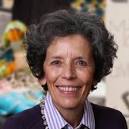
The beauty of the beauticians

Let me say right off that I am not what people consider a classic beauty.  I have, despite my best efforts, been appreciated more for my wit and intelligence than loved for my beauty or body.  Not that I’ve resented this.  I remember my mother told me that it was a good idea to develop your mind because even if you were good-looking, it was very likely that your looks would fade with age. She neglected to tell me that even if you developed keen intelligence and a wonderful memory, chances are that these would fade with age as well. If you grew up in the sixties, you can hear your mother saying about your lovely average-looking friend, “Well, she has a lovely personality.” That always meant that the girl in question was a girl like me. I do have to admit that in my family anyway, we weren’t supposed to be beautiful. That was reserved for movie stars. I would hate to be young these days when your image is plastered on Instagram, posing for glamor shots at 10 years old when the pressure is on young women, especially, to be beautiful and desirable.

Those of us not endowed with classic looks spend the first thirty-five years aching to look like someone else and the next fifteen years searching for our own style. This roughly translates into trying make the best of the assets you have.  These are personal characteristics that are not recognized by the rest of the culture but of great comfort to one’s mothers and aunts.  For example, while good looks don’t run in my family, my mother and aunts applauded themselves for having very thick dark hair, none of that stringy blond stuff some women have to deal with.  We are also blessed with strong nails, a characteristic that I’ve used to attract legions of men to myside. And, best of all, we have very wide hips which make it very easy to us to carry children in our wombs.  My Aunt Mabel reminded me all the time that when she’s at the mall and sees

these slim girls with long legs and slender hips having babies, she pities them. Well, lucky me. 

So, in my fifties, I began to investigate my own personal style.  I did this very deliberately.  I stared at every one who might look a little bit like me and determined whether they looked better or worse than I did. My measure was very generous. If they looked worse, I maintained my haircut, style of dress and lack of makeup.  If they looked better, I try to catch them on another occasion and see if they still looked better.  If they did, it planted an idea in my head. Hmm. Maybe I needed a new haircut? A tattoo? Colored hair? 

Or I may have looked at old pictures of myself to see if I’ve ever looked better than I did then. This is an insane thing to in late middle age and can be a depressing experience. In my search, I found a picture of myself with a very short haircut and that idea of cutting my hair really short lingered in my mind. Mind you, this photo was of me when I was six years old with a pixie cut and missing front teeth in a class picture. My aunt had just kidnapped from school and taken me to my first haircut at a salon. She did this because managing my too curly hair was driving my mother insane. She was tearing her hair out because she was tearing out mine, trying to comb through it. So, with no solutions sight, no conditioner, no hair management tonic, the only thing was to chop my hair off. When she saw with this tiny little hairdo, my mother was outraged on the outside and delighted on the inside. It seemed that usually, she was the opposite, pleasant enough on the outside and raging within. 

So, with that image in my mind, I summoned up my courage, found a new stylist and resolved to get a really short do. I had to change stylists because my Beverly, my previous haircutter would never allow to me to do such a crazy thing at my age. Too radical! If it was awful, how would I show up at work? What would this do to my social life, to all of a sudden look like Joan of Arc on her way to the stake? Beverly was a worrier and my haircuts reflected that. Twenty years of the same style was enough. Time to go bold and beautiful! I could always wear a wig. 

So, I submitted myself to the whims and caprices of a 21-year-old beautician named Tami. A recent graduate of beauty school, I figured she would have state-of-the art training and be completely up to date with all the cosmetology literature.  All the women who were working at this new salon were about her age, and all spelled their names ending in ‘i’. That was a nice touch; it felt casual and cute. Tami and her fellow stylists were wonderful because even though I was a college professor from a very good school, had won several awards and published well reviewed books, she clearly held the floor, decidedly more confident and more knowledgeable about life and beauty that I would ever have been.  

I entered the salon Hair Today and checked in the front desk. By the looks of the receptionist, I was clearly underdressed and undergroomed for an appointment. I had the feeling I should have entered through the emergency room or the back door which they reserved for hopeless cases. Nonetheless, we agreed that I was there for a cut and styling; the receptionist was clearly thinking, “Coloring. Highlights. Eyebrows. Make up. Facial mask. Manicure. Surgery is not out of the question.” She waved me into the waiting room.

I sat patiently waiting for Tami. She eventually called me to her chair and clicked the cape around my shoulders. I looked at myself in the mirror, with that big mass of hair, unruly and unkempt, curly and a bit of grey. She asked, “So what are we doing today?” Before I could answer, she pulled my hair back closer my head and then up and asked, “Let’s try this, shall we?” I had no idea. She came around to look at me from the front with a clump of my hair still in her hands and nodded, “This will be wonderful.” I nodded too, putting myself completely into her hands. I was wheeled into the shampoo bay where I got some important information about shampooing just my scalp, not my hair, about harsh detergents in the shampoo I was using at home and how I’d been neglecting my grey hair. How do these young people know so much? Why didn’t I learn any of this in college? 

After my hair was treated with something God made on the first day of Creation so it wouldn’t be contaminated by other things, we returned to the stool where the clipping began.  Well, after thirty minutes of intense clipping, my face began to emerge.  This was frightening enough, but soon after, my neck began to surface, bare to the world.  And, before I knew it, I had a new haircut, a radical pruning down of a concealing canopy of hair. I commented throughout the session while she was trying to concentrate. I tried to ask questions that would help guide her in a Socratic way.  “Do you feel this is a bit much”, I asked? She just smiled. She told me to let her know immediately if I crossed my legs. She would stop cutting right away.  She informed me that this sort of careless action could cut the line right out of the haircut.  She warned me that it would be readily apparent to anybody that saw me that I had a very crooked haircut. She wanted no part of that. Besides, she said, her mother got varicose veins from crossing her legs.  I guess she had me pegged.  I nearly did it a couple of times but was too terrified of the consequences.

So, ninety minutes later, I emerged with a biodegradable bottle of biodegradable gel and a little cap of a haircut.  With a great short haircut, I really saw the shape of was skull. It was very reassuring and comforting to rub my nearly bald head. Many of my friends asked for that opportunity; other people just rubbed my head for luck, I thought.

 Overall, the haircut was a great success.  One man at work came up and said to me that if my boyfriend didn’t take me to a fancy restaurant and dancing and that if he didn’t tell me how gorgeous I was, I should dump him immediately.  Then, he wanted to know if I was married.  Every time, he passed my desk, he whistled but, his whistles sounded like bird calls.  

And, everyone else has been just as complimentary.  One woman told me it was the best thing I could have done. Quite an assessment. So, Tami was right on target. She led me to the promised land of a great haircut entirely out of my own comfort range. Even now at the age of seventy-two, I think, maybe it’s time to go see Tami again. She’d be middle-aged by now, probably still a genius.   

Dear President Trump

Before I get down to matters of substance, let me first review the ways in which you can assault my character, identity, appearance and politics. This way before you call me any names in a tweet, we can just stipulate that I already know all of this. So, your response can address matters of political theory, social conventions, the ideals of the American democracy and current fashions. I come in friendship.

So, to start off, let me just say that I am not an attractive woman based on any of the conventional measures. For gosh sakes, I am almost as old as you and I know in many people’s books that already assigns me to the trash heap of beauty discards. Also, I have dark hair; It is clear that you prefer blondes—Betsy DeVos, Kelly Ann Conway, Kirstjen Nielson, some of your wives, Stormy Daniels—maybe there are others. I also have some grey hair. I know that your blonde mane suffers none of the assaults that many of us experience as we age. I also have curly hair, which as far I can tell is under-represented in your administration. I don’t straighten it, as I should, because its natural tendencies remind me of my Portuguese ancestors but I assure you, I am a real American. I just look like an immigrant sometimes because of my coloring, my hair and my tendency to clean up after other people and do some landscaping around the yard.

It should also be admitted right here that I have short legs. I think you prefer women with model length legs. If I wanted to be a long jump distance athlete, I would have preferred long legs as well but so far, despite this disability and all the others I have listed, I do well enough. Statistically, speaking, I can state that I am a lightweight, tipping the scales at about 110 pounds. Still, I am heavier than that more famous lightweight, Ruth Bader Ginsberg, who can bench press her weight and do twenty pushups, which may challenge your own fitness chops. She is a Supreme Court Justice—the small one with the big glasses. I intend to take on her identity, sneaking into the Court to render decisions that she would have, if she becomes disabled or loses her superpowers.

I am also a Democrat, but I am the sort of Democrat who, like you, believes that the elite in this nation have greedily taken more than their share of the country’s wealth for themselves. Unlike you, however, my answer to this would not have been to see if giving more money with a tax cut would make them more generous, raising wages and making work better for more people. And, despite those Democratic credentials, I also believe that the American people can be great again. My version of that may be different from yours in major ways but I do think there is room to acknowledge that many people are suffering, and the fix is way beyond less regulations and more mischief by the powerful.

Another point–although not officially enrolled in any parish or congregation, I could pass as a Christian. I know the songs and the rituals. And by behavior and community spiritedness, I could probably pass through heaven’s gates faster and with less of a pat down than some of those who claim to be Christian but whose attitudes and demeanor would characterize them as Pharisees and Idolaters in the Biblical sense and as genuine varmints in the cowboy sense. I don’t claim here to speak for any faith here, of course, but my exposure to members of the clergy who administer to the marginalized teach me lessons about compassion that I just find lacking in other figures.

Finally, I can’t let it escape this sort of confession but to state that, my goodness, I am a lesbian.  I have a badge to prove this.  There are many of us around. You will find many of us in every walk of life, some of us are quite beautiful, funny, loyal and true; others less so. But, overall, we are quite unremarkable and now that many of us are out of the closet, we find that returning to the closet so we can be quiet and invisible impossible. I am certain that as a man who has suffered lots of bullying, you can understand what I am saying here.  It is hard to get used to freedom only to have it taken back; it is like backing out of a deal and I’ve read about your legendary deal making. You are a man of your word, as you have written.

Also, I understand completely what you mean about fake news when I see how the media have misrepresented women and their accomplishments, how they have misrepresented all black people as criminals, how much underserved positive press the land barons get—I understand all of that. In fact, I think the real challenge for you and me is to tell the difference between the true news, the fake news, the fake fake news and the true fake news. This may require you, as leader of our nation, to appoint a press secretary for each type of news so the public isn’t so confused and so the news media asks fewer questions. Those White House briefings are too long, unpleasant and noisy in their present state.

So, some personal advice. If you want people to like you more, you really need to be kinder. Ask them how they are. You have probably noticed how boring it is to speak with people who are self-centered and narcissistic —Kim Jong-un impresses me as being that way, as does Vladimir Putin and Rodrigo Duterte–and although you know them better than I do, I fear that they pretend to like you just because you have money and power. No one wants that kind of friend, as you know better than anyone. If I had to pick out a real friend for you, I think Angela Merkle would be a good start. She is smart and savvy and sometime who really “gets” you, if you know what I mean. The Dalai Lama has lots of good points, as well. He would earn you lots of “diversity” cred and if you are willing to try some meditation, I think you would find the practice would reduce your anxiety overall. I would suggest ditching Twitter for a while and taking up deep breathing and maybe even yoga. If you are worried that as President you always need to be watching over the nation, I will take that on for you, screen your calls and the media feeds. All will be well.

There is no question but that you have been doing too much. In the context of our friendship, I would urge you to stop playing around with loosening regulations. Take your foot off the fraying the safety net pedal. Let someone else build than damn wall; haven’t you already accomplished more in your presidency than anyone else? A less generous man would play more golf and as you near retirement age, you can take full accounting of your life, and just relax.

In closing, I hope this long letter of friendship serves to cement our bond. I will try better to keep in touch. The first two years of your presidency has been very busy for me.

Best wishes,

Sandra

The good old days when grandmothers were dying

I have been teaching for nearly twenty years. I started a career as a newborn Ph.D. in a tenure track position when I was fifty years old. So, although I haven’t made my whole living by teaching, I do have the experience of teaching young people across a few generations and as an adjunct, an even longer trace of time.  In the past two years, I have noticed that my collection of student excuses for missing classes has moved from the very solid,

My grandmother died. I won’t be in class tomorrow but I can visit your office hours so that I don’t fall too far behind.

to the extended and complicated,

The grandmother of my roommate has died. I need to go to the week-long wake, the days- long funeral and need to live with her parents because they cannot get through this without me.

Or, when the holidays used to occur,

Professor, I will miss class on Wednesday to celebrate Passover. I wish our university recognized this holiday. Can we meet to go over the lecture that I missed next week?

Now, the run up to the holidays is something more like, 

My parents bought me cheap tickets for a flight home, so I won’t be in class Monday, Wednesday, Friday and the next Monday and Wednesday. We got an unbelievable deal. I know that with the high cost of tuition, you understand this. That’s OK. Right?

As a professor, many of us are understanding when illnesses, contagious or serious, befall our students. We are happy to accommodate them. A professor can tell when the sneezy feverish student with the pink eye presents a danger to the rest of the class. I urge students to get better before they return to class, to attend to these illnesses because the college classroom is really an incubator for disease. After two decades in a classroom, I am pretty certain that my immune response is better than my peers who have only been exposed to older people who are already suffering from something not contagious.

Recently a student told me he would be missing class because of a scheduled medical procedure. When I expressed my concern for his health, he comforted me by saying,

Oh no, professor. It’s not for me. It’s for my cat; she needs a rabies shot.

I am too well socialized to reply sarcastically to such a statement because I know to the student, this seems like a perfectly reasonable excuse.

Another student met me at the end of class,

Professor, on the first day of class, I told you I won’t be here next week because I have to go a wedding. I hope you remembered and that is still fine.

I was thinking, “Gosh, she has to take all that time to go to a wedding. I should probably send a gift or at least a card. How thoughtless of me.”

While I was scheduling class presentations at semester’s end, a student reported he and his study partner couldn’t make their report on Monday because the basketball formal ball was the night before. Hmm, I thought. There must be a Cinderella thing going on here. Why would an event the night before interfere with a presentation at 11:00 the following morning? I think I was supposed to understand that any formal dress occasion or any party involving college students meant excessive drinking and that a hangover wouldn’t allow them to do their best work. I should understand that this is way college life is.

I have also heard in an email from a good student that he would be missing class that afternoon.

Dear Professor, I just learned that my uncle has dementia. I won’t be able to make it to class today.

I would put that email in the category of non-sequitur unless maybe the uncle was the person who reminded the student to come to class and he wouldn’t be available to do that because he just got dementia. Or maybe, it was just hard for the student to accept the diagnosis, which says a lot about how sensitive and caring the student is.

Another wrote that a person close to his family has passed away and that he didn’t think he’d feel up to giving a presentation in class. I can sympathize, of course. I feel awful each day that I have to confront these excuses. But my worries about the fall of Western civilization and how students will navigate their way through the world when chances are grandmothers and uncles and cats and celebrities will routinely demand our attention and empathy. But how did coming to class fall to such a low priority, making it like a drop-in center instead of a commitment to learning in a community? How did we as adults allow this to happen?

Hmmm. I grow nostalgic. Wasn’t it nice when students tried to gin up an excuse that reflected their concern for the judgement of the teachers? Not to disrespect cats, of course. But, really. I should have a list in my syllabus of acceptable excuses so students wouldn’t have to spend anytime at all spinning a palatable way to ditch class (in their minds anyway).

And, of course, the second half of these appeals always include a request for a dispensation. Many ask, “Are we doing anything important in class that day?” or “Will I miss anything?” They search for your approval. This happens frequently enough that we should create some standard responses to this question, as well. Here is one that I have been working on.

Dear Child,

Openeth your ears and hear me well lest these words fall on hard ground, lest the dominions be called into battle and great torrents of fury shall flow. On said day of your absence, all the wisdom contained in Chapter three shall be poured forward and shared with grace and sentiment with your brethren. Those brethren shall not, with severe penalty, pass on to you, the secrets they shall learn that day. Blessed be me. And, even if those brethren could   pass such wisdom, verily it may fall on sterile soil. 

There, that seems clear enough.

It should be stated that the vast number of students seem engaged in their learning. But it should also be stipulated that, in my experience, there has been a change in the college classroom and in university culture. This is true in elite universities, as well as other less prestigious institutions.  There is more negotiation by the students over content, grading, assignments and other matters. It is as if they were coached by someone before they left on a trip to a foreign land, “Never pay retail. You can always bargain them down.” And, they took this lesson to their universities. Recently a student tried to convince me that his B minus grade wasn’t that far from an A minus and that he knew and I knew that he  knew the  course material dead cold. He was convinced that I could be argued into believing this was the case. This lasted about thirty minutes. I felt like I was being deposed in a criminal trial.

Finally, he asked,

Well, actually, what is it to you, if I get a B- or A-?

I explained that I would have loved to have given him an A, if he had earned it. But raising his grade wasn’t fair to other students who had done better than he had and got the grades they earned.  This was very hard for him to understand. I think he was about to argue that if students wanted better grades, they should simply put effort into arguing for them. I reminded him that I had accepted late work from him and allowed him to re-submit a poorly written essay. He may not have even earned the B-, actually.

That drew things to a close. Well, actually, I used the legitimate excuse of having to attend a meeting to end the conversation.

There is no present like this time

In a world as fast paced as this, we still only have the moments that every man and woman and every creature on the planet have in experience. Whether your time on earth was a short thirty years in pre-historic time or those same thirty years in the middle of the Dark Ages, still those moments of your life come and go. All those presents are past. And when we live in constant expectation, hope and anxiety about the future, we are only partially dwelling in this present. Similarly, our minds and selves are invested and placed in the past—for good or ill—we are just residing in the present but not open to it. With so many things to occupy the mind in twenty-first century, we are blessed to have any moment where we can be present to ourselves. Other forces command our attention and some of us are easily led. We are constantly entertained but that must distract us from the original nature of ourselves on this planet. This is not to showcase the singular quality of heroes and geniuses; it is simply to note that our places in time and place and family and fortune and tribe give us perspectives that can contribute to a dialogue about what it means to live at this particular moment. It is elusive because it is background of our lives, unless we stop, take a breath and make measure.


We may never know this particular moment for several reasons. We delude ourselves into thinking that this particular moment is just like its sister moment before and after. This one moment will predictably lead to the next. But, in fact, this may be a singular moment; one where everything changes. Where both the past and future are re-cast and re-calibrated. But this singularity is dependent on our showing up, which few of us really do. We may be able to divide the human race into large categories by where their orientation rests—to the past, to the future, to the present.


So, each moment is a gift but like many gifts, we don’t acknowledge the gift or the giver. In fact, we may pass along the present because we are not ready to receive it. Maybe, to be present, one needs to meditate deeply, to be centered, to wrap oneself against the onslaught of the noise around us and most importantly, the din within.


I do also think that being in the presence of others in conversation or prayer can help us embrace the moment. We know when this happens because these moments are memorable. We slow down time and focus here and now. Our need to connect overrides the noise and chaos, the worry about yesterday and the troubles of tomorrow.


There was today

This evening

This sunset

This moment before twilight

Just when the osprey returned to the nest to feed her chicks.

That moment.

That present.

That gift.

Lessons my father would have taught me had he lived

I thought about writing this essay as I was trying to figure out some mechanical problem. At home, I happily tackle nearly every problem—plumbing, electrical, digital–despite not ever knowing what I am doing. This attitude distinguishes this part of my life from most of my other experiences where I don’t try my hand unless I am nearly an expert. I think I picked this up from academic training where you learn to deny your interest in anything but your own area. Friends ask my opinion about all sorts of things and I can always defer, “I am sorry to say that is really outside my area.” This doesn’t work when we are trying to figure where to go for dinner but it works in lots of other areas, especially with other academics.


In hacking the repair of a broken ceiling fan, I was thinking about all the wisdom and know-how that my father may have passed on if he lived past the age of 45. When he died, I was 14 years of age and he was right in the middle of teaching me to be a caring respectful and contributing adult. For me, his oldest daughter, he held high expectations for my character. He could have cared less about other things I could have achieved. I wonder if I would have held the same ideals in place for my own children.

Lesson #1 Fix things
So, my willingness to tackle these projects can be traced, I think, to playing around in our cellar where my father’s tools were randomly gathered. He never had any nicely arrayed selection of screwdrivers, saws and hammers. In fact, I don’t think we ever asked permission to use his tools, or take odd pieces of pipe and plywood. We were never asked to put things back where we found them as well and I am imagining that my father must have run over plenty of these tools when he was mowing the lawn. But certainly as I think about it, had he lived and had I asked, I am quite certain he would have taught me how to fix a washing machine agitator. He already taught me how to build a motor and to understand the armature and the magnetism of the electric current through the metal bars.
He has also taught us how to mount an old lawn mower motor on a chassis so we could make a go-cart. I remember playing with the spark plug. This was all great fun. I don’t remember my mother ever warning my father that we could hurt (Our first go-cart didn’t have brakes.) This all makes me think that I would have been miserable under this current regime of parenting.
We also build a miniature golf course, digging up holes in the lawn and adding sand traps and water features. We used saws and hammers and nail and string and whatever we could find. We would regularly send divots sailing through the air, borrowing my father’s clubs and ripping up the lawn, Once again; he seemed not to mind at all—the lawn or the golf clubs. It was as if we could do anything we wanted as long as we were busy and learning things and not just hanging around. He was at the heart of him, a hacker. Someone who would apply a temporary fix and be happy with it. So from him in observation and in instruction, I learned to work with my hands and to fix things that I could. Part of this, I am certain, were the requirements of being working class. Calling in a repairman to fix the toilet is out of the question. It compromises your manhood and working class resilience.

Lesson #2 Being a man

My father was a veteran of World War II. He was a lace weaver early in this working life. I recently learned from the Census data that his birth year was estimated to be 1919. We thought it was 1917 or 1918 and his birthdate the 17th or 18th of August. It seems odd to me that much of this is unconfirmed. As a man who married late (30 years or so) maybe because of the war, maybe because he didn’t want to settle down, he was a father quickly About eleven months after they married I was born, a baby girl, when maybe a boy would have been more welcome, although I never felt like that. I think in his expectations for his children, my father couldn’t tell his sons from his daughters. We could all play baseball and drive the go-cart. He could all be good in school. We could all be crazy and silly.

My father taught me how to be a man. I considered that he was out in the world, doing things and fixing things and helping people and making money and I wanted that. I had no interest in cooking and sewing and being in the house when all the action was outside. He was to me what people in the fifties would call a “stand-up” guy, the sort of man who did the right thing, who honored his obligations and kept his word. I wanted that, too. I didn’t want to be liked in school but I did want to do the right thing. From an immigrant family with a tradition of working the fields, he distrusted money made in other ways. He urged me to save my money to buy a house as quickly as I could and to avoid the rigged rich man’s game—the stock market. He was constantly busy. I never recall him sitting with a book, except when we were on his lap and he was reading a story. As a man, he was different from any of the men on our block. He obviously loved children, loved their play, and admired their imagination. That went for all kids. While it may have been a manly thing to assign all of this to older siblings or to the women, my father dove right it. What kind of man did that? When I think about his tools, his golf clubs, his ceremonial sword from the Philippines, a cellar full of the body of washing machines, tubes of mercury and vials of oils and grease—all were available to us. In retrospect, I think, my gosh what a generous adult. What an embrace of our creativity and curiosity.  What sort of dangers did he leave for us to discover? Did we need more protection?


Lesson #3 Being a stand-up guy

And, he was the rare individual who could find a lonely person in a crowd and seek them out for company. Even though, he could be the life of the party and the center of attention—which he never sought. In this part of this personality, he was everything I wanted to be. A few months before he died, we went to the 9th grade father-daughter dance and he made a point of dancing with all the girls whose fathers were sitting things out. I asked him about this and he told me—in a moment that I still see in my mind’s eye, that like him, I could spot loneliness and sadness and when I did (and because I could) I was obligated to do something to ease that pain. I don’t know how his friends regarded him but I know he was a good man, always willing to lend a hand. I see much of him in my brother and his generosity and in this kindness to his children and to people in general. I remember as well how many times aunts and uncles would tell how much I would miss him and how much he loved us. Maybe, that is what one says to children whose father has passed away suddenly. I read it, however, as a sincere concern because he made it clear how much we loved us.

Lesson #4 The excitement of the tiny

I cannot look back and take an honest look at our income and expenses. I really don’t know how much my parents struggled over money. I know that my mother would have imposed a budget on my father’s spending and drinking if she could have. We lived in a house that they owned but it constantly needed repair. That wore on her; he was more relaxed about that and everything else. I share his tendency to put off addressing issues until I have to and her anxiety about things precipitously falling apart. He dreamed of living on a farm and for a while he had rabbits. I think he had other dreams for us as well. My mother, I think, dreamed of not having so much to attend to and not carrying so much of the burden of feeling not up to any of the tasks that presented themselves. Whenever we asked her what she wanted for Mother’s Day or Christmas, she always said, “Peace and quiet,” which we could never give her.

But the dreams of a farm, the possibility of a great vacation, like trips for ice cream—everything was more fun when my father was around. We would bring us snacks when he came home from the bar he used to frequent. He would be inordinately excited about this. He would buy the latest toy and happily try it out with us. I am doing my best to remember that lesson. With aging and aging friends and anticipating the next few decades, I find my mind more occupied by my mother’s perspectives than my fathers—more about loss and anxiety and less about fun and possibilities and living for today.


Lessons #5 Lessons about lessons

One could note that all of these lessons may be seen through rose-colored glasses. Maybe, I would have fought with him. Maybe, he would have placed obstacles in the path of college or VISTA or graduate school. Maybe, my coming out in my thirties would have been delayed until he passed away. None of this is knowable, of course. So, I do my best to piece this all together with remnants of memories, like any storyteller, fashioning one plot or the other. It seems that we would all be better off if parents would write letters to their children to answer questions that the children won’t raise until after they are dead. This wouldn’t have to be long detailed accountings of their lives but they would set forth the big questions and the big answers. To know so little about our parents and their parents is to showcase the unfortunate and existential fact of generational developments. We can hardly make sense of the present and can scarcely understand the generation that follows us, even though we were just so recently in their shoes—in the midst of building a career, carving out an identity, obsessed with raising children.

So these lessons that I am taking from my father are my own markings of his legacy. I am quite that there is plenty left on the cutting room floor and even more that I have so incorporated into my core identity that I can tell his influence apart from my own thoughts.

Giving Until It Helps

There is a lot of good in the world. We focus too much focus on people and institutions that are behaving badly and on things that are not working, major failures and minor aggravations. Instead, we should be paying attention to things that really matter more—like the decent work of millions of people who assure through adhering to social conventions that our lives are livable and in many cases, pleasurable. David Brooks recently quoted Pope Francis who described people who were kind to the needy, who took their turn, and who instead of running the other driver out of the merge lane waved him into traffic, as “the artisans of the common good” (https://nyti.ms/2E9c6iR). I strongly support celebrating this sort of behavior simply to remind us that without it, we’d need to be more vigilant, more wary of each other and require more protection from the other guy. Think of the quiet comfort we enjoy in daily interactions and how one rude clerk or nasty customer can rattle our whole day. Pile too many of these together makes us bitter, prone to act in kind, setting off our own discharges and sparks of misery.

We don’t hear enough about small acts that make a difference, like making a loan through KIVA. About twelve years old, KIVA invests money to micro-entrepreneurs in 82 countries across the world (https://www.kiva.org/). KIVA is not a government agency, neither is it funded by major philanthropists. KIVA relies on small donors—as little as $25—to fund its work. To date, 2.7 million loans amounting to $1.09 billion dollars have been granted to farmers, shop owners, parents who need to pay school fees for their children and other reasons. More than 1.7 million lenders—average citizens and community groups—have loaned these funds. And, in 96.9% of the time, these loans have been repaid. Once repaid, these funds can be re-lent to support the dreams of another entrepreneur or hopeful parent. I established a student-managed KIVA fund at my university, loaning more than $2500 over a five year period. We have funded cucumber farmers in Estonia, a truck driver in Belarus, a women’s coop in Chile, a store in Peru and many more endeavors. We feel that we contributing in a small way to the economic welfare of the individual, her family and her larger community. Certainly we are not saving the world, but we are contributing in a small way to do our part.

Each at the end of year, I receive a report on our fund which prompts me to make another loan. I defer the choice of who to support until I get a chance to meet with my sociology class. Here, we look at our portfolio of outstanding loans to see where we would like to make this small investment. It challenges students to think about how much difference we can make in someone’s like with a $25 loan. Our loan joins others until the amount requested, let’s say $500, is fulfilled. Once the loan is granted, we’ll get reports on the progress of the project and begin to receive loan repayments. To maximize the sense of community, individuals can create a team made up of people who share a common interest—members of a church group, a school, a large family or other basis. The team manages a portfolio of loans and maybe even engages in some friendly competition with other teams about who can loan the most money or manage the most loans. There are more than 36, 000 teams that loan through KIVA but the two leading teams drew my attention (https://www.kiva.org/teams).

In first place among the teams with the greatest amount loaned are KIVA Christians, founded in August 2008. They have 20,648 members and have lent $42,000,000 dollars pooled in 758,425 loans. KIVA Christians loans have biblical inspiration, which they cite in their reasons to give. “A new command I give you: Love one another. As I have loved, so you must love another” John 13:34 and from Corinthians 13:8 “Love never fails.”

In second place is the A+ team of Atheists, Agnostics, Skeptics, Freethinkers, Secular Humanists and the Non-Religious, also established in 2008 The A+ team has 38,108 members (almost twice as many as the Christians), loaning $36,109,650 (less than the Christians) with more than 1,200,000 loans (about half a million more than the Christians). The Atheists et al loan money because they “care about human beings and understand that it takes people to help people. We are one human family and know that people can do good without believing in a god.”

What are we to make of this? I am wondering which group came first? Maybe, a Christian and her pal, the atheist, met in a coffee shop and set down this dare.

I bet that we Christians can donate more money than you non-believers.

We’ll take that bet and challenge you to put your money where your God is, replied the Atheists.

I suppose we could review these portfolios to see what causes each team has supported. Have the atheists spread their investments far and wide while the Christians have supported a different set of causes? Who is supporting the Palestinians? Muslims? Women and children? School fees for girls? Maybe, there is very little difference between their giving patterns and if so, why donate under the banners of Christianity or non-faith. Does even something as seemingly non-partisan as giving a loan carry partisan baggage? What is really the best way to organize ourselves to do some good? Maybe, a donation to KIVA is, in fact, not the best use of these donations.

I would affiliate with neither team nor claim for giving. I don’t want to give because we are all members of one big human family. That squishy premise doesn’t motivate me at all. On the other hand, loving one another as God loves us also leaves me wanting for more. I can harbor all the positive feelings for my fellow human beings and wish them well as other beings on the planet but until I seriously consider the moral obligations that underpin the simple statement that all human lives have equal value, this one human family loved as God loves us, doesn’t carry much weight. Neither principle calls out my obligation to give in a world where the spoils of our economy and polity are so unevenly distributed and where some have so much and others. These inequities should serve as an embarrassment to all of us.

This, for me, is more a matter of justice than it is kindness and compassion. Similarly, I don’t want to give only when the mood strikes me–when I see that suffering child or when I am moved by a sad tale. I want to connect this giving to commitments that motivate me do more and to do it effectively. If I can shop for a cellphone, I can certainly research whether my donations are doing the most good they can. If the world were suffering from too much kindness and compassion, that would be one thing. But the fact that most of the world lives at subsistence level and a small percent of us are doing quite well is quite another. And, maybe, a donation to KIVA is not the best use of my charitable dollars after all.

As a privileged member of a rich nation and a beneficiary of the gifted generation, I believe that I have encumbered unplayable debts. These include government programs and unparalleled prosperity. A recent book (Goldfield 2017) argues that the generous governmental programs—GI bills for education and homeownership, virtually free college tuition at public institutions, and much more—were designed to lift the working class to the middle class. This gave many of us baby boomers and by extension, our children, great advantages that the current college-age population can scarcely believe. We do have to note here that those benefits were not distributed to blacks and other minority groups but they did establish the point that well-crafted government programs served as escalators into better lives for millions of American families. And, according to most economists, these approaches were far more effective than tax-cut supply-side approaches championed by conservative ideology.

It didn’t occur to me until much later in life how much these advantages propelled me and my peers into a middle class life. If I count up all the fortunate breaks that fell my way, all the investments made in me because of the sacrifices and forethought of others, it is clear I will never repay these. How do I repay those Catholic sisters and my parochial school for an excellent education? How do I repay the government for those social security and GI benefits that arrived just in time after my father’s early death? How do I repay the enormous gift of free tuition for four years from my state college? How do I repay that Ivy League university for their scholarship to this working class student so I could earn a Masters Degree, which impressed many people more than it should have? How about those state-sponsored low-interest loans to first-time homebuyers that allowed me, a single woman, to buy a house after three banks had turned down my application? I could go on. These benefits meant sacrifice on the part of others, of course, and I have reaped the benefits greatly.

Prosperity for many of us came because the U.S. In the fifties and sixties was the unchallenged world economic power. This afforded us with great advantages.  This sort of wealth and wealth-making opportunities seduce us into thinking that we climbed through the class hierarchy and the world pecking order due to hard work and brilliant business acumen when in fact, other forces were in play. Much of the ease and prosperity we enjoy comes at the expense of others. The masters of the universe and kings of commerce have figured out how to create a global engine that spits out low-cost consumer products using the lowest wage labor and under-valued raw materials. We could make the argument that our brothers and sisters in the global south subsidize our comfortable lifestyles in the global north. Behind that great curtain of commerce, we cleverly learn not to ask too many questions about who has made this shirt and iPhone and under what conditions. We ignore that man behind the curtain and assume that some one is taking care of these questions. So much for the great human family.

Given that acknowledgement that we have benefitted from programs (state supported and private) and a favorable economy, what should guide our course for giving back. How much and to whom? What commitments should steer these values here? Local giving to alumni organizations? Scholarships to children like me? Perhaps there are other considerations to examine. Is all giving equally good?

For me, the commitment here rests upon basic math. As Peter Singer has calculated, the rich of the world (the 10% of earners) could easily devote 10% of their income to the poorest people on the planet affording them basic educations, clean water, avoiding needless deaths, better nutrition, sanitation and more (2015). Importantly, this would include not the just the richest citizens but many of us who have middle-class lifestyles. Singer’s plan is not directed at only those people we imagine are comfortable enough to give; he would argue that many of us are in that situation. As radical as it seems, this plan would right the world, as we know it. And, this is simply seen in an organization like KIVA or Heifer where a small donation of $25 (a dinner at a reasonably priced restaurant, yet another T-shirt) could really make a difference in saving a life.

The developing effective altruism movement directs our charitable dollars where they will do the most good to organizations and approaches that are vetted and proven to work. Many things that we expect to address poverty, illness and illiteracy don’t. (For more information on this movement and its applications, see Derek Thompson’s article https://www.theatlantic.com/business/archive/2015/06/what-is-the-greatest-good/395768/). Movements like the effective altruism movement focus on populations with the greatest need addressing these with field-tested solutions. This approach eliminates the argument heard from so many—who knows where your money goes—and also addresses the concern that one may be throwing good money after bad.

So clarifying the motive to give–those unplayable debt and the great extremes in wealth built upon accidents of birth, the unfair distribution of spoils—and targeting effective strategies to address basic human need—work for me as a compass point for better giving and perhaps deeper commitments to making a difference. This is not to say that this movement lets me live with a clear conscience. Our complicated world is too ethically challenging to do that. But I can live with these questions and hope that they continue to reveal a truer path for me.

References

Brooks, David. 2018. How Would Jesus Drive? New York Times, Jan. 4.

Goldfield. 2017. The Gifted Generation: When Government Was Good. New York: Bloomsbury.

Singer, Peter. 2015. The Most Good You Can Do. New Haven: Yale University Press.

Thompson, Derek. 2015. The Greatest Good. The Atlantic online


The Woman Who Mistook Herself for Malcolm Gladwell


Although one of the blessings of maturity is the loss of vanity, older women and men are not completely devoid of a certain level of care about their appearances. For some of us, not reaching for that bottle of Clairol is an act of political defiance but while for others, they will visit the hair salon for a monthly coloring and send a check to Ms. as compensation. Not having plastic surgery (despite the promises and promotion) or injections of Botox or collagen is an act of acceptance that one’s skin will sag and wrinkle. It may come to pass that one will look her age or someone else’s idea of what seventy looks like. It is the embrace of “What the heck? How long can I fight this battle?” The truth of it is that some of us could afford a little work, as it euphemistically referred to. My fear is that plastic surgery would be like home repair. You ask the workmen to do one thing and they discover that the whole foundation is rotting and must be immediately replaced. What I am imagined was a tiny lift here and there is a major re-engineering, making me look less like my fifty year self and more like that porcelain baby doll I used to have that wet herself. You get to be a certain age and you avoid being photographed, not because you are running from the law but because you are still not used to looking like the person you have become. It is annoying to listen to people my age (late sixties) immediately attach the person who took the little snapshot with her iPhone. “Why did you focus on my neck?” “Why did you take this picture outside? The light is so bright.” “Wait. Let me put on my scarf and sunglasses and coat.” So much for aging gracefully.


Last year, I was giving a talk at Cornell University. This followed the publication of my book about teaching in colleges and universities. The semester had just ended and I was delighted to be taking a trip to this campus since I respect the work they do. On the second day of my visit, I walked to the lecture hall and saw a poster announcing a speaker for the same speaker series that I was a part of. I was excited and grew even more so when I saw that this was Malcolm Gladwell, a well-known staff writer for the New Yorker and best selling author of kazillon books (Outliers, David and Goliath, Blink, Tipping Point). I was delighted to be in the same company as him. I must admit that I was a little star struck by the possibility, maybe even giddy. Really.


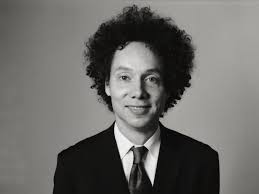
As I grew closer, I realized that the picture on the poster was not Malcolm Gladwell at all; it was me. Now, I don’t think there are many women who would mistake themselves for a man and be happy about it. And, I don’t think there are many people who would be flattered to be mistaken for Malcolm Gladwell, no matter how many books he has sold. (Personally, I think he is very cute in a geeky sort of way because he is not very cute in another sort of way.) I must also say that I hadn’t seen this picture of me before. It had been taken by university photographers in their biennial round up of faculty for up-to-date photographs for university publications. It was horrid. It was me, of course, but not the me, I know I myself to be—my fifty-five year old me with curlier hair and fuller eyebrows.


Below is the evidence.   One of these photos is Malcolm Gladwell; the other is me. Now, imagine these images on a poster at some distance away and you can easily see the resemblance between Gladwell and myself. And, you can sympathize with my disappointment, both at mistaking myself for Gladwell and for imagining that he and I would share the same lecture series.


download-3.jpg                   download-2.jpg


I assign readings by Gladwell in my sociology courses and intend to continue to do so despite our recent misunderstanding, not that he is aware of it. I have learned lessons here. One is not to appear on any sort of poster, whether issued by a friendly university or the FBI. The second is to try to regain ownership and distributorship of photographs of yourself. I just checked Google Images and found images of myself I wasn’t aware of. This is terrifying. Finally, you should really be careful about hairstyles. A decidedly poufy hairstyle in a nation of straight ironed, blown out hairstyles is certain to make you a likely candidate for a Malcolm Gladwell look-alike contest.

Dodging silver and other bullets

Today, I nearly walked into the path of a car that was entering traffic from a parking lot. The driver was edging into the road and had carefully scoped out his exit. I am certain that he had looked up the street and down. I was the surprise—a blind spot—in his field of vision. He was moving south; I was headed east. One half-second earlier and I would have gone sailing over the hood. I am a small woman, somewhat fit and maybe athletic. I saw myself arcing in a gymnastic tumble, except, unlike those tiny bouncy teenagers who would land on their tiptoes, I imagine that my head would have hit the pavement first, a non-sanctioned Olympic move called The Double Concussion Flip and Fall. Moby’s Wait for Me was playing in my earphones and I was over-dressed on this sixty degree spring day.

To break my fall, I stretched out my hands. This failed and my chest hit the hood of the car; my head whiplashed back. I tried to resettle myself: What was I doing before I slammed onto the hood of this car? Where were my thoughts?

The driver waved his hands in apology; I waved back. It was like a silent movie. All gestures, no talk. I wanted to dance a bit, maybe skip in front of the car as I left the scene, just like Charlie Champlin would have. It was a magic moment. A minute before we had been invisible to each other; now we separate with a little memory, a shared story, and maybe a wee lesson, depending on our temperaments.

This encounter put my mind on the path of other near misses—a series of events that could have led to some serious trouble. I have sped through a stop sign late at night, distracted and tired. I have twice driven the wrong way down a busy street at twilight.. Earlier in that day, I would have without doubt faced a series of quickly moving cars, zooming up the hill. I would have been like a little cat facing the running of the bulls. We could all have been seriously hurt.

I have been in cars that have spun out, flipping on their heads in slick Alabama clay. I have been held up in Texas on a little walk in the good part of town. The man who did this looked upset enough to hurt me. I have dodged so many medical scares, that I am pretty certain that my health insurance company thinks that I messing with their premium calculation algorithm. I have had so many tests and been diagnosed with so many wrongly accused major illnesses,there must be a office pool somewhere betting on my demise. I could go on and on here but it seems with every incident I recount here, I am feeling both dizzier and bolder. With so much good fortune, a karmic calculation would have me dead pretty soon. As they say, I may be running out of good luck. Or maybe in that cosmic computation, or my good fortune comes at the costs of another’s unearned bad turn of chance.

Which gets me into the meat of what is really on my mind. Earned and unearned good fortune. the movie Funny Girl when Fanny Brice finds early renown, she says to her lover and supporter that she can’t be famous yet because she hasn’t suffered enough. I understand this feeling. It is that sentiment that much of what we have is unearned. I have unearned good health, undeserved energy, unnatural optimism. I don’t know if others feel this way about the gifts they have. I think we mainly focus on what’s missing.

It seems to me that most of us have experienced good fortune we have neither earned nor merited and of course, the reverse is true. The Just World hypothesis suggests just the opposite, that what we get is what we have earned. People are rich for good reasons, not trumped up excuses. People suffer in poverty because of bad choices. When we think about who is rich and who is poor, who enjoys good health and who falls to early disease, we frequently resort to this idea. We typically see great justice in the way of the world. It is comforting and somewhat cruel to believe that we get what we deserve. This is especially true if we believe in the power of individuals more than we do that of systems and structures. If we believe that through individual pluck and drive that the poorest child who has gone through worst schools can make it to Harvard and lead the world, we tend to be judgmental when they don’t. If we cannot see the advantage that birth and family and neighborhood bring to us, we probably believe that we are playing on a level playing field.

Twentieth century philosopher, John Rawls, suggested that in considering systems of justice, we imagine that we don’t know where in a social system we may stand. When we are making rules for running the world, we should evaluate them outside of our own interests. We should create systems that don’t favor or disfavor individuals because of race, gender, social class, national origin, cultural differences and so so. If a thought experiment like this were possible and if it could influence social policy, we would have be to convinced that we actually could stand in someone else’s shoes and represent their position fairly and respectfully. Hale doubts this can be done because of what he calls the veil of opulence—the blindness that we all have to the privileges of birth and position. We fall victim to the comfort of believing that if we fell on hard times, we would work our way out of it. The veil of opulence works like the Just World Hypothesis. It creates that delusional narrative that we are self-made, deserving human beings whose unearned good fortune insulates from caring more deeply from others who we see as not as worthy or deserving of what we have. Lots of us dodge bullets thinking we are lucky and blessed; not imaging that the cards are stacked in our favor.

Jews, Jesus and encounters at the front door

Sociologists and political scientists are worried about us—all of us and some of us a lot more. Part of their compensation package is based on how many people they can convince to share the same worry. And, if that worry turns into a social movement, that is even better and actually miraculous. As a few of them might conclude about such a development, such progress would be “an unanticipated and not well predicted outcome given the variables under consideration and the logic model imposed upon the data.” Huh?

 In any case, they are worried about the way we live our lives, especially compared to our previous settlements and interactions. For example, they report that our children used to play with the neighbor’s children; now children are matched up with like-minded and like-classed others and sent far away to the develop their talents, no matter how weak those gifts really are.  Play dates are increasingly like arranged marriages.

 They also note that where we live—our address in a specific community—has fallen victim to the “big sort.”  If on Memorial Day weekend, we look to houses on the right and to the left, chances are everyone is cooking on the same type of grill and eating the same menu. We are organized by social class and hardly meet or interact with others who are living other circumstances. When I was growing up very working class, the dentist next door would always borrow our lawn mower, not because he couldn’t afford one but because my father was more “handy around the house” than he was and could keep a lawn mower running no matter what the challenge was. This allowed us to trade that favor into pretty good dental care.  In academic circles, this is referred to as “social capital” and is as valuable as other forms of capital, only harder to commodify and certainly nearly impossible to put in your wallet.

 They also complain that we are increasingly isolated and privatized.  We don’t visit with our neighbors. We don’t drop in at each other’s houses.  The world is so digitized and segmented and that the old days of people coming to your door without a pre-arranged mission are long gone. You could with great justification greet someone at your door these days with a salutation like “Did you NOT check my online calendar? Did I seem ready to accept visitors?”  Now, when the doorbell rings it is for a special function—the UPS man, the cable guy, or people you’ve invited for a dinner you’ve Doodling, texting and Googling about for weeks on end. When those earnest signature collectors come from Clean Water Action is an exception. They are too young to know they are breaking some big rule.  And, of course, there are the Jehovah’s Witnesses who must have special training to employ rejection as a source of connection to salvation. I admire their inability to know where they are not welcome.

 Two weeks ago, on a busy Saturday morning (another observation by the sociologists—even our leisure time is way over-programmed) the doorbell rang. When I first heard it, I thought, “Do I have a text?” “Is the laundry done? “Is the smoke alarm battery calling in to let me know its days are numbered?” Yet another observation by another researcher, the average American adult hears 150 beeps/blurps/chirps/bings every hour, most of which he ignores, just as he should. Some days, when my electronic devices seem to all call out as if it is their mating season, I feel like a dog in a Skinner experiment, raising my little ears and salivating for no good reason. These days, like mothers of yore, our smart phones rings and we can call out “That’s my phone; I’d recognize its ring tone anywhere!” I think all primates, birds and even worms recognize these calls for attention.

So, the doorbell rang I made my way downstairs We don’t have any way in our house of checking out who’s on the front stoop except by running outside and seeing, which really blows your cover. So, I simply opened the door to find an elderly man and a younger one. I deduced that they were together by their outfits, neither dressed like the FedEx man. Initially, I thought, “Encyclopedia salesmen” but then I remembered there were no more encyclopedias and selling Wikipedias door to door seems sketchy. And, besides these men were more Fuller Brush than Face Book types. I gave them a quick look over and thought they posed no terrorist threat, so I opened the screen door as well and gave them a little smile and asked, “Can I help you?” 

 “Well, good morning, Ma’am. Isn’t it a lovely spring morning!” 

 I stuck my head out the door, looked around and agreed that it was.

 “Ma’am, I am minister Bradford from the Calvary Baptist Church up the street and this is a parishioner from my church, Petey.” Petey couldn’t stop smiling and raising his eyebrows.  They seemed nice enough so I let him continue his introductions.

“Ma’am, do you know Jesus as your personal savior?”

 Gosh, the swarm of snarky replies that swept into my conscious brain was almost overwhelming. I have never ingested a really serious illegal drug but I imagined this was like that rush. Part of the problem of being a professor is the employment of quibbification as a tool of combat and partee. Quibbification, as defined the Professor’s Handbook, is the tendency to question every word and argue as long as breath will allow to answer questions that no one but you and another remotely quoted scholar has raised. So, when this nice man asked this question, I wanted to jump into a discourse about the disappearance of mainstream churches, the attraction of me-centered theology, the development of drive-in churches, God as a merchandising brand and so on.  My brain spun on.

“I don’t know Jesus as my personal savior but I bet you don’t know Megan, my personal trainer or Siri, my personal assistant, either” was my second thought. That sounded like it evened the score but it had a taste of meanness to it. My third possible response followed.

“I don’t know Jesus as my personal savior; our relationship is more spiritual. I consider Him less a friend and more of a benevolent overload. Sort of like one of the heads of the Hogwarts school, but with an appeal process.”  That kind of reply sounded like it could have launched a long conversation about schisms in the church and the changing character of religious faith. This pastor may have read the same sociological journals as I did and given his seriousness of purpose may have known the literature a lot better.  So, I passed on that response, as well.

I simply replied, “Actually Reverend Bradford, this is a Jewish household.” 

A light fell over his face, like rapture.

“My gosh, we love the Jews!” He nodded to his colleague, “Don’t we, Petey?” I think Petey nodded but mostly I think he was surprised at the turn the conversation took. Or maybe, he could just read my mind.

Then, he rolled out in quick order all the reasons why Jews such a gift to him.

“Ma’am, did you know that Jesus was a Jew?”

I am thinking, “Well, that’s the way the story goes but why was his last name, Christ?” I let it go.

 “And all the apostles were Jews.”  I nodded my head; I did know that.

 “And, the Jews gave us the Old Testament.”  Quibbification raises its head.  “Gave?” I wondered. Maybe not exactly gave. Maybe, left it hanging around like a library book that gets read by lots of people. And, I didn’t want to get into the complications here with authorial attribution and the lost Gospels and the DaVinci code, so I let that go, as well.

 I smiled in recognition of his kindness and openness to me and my faith. Of course, it should be said right here that I was raised a Catholic and live with a partner who is Jewish. So, quibbling again, we are not exactly a Jewish household but my claim to him that we were seemed like an easy enough way to not have a long conversation on the steps. I wanted to be kind and respectful.

 “Well. Reverend, in this household we embrace all faith traditions and respect yours, of course.” I thought, gosh, it is so easy to sound inauthentic.

 “I hope you have a good day and best wishes in your ministry.” I shook their hands and they left with a little wave or maybe that was a blessing.