This blog includes essays about life, aging, humor, inspiration and creativity. These things capture my attention and I hope are worthy of yours. Sandra Enos.
When I was a child growing up in the fifties, it seemed that everyone in my life – my parents, my teachers, my aunts and uncles, and grandparents – and everything in my life – from the movies I watched to the books I read to the things I dreamed about – were all aligned in a project to make me a very good person. I resisted these influences in my childish ways but overall, I bought in. I embraced their hopes and dreams for goodness for me, but that wasn’t enough; I wanted to be a Saint.
My little sister and I shared a tiny bedroom and, on those nights, when my mother had a late shift at work, I would read to her at bedtime. I had the upper bunk and with the streetlight falling brightly onto my pillow, I could read as late in the evening as I wanted without detection. Our favorite book was given to me by my aunt Gaby. Without her own children, she had plenty of time and energy to devote to my development and guidance. She gifted me The Children’s Book of the Saints for my First Communion. Every day of the year, there was another story of a Catholic saint, a simple guide for us to inspire goodness and courage. It was perfect for my dreams of sainthood. We loved best the stories of the saints who were martyrs. Stories of Saint Ignatius who was a rich boy and a soldier who then repented and found the Society of Jesuits did nothing to excite us. Saints like him seemed to us good enough but not bold or inspiring. We need saints who had visions and who suffered. We loved stories of saints like St. Bartholomew who was skinned alive, St. Ignatius of Antioch who was fed to the lions, or St. Lawrence who was burned at the stake. Never denying their faith. We relished stories of saints, like St. Juthwara who’d been beheaded and walked away with her head in her arms, on her way to church to pray. Our favorite was St. Thecia. When they tried to burn her at the stake, it rained. When they fed her to the lions, they laid down and licked her toes. She kept trying to kill her with snakes and swords but protected by her faith, not torture not the work of man could kill her. She lived to her eighties. As a child, I hadn’t yet worked out just how I would get myself into situations where I be given a chance at martyrdom but my mind was firmly made up to do whatever I needed to do to become St. Sandra of Rhode Island.
Recognizing the power of movies over our generation, the nuns gathered us together in the cafeteria every month to watch an inspirational film like Boy’s Town, Captain January, or TheMiracle of Fatima. When I was in the second grade, we watched a film about the Maryknoll Brothers doing missionary work among the pagans in China. At the end of the movie, the Chinese marched a Maryknoll Brother up a hill and crucified him – “He refused to deny his faith”, the narrator intoned. We were stunned; I was inspired. Our nun talked with us about the movie and about our faith and passed around the little metal box where we were supposed to drop our change to support the missions. Some of the kids had spent theirs on candy; not me. Then, she asked, “Children, how many of you are willing to die for your faith?” Almost all our hands went up. “Me, sister! Me, sister!” I was so proud of myself for offering my life for Jesus Christ. I never told my Mom, although maybe she would have been proud of me, as well. She knew about my sainthood thing.
From that moment on, I have never doubted for a minute that children could be recruited into Brown Shirts or an army of child soldiers or into the Children’s Crusade. Children may be innocent but they are engineered to be socialized into groups well-intended or evil seeking. I gave up on sainthood when it seemed the pagans were disappearing from the planet and emerging as Buddhists, Muslims, Hindis, and people of other faiths. There were other diversions from sainthood, as well, but that is a much more common story.
I posted this on Instagram and received several comments about the poem being “touching” and “lovely” and “heartwarming.” This little poem is meant to be funny and goofy. Could I have missed the mark? Maybe, no one really reads a poem on Instagram. In any case, this poem is best read aloud.
Across a crowded Zoom
I’ve been looking for love in all the wrong places
Because now that I’m older, I can’t remember faces
Which causes a problem in communication and connection.
I’m just looking for nice. I don’t need perfection.
I’ve tried going to church and meeting the congregation
I tried traveling the world on expensive vacations
I even ventured into learning ballroom dances
Maybe, I’ll meet someone, what are the chances?
Desperately, I tipped my toes into internet dating
But that feels like shopping, not at all like mating
So, I took an online course in romantic poetry
Thinking that certainly my love would there be.
I signed into the class, with twenty other students
Many speaking loudly, others simply muted
And I saw you in your square, your grace filling the room
And, all of a sudden, I fell in love on Zoom.
You looked so happy and pleased to be there
You sent us a chat message just to show how much you care
I was smitten and enchanted, just by your smile
And wondered how long I’ve waited to be so beguiled.
The class began with hellos and intros of all
You were a poet (I knew it) living in Sioux Falls.
With me here in Boston, our romance may be doomed
But if we really fell in love, we could zoom and zoom and zoom.
You were brilliant and insightful but when I tried to speak
I kept muting myself, like a clumsy teenage Geek
I scanned your screen background to learn a little more
And on your bookshelf, what do I see? Is that Mary Olivore?
Please, please don’t turn off your screen, we’ve only just met
Would I be too forward, to call you, My Pet?
I could send you a zoom invite for just we two
Gosh, I’d upgrade to premium just to spend more time with you.
Or should I go on looking for somebody special for me
It has come to our attention that as the size of passenger seats has declined that the number of complaints about passenger behavior in those seats has increased. While not rising to the level of a terrorist threat, these complaints have been the subject of an inquiry by Her Majesty’s Commission on Good Order in Seats under the Dominion of the Empire. Accordingly, today, we are issuing draft regulations that we hope do make our expectations clear about the right order and decorum in the passenger seats. Such regulations only apply to the leisure traveler and neither to those in business nor first class where order appears to be maintained by a more genteel breeding. The timing of these regulations is a matter of urgency as increasing numbers of people all over the globe are turning to the British for guidance in these troubled times on matters of decorum and manners. How else to explain the popularity of Downton Abbey? We British simply have the market concerned on civility and good manners, despite some recent high jinks in the royal family. These simple rules can surely return to the plane cabin some of the glamour of jet travel that existed before too many people could afford to fly.
Rule #1
The arm rest
In a typical seating arrangement on a flight, there are fewer armrests that there are arms. For example, for a three-seat wing accommodating three passengers with two arms each, we would expect six armrests. However, to save money, the airlines install only four armrests, leaving an undercount of two. This is not our fault; register a complaint with Boeing and Airbus. This shortage requires that EVERYONE share. The occupant of the middle seat bears this especial burden since that individual has no armrest of his own. Despite a common belief, the first person to arrive in the seats has no right, under national law or Geneva Convention, to claim the armrest as his. Neither does membership within a racial group or religious organization constitute such a claim. Similarly, the larger arms found on most men does not bestow upon them any endowed right to the armrest. It is our policy that all the arms of our travelers have equal call and claim to armrests. Accordingly, a timing device has been installed. A small really negligible electric shock will be administered every ten minutes to assure proper sharing of the armrest. In the event that this fails to move the recalcitrant resistant arm, the cabin attendant can adjust the current. Technology has evolved to allow this system to work efficiently and effectively.
Rule #2
The rightful allotment of seat space and its environs
Contrary to U.S. law on this issue, British law and custom argue for a circumscribed space that is purchased with a standard airline ticket. In other words, under the British system, one buys his seat but that does not allow one to claim the penumbra around the seat. This stands in opposition to American jurisprudence and practice which suggests that it is not only one’s seat that one is purchasing but the area around and into the other’s seat if one is big and pushy enough. Clearly, we see the American doctrine of Manifest Destiny still rules the American traveler. Our seats are NOT selected to accommodate your specific height and weight. For that, you buy a wet suit. Our seats perfectly fit the average male in Great Britain (determined by the British census of 1920) and so should fit women as well.
Overwhelmed by complaints from passengers that other passengers were taking up more than their fair share of breathable air and seat real estate, we are hereby providing enhanced procedures. A passenger may request from the cabin attendant a PROOD, a passenger-restrain-of-other-device. This instrument fits in between seats in accordance with British law on property and boundary rights on an aircraft. A full-body version can also be requested to guard against passengers whose body frame leaks into another’s as well as those passengers who fall asleep with their heads on the shoulders of strangers. Such activity is seriously disapproved by this airline.
Rule #3
General communication protocols
It should be noted early in this paragraph that we were one of the earliest airlines to accommodate digital devices in our cabins. This is despite our deepest reservations that this move would lead to a further diminution of civility and correct behavior. We had expected nothing better than the worst that has emerged. We have waited as long as we could before issuing guidelines.
To game players. Despite the fact that you have your earphones on, the rest of us can hear the guns, the shouts, the senseless music, the crashing cars. Please lower the volume or risk having your gaming device tased on our armed staff.
To the viewers of pornography, this should be done in your home, in your bedroom, if at all. Our cabins are full of children and people of good taste who really have no need to see what turns you on.
To traveling salesmen. Do not coyly bring up your latest website so you can cleverly poke your neighbor in the ribs, saying “Oh, man. Look what the IT guys have done. Our next Turbo Filter looks awesome. It replaces the older mode.” Blah. Blah. No one cares.
To grandparents. Only one person on the plane wants to see hundreds of pictures of your grandchild and that person has just locked himself in the restroom after seeing hundreds of pictures of someone else’s grandkids.
Our overall advice: keep to yourself. Pretend you are carrying state secrets and imagine that this is the case for your seatmate, as well. Imagine that he will have to kill you if he reveals anything at all to you. Who knows? It may be true.
Enjoy the flight. The cabin attendants will be serving refreshments if they think you deserve them. Thanks for flying British Air.
I came from a family where wearing makeup and caring much about one’s appearance was frowned upon and considered vain. I knew that I was not a great beauty. I was one of those “she has such a nice personality” girls, encouraged by my mother to develop my brain and housekeeping skills because youthful good looks wouldn’t last forever. She failed to tell me that my brain and housekeeping skills would also fade with time. (Thank goodness for the latter.)
I successfully resisted makeup and even paying much attention to my appearance until much later in life. Then I relented in my early seventies. Maybe it was my very pretty dermatologist. We had tried lotions and cremes for aging spots, and nothing worked. One day, she suggested a chemical peel. The results sounded promising. Clear skin! My heart swelled with expectation. I remembered what Charles Revson, the founder of Revlon, said about the cosmetic industry. “We don’t sell lipsticks. We sell dreams.” Or “Perfume is made in the factory, ‘hope’ is sold in the store.” So, I bit the bullet, believing in magic. The promise, dream, and hope of a better me.
Even after bottle after bottle and tube after tube fails to make us beautiful, we again and again put our faith in the magic of potions and creams and procedures, resting on a shaky foundation of that improbable fix.
I signed for theleast intrusive chemical peel, as I called it, the baby peel. My lovely dermatologist and her aide prepped me with alcohol and brushed the peeling agent over my face, paying special attention to the darkest areas. The whole thing took less than thirty minutes. I went home with discharge instructions and suggestions to stay out of the sun and take it easy. I should be back to normal with some redness in just a few days. Imagine that!
The discharge instructions and the calm counsel from my dermatologist were completely inadequate for what followed, like the instructions that Marie Antoinette might have gotten before her beheading, “You feel a sharp pinch in your neck that will end quickly, and you will fall into a deep state of rest and relaxation.” Follow-up instructions generally fail to describe what really happens in post-surgical recovery. Doctors are woefully inadequate in describing pain. Maybe, they figure no one would sign up for any surgery if they told the truth or maybe they resolve to leave the theatrics to the fiction writers of the world. If I wanted to really know the truth about a chemical peel, I could watch a Lifetime movie.
I resolved to catalog my agony and suffering. I took photographs and maintained a log. I have had several surgeries, some quite serious and nothing was as painful as this. I was actually crying in the anguish that I had gone through this suffering for vanity and nothing else – my punishment for believing in magic.
In the follow up visit to the pretty dermatologist, I am eager to share my misery. I have photographic evidence on my phone and paper documentation. However, before I can answer her question, “So, how was the recovery?”, she interrupts, looks kindly at me, and says “Horrible, right?” I nod in disbelief. All that was normal? I suggest to her that she needs to rewrite the discharge materials to more accurately describe the burning, the tightness in face, the frightening peeling of the skin.
Before she can disagree, I begin, “Here’s my version, Doctor.”
First, they pour acid on your face.
Then your skin lifts off your face and dies right in your hands.
Then your face burns no matter what you do.
It will seem that the procedure has gone completely wrong but that is entirely normal.
And please don’t sneeze because we have no idea what will happen.
Clinical results will vary.
We suggest that your loved ones take a short trip while you are recovering because some partners may suffer from nightmares from seeing the patient on days three and four.
Results will vary and are unrelated to your suffering.
The procedure may be repeated in six months because the spots are likely to reoccur.
I spent my childhood in the fifties, living a standard working class childhood. Besides all the other tasks associated with socializing children, the adults in my life were focused on exposing us to wholesomeentertainment. I remember Sundays at Mass where we would as a community take the Legion of Decency pledge, foreswearing temptation, and the work of the Devil. One version of the pledge read as follows:
I condemn all indecent and immoral motion pictures, and those which glorify crime or criminals. I promise to do all that I can to strengthen public opinion against the production of indecent and immoral films, and to unite with all who protest against them. I acknowledge my obligation to form a right conscience about pictures that are dangerous to my moral life. I pledge myself to remain away from them. I promise, further, to stay away altogether from places of amusement which show them as a matter of policy.
I remember all sorts of films received C (condemned) ratings including the Rosemary’s Baby, Clockwork Orange, The Producers, The Rocky Horror Picture Show, and Saturday Night Fever. The Legion of Decency was run by a loose affiliation of local civic leaders, not really a body of the Church. Pope Pius XII wrote that instead of condemning morally dangerous movies, Catholic organizations should be promoting good ones which is something my mother and my grammar school did all the time. I am not certain why the adults were so obsessed with movies. Perhaps, they had seen the ravages of unwholesome entertainment on the brains, souls, and character on the population. Maybe these effects were especially powerful on innocent children and callow youth. They wanted to mount a defense. My Catholic elementary school was especially vigilant about protecting “purity”. In my reading of the Lives of the Saints, a very high percentage of girls who became saints did so by protecting their purity. As a small child, I had no idea what any of this meant. I imagined it might have to do with the cleanliness of my soul, making sure nothing nasty entered. The ritual of confession offered a nice regular scrub down. You would share your sins with the priest. He would pass along some penance prayers, and within no time, you could be back to making mischief again.
I had loads of questions about penance. I knew that basically my sins were small potatoes. But suppose, someone confessed that they murdered someone or denied their faith or stole candy from their brother, could the priest make them go to jail or whip them or send them to their room without dessert? Certainly, it couldn’t be that everyone should just get to say a few prayers and go about their evil business. Who even remembered those prayers and who checked up to see if they were really recited with a pure heart?
A prime rule of child rearing in mid-century families was that It is important to offer children good things to do and consider, otherwise evil forces will capture them and never let go. They had to cut off bad influences at the start. A child will not want to see a a bad movie, “bad” in the sense of corrupting, when they can see a “good” movie, one that would lift them up morally, like the Song of Bernadette or even better, Rebecca of Sunnybrook Farm? The former was nominated and won several Academy Awards. The film tells the story of the apparition of the Blessed Virgin Mary to a poor girl named Bernadette. Miracles ensue, the sick are cured, and she is eventually canonized. Her faith triumphs over lots of disbelief and naysaying. As a Catholic child, I saw that movie lots of times, fully expecting my own apparition, if I could remember to pray and be good and simple hearted, full of faith and obedience and not much else. I was not visited but neither were my more obedient and devout classmates.
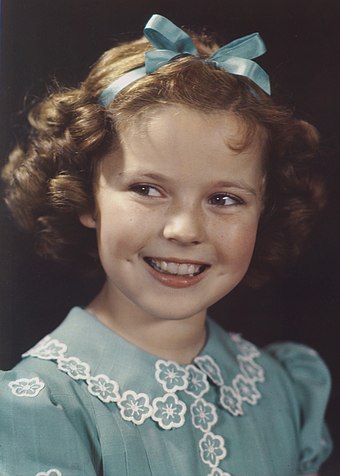
Despite the fact that I saw plenty of religious movies, the central figure of my wholesome childhood viewing was Shirley Temple. She loomed large at home and at school. We saw her movies at school at our first Friday film afternoons where the entire student body from first through ninth grade would gather. These were also shown on television on Saturday afternoons and my mother, a real devotee of Shirley’s, would watch those movies with us. We laughed and cried and “Awwwed” together. My mother could recite lines from these films that she remembered from seeing them in the movie theaters as a child and as a young adult. She loved Shirley Temple; I could see the adoration in her eyes, and I think I wanted some of that unqualified enchantment.
Shirely Temple
She had everything on her side. She was undeniably and overwhelmingly cute. She danced and sang in an adorable little girl way. She pouted endearingly. She had a strong moral compass and consistently directed adults to do the good and better thing. She showed the path to joy through good wholesome living. Even if you were a misanthrope, you had to like this kid. I remember feeling badly for boys because their role models seemed to be troublemakers from the Little Rascals, like Spanky, Alfalfa, and Buckwheat.
I don’t ever remember thinking that Shirley and I could be friends. I don’t remember thinking that she’d be a nice sister to have. I liked all of my friends well enough and really loved my sister. But I watched her in overalls in Rebecca of Sunnybrook Farm and made a note that I had overalls, but I didn’t quite look as cute. What was it about this kid? I saw her in so many movies with those killer banana curls. I had thick, black, nearly uncombable hair but earlier in my life, I had workable hair. Somehow that changed. Maybe, we lose our lovely baby hair like we do our baby teeth. My mother’s only attempt at hair styling was to cut my bangs short and let things fly. To address my hair issue, my favorite aunt took me to the hairdressers in the first grade where Leona gave me a makeover in the form of a pixie cut. With a gap in my front teeth and a very short haircut, I was quickly running away from any chance of looking like Shirley Temple. I needed another strategy.
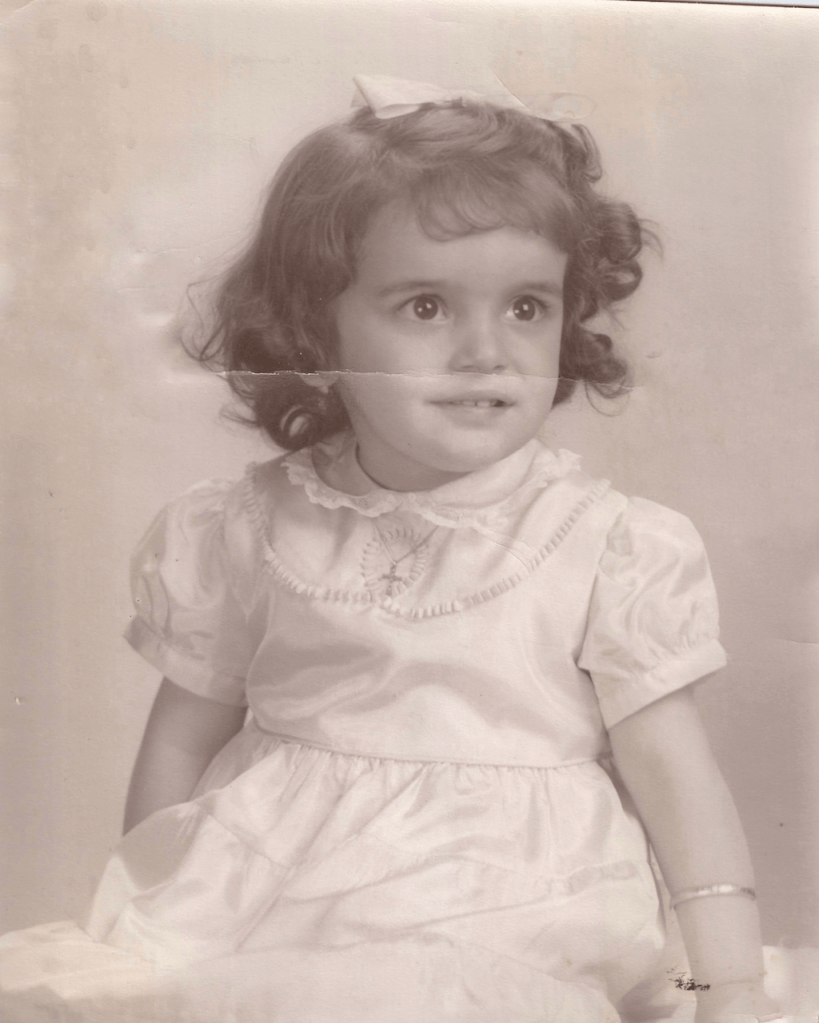
Me at three years old. The Shirley Temple influence is obvious.
I tried to sing like Shirley Temple and followed her steps closely when she tap-danced up and down a staircase. I tried to pout, swing my arm into a let’s-go-get-‘em pose, and say cute things like, “I’m very self-reliant”, which Shirley pronounced to the great delight of her elders in Rebecca of Sunnybrook Farm. My obsession with Shirley reflected my mother’s. She clearly adored this little girl. I compared her object of adoration and her own regard of me, which was so full of ambiguity and restraint. I recently learned that films like The Little Colonel, The Littlest Rebel, Captain January, Bright Eyes, Curly Top, Poor Little Rich Girl, andSusannah of the Mounties were made between 1935 and 1938. They were full of messages about optimism, grit, resilience, and spunkiness. Adults in Shirley’s orbit are charmed by her to do the right thing, to change their lives toward the better, to raise money for good causes, and golly, to do whatever it took to keep this child happy.
She is often without a family of her own. She is orphaned more frequently than any kid should be, but this gives her lots of chances to wheedle her way into the hearts of rich and poor, young and old, white, Black and Native American, the kindly and the grouchy. It is truly amazing. My Mom grew up during this time – in those years between the Depression and the Second World War. She may have embraced Shirley as a role model of sorts. She had six brothers and sister in an alcoholic home and was placed in an orphanage during the Depression at two or three years old when her parents couldn’t afford to keep her at home. Shirley Temple offered a glittering example of a charmed life. If the Gods could grant it, I would have loved to have been that child for my mother, but she very effectively resisted my charms for good reason.
But to live in the shadow of this lovely golden child – to see her weekly on TV and often at school, gave me a model of what a child I could be. What about this little girl could I emulate? Or maybe that was a losing battle. Maybe, I could simply understand that Shirley Temple was my mother’s fairy tale, and I was too busy with my own stories to be diverted by this one for too many years. I grew out of love with Shirley Temple and set my sights on Annie Oakley, another hero of fifties television.
Every day, we face opportunities to bloom and grow, as well as lots of ways to stagnate and get stuck. It takes some work on our part to recognize how many choices we make every day — deliberate and unconscious — that really steer our lives along one path or the other. I have been thinking a lot about this since I retired a few years ago.
When you are pursuing a career, the last thing you want to do is to undermine your pose as a serious competent person, someone who knows the rules and follows them. But since leaving that position as a sociology professor, I’ve embraced new adventures that take me way away from my comfort zones. I have embraced the blessing of the being the dumbest person in the room. We all have a long list of reasons why we don’t take up new adventures and opportunities. “ I will stink at this. What if I embarrass myself?Everyone will be better than me. I should have started in my teens. And on and on. I have countered those arguments with my own list of counterarguments. Imagine learning how to read music! Wouldn’t it be fun to put your wicked sense of humor to good use? This opens up new worlds to you.
If we want to grow, we may need to change our self-definition from a person who can’t to one who can and will.
Following these bold declarations, have taken up a series of projects that I really had no business doing, according to those self-defeating criteria of being too busy, too old, too shy, too me. In fact, a key here is to define yourself as a new kind of person, a person who tap dances, or sings in a choir, or plays drums or leads walks, or teaches yoga and whatever that may be.
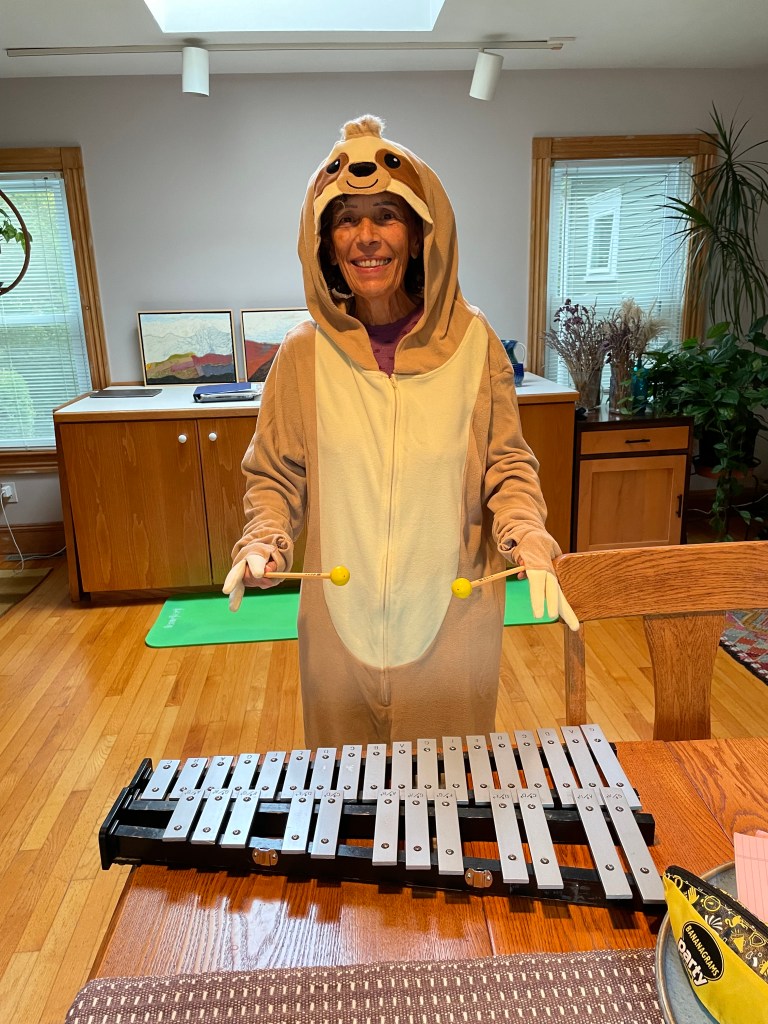
So, I started a new business that’s been a wonderful gift with some big fails. I took improv classes and been on the stage with a talented group of actors. I enrolled in a poetry class, my very first foray into writing poetry and sharing it with others. I joined a community band where I was not only assigned instruments, I’d never played but just had my debut as a mallet percussionist (Glockenspiel and timpani) in costume. In the photo, I am dressed like a sloth because I really am not only the slowest person in the orchestra but also the least experienced, having never in a band before and very new to reading music. In every one of instances, people have been kind and welcoming; I have made new friends; I have learned new skills that I thought were out of reach and have a new sense of possibility and joy. This all in the context of a challenging personal year with the deaths of several people I was close to.
Combined with the hard-won wisdom of being an older person, embracing being the dumbest person in the room has left me with more room for learning, growing and fun and less space for self-criticism, embarrassment, and regret for not doing things I have dreamt of doing.
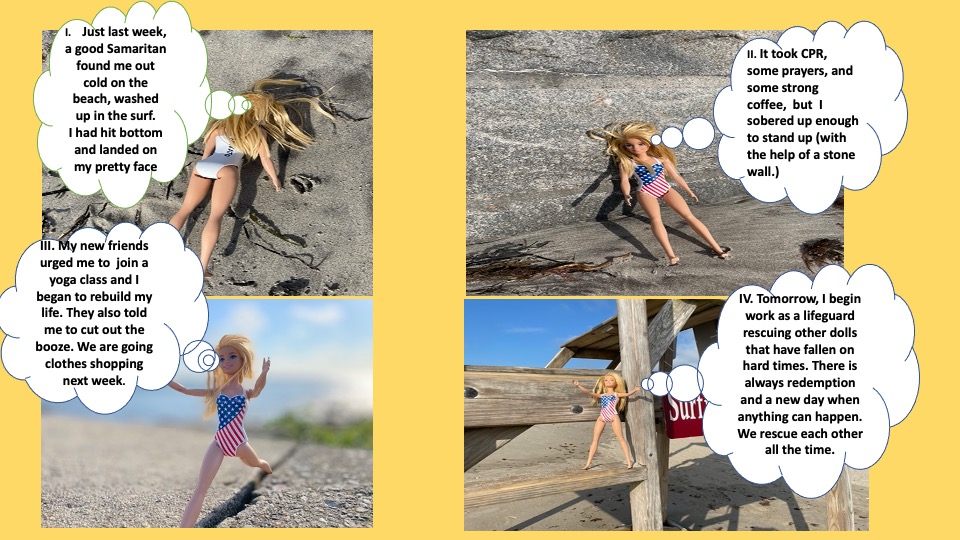
I took this series of photographs after finding this Barbie-like doll washed up in the surf at high tide. She was lying face down in the sand. I picked up and looked about for a little girl who made have left her but the beach was abandoned by then. I took her home, washed her up and put her to bed. I took her back to the beach the next day to take some more photographs, trying to tell a story of this girl who fell on hard times and was saved by some friends. I posed her on the lifeguard chair just after sunrise. This chair is usually populated by two young female lifeguards and thinking they could use some company, I left her with them.
In my mid-forties, I had a career crisis. I was bored to death at my state job reviewing applications for asbestos abatement assistance. The paperwork to get a grant for abatement was so onerous that we disbursed much more aggravation than we did money. I am not proud of that fact, but I could do could little about it. My supervisor was the sort of man who divided the world into two groups — the criminal and the pre-criminal. No one was above suspicion. He put rules and procedures in place to assure that no sneaky citizen would ever ever pull off a scam under his watch. I was his unwilling lieutenant repeating to applicants stupidly bureaucratic excuses for why their applications were turned down. I took a lot of appropriate abuse from perfectly eligible grantees. It was soul- and mind-deadening. I imagined myself, retiring at 90 or so, never having approved a single grant, and receiving an outstanding public service award from him for The Exercise of Frugal Excellence. He would be 110, still railing against incompetence and corruption, everywhere, everyplace, all the time.
I was located in a brand-new state of the art building laid out in a chessboard of cubicles. Our manager was very excited about this new office design, promising us that we would be more creative, and team-like. In truth, we felt like rats in a maze. With so little privacy and so much overcrowding, our union steward warned our overlords that we would most likely get aggressive and first turn on our supervisors, and then on each other. The workers wouldn’t be responsible. Instead, our bosses would have blood on their hands and it could be theirs, literally.
My little four cubicle pod penned up me and three other low-level bureaucrats. On one side was a young man divorcing from his wife and spending much of the day heaping abuse on her on the phone. On another, a woman constantly snapped gum and by the smell of nail polish and the sound of fingernails being filed, she was clearly running a manicure salon while pretending to meet with other employees. She was the busiest of us. In cubicle #3 was another man who played talk radio all day, muttered all day to himself and was full of bad ideas and half-baked theories. I saw myself as an abandoned soul in the land of troubled and troubling souls.
This new office landscape did not lead to our being more innovative and community spirited at work. It did the opposite. I hadn’t realized until I was trapped with them, how much I disliked each of them. I would sit at my desk with earphones, a face mask, and sunglasses, hoping not to be recognized. It was a perfect place to be a member of a witness protection program. Not one person ever came to look for me. It felt like Kafka may have been the genius behind all of this, like a revenge architect.
I came home each night wondering how much longer I could last. The good news was that this mind-numbing job gave me plenty of energy to dream about other possibilities. I settled on two. The first was to pursue a doctorate in Sociology so I could teach at the college level. I had been doing this for nearly a decade as an adjunct professor. Students liked the way I taught, and I loved the excitement of teaching challenging material in creative ways. This part-time job was like a lifeline to more engaging and stimulating world.
My second option was to become a standup comic. A friend and I ran “How to Be Funny” workshops at women’s conferences and those were really well received. I got several humorous pieces published in magazines. People thought I was funny; I could tell a good story. However, I was nearly fifty years old. Comedy hadn’t really hit the big time in the early 90s and there were few women comics that I really liked and admired. But undeterred by any facts at hand, I decided to explore being a stand-up comic. I connected with a middle-aged man who was a social worker during the day and an aspiring standup comic at night. I went with him to some of his shows. These were located in dismal, smoky bars, late at night, perilous to any woman in these places without a male attached to her arm. I got plenty of offers but none that would advance my career in comedy, except maybe to share truly clumsy pickup lines.
After visits to the clubs watching this guy suffer, I opted to pursue the more conventional route – pursing a PhD in sociology in my late forties, hoping to graduate when I was fifty. A colleague cautioned me that there were already 10,000 unemployed PhDs in sociology and that dreaming that I would land a teaching job was a fool’s errand. Having been on many fool’s errands and enjoyed them, I hopped on board and went to graduate school. I earned a PhD at fifty – the best learning experience of my life – and enjoyed teaching for a few decades before I retired. I was never properly a sociology professor, not a great fit for an academic role, but I did my best to carve out my own special practice as a uniquely weird professor.
Fast forward, twenty-five years after that PhD. and I was a retired sociology professor, ready to explore some new interests and revive others that I had ignored for way too long. During the second year of the pandemic, I decided to try out some new activities — to engage in some classes or activities I had sworn off, telling myself that I didn’t do these sorts of things. I wanted to step out of my comfort and competence zone. I was provoked by Emerson’s quote, “The mind, once stretched by a new idea, never returns to its original dimensions.” I loved that idea because I was sorely feeling that I needed new dimensions. I wanted my older years to be about expanding, not narrowing, my interests, activities, and friendships. I wanted to move down some new avenues while my health was still good and my energy abundant. I was looking forward to changing some things, to exploring what could happen.
Dan Gilbert, the Harvard psychologist, has done research about the end of history illusion. It refers to the ways in which we discount how much we will change in the future. We imagine that we have changed a great deal over the past ten years, let’s say, but assume that we will not change much in the future. What is even more interesting is that this illusion happens in the same way for people from all age groups. Neither the young nor the old nor the middle-age are any better at understanding how much change is ahead of us.
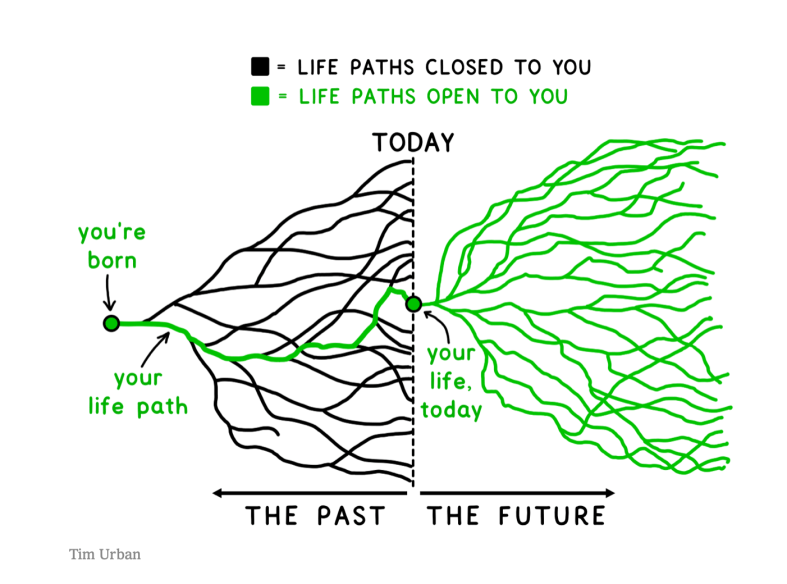
I was intrigued by this image is from a 2022 article in the New York Times[1]where author Tim Urban discusses how we use time and how we might consider our futures. At any point in our lives, we have arrived a place which is the result of multiple narrowing paths. We went to art school, instead of medical school. Or we didn’t apply for that promotion and instead changed jobs. Or we chose one partner over the other. On and on it goes. Each of these decisions leads to other opportunities; you foreclose on some possible opportunities at every turn. We can’t all the lives we might have lived. The only paths closed to us are the ones in the past.
However, ahead of us are many possibilities. We can be easily overwhelmed if we really take this to heart but if we really consider the many paths ahead, it is life-affirming, even in our later life. This is not to say that all of us are blessed with resources, time, and talent to move ahead and follow any dream that we can conjure. That is certainly not the case, especially in mid-life and later years when caretaking our elders, our partners, our grandchildren, and ourselves makes many demands on us. But there was enough truth here to make an impression on me. No matter what the constraints are, there are still plenty of possibilities and choices.
Over the course of my lifetime, I have put many obstacles in the path of exploring possibilities. Before I start anything new, I had to plow through a heavy thicket of objections. Why do this? Why now? What would I learn? Why didn’t I pursue music or language lessons when I was young? Am I too old? Can I really do it? Suppose I fail. Who would I meet? Would I like them? Suppose they don’t like me? What makes me think this is interesting? Am I having a late-life crisis? Is there such a thing? I would entertain doubts for so long that they got comfortable.
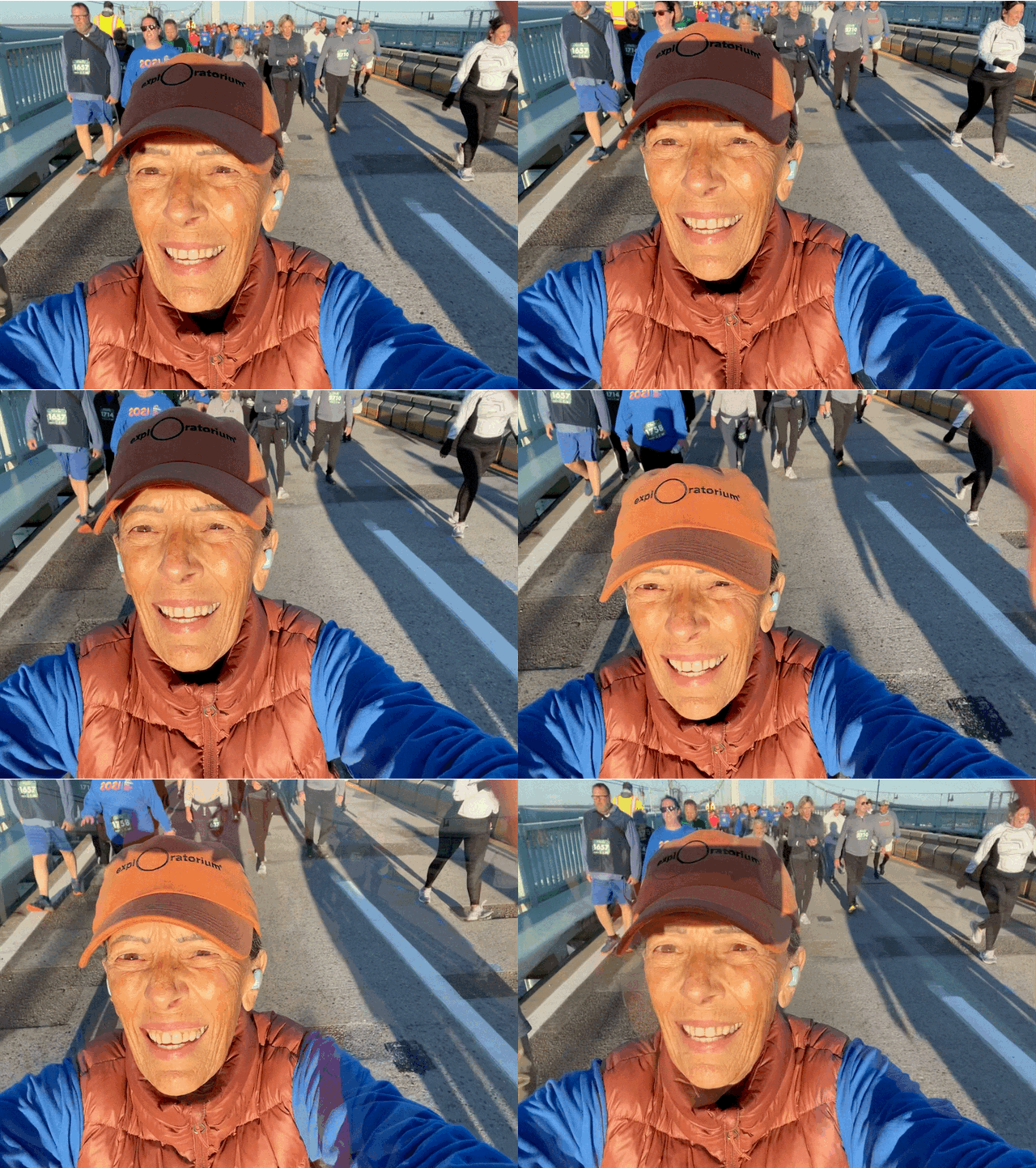
These were exhausting enough but not completely discouraging. So, gathering up my courage, I signed up for my very first 5K run. The race was a 5K over the Pell Bridge which spans Narragansett Bay in Rhode Island. The race started just before sunrise with three thousand participants on a beautiful October day At the peak of span, you can see Newport to the east, with a magnificent view of teh East and West Bays. I did very well in that race, finishing in the top quarter of my age class. I felt completely alive, like I did before the pandemic, with the world full of possibilities. And full of people enjoying their lives with each other, embracing the gifts we bring each other. A man proposed to his fiancé at the top of the bridge. Love (of life) was in the air.
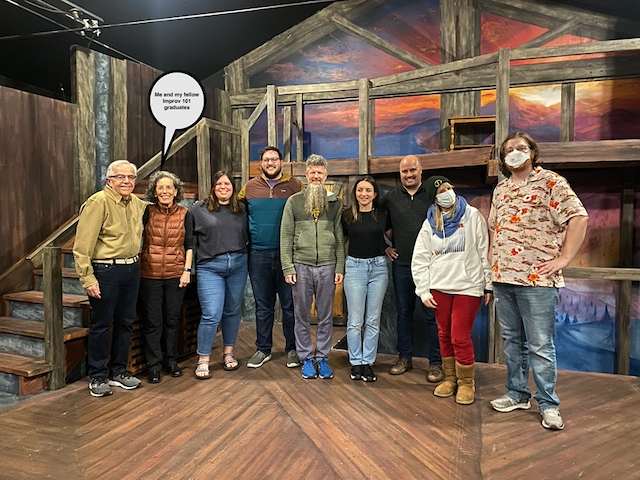
That summer, I also signed up for an Improv course, at OLLI,[2] hosted at the local university. The Improv class was a wonderful entry into the world of improvisational theatre. It re-awakened my interest in comedy. The students were at least 65 years old, drawn by an interest in Improv but with no big dreams or pretenses of appearing someday on the Comedy Channel. We were all simply curious and willing to be silly in the company of complete strangers. After years of pandemic isolation, we met in person in class, and it was delightful to be in the company of people I’d never met before; that felt like a completely new experience. I made two wonderful friends in that class. That course led me to another one at our local community theatre where the students were much younger, faster, and sharper[3]. That eight-week course was an engaging and challenging experience. I would leave these classes completely spent and energized. Soon I took another course in Musical Improv which tapped into another of my lifelong interests, singing and dancing and harmonizing—all of these re-ignited my sense of joy in playing with others. This led me to join the chorus catchers at my local theatre, where I am still learning the magic and structure of improv.
The Improv courses have been among the best learning experiences of my life. I say that in light of the fact that I was a very good student and a pretty good professor. I can perform pretty well in the structure, hierarchy, and predictability of traditional education but I really came alive as a learner in the improv environment and believe that almost anyone would benefit from a similar experience. What follows are my observations from improv classes. So, with less than one year of improv under my belt, I am ready to offer some summary observations and reflections. I call this LifeLessons from Improv or Everything I Learned for Real I Learned in Improv.
What happens in improv doesn’t stay in improv.
In improv, there are no set scripts. Improv classes are a series of games and exercises that teach some of the skills and orientations you would need in improv theatre. These exercises are fast. You are obliged to think on your feet. Not to overthink. Not to try to be funny or clever. To tell a story in improv, you rely on the other actors to create that story together. No one is really in charge. You are simply connected to each other in a contrived space and social situation. No experience is necessary. No basis of knowledge will help you more than another. In fact, it seems to me that the great variety of stories we all carry is the great fuel for improv. These serve as a great reserve for plots and characters and the flow of the stories told.
The key to improv is being in tune with your fellow actors and learning how to be in tune with a great variety of people and personalities in a short time. In music improv, you are not only telling a story, but you are also creating songs and choruses and dances sometimes. It calls on different skills, but you are still co-creating a story right on the spot.
For example, a typical improv musical runs in two acts about ninety minutes long. There may be four or five actors in the cast. The host of the show will ask the audience for the name of a musical that has never been done before. The audience may suggest, such as, Floating Down the River, A Town Called Fortune, or Dancing with the Cows. The actors choose one of these and then are challenged to pitch their idea of what the story will be. The audience claps to indicate their favorite among the options and the show begins. The actors will take their places on stage and the director sets the scene with a time and place. A conversation will ensue among the actors who begin to introduce their characters. Soon, someone says something, like “the trees look so big in this forest” or “I just had a crazy dream” and motion to the pianist that this phrase will form the first song. Music begins to play, and the actor begins to sing the words to the chorus. This is repeated until it seems set. The rest of the actors join and add verses that begin to develop a plot, the characters, the scene, and some interesting possible developments. The director may add challenges (“Ask her to marry you, Gary.”) or ask an actor to change her mood (“You are really really angry about this, Alice.”). The story line and characters develop, and chaos ensues. The magic of all this is how each show unfolds. It is very often a complete surprise to everyone who is on stage. The skills to do this work (or play) depending on your perspective are considerable. I will argue below that these are not just critical for improv, but that they instead broad lessons that could benefit all of us.
Since I have been taking improv classes, my friends have been asking me, if it is improv, why do you need to take a class? Or why does the cast need to go to a rehearsal for an improv show? Very simply, there is lots of learn. Acting is one thing. Bringing life to the written word, putting your voice to words a character may say is hard enough. That takes years of training. However, telling a compelling, maybe hilarious, maybe poignant story from scratch, a story that has never existed and will never exist again is another thing entirely. There has to be some sort of structure or protocols or rules of the stage in place for anything of value to happen.
Your fellow actors are at least as interesting, amazing, curious, and complicated as you.
Because you are a member of a troupe, there is great relief to know the success of the enterprise doesn’t rely completely on you. The success of the performance depends on everyone. You bring what you have and what you are to the stage, as do the other actors, and some magic may happen. Just the discovery of what may be cooked up is interesting in and of itself. Things happen. Personalities are revealed. Stories are shared. Connections are made. You can rely on each other’s passion, curiosity, sense of humor and connection to create the story and move it ahead. No matter how old or young we are and independent of what we do for work or play, we have plenty of share. Recognizing that depth and breadth in others is a real blessing in improv.
All of us has a superpower weirdness.
I have taken improv classes in two settings, at a university and at the local theater. All those classes brought together people who were strangers to me. With COVID, retirement and a busy professional life before retirement, I hardly ever found myself in a room full of strangers who were so diverse in terms of age, occupations, race and ethnicity and experience in the theater. Yet, after just a few exercises, people’s personalities would begin to surface. They would say something that was completely off the wall, surprising themselves and all of us. We would regularly crack each other up, based not on our native wit, but instead on the structure of the exercises, which pushed us to free association and creative expression. That occasion for weirdness opens an opportunity to pull something from your mind quickly and in some instances, crazily. That superpower can lie dormant your whole life. We actively suppress it in most settings, unless we have a reputation as a good storyteller among our friends. But that superpower is our very good friend in improv because it presents premises and oddball ideas and characters to work with and around.
Anything can happen.
Improv creates and rests on the premise that anything can happen. This hearkens back to chart we looked at above, where the paths ahead are multiple and unknown. An improv performance takes one of those paths and plays with it, exercising imagination and flexibility as the scenes develop, step by step. In an improv scene, you may be a Scottish farmer, a collector of goldfish, a mad pharmacist, or a grower of artisanal marijuana. You can sing a soulful ballad or belt out the blues. Anything can happen. You simply need to commit to it, to understand the context, and to incorporate both the development of the story and your relationship with the other actors on stage.
All the world’s a stage: All the stages are little worlds.
Improv is great stage for understanding human behavior, misunderstandings, status, culture and more. Real life provides the fodder for improv. In an improv performance what shines through is the character of human beings in social situations as they try to figure out what is going in the world. We can watch as individuals learn about each other, violate social norms, try to vanquish an opponent, fall in and out of love and much more. As much as we may feel on occasions that we are just cogs in some big wheel, we see the actors on an improv stage, learning from each other, as vulnerable, powerful, and very human beings.
The best plans are made by other people.
Improv pushes you to show up, to be fully present, but not to be in charge. As the story evolves, the actors are giving each other room and openings to develop ideas together. Possibilities surface in what are called, offers. An actor suggests an idea, “Hey, Bob. I know your wife has just left you. Why don’t go down to our favorite soak our sorrows in some gin. Who knows maybe you’ll meet a new girl?” Bob has some choices here. He can say, “Hell, no. What are you thinking?” or he can agree, “Hell, yes! And maybe, we will finally find a girl too after all these years?” or go a completely other way. These offers can pivot a story, adding complications, and filling in the characters.
You can stretch a lot and not break.
As I wrote earlier, I am new to improv, less than one year into the practice. I like to study things I get involved with and like to jump in with both feet. Every improv class I have taken has challenged me in some way to move out of my comfort zone.
You realize talents that you have kept under wraps, undeveloped and untested. I can now sing loud enough to offer my sense of harmony and timing. I can initiate a dance line. I can offer plot lines. I can move ahead with ideas. There have been several instances where I thought of opting out of performances until I was legitimately ready and prepared. I held some unproductive rule about readiness in my mind which held me back more than my lack of ability. Because I learned, you can’t feel the talent until you try to employ it and then it may appear or not. The truth of this is that no matter what we do, we are never fully prepared for what happens. We just need to trust ourselves a bit more but that takes practice and self-compassion. We need to defeat self-defeating ideas.
This story will never happen again.
Some periods of your life are packed with stuff; so much happens. In one month on the improv stage, I was a fortune teller in a wild west town in cowboy times, and was a little kid caught adrift on a pirate ship in an awful storm. Later in the month, as an inebriated sheriff, I welcomed two sisters who were prospecting for gold to California in the 1840’s. As a hungry wolf, I terrorized two little girls lost in a forest at night. The girls put a magic leash on me, turning me into Steve the Dog, their friend and protector. Most recently, I joined a chorus line of cows and a crew of French mice and their sexy tormenting cats. All of this happened while our cast was singing and dancing and acting out our destinies which we had just made up. These adventures prime you for more because they engage the best and brightest parts of you, selves you may never be in context but in spirit and emotion, this is you. Not only do you walk in someone else’s shoes, you walk into someone else’s world. And like so many of our encounters in real life, we are not just playing a role, we are creating the story of our lives.
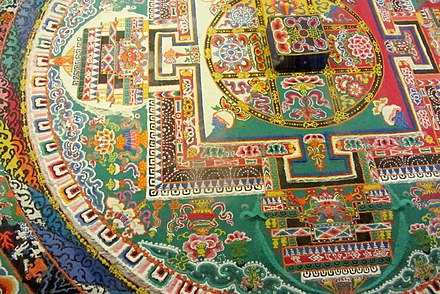
And wonderfully, what happens on stage, whatever song you create on the spot, however brilliant the dialogue, will never happen again. Improv is like a Tibetan sand painting, beautiful and ephemeral. The doing is the essence. And, once again, it is like life. We have one pass through it; today can be practice for the future, we are wiser, less judgmental, more fun to be with, a better listener, someone who is completely present, especially for the people who depend upon us and for the ones that don’t as well.
What skills are needed to succeed in life (and improv)
You can study improv for many years and take lots of improv courses before you will really get it, I believe. Well-done, improv classes are a wonderful way to learn about communication. So much is about connecting with the other actors in the exercise, maintaining eye contact, fully listening to what they are saying, appreciating the emotional feeling of scenes, bringing yourself there, and both being present and in the moment. It is wonderful to see improv shows as they are put together, to fully appreciate how much is left to the actors. Based on my one year of experience, I believe that among the skills you need to succeed at improv is confidence, believing in your bones that you can be on stage as a problem solver. You have something to offer that is creative or possible, something that will either develop the story or fill out a character. To me to be good at improv means that the other actors can rely on you to stand up and stand down, to be there for them, just like being a good member of any community. To this well in improv, you need practice that develops your improv muscle memory.
Important in Improv is the understanding that not every moment will be a brilliant one. You are never always at your best. Your attempts at humor or pathos may fail. You can die on stage, but others will have your back.They have energy at the moment when yours fail. Your obligation here is to be aware and open and ready and prepared to help others when they are lost for a moment.
We are always both living and creating our life stories
There are plenty of challenges to capturing the essence of improv. I think of it as “brain to fable.” In some ways, it is like writing a novel or play, laying out the plot, developing the characters, creating and resolving tension, and making it worth the reader’s time to turn the next page or stay in their seat. That takes lots of drafts and reworking. Many authors can write a novel in about a year but there’s lot of variation here. William Faulkner wrote As I Lay Dying in six months, but it took Tolkien sixteen years to write The Lord of Rings. At one end of the writing process continuum, Mary Shelley wrote Frankenstein in about a year, JK Rowling spent six years writing Harry Potters and the Sorcerer’s Stone. In improv all of this happens in a very compressed time period. It happens almost at once. On stage, the actors are deeply present, aware of the recent past, and looking forward to the future, but not too much because that future is so tied up with the future of other actors.
There is also the great blessing of having a brain and heart full of stories, yours, and others, that can be called upon as goofy, exquisite, and captivating slices and tidbits of live to offer to the actors and audience.
Balancing comfort and commitment
As my friend, Elisabetta says, we all need to be comfortable with being uncomfortable. Improv certainly affords that opportunity. The more improv I do, the more I discover the talent, skills, awareness, and emotional openness on the parts of the actors that makes a performance great for the audience. There is a palpable discomfort to making up an entire story on the spot but like life itself, it evolves in every sentence said, every gesture expressed, every choice made, and every breath taken. There is a sweet spot between that discomfort and being completely in the experience. Giving it all you’ve got. Showing up. Raising your voice and pushing to be heard.
In improv, there is a practice that pushes you to be committed – to your character, to the story, to the other actors, to the belief in the magic of pretending – in the moment and comfortable with the unknown and along for the adventure of whatever comes next.
Summary
Running a road race and being so engaged with improv were never on my bucket list; neither were they on my F(explitive)-it list. They were simply off my radar, out of my orbit. It wasn’t until I was searching for something new that I discover what have been some of the most enjoyable experiences of my life. Is this some late-in-life epiphany of what could-have-been? Career paths untaken? I don’t think so. What I am convinced of is that we all need to do things we’d never imagine ourselves doing, things that our of character. Who knows? We may find that we are many more characters that we would have imagined in our small worlds (like Parisian mice, and wolves, and sheriffs).
[1] Here’s a link to the article How Covid Stole Our Time and How We Can Get it Back by Tim Urban. He is the author and illustrator of the Wait but Why blog (@waitbutwhy) where he explores topics ranging from aliens to marriage to A.I., and its accompanying newsletter.
[2] OLLI stands for OSHER Lifelong Learning Institute. This is a network of over 120 programs located at colleges and universities in the U.S. that offer courses for older adults, taught by community members.
[3] The Contemporary Theatre Company (CTC) in located in Wakefield RI, the downtown area of the small town of South Kingstown, RI with a population of 30,000. The CTC offers scripted shows as well as improv theatre, live music, classes, campus for children. It has been located in a newly renovated space for about 10 years. It is a wonderful and welcoming community organization, vital to our lively downtown.
In our present culture, we seem oriented to believe that our children are special. Maybe that is a biological imperative. We want them to feel special all the time for everything they do. But I think children see through that pretense. They feel the deep fake in it. They are embarrassed when their parents present them as gifted and talented and better than their peers. On some level, children know differently. They know the difference between careless praise and really accomplishing something for themselves.
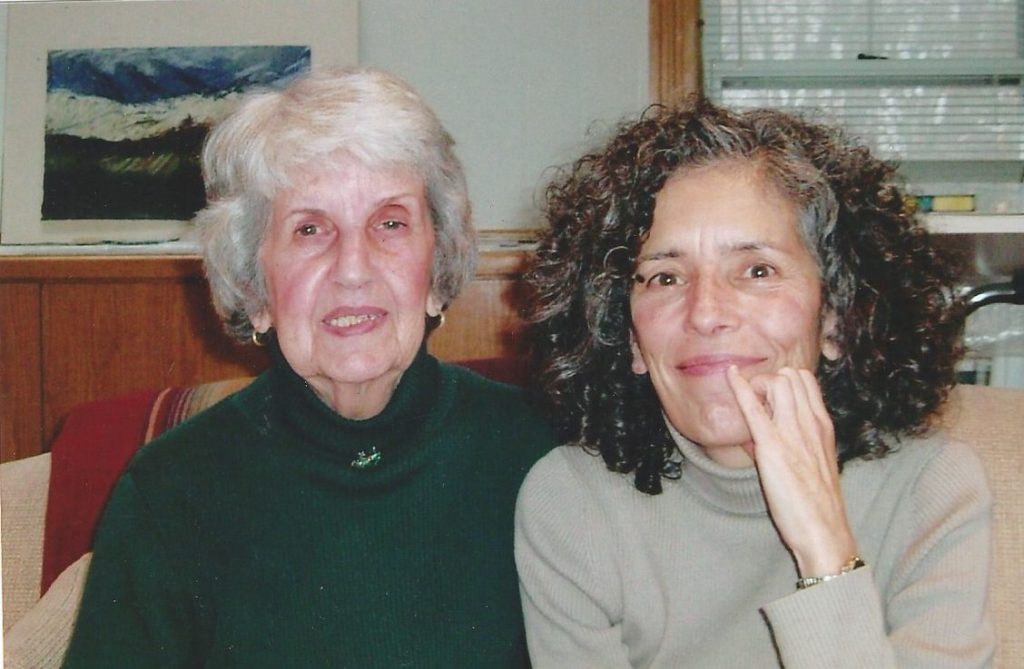
Although I think a brief study of the history of parenting would lead us to the discovery that our ideas about what children need from us are very much the product of this cultural moment. The history of childhood is a fascinating tale of the history of ourselves as a species. Even a generational change can make an enormous difference in the expectations for parents and children. This may be my nostalgia for my rosy-colored baby boomer childhood, but I am feeling very grateful for my mother’s parenting of us. She did a lot of this as a widow when my father died in an auto accident leaving her with three children – me, the oldest, at fourteen, my younger sister at twelve and my little brother at eight. My mother had no suspicion that any of her children were special in any way. It caused her not one sleepless night that we were perfectly average. And, she might argue that since no one is perfect, we were all actually averagely average. She would have found the idea that you are special just because you are you to be completely insane and especially wrongheaded when it came to raising children. I am inclined to be completely in her corner here.
My mother and me
If no one tells you that you are special, that you are musical or artistic or beautiful or funny or smart or just really talented in any way, you are left to discover those things through your own exploration. Without those early and (perhaps) misleading observations about you from your parents and relatives and whomever wants to make such a comment, you are on your own to discover your people, your interests, and talents. You play guitar or basketball and go on long bikes, and you discover things about yourself without much parental support. My mother never attended one of my basketball games. I never sought her advice about pursuing a degree in college because she never had any sense that I would be particularly good at anything. When I did go to college, my mother bet the lady next door ten dollars that I wouldn’t last a semester. I never resented that wager when I learned about at the end of my freshmen year. Given her experience of not knowing anyone personally who had gone to college, she was imagining that college students were very smart, and that I certainly wasn’t.
I worked in a series of factory jobs during the summers, many of which she was familiar with. She had worked in rubber and jewelry factories and knew very well the tedium of those jobs. She had friends who worked in these places, sometimes they were my bosses. I am pretty certain they told her I wasn’t showing much promise cutting huge pieces in rubber into rectangles to be glued onto to the bottoms of welcome mats; I might as well go to college. They may have also shared that the thing I was best at was reading a book. During coffee breaks and lunch, I found some refuge alone outdoors on a picnic bench to escape harassment and bullying as “college girl.” I didn’t feel so special there, either.
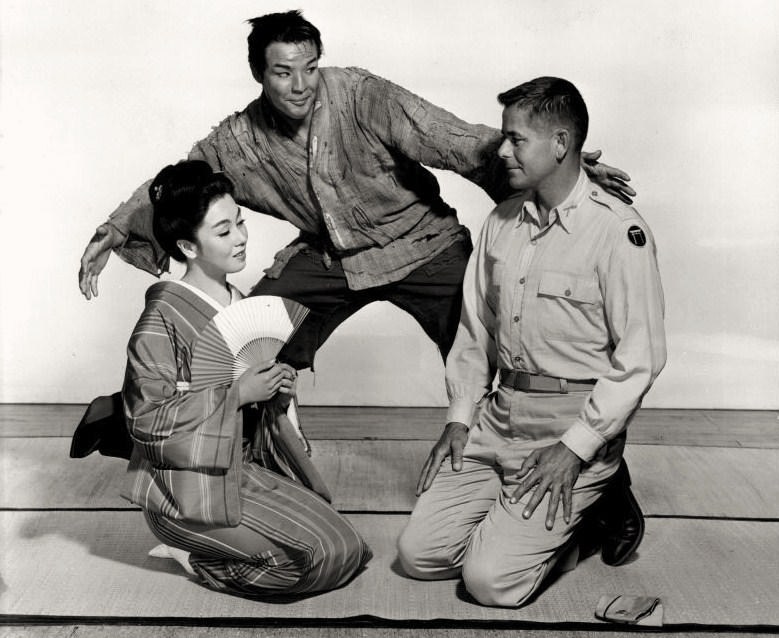
When I was elected class president in the ninth grade and rushed home to tell my mother, she responded. “Well, that’s nice. I am sure everyone in class will get their turn.” When I brought home good grades, she would nod and say, “That is good. You are doing your job studying. I think you could be studying more.” Or when I was the star of the senior play, she was proud enough but wondered why it was I had to play the role of a man. (In my defense, I would have to say here that I attended an all-girls school and not just anyone in class could have made a convincing man by simply painting on a mustache.) In fact, to toot my own horn here, I played the role of Sakini, the Okinawan interpreter, in Teahouse of the August Moon. The great Marlon Brando played that role in the movie of the same name to his great embarrassment I would imagine. Here he is. I am very glad I didn’t see the movie before I played that role.
Marlon Brando as Sakini in Teahouse of the August Moon
When I was in the 10th grade, I saw an advertisement in thelocal newspaper for the Famous Writers School and sent away for the aptitude test. The premise here was that America needed a lot of writers and that by working with distinguished writers like Rod Serling, Faith Baldwin, Bennett Cerf and Phyllis McGinley, you could learn to write and make a big success of yourself. There is an interesting video on You Tube featuring Serling in a promotional piece. I figured if I get into that correspondence school, maybe I could be a famous writer. But more importantly, maybe I could see if I had any talent. I did very well on the test which I recall asked the applicant to describe a scene prompted by a photo, write some complete some items that tested grammar and vocabulary. I don’t know how it happened, maybe it was because of my excellent test results, but a man came to our house and told my mother and me that I was indeed a very talented young person and could be a famous writer. I was so excited. My mother not only doubted the test’s validity, she also zeroed in on true scheme behind his discovery of me as a young talent.
I learned recently The Famous Writers School was actually a cover for a giant fraud. Most students did very well on the test and many signed contracts that they couldn’t escape from. If my Mom had any faith in all in my talent, we would have all been bamboozled. I can imagine many parents falling for such schemes today where their children’s TikTok videos may be used by some random “talent agent” as a key to swindle them out of their savings. Instead, my mother said to me and the salesman that we wouldn’t sign up for Famous Writers School. Rather, I would study harder and learn to learn to write at school where I was studying this every day away. No special talent to coddle here. Soon after he left, she wondered out loud, “what sort of people make a living by writing? What kind of work is that anyway?”
I would also come home with dreams to be something I had heard about in school. One of my classmate’s fathers was a lawyer and that was her dream, too. I asked her about that, and it seemed like a very interesting job to my seventh-grade self. When I told my mother, I thought I would like to a lawyer, she suggested I think of something else. “Don’t get your hopes up too high”, she would caution. I came slowly to understand the source of this dissuasion. With the Great Depression and the Second World War, a difficult childhood and maybe a challenging marriage, she’d had plenty of dreams that went nowhere. Her possibilities were so constrained. My most successful relative was a foreman in a factory. I don’t think she could imagine the possibilities I might have. I didn’t realize those myself until my third year of college.
My mother kept my self-image within tiny bounds, safely trimmed from getting in the way of others. And even though I attended Catholic school, her parenting set me for a Buddhist orientation to life. I have never thought I was exceptional in any way. I think many of us set a goal or attach our hopes to a dream, like writing a book, or earning a PhD. Then, when you do, you learn that lots of average people do these things all the time. That is not to diminish the achievement, it is just to put it all in context.
The gift of those lessons from my mother was that suffered no heartbreak later in life when I recognized that I wasn’t so special after all. I wasn’t as smart as many of my classmates. I was never a great beauty. I was never one to stand out in a photograph or to turn heads when I entered a room. The great gift here is that you have to discover those talents by yourself. You can carve your own path which certainly will be a winding one. You find that in your seventies that great passion is music or theatre and that your long career and several paged resume hardly matters any longer. It is mental furniture for another time and place. You find your specialness in the network of friends you have built around you, all indicators of who you really are. Maybe more self-aware. Maybe more aware of the natural world and the connections. Maybe appreciating your tiny place in the universe.
About a year ago, I nearly walked into the path of a car that was entering traffic from a parking lot. The driver was edging into the road and had carefully scoped out his exit. I am certain that he had looked up the street and down. I was the surprise—a blind spot—in his field of vision. He was moving south; I was headed east. One half-second earlier and I would have gone sailing into his car and over the hood. I am a small woman, somewhat fit and maybe athletic. I saw myself arcing in a gymnastic tumble. Except, unlike those tiny bouncy teenagers who land on their tiptoes, I imagine that my head would have hit the pavement first, a non-sanctioned Olympic move called The Double Concussion Flip and Fall. Maybe, I was too distracted with my earbuds playing Moby’s Wait for Me; it is a mesmerizing tune. I was over-dressed on this seventy-degree autumn day.
I stretched out my hands to cushion the crash. When this failed, my chest hit the hood of the car. I bounced back up and tried to resettle myself. What was I doing before I marched onto the hood of this car, I wondered? The driver waved his hands in apology; I waved back. It was like a silent movie. All gestures, no talk. I wanted to dance a bit, maybe skip in front of the car as I left the scene, just like Charlie Champlin might. It was a magic moment. A minute before we had been invisible to each other; now we separated each with a little memory, a shared story to tell our spouses, and maybe a wee lesson, depending on our temperaments.
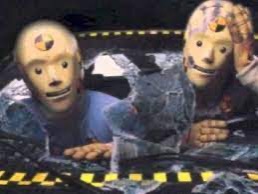
As we live our lives, we collect stories like this all the time. The older you are, the more you have of these. There are accidents, near-misses, losses and what-could-have-beens. Some we bounce back from, others less so. For me, all these brushes with illness and death bring to mind me those public service announcements from the ‘80s with those crash test dummies, Vince and Larry.
I see much of my life a series of crash test dummy trials. This encounter with the car put my mind on the path of other near misses—a series of events that could have led to some serious trouble. I have sped through a stop sign late at night, distracted and tired. I have twice driven the wrong way down a busy street at twilight. If it had been earlier in that day when I walked into the car, I would have without doubt faced a lot more traffic and a much greater probability of getting hurt. I would have been like a little cat facing the running of the bulls. We could all have been seriously hurt. Well, not all of us equally.
I have been in cars that have spun out, flipping on their heads in slick Alabama clay. I have been held up at gunpoint in Texas on a little walk in the good part of town. The man who did this looked upset enough to hurt me. I have dodged so many medical scares, that I am pretty certain that my health insurance company thinks that I am messing with their premium calculation algorithm. I have had so many tests and been diagnosed with so many wrongly accused major illnesses, there must be an office pool somewhere betting on my demise. This includes brain aneurysms, stomach cancer, pancreatitis, and more. I could go on and on here, but it seems with every incident I recount here, I am feeling both dizzier and bolder. To me, each of these is a like a crash test. With so much good fortune, a karmic calculation would have me dead pretty soon. As they say, I may be running out of good luck. Or maybe in that cosmic computation, or my good fortune comes at the costs of another’s unearned bad turn of chance.
Which gets me into the meat of what is really on my mind. Earned and unearned good fortune. the movie Funny Girlwhen Fanny Brice finds early renown, she says to her lover, the fabulously dreamy Nicky Ornstein, and supporter that she can’t be famous yet because she hasn’t suffered enough. I understand this feeling. It is that sentiment that much of what we have is unearned. We moan, “Why me?” when bad luck strikes but when good fortune strikes, we smile, “I so deserve this.” Personally, I have unearned good health, undeserved energy, unnatural optimism. I don’t know if others feel this way about the gifts they have. I think we mainly focus on what’s missing.
It seems to me that most of us have experienced good fortune we have neither earned nor merited and of course, the reverse is true. I used to joke with a friend that I had the Luck of the Portuguese. When that friend remarked that he never heard of the Luck of the Portuguese, I would simply reply, “Exactly.” John Rawls suggests that in considering systems of justice, we imagine that we don’t know where in a social system we may stand. He calls this a veil of ignorance. How would we want the world to distribute its bounty if we didn’t know whether we were rich or poor or white or Black or male or female or a U.S. citizen or a citizen of another county or abled or disabled? If a thought experiment like this were possible and if it could influence social policy, we would have to be convinced that we actually could stand in someone else’s shoes. Hale doubts this can be done because of what he calls the veil of opulence—the blindness that we all have to the privileges of birth and position. We fall victim to the comfort of believing that if we fell on hard times, we would work our way out of it. The veil of opulence works like the Just World Hypothesis. It creates that delusional narrative that we are self-made, deserving human beings whose unearned good fortune insulates from caring more deeply from others who we see as not as worthy or deserving of what we have. Lots of us dodge bullets thinking we are lucky and blessed; not imaging that the cards are stacked in our favor. Like all those crash tests that I have survived, many have to do with an advantage of class or nationality or gender. Others have to do with random events completely out of our control. And like the crash test dummies, we often do not take good advice or live in a manner that reduces the risk we visit upon ourselves or others. But, as humans endowed with some degree of reasoning, we can do more than our best sometimes to avoid doing the worst.
 Delight/ Awe and other things