This blog includes essays about life, aging, humor, inspiration and creativity. These things capture my attention and I hope are worthy of yours. Sandra Enos.
Although I don’t believe in the unified theory of creation, I do embrace the notion that patterns characterize our lives, giving them coherence. In fact, our brains are always making sense of our surroundings — not in ways that always render the truth — but having a working theory is better than the disorienting feeling that all is random and chaotic.
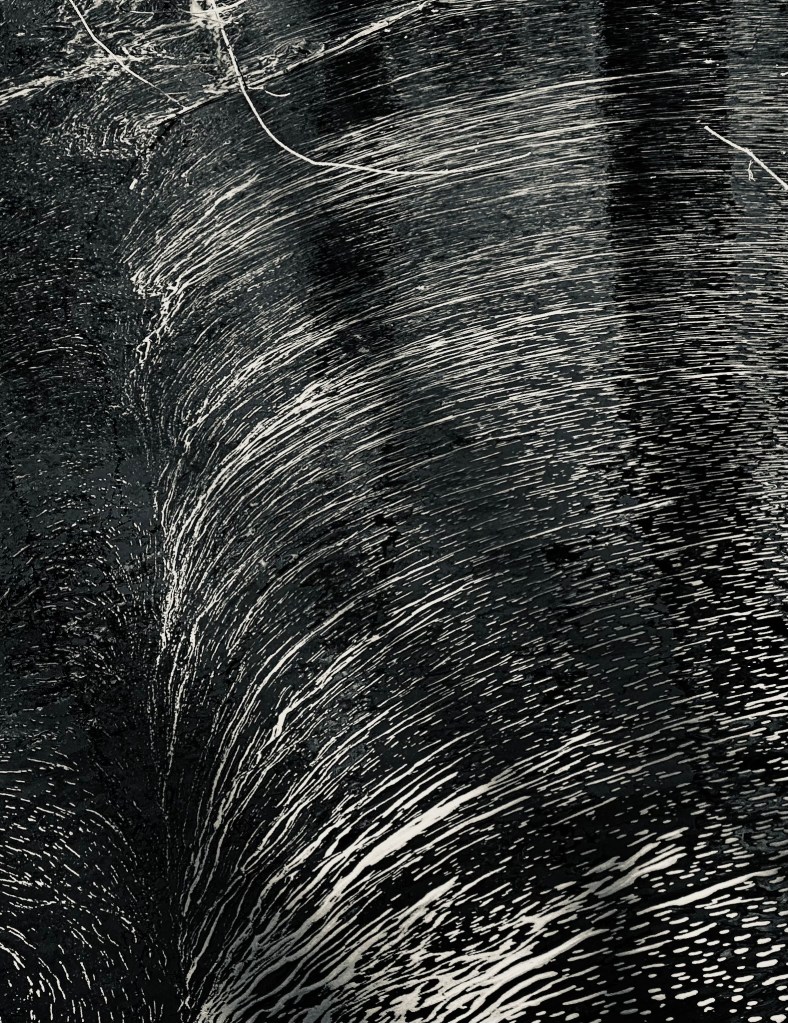
Seeing this image reminds me of the Milky Way or a Ferris wheel at night or a vortex of particles swirling in a magical mixture. When in fact, what I captured is a tiny body of water near Asa Pond and off the bike path after a heavy rain, bringing soap suds into the stream and down a half-foot waterfall. The more you look, the more you see the connections and the deep surprise of everyday encouters.
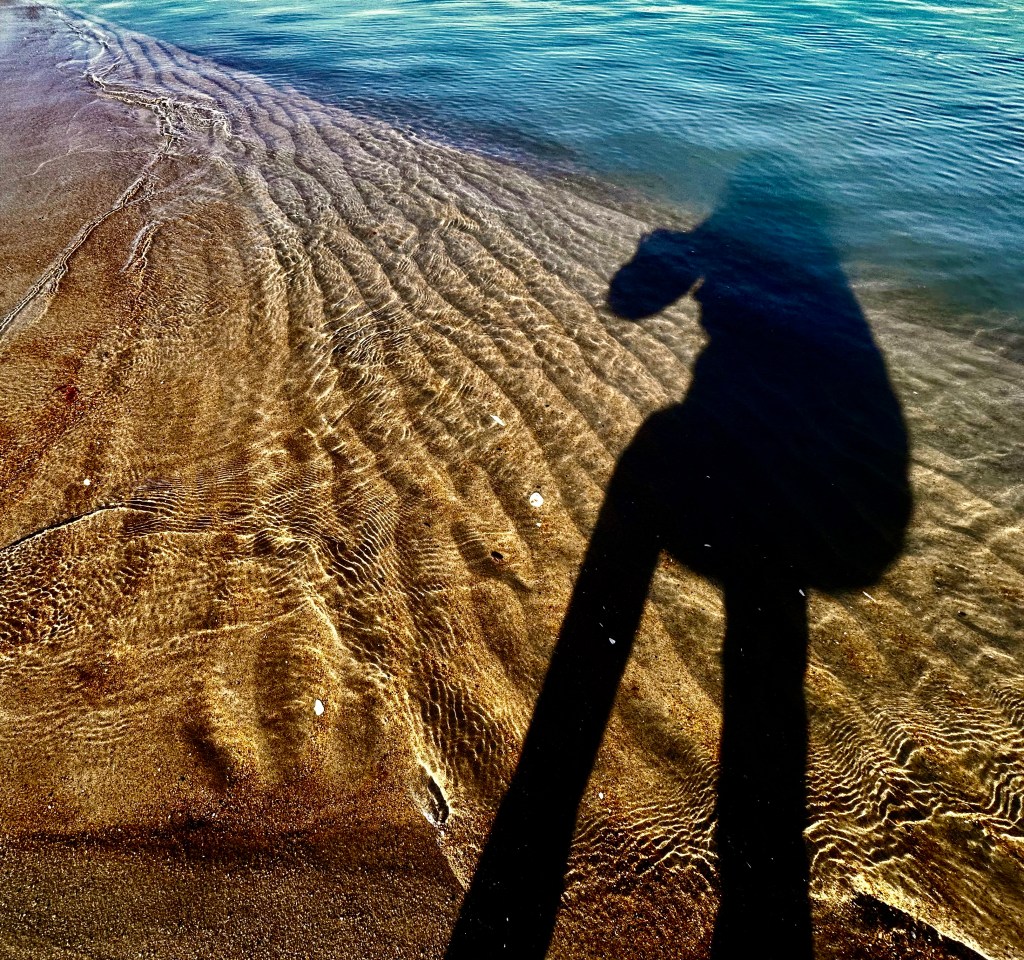
Often enough, we can find ourselves in a place, both completely recognizable and profoundly strange. Sometimes, we don’t even know we’ve been there until we’ve see sand from the desert on our pants and fragments from the Rain Forest in our boots. Or we see what image emerges in our camera and wonder how something could have played out in front of our eyes while we were paying attention to something. It’s like playing that ‘“nobody saw the gorilla on the basketball court because we were watching the game” kind of phenomena. This doesn’t only happen in our material world. It happens in our social and political world, as well. We wake up in the middle of the night in anguish because we suffered an unaccounted for moral injury earlier in the day. We often take ourselves to task for living these privileged lives and those points are all well taken. The ways of the world are crazy. There is no arc of justice that bends fast enough toward justice as we’d like it to be. There is no denying that there are forces bending the arc the other way, perhaps towards a world they see as just. It should be noted that our complex interconnected world yields great fortunes for some of us but it comes at a great cost not only to others but ourselves, as well, in the alienation, the existential threats, the complex nature of matters around us. Perhaps, those are all diseases of modernity but it seems more than that recently. Like the photo above, I seem to be underwater, somewhat adrift, in a world less of my making and certain less to my liking. The world swirling and our struggle to gain footing. Perhaps, in our complex rapidly-changing world, the longer we are alive, the more alienated we feel. Unless, we take the long view — that we are members of a long lineage of creatures on the world, stumbling along and making the best of our limited and limiting view of what’s around us.
When I was a child growing up in the fifties, it seemed that everyone in my life – my parents, my teachers, my aunts and uncles, and grandparents – and everything in my life – from the movies I watched to the books I read to the things I dreamed about – were all aligned in a project to make me a very good person. I resisted these influences in my childish ways but overall, I bought in. I embraced their hopes and dreams for goodness for me, but that wasn’t enough; I wanted to be a Saint.
My little sister and I shared a tiny bedroom and, on those nights, when my mother had a late shift at work, I would read to her at bedtime. I had the upper bunk and with the streetlight falling brightly onto my pillow, I could read as late in the evening as I wanted without detection. Our favorite book was given to me by my aunt Gaby. Without her own children, she had plenty of time and energy to devote to my development and guidance. She gifted me The Children’s Book of the Saints for my First Communion. Every day of the year, there was another story of a Catholic saint, a simple guide for us to inspire goodness and courage. It was perfect for my dreams of sainthood. We loved best the stories of the saints who were martyrs. Stories of Saint Ignatius who was a rich boy and a soldier who then repented and found the Society of Jesuits did nothing to excite us. Saints like him seemed to us good enough but not bold or inspiring. We need saints who had visions and who suffered. We loved stories of saints like St. Bartholomew who was skinned alive, St. Ignatius of Antioch who was fed to the lions, or St. Lawrence who was burned at the stake. Never denying their faith. We relished stories of saints, like St. Juthwara who’d been beheaded and walked away with her head in her arms, on her way to church to pray. Our favorite was St. Thecia. When they tried to burn her at the stake, it rained. When they fed her to the lions, they laid down and licked her toes. She kept trying to kill her with snakes and swords but protected by her faith, not torture not the work of man could kill her. She lived to her eighties. As a child, I hadn’t yet worked out just how I would get myself into situations where I be given a chance at martyrdom but my mind was firmly made up to do whatever I needed to do to become St. Sandra of Rhode Island.
Recognizing the power of movies over our generation, the nuns gathered us together in the cafeteria every month to watch an inspirational film like Boy’s Town, Captain January, or TheMiracle of Fatima. When I was in the second grade, we watched a film about the Maryknoll Brothers doing missionary work among the pagans in China. At the end of the movie, the Chinese marched a Maryknoll Brother up a hill and crucified him – “He refused to deny his faith”, the narrator intoned. We were stunned; I was inspired. Our nun talked with us about the movie and about our faith and passed around the little metal box where we were supposed to drop our change to support the missions. Some of the kids had spent theirs on candy; not me. Then, she asked, “Children, how many of you are willing to die for your faith?” Almost all our hands went up. “Me, sister! Me, sister!” I was so proud of myself for offering my life for Jesus Christ. I never told my Mom, although maybe she would have been proud of me, as well. She knew about my sainthood thing.
From that moment on, I have never doubted for a minute that children could be recruited into Brown Shirts or an army of child soldiers or into the Children’s Crusade. Children may be innocent but they are engineered to be socialized into groups well-intended or evil seeking. I gave up on sainthood when it seemed the pagans were disappearing from the planet and emerging as Buddhists, Muslims, Hindis, and people of other faiths. There were other diversions from sainthood, as well, but that is a much more common story.
Even though I keep a daily journal, my notes on the pandemic are sparse. I recall best those very early days when neither science nor faith could stem the tide and terror, fear, and dread of the virus. As an older person, I felt my age for the first time, as both a high-risk target for the disease and as a vulnerable elder requiring careful watch and extra protection. I’ve learned that children can be just as paternalistic as their parents in that caring but condescending way.
I do have an entry in my daily notes for Sunday April 5th, a few weeks after the federal government declared a national emergency, just a week after the U.S. had more COVID cases than anywhere else in the world. We were in the early days of lockdowns, travel bans, shortages. Fear of the disease and of each other. Daily briefings. Panic. On that day, I spoke with my sister in Florida. A few weeks prior, we had set up bi-weekly check ins. That Sunday, we talked about how these could be our final days. That sentence sounds melodramatic when I write it, but it rings true to my experience. On that day, we broached the subject of final plans. She had organized a box full of important documents with my name on it on the second shelf of her guest room closet. All her contacts– professional ones and personal ones – to be notified when she passed away. Emails, phone numbers, passwords, online accounts. She had thought of everything – so kind. I committed to doing the same thing as soon as possible, yet still to this day, four years later, I have left most of this undone.
She considered almost everything. I asked her about her eulogy. Had she thought about who would say those final words? As soon as the question left my lips, I knew what I wanted to hear. As her older sister, I prayer it would me. She confirmed that hope. I would deliver her eulogy and she mine. We wondered together whether we knew everything we should know about each other. I made these notes in my journal. Committed to writing Marcia’s eulogy. That sent me down a rabbit hole of wondering. Was I really the best person to write this? Did I really remember the important points in her life? Did I underestimate how painful those early illnesses were for her? Did I comprehend how deeply she at age twelve felt my father’s early death? Did I know the whole story about her marriage? Did I appreciate how deeply others loved her? Did I know only my special sister-side of her? Did she know I’d nearly been hospitalized for depression? That I came close to suicide more than once? Those eulogies may reveal more than we have told each other so far. These can be reckonings.
I delivered my first eulogy for my mother. I asked her parish priest if I could say a few words after Mass. He told me that this wasn’t the custom in his parish but since my mother was a parishioner, he’d allow it. I could have three minutes. Three minutes? For my mother? And then I thought of her, so hating attention in any of its forms. She would tell me to take no more than two minutes, more than enough to say what needed to be said. So, I delivered that eulogy from my heart as I knew my Mom to be, underestimated, full of broken strength. I learned during the reception in the church basement how much I didn’t know about her. How kind she was to a neighbor. How much attention she paid to a lonely resident in assisted living. How crazy funny she was. That she was a wonderful dancer in her twenties. How she was a complete person separate from me—a richer, deeper, more complex story than I knew. I wished I had done better for her. Reaching beyond what I know or think I know; I will do better for my sister.
Setting: September 1971 to May 1972, rural Alabama
Characters: Twelve northern-born VISTA Volunteers sent to the South to fight poverty. After a week of training, they cut their hair, put away their bell-bottomed jeans and prepare for work as teacher’ aides, family planning specialists, construction supervisors and community organizers. They are full of idealism and brotherhood and the wonderful feeling that they are doing something important. However, their ideas about doing good, about being comfortable in the world are challenged in this culture that is confusing, frightening, and disorienting. They spent that year and the rest of their lives wondering what’s going on.
Soundtrack; Marvin Gaye’s What’s Going On
Act 1. Three days after arrival. The VISTAs are placed with host families while they look for housing. The third night one of the women is raped by a teenage boy. She tells her friends. They debate what to do. Reporting this to the police guarantees that the boy will be arrested and may pay with his life. It will also mean the VISTA site is shut down. Not reporting it means that the violation goes unpunished, that the other women may be targeted for other attacks. It is just three days and already they are in over their heads. They make up an excuse to the supervisor to move her to another host family. This event has repercussions all year.
Act 2. End of September. A cell in the local jail. Sheriff Wilkins welcomes the VISTAs to Lee County. He tells them he can recognize a Yankee at a half mile away – the walk, the swagger, the clothes. He wonders why they would come all the way to Alabama when they have so much trouble with the “coloreds” up north, rioting and all of that. He knows that as outsiders, the VISTAs will be troublemakers and that he will be watching them carefully. Her reminds them that last year, the house that the VISTAs were living in in Beulah, a Black community, was firebombed. He sure hopes they doesn’t happen to them.
Act 3. Early October. Three women are renting an old farmhouse from the Belks, a prominent family in Lee County. Bubba Belk, the youngest of four brothers and like the VISTAs, a recent college graduate, visits and brings along the gift of a rifle so the women can have some protection. They refuse his generosity. He insists, reminding them that they have no phone, that the nearest police station is twenty-five miles away, and that everyone knows that three white girls are staying together alone in this house. He reminds them that they are living in Alabama, not where they come from. He walks them to the backyard, shows them an old whipping post and has each of them learn to load and shoot the rifle. They each take a few shots. They thank him and promise each other to hide the gun away.
Act 4. A warm May late afternoon, three VISTAs and six Black families gather together to work out the day’s schedule at the self-help housing site. A young man arrives in a pickup truck, yells at them to gather around, jumps into the back of his truck and says, “the Governor’s been shot. Governor Wallace has been shot!” One of the men leads the group in prayer and song. They are praying for the soul and deliverance of the Governor. The VISTA volunteers are quiet, wondering how these folks can be praying when their own hearts are so full of hate.
Her days were undistinguished except for the afternoon sun. As the seasons passed, she watched the shadows shorten and lengthen gliding across the floor in her tiny sitting room. At her side, a basket of knitting sat untouched. The last time she picked it up, she had no memory in her fingers of how she once made blankets and hats for every member of her family and many of the babies at the church.
She felt the warm June sun and looked out to the garden. She struggled to recall the year when she. was strong enough to dig a two-foot trench for the asparagus bed. It thrived for years when the children were small and began to fail when she could no longer tend it lovingly. Where did that lovely asparagus go, she wondered.
She surveyed the yard, once resplendent at this time of year — every bed a surprise of color and form, her peonies with the grace of ballerinas, those dahlias uncompromising in their bold colors and shapes. Where had all those flowers gone? Or maybe, she didn’t recall this so clearly. A fleeting thought poked into her mind, perhaps this beautiful garden in her memory was actually someone else’s garden. Not hers at all, perhaps.
The neighbor’s children, the age of her great grandkids, were screaming with delight, splashing into their backyard pool, celebrating the birthday of the youngest, Liam. She recalled such parties when she was young but not much about them. She couldn’t recall the name of her favorite cousin or remember when she had last seen him. Had he died? Maybe so. Could that be that I wouldn’t remember? She knew she had a happy childhood but the details, of it like so much else these days, escaped her.
So much had passed by in her long life. Friends. Wars. Struggles. Great joy. Great books. Love. Being a mother. A productive career. Losing a husband. Losing all but one of her siblings. She tried not to dwell on the past, but her future seemed short to her. She did remember her high school friends. “We were such a gang of girls, full of energy and delight and not a little sassiness” she thought. “We were so lovely although we didn’t know it at the time. Where did those girls go?” When she saw the few friends that remained, she saw old women, with their youth like phantoms beside them.
She was willing to accept that life was full of loss; that fact she could accept with equanimity. More than anything, she missed her words, her clever mind, her intellectual power. Once, she could summon a rich vocabulary and choose words that delighted her, like a captain commanding his troops to attention, those words bold and perfectly fitted to her ideas. Now, those words were fewer, wandering, and remote and painfully slow to appear. That loss she felt deeply.
But even as others saw her depleted and elderly, she felt something else. A favorite author of hers wrote at the end of her life, that she was herself, as never before, with fierce energy and intense feelings. Everything was profoundly beautiful to her. Even her own children weren’t as captivating as the children she saw these days. Last year’s Mother’s Day flowers drew her attention like never before. Music brought her to tears. She wanted to draw the world close, to live each minute with all the passion and light that was remained.
I was at a perfect age when I wrote my first eulogy, just a few months after I officiated at my first wedding. I was just sixty years old, the oldest in my family of three children, just old enough to understand my mother as a mature adult, beginning my own aging journey. For the first time in our shared history, I could see her life from a larger more generous perspective. If you are blessed with some wisdom, you understand that understanding your mother is not all about you. She has her own history, of which you are only a tiny part, perhaps. If I had been younger, I would have missed much of this and written a good enough eulogy, but not one so deeply felt. If she had lived longer, I might have done better.
I wrote that eulogy for my mother and conducted that marriage ceremony for two former students. For a brief period, it felt like I was doing so much officiating that I should look into becoming a minister. I had developed a nice demeanor and a warm appropriate manner, according to those attending these ceremonies. It is a lovely feeling to be of comfort or to be a handmaiden of joy and commitment.
My mother died soon after falling in her apartment: she never recovered. In a short two weeks, she was hospitalized and went to a nursing home where she picked up an aggressive infection. We were planning for her return to independent living, but things took a different turn. She failed fast, not eating, or communicating. I think she died of exhaustion, loneliness, loss, and fatigue. The moments in her life that felt full to her were dwindling, like they do for so many older people. She was tired of living. At my age now, mid-seventies, I completely understand that. I am losing my life-long friends, not because of betrayal or disinterest, but because their lives have ended. Somehow, I never expected that one of us would die before the other. And if I had imagined it all, I would have me dead first. That appealed to me as tragically just right.
I took on the assignment to write and deliver my mother’s eulogy by default and by design. I had grown to be the closest to my mother, seeing her every week, sometimes twice. My brother was busy with his family; my sister lived a thousand miles away. I was the writer in my family, although any of us could have done the deed, each in our own way. In fact, I believe that I could have written versions of what I would have imagined by brother and sister would have said about our mother. Siblings experience their parents quite differently and I presented my eulogy as my own, not speaking on behalf of the family, except to express our thanks to everyone in attendance who cared for her, as a friend, and a relative.
Her Mass was at the church near where she lived in an elderly high-rise. I accompanied her to Mass on holidays and special occasions so knew the pastor there. When we were arranging her funeral, I asked if I could share some remarks. He said that I could, after the end of Mass. I had three minutes no longer.
I loved doing that eulogy. It gave me an opportunity to set the record straight, to tell those gathered that snowy morning, how funny, how smart, how underestimated she’d always been. I got to claim some territory for her that she had ceded to us children. I don’t think I have ever met anyone who was as humble. Even after she raised three children on her own after my father died at fourteen, she was convinced that we raised ourselves. There is something about wanting to be nearly invisible because of anxiety that puts that person into a place where they can’t feel their impact on others. That was my Mom; it took me way too long to understand her. I sometimes think if she had been born a generation or two later, that she would have found some refuge and respite in therapy or maybe some better friends or a more accepting community.
Eleven years later, I delivered my second eulogy for a very close friend, Marion. She was dying of a terminal pulmonary disease, and I was visiting weekly. I asked if there was anything on her mind that I could attend to on her behalf.
“Well, I have to write my eulogy. Could you do that for me?”
I was stunned. She handed me this assignment which I said I’d be honored to do. I wasn’t really thinking that she was near death. We never talked about it again. But, it was the most that any friend had ever asked of me – the most important mission of my life as a friend. However, because of the error every living person makes – thinking we had more time together — I never asked the questions that I should have.
“Marion, my dear friend, how do you wish to be remembered? What would you like me to say? What quotations should I recite? What message would you like to pass along? Do you need to set the record straight? Is there a secret you’d like to reveal now? What would you like people to know about you that you haven’t quite gotten around to telling us yet?”
So, none of that got asked or answered. I didn’t even properly tell her how much I loved her. Over the course of our fifty-year friendship, we pledged our fidelity to our truth- and beauty-seeking over and over again. That intense interest in each other’s mind was our deep love. She was such a treasure in my life. I am always reading something or writing that I want to show her. I want to know what she’s reading and thinking. I want to be filled with all the love and attention she poured into me. If you know and love someone deeply enough, they simply can’t be replaced; there is no one else. We often forget that is true about our closest friends and family members is also true for us, as well. We will be missed when we pass on.
Of course, my heart was broken when she died so quickly but one’s pain in the loss doesn’t make for a real eulogy. The standard ritual of a funeral may serve as the perfect balm for some. The familiar cadence of the Mass. The prescribed readings from the Psalms and the Gospel. The final anointing and blessing of the soul to be reunited with God as he welcomes her in the everlasting glory of the chosen with Him. But that doesn’t serve all of us well. A eulogy begs for something different.
A eulogy is a tribute. My friend was a published writer and an English teacher at an all-girls high school. She was brilliant and beloved. The tributes that were posted about her were glorious.
She changed my life.
She opened me to literature.
I became a teacher because of her.
She really saw me., like no one else.
She helped me see the beauty of stories.
I so wanted to be just like her – smart and funny and kind.
My friend was a brilliant conversationalist. She found almost everything interesting, except small talk and narrow people. She wanted your mind to fly like hers did, so you could explore together and wonder and then wonder some more.
She had a hard childhood but she never wore that damage. It simply made her curious about families and love and attachment. Later in her life, she explored her roots and her father, especially in his service in the Canadian army.
When you spend all of your adult years with a friend, you watch them grow and change. If you are lucky, the qualities you loved about them are there for the duration. They don’t grow bitter or self-pitying. They allow you to grow with them. You see all the passions and interests that once absorbed you both float along like that Buddhist cloud that contains fleeting thoughts and feelings. You grew together step by step along a journey that you don’t realize until later in life is one we all take. I see this more and more clearly as I watch my elders and juniors all with their generationally-specific concerns and anxieties and challenges. We change so much over a lifetime that we are barely recognizable to ourselves when we look back and wonder how we raised three kids under the age of six or got our Ph.D. part-time over ten years or hitchhiked across the country or drove too fast one night and nearly killed our little brother. It is all in the memory; it is just hard to see that it is us sometimes.
So when you are writing a eulogy, you are also writing your own history, as you consider what your life would have been like without this friend. And often that is unimaginable, not because the imagined emptiness is so sad but instead because your mind has been so shaped by this individual, your ideas so intertwined with hers, that you really can’t separate them. It would be like observing just the water in the brook, trying to block out the rocks, the movement of the water, the sand at the bottom, the banks at the side. It is just impossible; it is all of one piece.
I think this is what makes writing a eulogy so challenging. I consulted with Marion’s friends about what made her so special to them. These were a handful of people who visited with her during her last months of life. Long-term friends. Work colleagues. Former students. Several themes surfaced but it was clear that Marion was not just a treasure to me. She was a treasure to many people. We were caught up in a circle of her love but didn’t know each other, like planets governed by gravitational pull and not aware of that force. I wanted to write a eulogy that would be unmistakably hers. No one in the audience could say, “Oh yes! That sounds just like my friend, Margaret” if I did my job correctly. I wanted to plot out exactly the size, dimension, character, and nature of my loss. Something impossible to fill; someone impossible to replace.
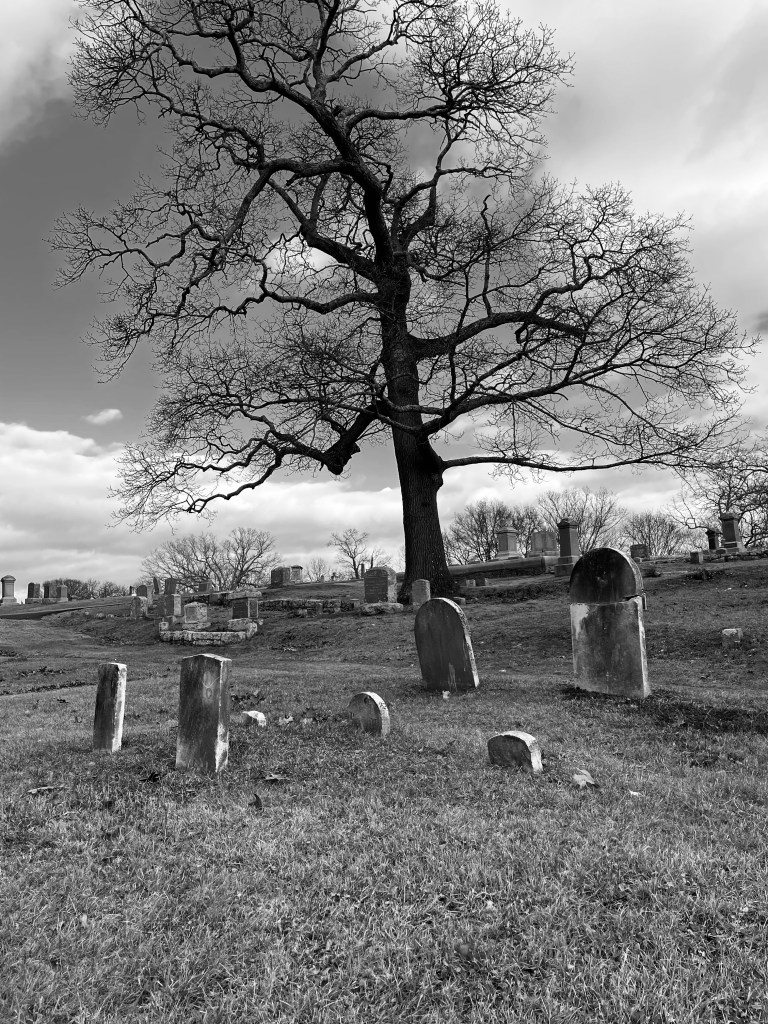
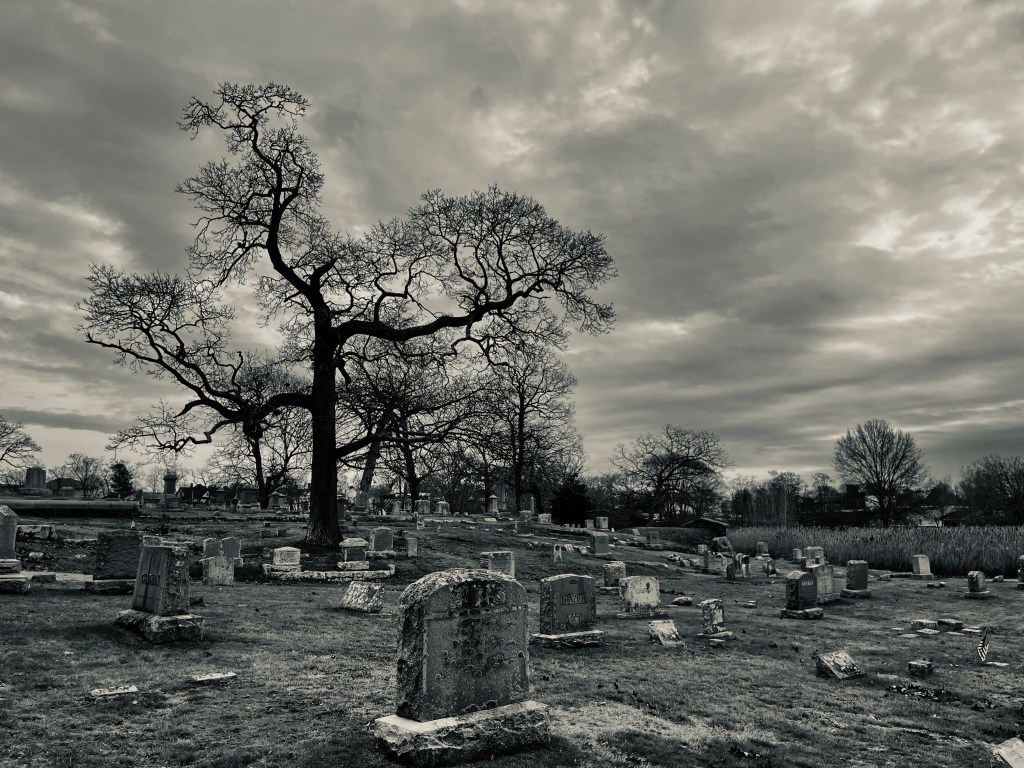
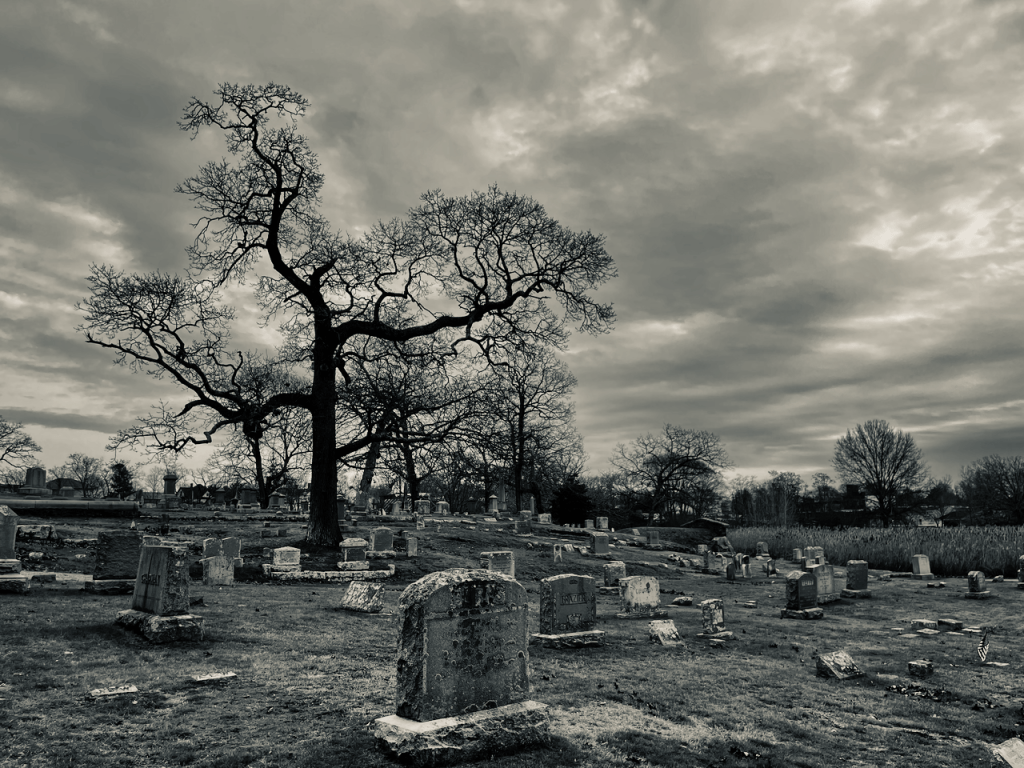
Writing a eulogy is the very start of facing your undeniable loss. Your entry into a lifelong process of missing your friend, remembering at so many turns of their absence. Sitting down to write them a letter and aching for the notes they used to send along. Because their place in your world was so unique, there is no filling that void. It remains a hole in your heart. And the eulogy delivered with tears and grace reminds you as well that others are feeling the same or even greater loss than yours. And that you are connected with all of those who have suffered similar losses. I walk once a week through the cemetery just off the bike path and I pay more attention to the names and dates on the graves, marking all those lives that have come before, loved and buried, with some memories still echoing. Each tombstone its own sliver of a eulogy.
Every day, we face opportunities to bloom and grow, as well as lots of ways to stagnate and get stuck. It takes some work on our part to recognize how many choices we make every day — deliberate and unconscious — that really steer our lives along one path or the other. I have been thinking a lot about this since I retired a few years ago.
When you are pursuing a career, the last thing you want to do is to undermine your pose as a serious competent person, someone who knows the rules and follows them. But since leaving that position as a sociology professor, I’ve embraced new adventures that take me way away from my comfort zones. I have embraced the blessing of the being the dumbest person in the room. We all have a long list of reasons why we don’t take up new adventures and opportunities. “ I will stink at this. What if I embarrass myself?Everyone will be better than me. I should have started in my teens. And on and on. I have countered those arguments with my own list of counterarguments. Imagine learning how to read music! Wouldn’t it be fun to put your wicked sense of humor to good use? This opens up new worlds to you.
If we want to grow, we may need to change our self-definition from a person who can’t to one who can and will.
Following these bold declarations, have taken up a series of projects that I really had no business doing, according to those self-defeating criteria of being too busy, too old, too shy, too me. In fact, a key here is to define yourself as a new kind of person, a person who tap dances, or sings in a choir, or plays drums or leads walks, or teaches yoga and whatever that may be.
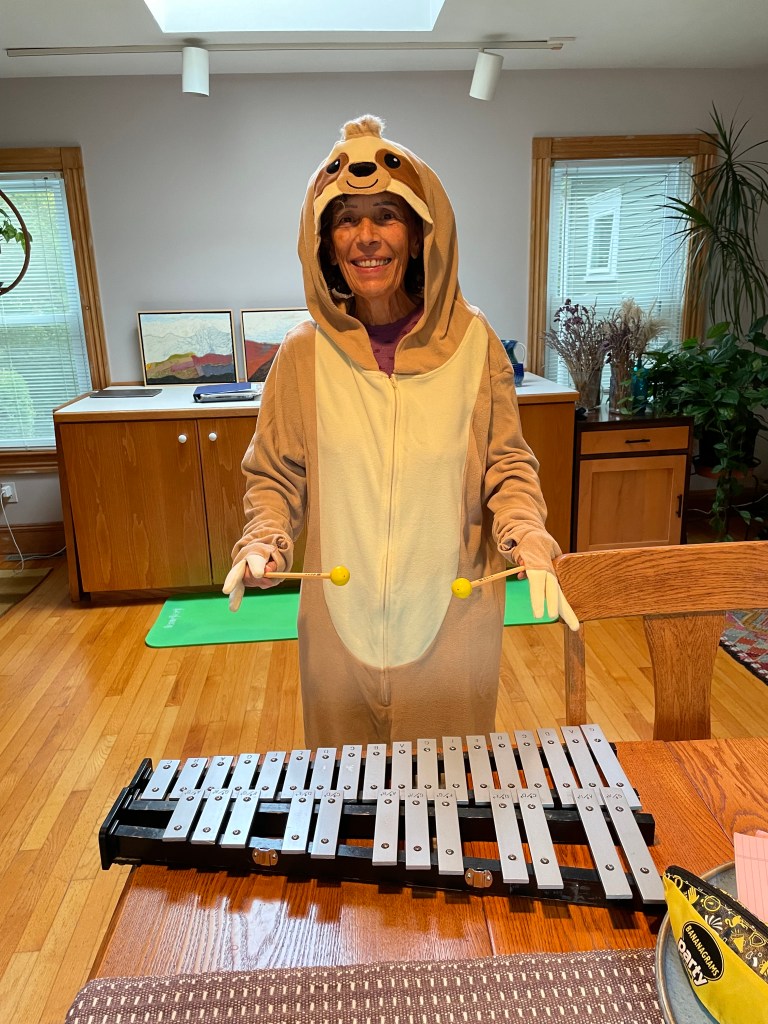
So, I started a new business that’s been a wonderful gift with some big fails. I took improv classes and been on the stage with a talented group of actors. I enrolled in a poetry class, my very first foray into writing poetry and sharing it with others. I joined a community band where I was not only assigned instruments, I’d never played but just had my debut as a mallet percussionist (Glockenspiel and timpani) in costume. In the photo, I am dressed like a sloth because I really am not only the slowest person in the orchestra but also the least experienced, having never in a band before and very new to reading music. In every one of instances, people have been kind and welcoming; I have made new friends; I have learned new skills that I thought were out of reach and have a new sense of possibility and joy. This all in the context of a challenging personal year with the deaths of several people I was close to.
Combined with the hard-won wisdom of being an older person, embracing being the dumbest person in the room has left me with more room for learning, growing and fun and less space for self-criticism, embarrassment, and regret for not doing things I have dreamt of doing.

 Delight/ Awe and other things