When you receive a medical diagnosis that is serious, your mind moves out like a posse chasing a dangerous suspect. At first, the deputies fan out in all directions at once without much coordination. One team is off in the hills investigating where all this began, the very moment when your blood vessel bulged. A special team investigates the question: was it climbing up the stairs on the second to the last day of class in the winter session when the pressure behind your eyes pounded so hard that your brain seemed to have been invaded by a timpani orchestra? A squad of detectives inquires: was it that night when in your half-wake consciousness that you felt a sharp pain and colors swarmed in paisley patterns behind your eyes shut and you swear, your eyes opened as well? Members of the posse quickly tire of this chase, especially after learning from the Merck bible that the doctors have no idea of why aneurysms occur. You and the doctors have called back the search parties back from their assignments. So, after the news settles, the investigation begins to narrow and to focus. We find words clinging to diagnoses: we learn new vocabulary. A new word—idiopathic—flows into your conversation with friends. Idiopathic, in medical terms, means “of unknown or spontaneous origin.” Something has gone wrong; they don’t have an idea why. You think what a wonderful word. I can use this to explain relationships gone sour, missing cookies from the cupboard, and maybe, as well, unearned blessings. More about that later.
And, finally after lots of preliminary wondering about the sources of the problem, you understand that it is well beyond the point of wondering who did the dirty deed, it’s time to move to a conviction and begin the treatment. But, this neglects the long periods, or so it seems, of waiting. Every patient with a potentially troublesome diagnosis must feel that his is a cold case. The doctors and the laboratory technicians seem matter-of-fact, too measured, and taciturn. They process your case in turn as if you were ordering at the deli. In a few short weeks, I had two imaging tests and one consult with the neurologist and each encounter would have been enhanced by some training on my part in what Goffman, a favorite people-reading sociologist, calls the signals that we “give off” in impression management. Two weeks earlier, I submitted myself to a cerebral angiogram, a test where contrast is injected into your veins in order to trace your blood flow through the major arteries. The artery under suspicion was the carotid artery, specifically the choroidal artery, as the blood bearer that enters the head making its way from the heart and through the neck. The technician was matter of fact, as disinterested in my case, as a character you would find in a tale by Kafka . Her voice modulated; her conversation as scripted as any cabin attendant warning you to fasten your seat belt and to turn off electronic devices for the first part of the flight.
The first part of the test is without the contrast, sort of to mark the ground, I suspect. Then the needle goes into your elbow crease at the opposite side of the elbow. I asked, “Will this be cold?” “No, it is warm” she replied. “For some women, it feels like they need to urinate, but that feeling will pass quickly.” I nodded and she returned to her station. The test lasted maybe ten minutes, maybe shorter. In a CAT scan machine, you enter a different time zone. One cannot be trusted to tell the time. It is suspended, in your own particular time zone, as you are when you are in the place where the long trail of medical diagnoses process.. And, that is the funny thing, I suppose. At the time of your life, when you should be most engaged, your brain recedes back and you stall. You begin not to make plans. Things are tentative.
“OK, that’s it. You can relax, Sandra.” She called my name and she was smiling sweetly and patiently. Her manner had changed and I thought, “Hmmm. I have moved or more accurately, my case has moved from “Worries-too-much-middle-aged-woman” to “Cerebral aneurysm. Too bad, she seemed like a nice person.” She helped me from the table and said that the results would be on my doctor’s desk on Monday morning. Surprisingly, the doctor called me later that day asking me to come in as soon as I could. It reminded when of crime dramas when the detective asks the unsuspecting person to come to the station and answer a few questions. Unlike a younger person with fewer medical miles under their belt, I have had plenty of health scares and I can’t tell yet which side of the equation this little medical issue will fall on. As statistics show us about tests, there are only four options:
The test could find something that really is there.
The test could correctly determine that there is nothing there.
The test could find something where there is nothing.
The test could miss something that is a problem.
With a minimal understanding of probability theory, you understand that the latter two outcomes are Type I and Type II errors, respectively. The challenge for those of us facing medical tests is that we have no idea of how accurate the tests are, how often they miss the problem or how frequently they identify problems that are not there. We assume that the tests are accurate with a certainty that simply doesn’t exist.
If I had the powers of reliable prediction, this would save me some wasted concern or it would propel me to get my affairs in order.
When this story happened, I had just one year short of sixty years old. That decade of my fifties had been a good period in my life. In fact, it is miserly and ungrateful to write “good.” These years have been wonderful and blessed. I see my left-sided brain losing its grip and see my right-sided brain coming to the rescue, allowing me to relish the beauty of the visual world. I think this is why middle-aged people find the young so lovely. The visual world begins to kick in and perhaps, in some cases, quiets that noisy interfering left side. It is the lesson of dwelling in the moment that comes with some aging. It is also the age where your contemporaries have survived medical crises. Heart attacks, breast cancer, skin cancer and others. Some close friends have died; our parents have passed away or may be in a steady decline. These incidents all line up and one hardly pays close attention until one takes her own turn. This is not to say that we are not sympathetic to the medical challenges of others but we don’t listen as carefully as we might. I think with deep shame of how not there I was when my mother was admitted to the hospital for emergency surgery. She seemed so intact, so independent, and so not needy of me. I did my duty but I probably was not that loving daughter that I am certain women dream of when they are carrying their children, hoping for a girl with whom to share the pains and promises of womanhood. One can be completely blind to one’s sins if convinced that duty is being done, especially if it is done out of obligation, and not out of love and the opportunity to love more generously.
During that episode, I wrote a question in my journal for consideration, “If you wrote a book this year and it would be the last thing or the most important thing you would write, what would it be about? Who would you want to read it? I have a lifelong friend who has been urging me to write this book for years and I have delayed doing this, believing that I have all the time in the world. I wrote in my journal that if this medical scare passed, I didn’t believe that I would change my life very much. Here is a quotation from that journal entry,
There are people who swear they will live every day to the fullest, that they will greet every day as a gift from God. I am not that sort of person. I am too programmed, too average, too much in my head. I would go on my way, thinking about squeezing in time and space here and there.
A few days later after that first troubling test, I visited the neurovascular surgeon. The doctor was very likeable and easy to speak with. He ordered an angiogram to further study the aneurysm. They are trying to locate the exact place of the aneurysm to determine if it is as dangerous as it looked in the image they had taken earlier. Another procedure. This reminded me of the stories in children’s books where the hero faces a series of challenges, running the gauntlet to slay this dragon or the monster until he is redeemed and can go home again a braver and more courageous person. And, in the same way, the hero is very much alone in this quest, even as the doctor says, “We will try this new procedure to see how we do.” The specialist reveals that discovering the aneurysm was an auspicious event because the original tests to chase down the cause of pounding head pain is completely unrelated to the suspicious blood clot in head. In other words, we are pursuing a villain for an unrelated crime. While potentially life-ending, the blood clot is completely innocent of the crime of throbbing head pain.
A few weeks later, I checked into the hospital for the cerebral angiogram. I took a careful look at the other patients in the waiting room to see if I could draw any conclusions about how sick I might be. I could draw no conclusions. A little girl. A ninety-five year old man. A middle-aged man who had to be lifted from his wheelchair to the hospital bed. I listened to the conversations between the patients, their caregivers and the nurses—all assuredly similar. We had to recite our names, our dates of birth, and the names of the procedures scheduled for us and had to point to the surgical site. I signed some paperwork, including the one document that warned me that the procedure could result in serious damage to my brain or death. I wondered if, perhaps, this was a good time to ask for a second opinion when mercifully, one of nurses brought me a heated blanket. This simple act of care and concern anchored me in a place of dispassionate observation where Buddhists hope to dwell. I was partially sedated and felt calm throughout the procedure as the doctors inserted a tube in my thigh where the dye would travel up to my brain to light up my blood vessels where more images would be taken.
After all the examinations and MRI, the angiogram revealed nothing suspicious. The MRI mistook a congenital bulge in my blood vessels for an aneurysm, sort of the like making a serious error in identifying the wrong suspect in a lineup. I learned that these malformations are common and most of them undiscovered. So, the average patient begins to wonder about these tests and their veracity. The first test that led up to the angiogram was wrong in that it concluded I did have one. The most recent test argued the opposite case. Who knows and should not the doctors tell us, like the pollsters do, about the margin of error? Shouldn’t there be a disclosure on these procedures, some clear labeling? This might read something like, “This MRI misses 15% of the tumors it is looking for and mistakes innocent cysts and congenital abnormalities for cancers/aneurysms 20% of the time. See your physician or a statistician for more information.”
A recent article in the NYTimes makes these points convincingly. Patients are typically not informed about the risks in treatment and tests and they typically over-estimate the benefits of procedures. We believe that each new procedure provides us with an invisible shield of protection when in fact the added benefits may be small. Without this information, we go blindly into the world of medical care. Some may argue that patients cannot understand this sort of information or that they are better off believing in good outcomes, even if these are not the most likely ones. There is a fruitful debate to engage here. But, that shouldn’t deter us from expecting more.
Someday I will write an article one day about my history with false positives tests and their effect on the psyche and the body and the spirit. Every time I receive one of these diagnoses (torn rotor cuff, pancreatic cancer, blocked carotid artery, heart attack, intestinal blockage, and leukemia) I could readily think the worst but these episodes have worn down my anxiety response. I used to think about my will. I fantasized about some lovely and noble ways for the managers of my family foundation to spend my fortune once I am gone, but no longer. With every test that releases me from my near-death sentence, I am reborn as the fool I am. Maybe, my brush with death is not close enough. Maybe, I am too suspicious of the field of medicine. I am growing cynical and suspect that when I die it will be of no cause at all. They will take an autopsy and find no grounds that led to my death–an idiopathic end. And, then I am certain the doctors will suggest to each other that they should have tried one more test or two more medications. I am going to take noncompliant patient to new levels of perfection.




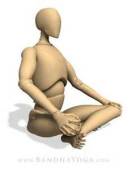 ke your way quickly to Starbucks for a three shots of espresso and a RedBull, it will stop you dead (not exactly dead) in your tracks by sending out a little digital shock. Sitbit wants you to relax, to calm down, not speed up. It wants you to do less, not more. Other features of the Sitbit include the Stress Manager which shuts down all your other apps and communications and erases contacts and emails that seem to be troubling to you. Sitbit can also be placed in trance mode inducing hypnotic tones, new age music and a simulated scent of those gauzy Indian shops wherever thing smells like the shop owners are trying to mask the smell of marijuana.

 Delight/ Awe and other things