Fifty shades of grey (hair)

I am just learning that some time in the last decade that I’d gone over to the other side. I don’t mean that I’ve had a near-death experience and glimpsed heaven. I mean that I now find myself on the other side of the cultural divide—those who can appreciate all that our media machines have to offer and those of us who are so out of it that we are turning off our TVs, opting out of Twitter feeds and locking our Google glasses in a dark room. Several indications line up and as the media commentators sometime say, “All the date is in and we are prepared to call the election.” I am officially out of the cultural mainstream.

Despite my best intentions and heartfelt efforts, I just don’t get it any longer. As evidence, I could cite my cluelessness at the Grammies (I don’t know how these people are or how they made their way to fame), my failure to be enchanted by most of the ads during the Super Bowl (That’s supposed to be funny?). I could go on and on here. But, perhaps, the conclusive event was my reaction to Vermont Teddy Bear’s Valentine’s Day promotion. First of all, I must admit my fondness for Teddy Bears and although I have never ordered anything from this company, I liked their support of NPR. I had imagined that the leaders of this organization were enlightened public-spirited men and women. And, perhaps, they are. I mean really what else would you imagine about a company that makes teddy bears AND is located in Vermont (although I don’t if the location is just a ruse; maybe they are located in communist Russia.)

What has thrown me for a loop is their promotion for their 50 Shades of Grey Teddy Bear. The ad reads,

Dominate Valentine’s Day. Give the one you want something that will obsess and possess them. With all of the trappings of a memorable gift–daring, passion, exciting next-to-skin touch–she’ll be desperate to get one. Bear seduces with silky smooth Grey fur, smoldering grey eyes, a handsome grey suit and silver tie. He even comes with a mask and handcuffs.

Now, it seems from reading the copy here that the writers are having fun, which is fine for them. Maybe, this is their way of adding some sexiness and spark to their own tame workplace. thHowever, the pleasure of having this bear join your household or book club or whatever will cost you $90. And, there may be other costs, as well. I am imagining the look on a mature woman’s face when she gets this bear from her new male friend after she has already complained to him about his dominating their conversations in mixed sex groups. This gift could make most situations worse, I am fairly certain. I would suggest to most couples that they stick to roses and chocolate and leave these aggressive bears to another demographic.

Because I am so out of the mainstream and because no one who is reading this is likely to take my opinion as the end of this important debate, I want to be clear and frank about my position. I like my bears cute and submissive and I like them with traditional teddy bear garb. If we are nominating bears for Valentine’s dates, my vote is cast in a tie ballot between Paddington and Pooh. I like the former for his erudition and the latter for his social networks and can’t choose between them. Taking on two bear lovers on may be frowned upon but I just can’t help myself.

We should put this issue in context. Toy companies have made lots of goofy moves and found themselves in the middle of media firestorms. The creative geniuses at Mattel may take the first prize for their lineup of Barbie kerfuffles. A website has conveniently put 24 of these missteps together for us in a slide show. There was Tokidoki, a tattooed, pink-haired Barbie with a skull and cross bone T-shirt and leopard leggings. There was Oreo Fun Barbie with an African American doll. There was Midge, a pregnant friend of Barbie whose flip-open stomach revealed a well-developed baby. There was Growing Up Skipper who developed breasts as your child turned her grow dial. There was Teen Talk Barbie who talked and said, “Math is tough”. There was Share a Smile Barbie who sat in pink wheelchair, which was too wide to get through the elevator doors in Barbie’s Dream House.

There are others. Doesn’t it seem that Saturday Night Live must have planted a confederate in the New Ideas for Barbies office, offering crazy schemes so that SNL could make fun of these later? I have worked in organizations where we have done some very dumb things that could only have been initiated by a sworn enemy of ours masquerading as a vice president of strategic strategy (or something like that.) There have also been products blowups associated with Legos and Mr. Potato Head. One has to wonder how tone deaf we all can be to make major mistakes like this. Or maybe, this is part of the plan. “Let’s do something that’s offensive and see how that turns out.” We can give people a break for silly mistakes but sexualizing an innocent bear, no way.

http://blog.sfgate.com/sfmoms/2012/01/25/barbie-dolls-that-have-stirred-up-controversy/#photo-45870

http://www.slate.com/articles/news_and_politics/chatterbox/2000/10/is_mr_potato_head_racist_part_2.html

http://listverse.com/2013/11/13/10-controversial-events-involving-lego/

Doggie diligence

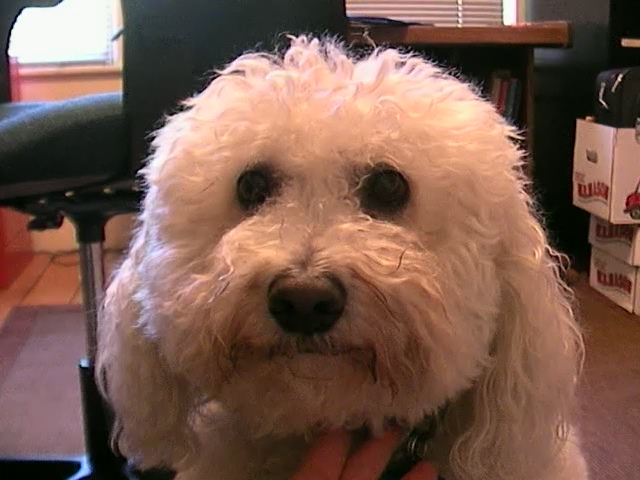
My dog Rags died last week. He was old and feeble, blind, deaf, incontinent; his organs were failing. He had to put him down, and it was so sad. We had spent sixteen years together on long walks, running on the beach, going to the groomers, enjoying each SANYO DIGITAL CAMERAother’s cookies. He was a great dog—lots of people who knew Rags were genuinely fond of him. He was the sort of dog you want to like you. He was furry, easy to pet, desperate for human attention, and eager to please. He was that dog that truly looked well-turned out in doggie clothes; not all of them do, I feel. In the truest sense, I was really missing him.

Then, last night, I got a letter in the mail from his attorney. It seems that my impression that we had a wonderful life together is being challenged by a civil suit filed on his behalf. Amazing, right? He is being represented by one of those sleazy attorneys who solicit cases on late night TV. This one specializes in domesticated animals malpractice claims. His attorney is claiming that I am obligated to pay for years’ worth of doggie mistreatment, including emotional abuse.

As I review our many years together, it seems to me that, if anything, he was an indulged dog, which is not to say that he didn’t deserve the best of everything but there were some demands that could have been considered excessive. I mean how many dogs insist on a Tempurdic dog bed? He actually refused to sleep in ours.

We subscribed to a dog magazine on his behalf, although it was much more focused on dog consumerism than on the human experience of dog ownership. (It should be noted here that he absolutely despised the term “ownership” to reflect the relationship between domestic pets (he didn’t like that term either) and their human companions. Often enough at night, when I would bring him his slippers, (we shared household duties) I would find this magazine opened up to a page full of advertisements for gourmet dog food that was guaranteed to stave off doggie dementia. His right paw was placed right on the order blank for this stuff. When I tried to pull the magazine away, he lifted his right doggie eyebrow, I gesture I read as a not so veiled threat. If I didn’t buy this food, there would be repercussions. Enough said. I took his advice I ordered the food right away at $100 for 40 lbs. The stuff smelled like a dead cat (which I assume he found charming) and had the consistent of hot fudge sauce with gravely bits. And sure enough, he was right. He was in complete command of his senses till his last day on earth, thanks to that food.

With respect to all the doggie arrangements—food, water, cookies, walks, toys, access to furniture and leftovers—I felt that we had negotiated fairly with him. I thought I could read this affect very well and thought he was happy. In retrospect, I should have known better. We referred to him as a mutt; he, on other hand, made much of his hybridized pedigree, the result of planned pregnancy between a poodle and a Bichon Frise, which he argued made him French. I must note here that I did speak French to him on occasion. He seemed not to understand the “Sit” command any better in French than he did in English. Either he was faking his knowledge of French or simply disdained my accent, which it should be noted is more Canadian than Parisian, so I can understand the confusion.

There were other episodes and indications as well now that I look back on our time together. I ended up in the hospital a few times on his account. One a third degree rope burn. On another occasion, my partner tripped on his leash which Rags had tangled, and knocked out her front teeth. Yet another time, he ran away and caused another dog to burst out of his house, flying through the screen door to chase him. The owner (sorry) thfollowed, calling “Killer, come back.” He didn’t, meaning that I crossed several lanes of heavy traffic (courageously with no concern for my own safety) to rescue him. And there was another time, when he stared down a female pit bull, growled at her actually, causing the other dog to grab him by the neck, pushing me to the ground, where I nearly got mauled by this vicious animal and could have died right then and there, except that the other dog lost interest when his owner called him back. And, then another time, when he stuck his nose into a nest, which liberated a troop of hornets in attack him and me. I then hauled him out of the forest in a two-mile walk with a thirty-pound dog whining in my arms. I fixed up a special doggie sling out of twigs and my torn shorts to carry him. I was swollen for a week.

It occurs to me now that I am hearing from his lawyer that these were not casual accidents but instead something more ominous. Foucault and post-modern theorists may characterize his behavior as resistance to hegemony, which I accept and understand. And, I must say that I forgave him at each turn, attributing these events to immaturity and a failure to plan. But, what I am left with here? Could all these incidents be signs of aggression on his part, against me, the most devoted dog owner one could imagine? Or maybe he was passive-aggressive? My therapist doesn’t think dogs are smart enough to be passive aggressive, especially Bichons, but I think she has a personal issue with my dog. She felt all along that I was a little too indulgent with him. I do think she blames me for this turn of events, but no matter, this is my issue to fight.

Here is the real problem. I cannot find an attorney to take my case. They all expect that Rags must have a case otherwise he wouldn’t have contacted a lawyer. “No dog would do such a thing—they are much too loyal and adoring—unless they have been provoked.” I hear this over and over again. So, it seems that either I defend myself or settle out of court. And, if I defend myself am I really going to get a fair trial in any state in our dog crazy culture? I would stand a much better chance defending myself against a Vietnamese pot bellied pig. And, there’s another problem. The complaint insists that I located his siblings and his children (he claims he fathered six puppies before he was placed at the shelter for adoption) so that I can pass on the settlement to them. It seems of all the “sins” I committed this was the worse. I know the pains of adoption and should have been sensitive. Maybe, we could have arranged a monthly visitation program. I wish I could have told him the bitter truth—that he wasn’t a very good father after all. When we adopted him, he had his eyes on another lady dog—not the mother of his children. But, you know, we all live with regrets. And, even with this lawsuit hanging over my head, I am glad he went to his grave with this delusion that he could have been a good dad with a swarm of happy puppies. Let him rest in peace.

A final cautionary note. I can’t say that I would have treated my canine companion any differently had I know this would have been the outcome. We may have had more heart-to-hearts about whether he was happy. Maybe, I would have asked him if he wanted to go back to the shelter or maybe list himself on dogmatch.com to find a more perfect owner. Maybe, I could have indulged him less and made him watch videos of working dogs on sheep farms so he would have known how bad things could get. Or maybe, that was the sort of life he was dreaming of. I know that his favorite movies of all time were Wallace and Gromit series. He never was happier than when he watched Gromit, the super-intelligent dog with rectitude and grace, get the idiot human Wallace out of yet another scrape. In fact, that is only time I really ever heard him really laugh long and hard. I remember that now with such mixed emotions.


Imagine.Engage. Reflect. Repeat: Forty years of civic work

An anniversary is always a good time to take measure of where we have been, where we are and where we might go. So, when I look ahead, Compact’s thirtieth anniversary next year provokes me to consider the arc of the work we do and to consider my own path within this larger story. Next year, I also mark a personal anniversary. In 1971, I joined VISTA, finding my way to southeastern Alabama for a year of service–a short 45 years ago. This year turned out to be the most determinative event of my life. From that year, I can trace an unsteady path from my sojourn in the south to my early career in child welfare and corrections to my later time at the Compact’s national office twenty years later to my current position as a faculty member. Throughout all of this work, one question has haunted me–whether working in the state prison or behalf of foster children or building houses in Alabama or teaching sociology at a private university: how do I understand what I am doing when I aim to be of service? And after decades of being in the company of some people who I think are the finest I will ever meet, I think this question haunts many of them, as well.

We could consider this question as a standard reflective practice—a way to understand our experiences—but I think it is much more important than a learning exercise to tick off as end a particular project. I think of questions like these as our life’s work, creating and calibrating the compasses we use to steer our hearts, minds and souls. I think about how the purest of intentions have formed some of our local, national and international efforts to do good and I have to consider why and how these so often go awry. I think about how those of us who do this work appear to those whom we aim to help. In my own experience, I think about how a ragtag group of twelve long-haired young people from the north looked to the poor black folks in rural Alabama when we showed up to “help.” I reflect upon what their white neighbors may have made of us and our intentions. So many decades later, I can still hear the echoes of those conversations when my host family asked, “Didn’t your family need you at home?” or when the waitress at the restaurant said to us, “Things must be very bad down here for you to trouble yourself to come all this way.” All those misunderstood motives for our being there put me on a path to question my own reasons and purposes for service.

That year of service taught me many things, most of which were most likely not the part of any administrator’s strategic plan. Our planned projects—building houses, organizing the community improve the distribution of commodity foo, extending family planning—became so complicated and difficult that I finally understood that the art and science of helping and bettering the world was much more complex than simply planting that disposition in one’s heart. The challenge was to not allow those difficulties and complications to stop us from doing what we believe ought to be rightly done. This is as true on our campuses today as it was in rural Alabama forty years ago.

There are many benefits to being a member of service-learning and community engagement communities. I have never worked in a field where there are so many individuals to emulate. I find myself taking on mentors who have no idea I have chosen them to guide and enrich my work. One of my heroes, Ira Harkavy quoted Chilean sociologist Eugenio Tironi in a recent speech.

The answer to the question “What kind of education do we need?” is to be found in the answer to the question, “What kind of society do we want…If human beings hope to maintain and develop a particular type of society, they must develop and maintain the particular type of education system conducive to it.

This point is a critical one if we in higher education believe we have something to offer to the public, as a public good, well beyond career training and a narrow agenda. And, I would argue, well beyond mandatory community service projects and days of service. What I have learned after two decades in this field is that we need to be both ambitious in our aims and humble in our approaches. I will try to make these points as clearly as I can. First, I have been thinking deeply about what we need as citizens and members of our communities to be full-fledged members of our community. In teaching sociology at Bryant, I try to help students understand all the ways that their lives are implicated in the lives of others. So, we think about ways to be more conscientious in what and how we consume, to be more thoughtful about philanthropy, to be better informed about public events, to be careful researchers, to design new approaches to social problems, and to be accountable for our actions, especially those meant to do good. This is what I meant about ambition or maybe, more correctly, vision. It is just too easy to keep doing what we have been doing without considering how we might take on more. As Tompkins reminds us,

 The classroom is a microcosm of the world; it is the chance to practice whatever ideals we may cherish. They kind of classroom one creates is the acid test of what it is one really stands for.

Onto my second point. The lesson here may seem remote. A recent article in the New York Times traced the impact of the campaign to distribute millions of mosquito nets to eradicate malaria—an effort that has had multiple unanticipated negative consequences. Play Pump met with a similar fate. Great excitement over a cool idea. Millions of dollars to ramp up and spread this innovation. Six months later, most pumps were out of service and residents were left with less access to water than they had before the pumps were installed. We don’t have to go to far off regions to find other instances where our own intentions went away. As I wrote earlier, these issues are complicated. This is not to say that we are not obligated to do much better and bigger than we do at doing good; the second lesson suggests we be as careful with the lives and life-spaces of others that we seek to help as we would be of our own lives and communities.

New York Times columnist David Brooks offers two paths for living a worthwhile life. The first, the well-planned life, is the one we typically suggest to students–that they find their passions and follow these. We argue that it is only when we are deeply inspired by own dreams that we accomplish anything of significance. Brooks suggests an additional path, which he calls the summoned life. In contrast to the first model, individuals drawn to the summoned life believe that, as Brooks writes, that “life isn’t a project to be completed; it is an unknowable landscape to be explored.” And because of this, we have to be open and engaged to pose the questions that Brooks suggests, “What are these circumstances summoning me to do? What is needed in this place? What is the most useful social role before me?” To these questions, I would add, “And what can we do as educators to help students develop those visions, skills, and values that get us closer to the society we want?”

Social Security and Superheroes

Imagine what an unusual day it is when you file for Medicare AND apply to be a superhero all in the same 24-hour period. I am nearing my 65th birthday but for several months I have been thinking that I want to a hatch a plan for a spectacular retirement. Those ambitions could be the legacy of my overactive imagination, a charge my teachers leveled against me when I suggested we take up juggling as a class to learn physics or when I alerted my classmates every Friday afternoon that that I thought I heard the tornado siren go off just before our weekly math tests.

There are many claims already in place for the retired or pre-retired. We have to be as calm and happy as all those beautiful people in the investment commercials, as deliriously joyful as the energetic seniors having water fights with the grandchildren in the Depends ads and as sure-footed and culturally accepting as those elders walking the Great Wall of China in the Viking Cruises commercials. And, of course, we p305dancersimageare pressured to be inspired by big pharma ads, dancing the tango without stiffness, having inspired sex, and being cuter than we should be at our age. Besides all that, there is also trying to work through the maze of insurance options, end-of-life policies, estate and trust planning. Like all the life events that have faced the baby boomer generation, this one seems more overwrought and over-exposed than at earlier times.

The fact that “seniors” can account for anyone between 50 and 105 makes talking about the elderly an exercise in stereotype mongering. A person in this age group can find herself on a Road Scholar trip, enroll in a class designed for the retired or go to the doctors and see the impact of this careless demographic dumping. Road Scholar used to be called Elderhostel but that sounded too “old” and “hostel” inferred sharing a bathroom and maybe a bed with a under-resourced stranger, so they changed the name. If you are one of the younger people on these adventures, the people who are eighty or ninety years old will eventually consider you a “kid.” You will find yourself getting them coffee and helping them to cross the street in cities where the drivers can’t distinguish between a downtown neighborhood and the Grand Prix. If we are over 65 and go to the Minute Clinic or some other walk-in, you will confront this one-label-fits-all mentality. I visited the clinic for a sinus problem—a non-age related disability, it seems to me—and was questioned about my medicines—what did I take every day? What sorts of chronic conditions did I have? Was I under a doctor’s care? When I answered in turn “none,” “none,” “no,” the nice medical professional asked me if I was certain. I said I was. She said maybe I forgot. I said, “No, I am not taking any medication.” She offered to check my record just in case. I felt like an ex-convict hiding a shaky past. I countered that I wasn’t on my meds and had no plans to add some just because it would help a big company turn a profit. (This is exactly the sort of provoking behavior that makes the elderly peevish) In fact, I told her I would like to add just one drug—an antibiotic to help me with a chronic sinus infection that has plagued me since breaking nose in an encounter with a glass door (entirely my fault; the door had been in position; I was the moving party.) That accident happened in mid-morning as I was on my way to take a long bike ride after leaving my Aquatic Aerobics for the Elderly, Infirm and Arthritic class. See what I mean? You cannot disconnect that coupling of beliefs: “if it is old, it must be broken.”

We are being besieged to do something creative with our retirement. TV pundits keep repeating the same note—the baby boomer generation has changed everything as they have moved through the lifecycle. The generation that has made marijuana a legitimate drug, kept Mick Jagger cavorting on the stage after his seventieth birthday, and provided rebel icon Bob Dylan a nice spot on the cover of AARP magazine will recast retirement for its members. So, here is my plan.

Given my public-spirited nature, I want to give back to those who came before, as well as those who will follow. And I want to give back as well to those who got here when I did. I have decided to create a league of superheroes called Geez Squad Girls. Like the Geek Squad, we are there to address problems with technology. We can fix things that are not th-2obviously fixable with your phone, computer, tablets, TVs, remotes, alarms, refrigerators, monitors, and so on. We can tweak anything that beeps. But unlike Geek Squad which is overwhelmingly male, under twelve, white and snippy, the Geez Squad Girls will be made of up women fifty years of age or older, who are racially, ethnically, and dietarily diverse, and who are most importantly, kind and lovely.

The premise is simple. Whenever someone my age complains, “Damn this phone. Why does it ring when I want it to buzz?” or “What the hell is an app?” or “For God’s sake, why would I want to be on Facepage?,” we would swoop in with our capes on, take off our flying shoes on the porch, stroll into their houses and say, “On my gosh. We are so sorry stick_figure_superhero_anim_md_wmyou are frustrated. It is not your fault. But don’t worry.” We’d do take some quick measurements and make a big showy sweep with our special wands. We may separate the overly confused from their technology and replace it with something simpler, like paper and pen. Then we would do some magic that looks like magic to the naïve, smile widely, flex our muscles, tie an attractive cape knot and yell, “Geez Squad Girls to the rescue” and fly off to our next call for help.

I am totally excited about this idea for two reasons. The first is that it will provide a lot of help to millions of perplexed users; second, it will re-establish the position of the baby boom generation as a bunch of cool people who are really with it, man. We must not cede that ground.

In some instances, the Squad may use its superpowers to knock the teeth out of the mouths of patronizing salesmen when they try to pull the wool over our eyes. We may mount a campaign against those clerks who offer us senior citizen discounts when we would rather have to ask for them, praying that the clerk dismisses our request, saying, “Oh, you can’t possibly be 65.” We can do battle with the rows of age defying ointments at the drug store with some guerrilla labeling to expose them for the false promises they advance. There are lots of possibilities here for correcting the injustices in the world, just like all the superheroes are called upon to do.

I am also thinking of taking on a sidekick, a taller person, probably a young woman who actually knows something about all of this technology mumbo-jumbo. I would exploit her in that gentle way that Batman did Robin, but nothing devious here. I am looking for cleverness without a hint of snarkiness in my assistant. I can take sidekick applications, like they do on American Idol, make a big event, do a crowdsourcing kind of thing, and send out some letters. Well, maybe not. That is sort of old school.

But just imagine, a smart and attractive mature woman arriving at your house, just GJcapedetail-1moments before your adult son is about to say, “Motherearly cell phone, how many times do I have to tell that you that telling your phone to go to hell doesn’t actually execute that command?” or “If you call me one more time to ask what the difference is between apps and appetizers, I swear that…” In fly the Geez Squad Girls to your immense relief and satisfaction. “Never mind, honey,” you say, “I got it figured out.”

Coffee Shop Therapy

Coffee Shop Therapy

Early this past summer, I was reading an academic text about charity and the wealthy and taking notes at Dunkin’ Donuts, an establishment that reveals its humble roots in its name. An upscale free-trade, micro-roasting, espresso shot-selling coffee bar simply would not entertain the idea of offering its customers a donut, donuts being a product OLYMPUS DIGITAL CAMERAengineered for the lower class working stiff who can wipe his sugary hands on his clothes and not consider the dry cleaning implications. In contemporary America, coffee is as good as any measure to distinguish the classes. If Thorsten Veblen were writing today about conspicuous consumption, he would start at coffee and work his way up to bigger markers, like cars, watches, and vacations. I like to come to Dunkin’ Donuts. The servers here are not baristas; they are not biding their time making coffee before their big break on Broadway and they are not scratching out a novel during their breaks, they way the staff at Starbucks do. They are the salt of the earth brewing coffee and doing their best to offer a full menu of breakfast, lunch and snacks with a five-foot square kitchen. I admire them.

As I was biding my time before a meeting at a local college, I enjoyed a cup of decaffeinated regular roast, no flavor added, no whipped topping, no anything. Just one noun (coffee) and one adjective (decaffeinated.) A seemingly dysfunctional family is seated nearby. We throw around the title “dysfunctional” a good deal these days to describe even our own perfectly average families that are blessed with a few eccentricities, like mothers who count out the number of Cheezits each child will thconsume in an evening. But this family was, in my semi-professional opinion, a bit disturbed. Maybe not dysfunctional, but more like undomesticated. They are speaking loudly and seem eager to share their “issues” with the rest of the customers. The woman who dominates the conversation, whom I will name Cheryl for this report, is joined in this demonstration of family dynamics with her tenth grade daughter, Stacy, her older daughter, a young adult named Paula, and an older woman, Auntie Dee, who joins the unit a bit later in our story. Rounding out the group is a middle aged skinny man with oiled up slicked-back hair, who I will christen Ratso, just to keep all the parties straight and easy to recognize.

When I joined the unwilling audience at the shop, this group was in the middle of talking about vaccinations.

“No kid of mine is going to be vaccinated unless and until I say so. I told that loser teacher of yours, ‘We ain’t just a bunch of dumb sheep, you know.’”

She addressed this statement to the youngest girl who’d just finished 9th grade and needed to get some shots renewed before the start of the next school year. According to Cheryl, she spent half the year in the principal’s office, straightening out the way they conduct their business–exhausting work for sincere parents interested in their children’s education. This led to a long story about Cheryl’s own childhood and the misery that was visited upon her by a series of stupid, fat and miserable teachers. These teachers were so ugly that she had to drop out of school in the ninth grade.

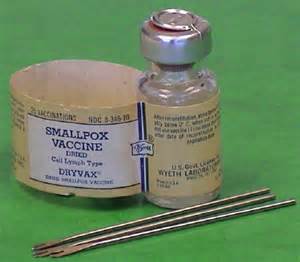
She launched into a story of a vaccination that she received when she was in the first grade that “hurt like a f***ng b**st*ard.” That wasn’t the worst of it. Then the injection site filled up with pus and scabs and all the kids had to wear a little plastic cup over the shot so no one would get infected with the terrible disease.

Paula looked dubious, shaking her head. “Yeah, right, Ma. Sure you did. And what AWFUL disease was this shot for? The plague?”

Auntie Dee added her own two cents, “I don’t remember anything like that happening when you went to school. Maybe, you’re just confused, honey.”

“Crap,” responded Cheryl. ”You people don’t know nothin’. That definitely happened and I remember the teachers saying to us, ‘If you a**holes knock that cap off, you will get very, very sick and die.’ So, we tried to be careful, and not ram into each other.”

“Uh, huh. Very interesting, Ma,” Tracy added in that undercutting tone that only early teenagers really know how to employ.

“You jerks don’t believe me, do you?” Cheryl confronted them head on, making eye contact with each of the doubting family members.

All through the conversation so far, Ratso didn’t add a word except to mutter under his breath, “Fat stinking lousy slobs, the whole bunch of ‘em.” Every time Cheryl opened her mouth, he added, “Especially you, you big bag of sh*t.”

Cheryl ignored this. Auntie Dee seemed to hear what Ratso said and smiled sweetly at him, nodding her head. As if to say, “Well, now that you put it that way, I think I understand what you mean.”

Cheryl wouldn’t let the vaccine thing go so easily. She looked around the donut shop, maybe expecting that there would be an encyclopedia Britannica or maybe the lady from Who Wants to Be a Millionaire would be here with a Life Line.

Lacking that, she called out, “Excuse me, Miss. You look very intelligent. Could you settle an argument for us?”

She swung her eyes unobtrusively around the shop. The only other occupant was an elderly man who had taken his hearing aid out as soon as Cheryl began talking about vaccinations. He was spinning it like a top and it was whistling. He was eyeing this group as if he had never seen the Jerry Springer Show.

Knowing I was fingered as the “intelligent” party in question, I turned her way and gave her a smile.

“Well, I am not so sure how intelligent I am but I would be happy to try to help,” I offered. What cardinal work of mercy this was, I couldn’t say. It wasn’t visiting the sick or feeding the hungry but there was definitely an element of charity addressing the essence of despair here.

“So, tell these bozos about the vaccination. I know that someone as smart as you knows what the f*** I am talking about.” She sounded so exasperated, I couldn’t refuse the assignment. I had to deliver here and fortunately I had the goods. And unfortunately, I sounded very much like a know-it-all-smarty-pants-geek when I shared the information.

“Actually, I think you referring to the smallpox vaccine protocol as it was administered in th-2the 1950s and early 60s. You indeed couldn’t disturb the shot because there would be some oozing at the injection site and it had to be covered until it healed.”

“F****ing Exactimundo!” she exclaimed. “Damn it, I knew you were smart. I knew it as soon as I looked at you. I said to myself, ‘Now that lady right there reading that big boring book is very smart.’ That makes me a f***king genius. What kind of job do you have? You must be a teacher or a doctor or something else.”

I thought about this carefully, not that I had to recall what I did for a living. I just couldn’t imagine what would be gained by telling her that I was actually an actress who played smart people on TV but wasn’t really intelligent at all. So, I went ahead and confessed.

“I actually am a college professor,” I smiled like you do when your mother says in front of your new boyfriend, “Even as a child, she had very regular in her bowel habits.”

Cheryl slapped her knee like they do on Hee-Haw. She looked around the coffee shop to alert the rest of the customers to her discovery.

“Ah, ha! What you think of that, Auntie? A college professor right here! Sitting having coffee with the rest of us.”

With the exception of Ratso, everyone paid proper homage. She asked about what college I taught at and what subjects I taught and asked me how many years of study it took to be a college professor. Cheryl repeated every bit of this to her 10th grader, point by point. I would say, “Well first, you graduate from high school” and she would repeat it, as if she was the only one who could understand what this college professor was saying. And, I, still playing super geek took them through the masters, comprehensive exams, the dissertation and its defense. At the conclusion where I graduate with my doctorate, she grinned at her teenager and said sincerely, “See, honey, if you study real hard, you can be anything you want, even a college professor.”

Stacy objected to her mother’s interjection of this plan for her.

“For cripes sakes, Mom, I was thinking more like studying to be a nail technician and if that doesn’t work out maybe a child shrink or something like that.”

For this young woman, career choice was a simple matter. What sort of outfit do the people who have all these jobs wear? She took notice of my sensible brown suit, set off by my collarless loose fitting black top, and topped off with shoes that are featured in catalogues to outfit senior citizen outings. A small gold pin. No earrings. Nothing at all dangled from me.

Bunny, a cute little beautician, known by the Dunkin’ Donuts clerks, had just come in for take out coffee. She wore a tiny faux leopard skin skirt, high heels, and an off the shoulder red blouse. She had beautiful long fingernails with selected images of the Stations of the Cross on each hand. In the eyes of a fourteen year old, here is someone one can relate to. Here is a role model to which to aspire! I saw Stacy’s eyes follow the girl as she left the restaurant, full of dreams, and hopes for a promising tomorrow—opening her own little shop Stacys’ Nails and whatever.

I had satisfied all the questions they had at the moment and I was thanked several times and excused to go back to my reading. I must admit I was growing tense and could hardly concentrate on the author’s main thesis. Suppose, the next question Cheryl posed was about the history of Persia or the sequencing of DNA and the role of pseudogenes in evolution? My cover would be blown.

Ratso was reading the newspaper but he continued to mumble. Every ten minutes or so, he would stride over to the center of the shop, pull up his jeans, bend his chin down to his chest, and then comb his hair back in a two handed sweep. Then, he squared his shoulders and strutted back to his seat. Once in a while, he would find his way outside, looking authoritatively and importantly up and down the street, like he was this New England town’s appointed tornado watcher. When he returned, he resumed his litany of miserable observations about his family members.

“Fat ugly sluts. They never get what they deserve. And you’re the biggest one.”

He tilted his head toward Cheryl. “You big bloated bag of wind. Why the f***don’t you shut up?”

These comments and others were muttered so that they could be heard easily enough by anyone in the room but quietly enough that his family members could pretend they didn’t hear them and could ignore him while they continued their conversation. This also saved them the trouble of whipping his “sorry a**” which also surfaced as a possibility later on in the exchange.

The conversation continued on without me. Like all human discourse, this was wide ranging, in part intellectual, in part emotional; sometimes the tone was playful, and sometimes close to indictable under the charge of “threatening to do bodily harm with the use of fists, feet or teeth.” They covered the price of gasoline, the love life of a woman friend who’d taken up with an older ex-inmate who was also shacking up with a teenaged prostitute, plans for the weekend and other matters.

Cheryl suddenly made a show of standing up. She cleared her throat to warn her family that she was about to say something of vital importance. She pulled down the front of her jersey pants.

“See this, Auntie. I have a big smiley face scar left over from that f***cked up C-section from you know who.” She shot a look towards her youngest daughter and drew her finger along the scar. Her aunt’s eyebrows arched up and she looked at me for some unaccountable reason.

“So, I been thinking about it and I’m going to use that $1500 from that insurance check to have it removed. Doctor Wahid, the plastic surgeon, said it would be a cinch and then I could wear a bikini again.”

“Oh, my!” they all thought. They all wore the same expression on their faces–horror and anticipatory discomfort. They were thinking, “You must be kidding. No one wants to see you in a bikini. It is not fair to the rest of us.” But they remained silent. It was Ratso who rescued the conversation.

“Never mind plastic surgery, what you really need is a lobotomy!”

Stunned, she pulled up her pants and sat down, looking dejected.

Auntie shook her head and said, “She does not need a lobotomy, mister!”

Cheryl appreciated the support and asked,

“What the hell is a f**cking lobotomy?”

Auntie tried her best to explain. Paula was confused and said politely,

”Auntie, I think maybe you are thinking of a hysterectomy.”

They tossed around Ratso’s idea for several minutes while he smirked with satisfaction.

He grumbled, “F**cking idiots! What the hell am I doing with this bunch of losers?”

Then, it occurred to Cheryl that I—the Oracle of Donuts—was still there, available for questioning.

“Professor, excuse me. I don’t want to bother you again but my a**hole husband says I need a lobotomy. What the hell is a f**cking lobotomy?

It was evident that the family appreciated clear answers. They were rapt, each turning in my direction with mouths agape.

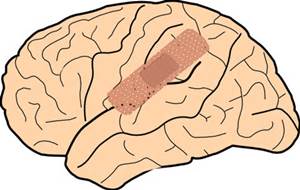
First, I demurred and noted that I wasn’t a doctor or a historian of medical technologies but I would try to do my best. So, I explained the origin of the procedure, its former th-1medical uses, cited a few reputable journals to consult if they wanted to do follow up reading on their and how the practice was no longer used here in the U.S., although some dictators still employed it to quell incipient rebellions.

“So, Professor, are you saying that I don’t need no f**king lobotomy after all?” She was looking more confident, returning to her old self.

“Well, although this is not my area of specialization. I am a sociologist with sub-specialties in organizational theory and post-post-modern deconstructionist philosophy. However, I think it is safe to assume that you don’t need a lobotomy. No one gets lobotomies anymore.” This vindicated her immediate contrary response to nearly any point offered by her husband. Ratso was glowering at me. Actually, I think I saw sharpening the knife that he had stowed in his shoe.

Pointing her index finger in Ratso’s direction, Cheryl asked, “And what about him? He’s the one who needs a lobotomy, right?”

“No,”I advised her, “he probably isn’t a good candidate for that procedure, either.” I actually was about to recommend a vasectomy but she didn’t ask.

I was thanked and excused again and it was almost time for me to leave. I considered for a second that I should leave my business card because I was so helpful to this family. We should really keep in touch. Then, I thought better of it.

I rose to leave but not before a long goodbye where Cheryl remarked on what a remarkable, actually “f***king amazing” day it had been.

”How about that, girls! We have never even met a professor before and here she is drinking coffee with us like a regular normal person. Do you come here often, Professor?”

“No,” I responded. “I am usually at the library behind a pile of old books, studying and studying.”

Cheryl gazed at me with what I understood to be maternal concern, “Well, you shouldn’t work so hard, Professor. You should relax more. My mother once told me that too much reading could ruin your eyes and your figure, if you know what I mean.” She smiled at me and winked conspiratorially. I, of course, didn’t have a clue.

I waved them goodbye, waiting a second for a round of applause. Cheryl continued to remark on her good fortune and reminded everyone that she had spotted me first. She waved to me as I got into my car. I thought to myself, she’s right. This had been f***king amazing.

 

Let’s name names

Let’s name names

I have long been fascinated with memory. Thirty years ago (or was it longer than that?) I wrote a piece about forgetfulness, foreshadowing my current disability by decades. Maybe, it was all those knocks to the head I suffered as a young tomboy with more energy than grace, when I repeatedly fell off my bike, or ran into walls, or slipped on the ice, or got knocked out in some touch football game with boys twice my size. I did know enough algebra and physics to understand that other bodies carried more mass and volume than I did and that a two hundred and fifty pound boy could easily fling a 105 lb. girl into the trees with a simple wave of a big paddle-shaped hand. In any case, this memory loss falls hard upon me as I take my place at the top of the pyramid, not the class pyramid. No, just the little hierarchy and pecking order in my job and in my family. There is no one left to take charge but me. My job as a professor puts me right in the crosshairs of the slings and arrows of the young and the impatient.

As a college professor, I am in the classroom with seventy or more new students each semester. Research shows that this is important that you remember their students’ names as soon as possible even they still don’t know yours at the end of the year. So, I pledge to myself that I will learn their names as soon as I can. Not only for courtesy’s sake, but so that I can call on them even when they don’t want to be called on. Maybe, as they are in the middle of imagining eating a nice juicy burger for lunch or thinking about taking a nap or just about to grab their smart phone to distract them from what’s going on in the classroom. So, names are important to me, as well. It is embarrassing to refer to them by other descriptors like, “You there. Yes, you—the young woman who’s paying attention to me. Yes, nod your head. Good. Please, poke the student next to you and ask her to climb back into the classroom. That’s right! Thanks.”

Last week, two weeks into the term, I called on two students using wrong names. The class thought this was very funny. Not like joke-funny, more like, “we are so embarrassed for YOU” funny. Like roll-your-eyes-funny. I quickly recovered and pulled their correct names out of memory. (I called Kristin “Karen” and Katie “Kristin”—I didn’t think that so bad. Bad would have been calling Kristen “Kenneth” and calling Katie “Kim Kardashian.”) My brain was at least in the correct mnemonic space. There are semesters when I have had three young men in my class—all named Kyle, all about 5’ 10”, all wearing campus gear, all dark haired with a little beard, all in the back row. How to keep them separate in my mind?

More challenging is another case. I have a girl (Madison) in my introductory sociology class who wants to be called Steve because another girl named Mariah wants to be called Monica. She was explaining to another student that Mariah is her slave name; she wanted me to accommodate her request, which led to a series of similar requests by other students. Give them an inch on issues like this and pretty soon, they all want to be called Harry Potter, and then you really can’t figure out who deserves which grades because Harry has earned A’s, B’s, C’s and F’s on his exam.

So, to address this problem with learning student names, I am thinking perhaps, that I should ditch their given names and tag these students myself using my own assessment of their qualities and my own creative spin on their characters. What is nice about this scheme is that these names can be used each semester since from one semester to the next, there’s quite a bit of consistency in their behaviors and appearance.

For that student who keeps looking out the window,

windowatcher  ‘the boy who turns to the light,’



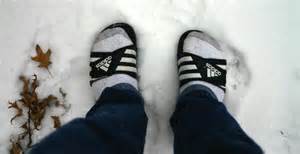
For the boy who wears flip flops in the winter,

sandals‘the boy whose feet don’t freeze,’


For the girl who complains each time I give an assignment, ‘the girl who whines without rest,’

For the boy whose baseball cap is way too big, ‘the boy with hat like a tent,’

For the third boy who is named Kyle in my class (see the discussion above) ‘the one who is named like the other two,’

For the boy who is always late, ‘he who arrives on the tortoise,

For the boy who nods off in class, ‘the  one for whom sleeps comes during lectures’

sleepingstudent

For the girl who never reads the material and seems satisfied to pretend she has by making up answers that are wrong, ‘the storyteller with the false tongue,’


For the girl who brings neither book, nor paper nor pen to class, ‘she who bets on hope,’

clueless_girl__open__by_shiraikimizuno-d4x9bbm

For the boy with longish hair and big dimples, who seems always to be in the company of

lazyguythree beautiful young girls who seem to do all his work in class,

‘the coed whisperer,’


For the young woman in the first row who keeps texting during class despite my warnings and harsh looks ‘she who raises my blood pressure’

And for the male athletes who are too big for the classroom furniture, ‘the boys whose knees climb the desks,’

little chair

Also in class are

‘yawning boy,’ ‘the girl with jewels in her nose,’ and ‘shiny blue nails.’

And, because of divine intervention and good luck, each semester, in my classroom, I find my favorite student, ‘the girl who smiles at the wit of her elders.’


The canary in the classroom

The canary in the classroom

Every January, at the start of the spring semester on college campuses, faculty members receive advance notice of impending doom. There will be flu; there will be colds; there will be outbreaks of strep throat; there may be plagues. One year, there was even a panic about swine or bird flu, I think it was. And, there was also the SARS scare, which pushed some campuses to bar students from Asia from their summer programs. At one point, there was a proposal circulating that we should not meet with those germy students at all and, if we did, we were not to accept any assignments from them in person. Don’t handle anything that they have handled, the administration suggested. I shrugged my shoulders. I have long figured out that with over fifteen years of teaching under my belt, that I most likely have the immune response of the well-traveled doctors from Medicine Sans Frontiers. Perhaps, I am too careless. Heck, I don’t even completely disinfect all my students by spraying them with a steady mist of Lysol; nor do I pass around a bottle of Purell before class, asking that students “disinfect into” my classes. I just let things lie where do they and hope for the best.

Given all that, however, I do take some precautions. I cling to the front of the classroom, walking along a tight line there as if I am perched on the edge of a skyscraper. I don’t hug any students until graduation in May. I don’t meet with students individually in my office; I hold meetings across campus on a bench where students are downwind from me. I arrange these meetings when the weather forecast calls for a strong ocean-driven wind behind me.

However, despite our best efforts, there are dangers that faculty members face no matter how careful we are. There seems to be an ineffable law of Murphys’ that predicts that students with the lowest immunity levels will sit in the front row. There are the sneezing, coughing, and sleeping students wthho a few days into the semester present you with a note that they have mononucleosis, which they inform you, as if you’ve never encountered it before, is very contagious. They follow that with a big achy swallow and a giant cough. They are eager to shake hands and bid you farewell. Sometimes, they tell you they don’t when they will ever be able to return to class. Can you email them to let them know if they miss anything in class?

By the time the class next meets, the students who were sitting near the first sick students are sending emails. They have fallen to the disease or something like it. Their best writing of the semester is contained in these detailed emails where I learn all about their symptoms and what their mother thinks they have and what they should do. I do believe these emails sparked the movement to electronic medical records. That day in class I am noticing that so many students are sneezing and coughing from all areas of the classroom that it sounds like a syncopated session of allergy-prone bullfrogs on a warm summer night. The noise is so distracting that my thoughts move from my lecture to thinking about how I should really apply to the CDC for a research grant. I am thinking of an investigational grant titled “Tracking the velocity, vectors and distancecanary-1 traveled by coughs, sneezes and other respiratory effluvia expelled by students in the direction of professors in confined spaces during high-threat conditions” Actually, that sounds like a pretty fundable proposal.

On my more cynical days, I think that perhaps, the administration is already conducting research to see how faculty members survive conditions of constant exposure to germ-bearing studentshttps://professorenos.wordpress.com/wp-admin/media-upload.php?post_id=66&type=image&TB_iframe=1. They may already be collecting data. It seems that we are the ideal sentinel cases. Google should be monitoring our emails to see what doctors’ notes and emails we are getting reveal about student absences (as if they are not already). These are wonderful experimental conditions—millions of students getting little sleep, drinking to excess (some not all), cavorting with uncounted others, traveling here and there, vaccinated and not—really, this could be a perfect storm. How perfectly innocent victims like faculty members survive in these settings must be a matter of the most serious public health concerns.


Are you there, Fitbit? It’s Me, Sandra

I don’t mark my birthdays, even the big ones, with any élan or flash but I do note other occasions like anniversaries of when I met my partner or when I joined VISTA or when my parents passed away. One event that I have recently celebrated was the first anniversary with my Fitbit. We have been together for one year; it has been a wonderful relationship—a little one-sided but I think I speak for both of us when I come to this conclusion.

simple.b-cssdisabled-png.h4eb3e8d9303ef6871a4973b19fa8ad11.packI have the Zip model which tracks your steps like a pedometer, translates those into miles and keeps a calorie count which has nothing to do with how much you eat just whether another day has dawned on the planet so every day my calorie count is about the same whether I have feasted on an oversize Thanksgiving meal or have fasted to protest the colonialist travesty which is Thanksgiving.

More sophisticated tools can do all of this, of course, but I worry that the insurance companies are capturing all this information and my lazy napping days are being recorded in some big file and when I claim to be an active senior citizen, the Fitbit may betray me. Maybe, I am just a bit paranoid. Last week, the NSA came to my house to ask me I was walking by that house on Broad Street where someone who was binge watching Homeland the week before. Did I suspect anything? I guess some patterns of TV watching are significantly suspicious to those paid to be worrying on our behalf.

The Fitbit is truly interested in our welfare, I suppose. It imposes a ruthless regimen; it wants you to take10, 000 steps a day. It doesn’t care if you do this at one mile per hour or twelve. It doesn’t matter if you do this in a meditative trance or if you are breaking a world record for power walking. 10,000 steps is 10;000 steps to the Fitbit. You can imagine my surprise when I received my annual report and found I had walked over two and a half million steps or 1100 miles.   If I had been more strategic, all these steps could have taken me from my home in Rhode Island to St. John’s, New Brunswick in Canada (where I have a friend actually) instead of just around my block and across campus to teach over and over again. Now that I see all those steps taken in such a small space, I feel I lack ambition and big thinking.

The Fitbit also reported that my most active day of the year was in mid-March (I think I was on vacation or doing a stress test at the doctors) and the least active day was at the end of January when I hospitalized. I feel that I owe the Fitbit an explanation about my activity levels: I don’t want it to be unnecessarily worrying or thinking that somehow the Fitbit is at fault. I do worry that if I walk 10,000 steps every day that eventually the Fitbit will want more from me and I am afraid to disappoint it. At age 65, I am wondering how to calculate how far I have walked all my life without the Fitbit calculating my steps and thinking about some serious sitting down for a while, except that the Fitbit has other plans for me.

Like so many of us, the Fitbit can be distracted and restless. I come back after a hard run on the treadmill and it chirps, just 3,000 steps to go to reach your target. At 11:00 p.m. undressing for bed, it reminds me, just 2603 steps to go. Seriously? Can you tell that I have my pajamas on, Fitbit? Where the heck I am going to walk in the next hour, around my bed, like a dog spinning in circles before he lies down? Are even if that is the best possible strategy to log on steps, do we really want to encourage that sort of behavior?

I mean I understand the technology and I understand the principles of behavior management here as well. I am all for it. I like to be reminded but I don’t like to be nagged. This is the reason why we ask Fitbit to keep track of our steps and not our spouses. With the success of Fitbit, I have thought of several other possible applications. In this “innovate or die” culture, I want to be at the cutting edge. So, here are my suggestions for the next generation of Fitbit-like devices.


Fit-to-be-with-bit

This little device would indicate to the wearer that they are such a bad mood that they ought to stay in their room. Maybe meditate or medicate (depending on one’s treatment philosophy.)

th-2

This could be done with a little jolt or vibration or maybe a whining noise that would grow louder as the wearer nears others. Better yet, it would wail if the provoker of that bad mood comes into the room, asking what’s for dinner. It is the sort of gift you want to give others actually but that would need to be done carefully.


Throw-a-fit-bit (or more commonly known, as Snit-bit)

There is a school of thought that proposes we are spending entirely too much time on our screens. This app directly addresses this issue. Throw-a-fit bit allows us to take the little device and when we are mad enough to toss it wherever you’d like. Of course, as we’d tell our children, don’t hurl this in the direction of innocent others.

th-3This app will measure the length and force of your throw and mark the where the device lands when you toss it so you can find it and throw it again, if you would like. Thanks to a sophisticated algorithm, the app reports how angry you are based on projectile velocity and force and calculates how this compares to your records last week when your partner was such a jerk about the holidays. It also manages chance encounters with other toss throw-a-fits so that you and another user don’t fight over whose device belongs to whom.

 Nitwit-bit

Designed especially for those of us who are susceptible to whacky ideas and get-rich-quick or reversing-aging scams, this app is the perfect complement to late night TV watching or to spending time with your sketchy in-laws.  idiots-motivational-posterFor this to work successfully, all you have to do is send those emails and phone calls you get from Nigerian princes, Ukrainian marriage brokers, penis enlargers, your brother-in-law and other questionable sources to this site, and the app will separate out the wheat from the scams. If, however, there is a great idea among the charlatan proposed offer, Nitwit-bit will take a small percentage of the killing you will make. The app does not work with proposals made by politicians, which brings to the next app, Mittbit.

Mittbit

For every one of us on the planet, we reach a point where our civic responsibility to be an informed citizen eventually drives us to drink and worse. Here is where MittBit comes in. Based on your TV viewing habits, your age and gender, whether you have stickers on your car bumper, your voting record, your GI (gullibility index), your AFATT score (All Fox All The Time news watching)

th-1which measures how welcome you are to new ideas, the MittBit blocks all messages that it knows you will ignore because you have heard them for a million times, because the message is so patently a lie or because there is no way that this message will do anything to advance world peace. In other words, the Mittbit assures that you won’t change your conviction the world is made up of givers and takers and that you are in the first group and detest the second.

Sitbit

Sitbit is perhaps the perfect app for the meditation set. A few times a day, this app would remind you that you haven’t given an iota of thought or sliver of attention to the cosmic truths of the universe, to the wonder that is you. Once you activate Sitbit, it will start breathing deeply. It will keep this up, growing louder and louder until you join in. If you begin to masitbitimageke your way quickly to Starbucks for a three shots of espresso and a RedBull, it will stop you dead (not exactly dead) in your tracks by sending out a little digital shock. Sitbit wants you to relax, to calm down, not speed up. It wants you to do less, not more. Other features of the Sitbit include the Stress Manager which shuts down all your other apps and communications and erases contacts and emails that seem to be troubling to you. Sitbit can also be placed in trance mode inducing hypnotic tones, new age music and a simulated scent of those gauzy Indian shops wherever thing smells like the shop owners are trying to mask the smell of marijuana.


 Quitbit

Most of us have habits we want to dump (cigarettes, nail biting, singing out loud when we don’t mean to, swearing in front of our saintly grandmother.) Many of us have partners we need to leave (discretion leaves this point undeveloped.) Quitbit is the perfect app. It tells us when things should end by carefully listening to our conversations on the phone, scanning our photos, reviewing our texts and considering our Facebook postings and friends. And, not only does it understand when the end should be near, its helps hasten that end. It quitimageposts things for you, like announcing the end of a relationship. It will clean up your language and make it impossible for you to pay for another bottle of vodka with your credit or debit card. It will play the least popular song on iTunes at full volume if it finds you lighting up, even if you are in a non-smoking area.

As the app becomes more popular, it will identify for you, people in your circle of friends and contacts who are dying to dump you as well. It will also find people who will pay you to quit your lousy habits. A note of caution: It offers no help at all when you find yourself in a situation like the lovers in Broke Back Mountain, when Jack said. “I wish I knew how to quit you, Ennis.” The Quit Bit is clearly outmatched here.

Nitpickbit

For several years, human resource departments have offered a half-day workshop called something like, “Dealing with Difficult People.” It was quite a daring offering. Suppose the most difficult person in the company showed up for this workshop along with all of his hapless victims? You can also imagine that this person, let’s call him Ernest, found everyone else in the office immeasurably dull-witted and thin-skinned. He found this as difficult as other people found him. A situation like this leads to my final idea.

nitwitNitpickbit reminds that we are constantly driving other people (most likely our partners and other family members) crazy by our need to make things perfectly clear and orderly. Those of us who have a bit more power over others are especially prone to this behavior, as are older siblings. The Nitpickbit can be adjusted for several occasions and multiple relationships. For example, you may notice that you have brought to husband’s attention that his favorite shirt is missing two buttons and has stained underarms for about 100 times. Or you may have corrected your adult child’s use of ‘irregardless’ on many occasions in speech and writing. (Irregardless is not really a word, the Oxford dictionary says so; no matter how often George Bush says it in a speech and no matter if that child has an MFA from a fine university.)

Or you may grow frustrated at hearing the same tedious story from your best friend about the challenges of filling a prescription over the phone from someone she swears is a deaf Pakistani robot. Every time she tells this story, you remind her that she has already related this remarkable tale. After years of this careful guidance on your part, you finally reach the apt conclusion that none of this nagging does any good. Your husband has put that old shirt in his private safety deposit box to keep your hands off it. Your child refuses to speak with you except in monosyllabic phases. Even news about your grandchildren arrives in an Instagram message with an inscrutable text. And, your best friend accuses you of trying to put her in an Alzheimer’s unit with all your harping about her memory.

Nitpickbit addresses all of these issues. It disables your brain’s auto-correct function; it lets things be. It puts a smile on your face, no matter how untidy, unkempt, unswept, or uninformed your family and friends are. It makes you, in many respects, a much more pleasant person to be around, although somewhat of a dimwit. Like the Fit-to-be-with-bit, you may want to think carefully about gifting this app to others.

All the apps that fit-bit

In the new economy, we are all supposed to be our own creative geniuses. We are supposed to be buddying up with personal coaches and developing a life plan. We are urged to self-publish, grow our own food, be our own person, be hypnotized by our own mantra. So, I see clearly that I cannot in good conscience just suggest these as good ideas without developing them myself. I need to do some market research, code and test these apps, sell them on the App store and see how much money I can make.  I need to find an App to help me with all that.

Are you there, Fitbit? It’s Me, Sandra

Walk like a woman, teach like a man

Walk like a woman, teach like a man

By some accounts, college professors are among the most respected professionals. Compared to lawyers, we do pretty well; compared to hedge managers, we are closer to the saints. That is all to the good. With decades of training and not much glamor, unless you are an academic superstar celebrity, the college teaching profession is an honorable way to change lives and make a relatively decent living (unless you are an adjunct professor.) Teaching, as many report, is an art and a science. Any of us who teach know that there are moments that zing in the classroom and others that moan. But what many of us don’t understand is that the students in the classroom have huge influence on the teaching and learning that is done. Although an audience of dolts doesn’t influence whether the film that is being shone is brilliant or inane, a classroom full of half-tuned in disengaged students can make all the difference in the world in the tone and content of what goes in the classroom setting. In other words, what students bring to the classroom in terms of attitudes, beliefs and expectations matter a great deal.

In Blink, Malcolm Gladwell reports on an experiment conducted in 1993 by psychologists Ambady & Rosenthal on the impact of first impressions of college professors on student evaluations at the end of the semester. The students were shown a ten second clip of a professor teaching a class and asked to evaluate their effectiveness. The sound was muted. Those ratings correlated highly with the end of the semester rankings of students who had actually had the professor in class. Even when the clips were shortened to five seconds, the correlations between the immediate impressions of the professor and those earned after an entire semester of exposure to the professor were unexpectedly high.

This suggests that after the first five seconds of interaction, the battle is over. Either we are effective or we should sit the semester out, perhaps conceding the class time to other activities.

As a professor, I often think about crafting each lecture, with points carefully drawn to enhance learning objectives, to align my work with that of the mission of the university, and to advance the progress not only of Western civilization but of all the other cultures and communities we now have incorporated into our curriculum. So, imagining that a lot Enos_Oct07_12 revof that work done during the fourteen-week semester may be for naught makes me truly reconsider my career. Unless, of course, I can make those first five seconds especially charming and, well, effective. Watching the Grammies may help or maybe appropriating an attention grabber from the halftime the Super Bowl or better yet, Shark Tank when those earnest entrepreneurs make their pitch to their potential backers.

In any case, a recent article in the New York Times brings additional light to this subject. Benjamin Schmidt, professor of history at Northwestern University, examined fourteen million student reviews of professor on Rate My Professor. On this site, students write descriptive comments on professors. These are by no means a scientifically designed sample. It could be argued that students who go to the trouble of filing reports on the site are either very happy with their professors or quite the opposite. Because students can write whatever they want, “Professor Brown reminds me of a jellyfish—bland but dangerous when poked” or “Like lemonade on a hot summer’s day, Professor West is a brilliant and satisfying answer to what could have been an awful course.” And because students can use whatever descriptors they want, a resourceful researcher can try to make sense of these comments to discern interesting patterns. Once you have fourteen million responses, something interesting is certain to surface.

Schmidt has not only published his research, he has created an interactive chart displaying how these descriptors break down by department and gender. The level of detail is amazingly disorienting. For instance, you can enter “funny” and see not only which disciplines are rated by students as most funny but also whether students are more likely to label men or women with that value. Across all disciplines, men are more likely than women to be described as brilliant. Women are more likely to be described as bossy, disorganized, annoying and nice than as men. The descriptors for men focus more on skills; those assigned to women aim at personality.

Playing with the interactive chart yields some interesting results. As shown the Times’ article, searching for genius display music at the top with criminal justice at the bottom with men far out distancing women on this measure. My own discipline of sociology is close to the bottom on the genius scale. On the other hand, searching for funny finds psychology at the top followed closely by languages with sociology among the top five. Still here, men are far out front. The least funny professors are the engineers, the computer scientists and the accountants. Sociology and psychology are the top disciplines when the term “interesting” is used with very small differences between men and women. Math and chemistry are at the bottom of this list. Like the overall finding, women professors are more likely to be described as moody. The fine arts (the tortured woman artist?), music and communication studies top the moody list while the political scientists, philosophers (really?) and physicists are at the bottom of the list.

Although not widely reported, men are much more likely to be described as goofy with music and science professors heading the top of this list. Men are reported to be a lot goofier than are women by the students. At the bottom of the goofy hierarchy are the professors of criminal justice, business and accounting. I am not certain if “goofy” is a term of endearment. Maybe, the students mean pleasantly disorganized, forgetful and spaced out which in men is charming and in women is seen as annoying and disorganized. The goofy professor teamed with the right faculty wife may be quite the prize.

So, armed with the information about the importance of first five seconds of the semester and the findings from the Rate My Professor analysis, I will swear to move into new semester by introducing myself this way.

 Good morning, class. My name is Professor Enos. (Enter the marching band and the cheerleaders.) This sociology class will be unlike any other class you have taken (Beyoncé’s If You Like It, Put a Ring on It video displayed on every wall of the classroom.) Although I appear to be a woman, I will be teaching like a man—brilliant, commanding, funny, goofy. Questions? Comments?

 That should do it.

References used

Ambady, Nalini and Robert Rosenthal. 1993. Half a Minute: Predicting Teacher Evaluations from Thin Slices of Nonverbal Behavior and Physical Attractiveness. Journal of Personality and Social Psychology 64(3): 431-441.

Gladwell, Malcolm. 2005. Blink: The Power of Thinking without Thinking. New York. Little, Brown.

Miller, Claire Cain. Is the Professor Bossy or Brilliant? Much Depends on Gender. New York Times, February 6, 2015

http://nyti.ms/1EN9iFA

Link to Benjamin Schmidt’s interactive chart

http://benschmidt.org/profGender/

From Penguin to Oblivion

This essay was written at the end of June 2013 as the culmination of a course in creativity and play for professors at my university. As faculty development seminars go, this was certainly longer and much more engaging. If ever there was a teachable moment, this was it.

From the Penguin to Oblivion:
A Journey through the Creative Process

Introduction

Wherever you are, there is somewhere further you can go.” Ingold

In this essay, I will redraw the path I took during the academic year (2012-2013) tracing a journey from teaching to play to creativity and back again. As Ingold (2007) observes, some journeys don’t simply take the traveler from point A to point B. Indeed, this story tracks a wayfaring walk where the sites along the way tell the tale as much as does the wayfarer’s scripted walk. This is not a journey limned by a GPS device. In fact, it is much the opposite. It is a walk that doesn’t map clearly or coherently. Until the end, perhaps, when the hero (me) understands the purpose and portent of the trip in the first place which is to take a different journey the next time and to have my students along for the walk. We could take the car or the bus with a guide setting out on a prescribed tour but that would be a different journey with another professor.

This is also a journey of discovery as a professor. Renowned educational philosopher, Parker Palmer, argues that we cannot teach without courage (Palmer 1998). In The Courage to Teach, he argues convincingly that professors need the courage to be ourselves in our teaching–no more, no less–but deeply ourselves. In taking up this challenge, he asks the most important question, “Who is the self that teaches?” He notes that many of us who choose to teach carry in our minds’ eye the image of “the” professor we wish to become—a brilliant lecturer, a compelling storyteller, the captivating theoretician, or the Socratic genius. However, as Tompkins (1990) notes, a focus on performance is on what sociologists call impression management can get in the way of student learning. Balancing those images with the mandate to be truly ourselves can set us on a journey of creative self-making and refashioning. It is hard enough to appear in front of a class of thirty young men and women, who are tamped down in the expectation of “another boring class,” determined to be more confident, competent and well-organized. To be more alive, more mindful, more fully realized, more authentically ourselves–maybe, that’s just too much to expect. As she writes,

The classroom is a microcosm of the world; it is the chance we have to practice whatever ideals we may cherish. The kind of classroom situation one creates is the acid test of what it is one really stands for (Tompkins 1990, 656).

I am a late career academic, joining the professoriate as a sociology professor in my fifth decade. I have a lifetime of experience in the so-called “real world” behind me, but not really behind but rather infused in direct and indirect ways. These influence my teaching and research, of course. As Florida Scott-Maxwell writes in The Measure of My Days,

You need only claim the events of your life to make yourself yours. When you truly possess all you have been and done…you are fierce with reality (as cited in Palmer, 1998).

Like many things done later in life, I have found learning to be a professor a steep curve. During this last academic year, I have taken the challenge—to bring my creative side to my classroom. This means making deeper and more inspired connections between the work I do off campus in music, photography, creative writing, community engagement, and other pursuits with my teaching, research and service.

As I will discuss later in this essay, I have long tolerated a division between my left-brain and right-brain orientations to the world and have found this a useful conceptualization of how one understands and approaches the world (Edwards 1979; Pink 2006). In the past academic year, I had decided to be divided no longer. Like Whitman’s Song to Myself where he rejects “resistance to the brain that divides,” (cited in Hyde, 211). I am seeking a way to bring a richer way of encountering teaching and the world I teach into the classroom.

In my application to join the Faculty Creative Fellows project, I suggested that I would be good candidate because I considered myself a creative person and was eager to meet with other faculty members to talk about how to be more creative in my teaching. I also wanted to work on a new course in the sociology of creativity, a long interest of mine. Finally, I was interested in developing a proposal to the administration at Bryant University for a commencement award that recognized creative expression, the first such award in the institution’s history. I jumped into this faculty development opportunity without much concern about the design or content of the yearlong commitment. I trusted our leaders, Bob Shea, Director of Faculty Development and Terri Hasseler, Professor of English and Cultural Studies, and imagined that the experience would be productive and enriching.

Jumping into play with one toe in the water
I can summarize my thoughts coming into the Creative Fellows course—happy anticipation. The course presented for me a way to use play and creativity to build a bridge from my creative side to my teaching side and back again. I must admit I have been hesitant to do this in any deliberate or well-considered way prior to this opportunity. My initial definition of play and creativity equated this with stepping out of my routines, my planned day, my left-sphere dominated brain and to let play evolve slowly perhaps, and steadily, or maybe, not at all. I see play and creativity as my counter weight to boredom and repetition, on and off campus. Buddha said that we cannot walk into the same river twice because of the nature of impermanence in our world and in our lives and I believe that this is the case for teaching, as well. I cannot to teach the same class twice—the students are different from last semester’s class; we are living in the world together and have common, yet different experiences; I may have just read an article that has me reconsidering my understanding of school reform, for example; I may be weighing the impact of some new research. I always aim to change the script but increasingly, I am interested in changing my role and my character. In wading through the daily business of our lives, we can play out our roles, superficially and alienated, as if the act of teaching was indeed a performance. Ask anyone who is pretending to be doing something in a half engaged spirit–like teaching–and it is easy (and painful) to feel deadened by a lack of imagination, energy and creativity. The drive to do something new and more authentic may take us back to play as inspiration.

As I participated in the seminar, these themes of divisions, categories, and tensions have reverberated through much of my work created for the course. As I trace my life’s path, I see multiple forks in the road. A sharp turn toward one direction, which in good time and order, sends me back the other way, usually by way of a long meandering, and not wholly conscious choice. In my career, I have had many jobs with few consistent themes. My life mirrors what Mary Catherine Bateson (1989) proposed reflected the lives of women—a composed life, not a straight line stretching from point A to Point B, but rather one knitted together with themes, where each age echoes another. I do see those themes in my creative work and my professional work but my mapping out of these developments suggests nests, networks, cul-de-sacs, dead ends, and tendrils—a far stretch from a planful, left-brained path where one step is a necessary and sufficient precursor to the next stage.

During my career and personal life, I have always been blessed by creative ideas, by flashes of work I want to do, of ideas I wish to pursue. In the creative exercises we been assigned, I had no end of ideas but I was always challenged to execute these in a shape that follows my early vision. This play-work to me is similar to the back- and forthingness of any endeavor. One takes a step, is blessed with an insight, sees how one thing leads to another or away from it, and waits for a shout of inspiration while deeply engaged in something else. The essential genius of the Creative Fellows project was that it has presented challenges to us to create something that wasn’t there before—not manifested anyway. Stephen Johnson (2010) writes about the long hunch—the slow evolution of ideas that seem to emerge one day fully formed when, in fact, the mind has been crafting and tooling those ideas on a slow course of development. With the “adjacent possible,” creativity comes with connections and communities, with broadly seeking inspiration and putting one’s toes and eyes in places where the unfamiliar is encountered. This is exactly where the Creative Fellows project brought me.

I loved the purposelessness that was part and parcel of the instructional design in this course and found myself turning toward the projects that Professor Hasseler assigned as a meditative practice—to clear my mind in order to create something that the noise and busyness of faculty work in a complex organization typically drown out. Now, my challenge is turning a richer focus toward teaching and writing. STOP

The source of these ideas has been a lifelong tug of war for me between what some would characterize as right vs. left brain dominance, as intuition vs. rational analysis, as divergent vs. convergent thinking, as expansive thinking vs. more narrow working through. Play and creativity have always been for me a way to fashion projects for myself—inside the classroom and beyond it–that are both creative and intellectually challenging. Play creates the ideas and the insights and the work to get the project organized and moving ahead moves into another dimension.

A few years ago, I became a more serious photographer taking pictures of seaweed that had washed up after southeasterly storms on Narragansett beach. The images were lovelier and more stunning than I had imagined they would be. I decided to make a structured study of the seaweed, researching the genus of seaweed, identifying their characteristics, studying the geology of the sand, the shape of the tides, the lines and whorls of the water at the edge of the beach and writing about the history of seaweed on the southern New England coast. This all come together in self-published books using Blurb software. What was interesting to me was that taking the images AND researching their vocabulary added on a dimension to my experience of walking the beach that made it a richer, more compelling experience. So, although I walked the same walk for twenty-three years, it was by no means the same walk any longer. Experiences like this left me open and excited about play and creativity.

Seeing the forest and the trees
Like most non-artists or even artists who decide to move into another medium, I had a great fear and trepidation of making art. Reframing this as play made this work easier. I see some direct connections between play and creativity and productivity, not in the sense of efficient production of work but instead in the fomenting of ideas I am interested in pursuing. So, the obstacles that I can typically put in my way of doing the work I should be doing can be readily enough managed if I allow myself the place and time for the joy of play.
One obstacle for me is that I seek novelty. I love to learn new things and explore doing something new, with or without guidance, usually without, so I seldom move to a place of mastery in these fields. I like to improvise, to move along my own path of exploration. While I have been playing music for nearly fifty years, I am just now taking music lessons but I am realizing the power of a teacher to guide me through. That is embarrassing for a teacher to admit, I imagine.
Besides the time and place to create, I would add courage, not so much to make, but to share what has been made. Recently, I have shared some writing I have done with colleagues. The courage to fail, or to succeed, is less essential when one is committed to the private making of things and ideas. I think these concerns surface as real obstacles to building creativity into my daily routine. The sharing with a safe community would be a blessing. I know that I have certain creative strengths and struggle to be recognized for those; I also know that my personality keeps me modest and safe and not willing to grab attention for achievements.

Learning a new language to think about process
The projects we did in the course created opportunities to provoke thinking about presenting ideas and concepts. Through the mapping and genealogy exercises, I struggled with using new media (new to me) to tell stories I have telling myself for years. However, with these new challenges, I discovered important insights that hadn’t surfaced previously. My aim in The Begats was to create a structure of lines around objects and people that would knit together a divided self. I have often thought of this with me a central figure framed by two figures that represent that divided self—somewhat linked together with lines of attribution—sort of like an annotated paper doll. I did find to my great surprise that when I went to my collection of photographs for this project, I found huge holes—key events and turning points with no photographic trace.

The exercises we did in class–whether it was making pottery or drawing mandalos or map-making or genealogy–really stretched me. I understand that I was more “successful” in some exercises than I was in others. In some, I didn’t understand the instructions as well as I could have; in others, I was hesitant about my ability to draw or add color. The lessons here for me were profound with a link to Vygotsky’s work (1978) on the zone of proximal development work and its implications for scaffolding in teaching. I understand more clearly why and how hard it is for students to understand directions for projects they have never done before. I thought of the craft of learning my discipline of sociology and how so much goes on in learning vocabularies and conceptual organization of ideas. I also learned here that like me, students are afraid to fail. Finally, in terms of my own work with the exercises, I recognized that I create the idea of what I want to do and find it frustrating to understand how I am going to bring that vision to reality. My talent fails me, unless I work it over and over again. Perhaps, we don’t as mature professors and adults believe that we can reach out to new fields of endeavor, experiment, and go beyond our comfort zone, fail, and try something else. And perhaps, in our traditional teaching, we have passed on that unfortunate premise to students, as well.

The courage to change back to me
It is hard to make art when there is so much in one’s mind about the process and the product. This class has pushed me to carefully consider the “monkey mind” and the act of work and play. I have taken several classes on memoir writing and have tried to teach myself to draw, as well. For a while, I was writing humorous pieces and getting them published here and there. I have also recently taken up the mandolin—the first time in my life that I am taking music lessons—and will join an ensemble this summer—screwing up my courage here to show what I have learned and can do.

In the creative process, I work hard to mold and re-mold. I love creative insight when no march down a linear path would have gotten you where you wanted to be—someplace new. As a result of this course, I have more confidence in my creative energy and interests—not necessarily my talent–but instead a deeper focus on the questions and practice around the creative process, not only as it applies to my creative work—poetry, photography, social problem solving–outside of the classroom, but in the classroom, as well.

The whole nature of play with other faculty members was enormously engaging for me. When I had the chance to listen to other faculty talk about their fears of failure, of performance anxiety, it helped me to understand the nature of my own hesitancy to create, think, and act outside the boxes we typically create to manage our self-images as professors, as experts in our disciplines, and as creators of learning opportunities.

The wayfaring way forward
I intend to use a new course (The Sociology of Innovation and Creativity) that I am designing as a touchstone for the lessons I have taken away from this experience. This course will explore how ideas and innovation emerge in social settings examining some texts that trace the conditions that lead to great periods of innovation and creativity. We will also examine the characteristics of groups and organizations that frustrate or enhance creativity and problem solving. Students will develop a creative portfolio, examining how their skills, orientations and dispositions to creative problem solving change over the semester.

As a teacher who considers herself creative, I know I can do more in the classroom to encourage students to be more creative by scaffolding ways for them to develop their “creative” muscles.

I will be applying for a Faculty Innovation Grant to support a new project that develops toys for poor children to address the issue of “toy deserts” (Bellafante 2012). This project can readily adapted to use in my courses, to build creative problem solving skills in students. Finally, I hope that the Creative Fellows can work with other faculty to further build and sustain this work on campus. Can we create some supports on campus that celebrate and push our creative selves? Can we develop a community of practice? A flash mob? A pick-up band? An informal group of faculty that can work across disciplinary boundaries and come together around projects of common interests and new ones, as well? As Ingold noted as the start of this essay, no matter where you are, you can go further. That is the key lesson here for pedagogy and practice that emerges for me in this creative adventure.

Works Cited
Bateson, Mary Catherine. Composing a Life. New York: Grove Press, 1989.
Bellafante, Ginia. New York Times, 2012 8-December.
Edwards, Betty. Drawing on the Right Side of the Brain: A Course in Enhancing Creativity and Artistic Confidence. Los Angeles, CA: J. P. Tracher, 1979.
Hyde, Lewis. The Gift: Creativity and the Artist in the Modern World. 2nd edition. New York: Random House, 2007.
Ingold, Tim. Lines: A Brief History. New York: Routledge, 2007.
Johnson, Stephen L. Where Good Ideas Come From: The Natural History of Innovation. New York: Penguin Group, 2010.
Palmer, Parker J. The Courage to Teach: Exploring the Inner Landscape of a Teacher’s Life. San Francisco, CA: Jossey-Bass, 1998.
Pink, Daniel H. A Whole New Mind: Why Right-Brainers Will Rule the Future. New York: Riverhead Press, 2006.
Scott-Maxwell, Florida. The Measure of My Days. New York: Penguin Books, 1983.
Tompkins, Jane. “Pedagogy of the Distressed.” College English 52, no. 6 (October 1990): 653-663.
Vygotsky, Lev. Mind and society: The development of higher psychological processes. Cambridge, MA: Harvard University Press, 1978.