Do You Believe in Magic? An Older Woman’s Brush with Beauty. 4 of 6 essays for writing prompts

I came from a family where wearing makeup and caring much about one’s appearance was frowned upon and considered vain. I knew that I was not a great beauty. I was one of those “she has such a nice personality” girls, encouraged by my mother to develop my brain and housekeeping skills because youthful good looks wouldn’t last forever. She failed to tell me that my brain and housekeeping skills would also fade with time. (Thank goodness for the latter.)

I successfully resisted makeup and even paying much attention to my appearance until much later in life. Then I relented in my early seventies. Maybe it was my very pretty dermatologist. We had tried lotions and cremes for aging spots, and nothing worked. One day, she suggested a chemical peel. The results sounded promising. Clear skin! My heart swelled with expectation. I remembered what Charles Revson, the founder of Revlon, said about the cosmetic industry. “We don’t sell lipsticks. We sell dreams.” Or “Perfume is made in the factory, ‘hope’ is sold in the store.” So, I bit the bullet, believing in magic. The promise, dream, and hope of a better me. 

Even after bottle after bottle and tube after tube fails to make us beautiful, we again and again put our faith in the magic of potions and creams and procedures, resting on a shaky foundation of that improbable fix.

I signed for the least intrusive chemical peel, as I called it, the baby peel. My lovely dermatologist and her aide prepped me with alcohol and brushed the peeling agent over my face, paying special attention to the darkest areas. The whole thing took less than thirty minutes. I went home with discharge instructions and suggestions to stay out of the sun and take it easy. I should be back to normal with some redness in just a few days. Imagine that!

The discharge instructions and the calm counsel from my dermatologist were completely inadequate for what followed, like the instructions that Marie Antoinette might have gotten before her beheading, “You feel a sharp pinch in your neck that will end quickly, and you will fall into a deep state of rest and relaxation.”  Follow-up instructions generally fail to describe what really happens in post-surgical recovery. Doctors are woefully inadequate in describing pain. Maybe, they figure no one would sign up for any surgery if they told the truth or maybe they resolve to leave the theatrics to the fiction writers of the world. If I wanted to really know the truth about a chemical peel, I could watch a Lifetime movie.

I resolved to catalog my agony and suffering. I took photographs and maintained a log. I have had several surgeries, some quite serious and nothing was as painful as this. I was actually crying in the anguish that I had gone through this suffering for vanity and nothing else – my punishment for believing in magic.

In the follow up visit to the pretty dermatologist, I am eager to share my misery. I have photographic evidence on my phone and paper documentation. However, before I can answer her question, “So, how was the recovery?”, she interrupts, looks kindly at me, and says “Horrible, right?” I nod in disbelief. All that was normal? I suggest to her that she needs to rewrite the discharge materials to more accurately describe the burning, the tightness in face, the frightening peeling of the skin.  

 Before she can disagree, I begin, “Here’s my version, Doctor.”

First, they pour acid on your face. 

Then your skin lifts off your face and dies right in your hands. 

Then your face burns no matter what you do. 

It will seem that the procedure has gone completely wrong but that is entirely normal.

And please don’t sneeze because we have no idea what will happen. 

Clinical results will vary.

We suggest that your loved ones take a short trip while you are recovering because some partners may suffer from nightmares from seeing the patient on days three and four.

Results will vary and are unrelated to your suffering.

The procedure may be repeated in six months because the spots are likely to reoccur.

Abracadabra.

Inspired by Do You Believe in Magic?

Be Your Own Crash Test Dummy

About a year ago, I nearly walked into the path of a car that was entering traffic from a parking lot. The driver was edging into the road and had carefully scoped out his exit. I am certain that he had looked up the street and down. I was the surprise—a blind spot—in his field of vision. He was moving south; I was headed east. One half-second earlier and I would have gone sailing into his car and over the hood. I am a small woman, somewhat fit and maybe athletic. I saw myself arcing in a gymnastic tumble. Except, unlike those tiny bouncy teenagers who land on their tiptoes, I imagine that my head would have hit the pavement first, a non-sanctioned Olympic move called The Double Concussion Flip and Fall. Maybe, I was too distracted with my earbuds playing Moby’s Wait for Me; it is a mesmerizing tune. I was over-dressed on this seventy-degree autumn day. 

I stretched out my hands to cushion the crash. When this failed, my chest hit the hood of the car. I bounced back up and tried to resettle myself. What was I doing before I marched onto the hood of this car, I wondered? The driver waved his hands in apology; I waved back. It was like a silent movie. All gestures, no talk. I wanted to dance a bit, maybe skip in front of the car as I left the scene, just like Charlie Champlin might. It was a magic moment. A minute before we had been invisible to each other; now we separated each with a little memory, a shared story to tell our spouses, and maybe a wee lesson, depending on our temperaments.  

As we live our lives, we collect stories like this all the time. The older you are, the more you have of these. There are accidents, near-misses, losses and what-could-have-beens. Some we bounce back from, others less so. For me, all these brushes with illness and death bring to mind me those public service announcements from the ‘80s with those crash test dummies, Vince and Larry. 

I see much of my life a series of crash test dummy trials. This encounter with the car put my mind on the path of other near misses—a series of events that could have led to some serious trouble. I have sped through a stop sign late at night, distracted and tired. I have twice driven the wrong way down a busy street at twilight. If it had been earlier in that day when I walked into the car, I would have without doubt faced a lot more traffic and a much greater probability of getting hurt. I would have been like a little cat facing the running of the bulls. We could all have been seriously hurt. Well, not all of us equally. 

I have been in cars that have spun out, flipping on their heads in slick Alabama clay. I have been held up at gunpoint in Texas on a little walk in the good part of town. The man who did this looked upset enough to hurt me. I have dodged so many medical scares, that I am pretty certain that my health insurance company thinks that I am messing with their premium calculation algorithm. I have had so many tests and been diagnosed with so many wrongly accused major illnesses, there must be an office pool somewhere betting on my demise. This includes brain aneurysms, stomach cancer, pancreatitis, and more. I could go on and on here, but it seems with every incident I recount here, I am feeling both dizzier and bolder. To me, each of these is a like a crash test. With so much good fortune, a karmic calculation would have me dead pretty soon. As they say, I may be running out of good luck. Or maybe in that cosmic computation, or my good fortune comes at the costs of another’s unearned bad turn of chance.  

Which gets me into the meat of what is really on my mind.  Earned and unearned good fortune. the movie Funny Girlwhen Fanny Brice finds early renown, she says to her lover, the fabulously dreamy Nicky Ornstein,  and supporter that she can’t be famous yet because she hasn’t suffered enough. I understand this feeling. It is that sentiment that much of what we have is unearned. We moan, “Why me?” when bad luck strikes but when good fortune strikes, we smile, “I so deserve this.” Personally, I have unearned good health, undeserved energy, unnatural optimism. I don’t know if others feel this way about the gifts they have. I think we mainly focus on what’s missing.

It seems to me that most of us have experienced good fortune we have neither earned nor merited and of course, the reverse is trueI used to joke with a friend that I had the Luck of the PortugueseWhen that friend remarked that he never heard of the Luck of the Portuguese, I would simply reply, “Exactly.” John Rawls suggests that in considering systems of justice, we imagine that we don’t know where in a social system we may stand.  He calls this a veil of ignorance. How would we want the world to distribute its bounty if we didn’t know whether we were rich or poor or white or Black or male or female or a U.S. citizen or a citizen of another county or abled or disabled? If a thought experiment like this were possible and if it could influence social policy, we would have to be convinced that we actually could stand in someone else’s shoes. Hale doubts this can be done because of what he calls the veil of opulence—the blindness that we all have to the privileges of birth and position. We fall victim to the comfort of believing that if we fell on hard times, we would work our way out of it. The veil of opulence works like the Just World Hypothesis. It creates that delusional narrative that we are self-made, deserving human beings whose unearned good fortune insulates from caring more deeply from others who we see as not as worthy or deserving of what we have. Lots of us dodge bullets thinking we are lucky and blessed; not imaging that the cards are stacked in our favor. Like all those crash tests that I have survived, many have to do with an advantage of class or nationality or gender. Others have to do with random events completely out of our control. And like the crash test dummies, we often do not take good advice or live in a manner that reduces the risk we visit upon ourselves or others. But, as humans endowed with some degree of reasoning, we can do more than our best sometimes to avoid doing the worst. 

Are you there, Fitbit? It’s Me, Sandra 

I don’t mark my birthdays, even the big ones, with any élan or flash but I do note other occasions like anniversaries of when I met my partner or when I joined VISTA or when my parents passed away. One event that I have recently celebrated was the first anniversary with my Fitbit.  We have been together for one year; it has been a wonderful relationship—a little one-sided but I think I speak for both of us when I come to this conclusion. I have the Zip model which tracks your steps like a pedometer, translates those into miles and keeps a calorie count which has nothing to do with how much you eat. In its simple way, it reports whether another day has dawned on the planet so every day my calorie count is about the same whether I have feasted on an oversize Thanksgiving meal or have fasted to protest the colonialist travesty that is Thanksgiving. 

Macintosh HD:Users:drsandraenos:Desktop:simple.b-cssdisabled-png.h4eb3e8d9303ef6871a4973b19fa8ad11.pack.pngMore sophisticated tools can do all of this, of course, but I worry that the insurance companies are capturing all this information and my lazy napping days are being recorded in some big file and when I claim to be an active senior citizen, the Fitbit may betray me. Maybe, I am just a bit paranoid. Last week, the NSA came to my house to ask me I was walking by that house on Broad Street where someone who was binge watching Homeland the week before. Did I suspect anything? I guess some patterns of TV watching are significantly suspicious to those paid to be worrying on our behalf. 

The Fitbit is truly interested in our welfare, I suppose. It imposes a ruthless regimen; it wants you to take 10, 000 steps a day.  It doesn’t care if you do this at one mile per hour or twelve. It doesn’t matter if you do this in a meditative trance or if you are breaking a world record for power walking. 10,000 steps is 10;000 steps to the Fitbit.  You can imagine my surprise when I received my annual report and found I had walked over two and a half million steps or 1100 miles.   If I had been more strategic, all these steps could have taken me from my home in Rhode Island to St. John’s, New Brunswick in Canada (where I have a friend actually) instead of just around my block and across campus to teach over and over again. Now that I see all those steps taken in such a small space, I feel I lack ambition and big thinking. 

 The Fitbit also reported that my most active day of the year was in mid-March (I think I was on vacation or doing a stress test at the doctors) and the least active day was at the end of January when I hospitalized. I feel that I owe the Fitbit an explanation about my activity levels: I don’t want it to be unnecessarily worrying or thinking that somehow the Fitbit is at fault. I do worry that if I walk 10,000 steps every day that eventually the Fitbit will want more from me and I am afraid to disappoint it.  At age 65, I am wondering how to calculate how far I have walked all my life without the Fitbit calculating my steps and thinking about some serious sitting down for a while, except that the Fitbit has other plans for me. 

Like so many of us, the Fitbit can be distracted and restless. I come back after a hard run on the treadmill and it chirps, just 3,000 steps to go to reach your target. At 11:00 p.m. undressing for bed, it reminds me, just 2603 steps to go. Seriously? Can’t you tell that I have my pajamas on, Fitbit? Where the heck I am going to walk in the next hour, around my bed, like a dog spinning in circles before he lies down? Are even if that is the best possible strategy to log on steps, do we really want to encourage that sort of behavior? 

I mean I understand the technology and I understand the principles of behavior management here as well. I am all for it. I like to be reminded but I don’t like to be nagged. This is the reason why we ask Fitbit to keep track of our steps and not our spouses. With the success of Fitbit, I have thought of several other possible applications.  In this “innovate or die” culture, I want to be at the cutting edge.  So, here are my suggestions for the next generation of Fitbit-like devices.

Fit-to-be-with-bit

This little device would indicate to the wearer that they are such a bad mood that they ought to stay in their room. Maybe meditate or medicate (depending on one’s treatment philosophy.)

This could be done with a little jolt or vibration or maybe a whining noise that would grow louder as the wearer nears others. Better yet, it would wail if the provoker of that bad mood comes into the room, asking what’s for dinner.  It is the sort of gift you want to give others actually but that would need to be done carefully. 

Throw-a-fit-bit (or more commonly known, as Snit-bit)

There is a school of thought that proposes we are spending entirely too much time on our screens. This app directly addresses this issue. Throw-a-fit bit allows us to take the little device and when we are mad enough to toss it wherever you’d like. Of course, as we’d tell our children, don’t hurl this in the direction of innocent others.  

This app will measure the length and force of your throw and mark the where the device lands when you toss it so you can find it and throw it again, if you would like. Thanks to a sophisticated algorithm, the app reports how angry you are based on projectile velocity and force and calculates how this compares to your records last week when your partner was such a jerk about the holidays.  It also manages chance encounters with other toss throw-a-fits so that you and another user don’t fight over whose device belongs to whom.

Nitwit-bit

Designed especially for those of us who are susceptible to whacky ideas and get-rich-quick or reversing-aging scams, this app is the perfect complement to late night TV watching or to spending time with your sketchy in-laws.  

For this to work successfully, all you have to do is send those emails and phone calls you get from Nigerian princes, Ukrainian marriage brokers, penis enlargers, your brother-in-law and other questionable sources to this site, and the app will separate out the wheat from the scams. If, however, there is a great idea among the charlatan proposed offer, Nitwit-bit will take a small percentage of the killing you will make. The app does not work with proposals made by politicians, which brings to the next app, Mittbit.

Mittbit

For every one of us on the planet, we reach a point where our civic responsibility to be an informed citizen eventually drives us to drink and worse.  Here is where MittBit comes in.  Based on your TV viewing habits, your age and gender, whether you have stickers on your car bumper, your voting record, your GI (gullibility index), your AFATT score (All Fox All The Time news watching) which measures how welcome you are to new ideas, the MittBit blocks all messages that it knows you will ignore because you have heard them for a million times, because the message is so patently a lie or because there is no way that this message will do anything to advance world peace. In other words, the Mittbit assures that you won’t change your conviction the world is made up of givers and takers and that you are in the first group and detest the second. 

Sitbit

Sitbit is perhaps the perfect app for the meditation set.  A few times a day, this app would remind you that you haven’t given an iota of thought or sliver of attention to the cosmic truths of the universe, to the wonder that is you.  Once you activate Sitbit, it will start breathing deeply. It will keep this up, growing louder and louder until you join in. If you begin to make your way quickly to Starbucks for a three shots of espresso and a RedBull, it will stop you dead (not exactly dead) in your tracks by sending out a little digital shock. Sitbit wants you to relax, to calm down, not speed up. It wants you to do less, not more.  Other features of the Sitbit include the Stress Manager which shuts down all your other apps and communications and erases contacts and emails that seem to be troubling to you. Sitbit can also be placed in trance mode inducing hypnotic tones, new age music and a simulated scent of those gauzy Indian shops wherever thing smells like the shop owners are trying to mask the smell of marijuana. 

:th.jpeg

Quitbit

Most of us have habits we want to dump (cigarettes, nail biting, singing out loud when we don’t mean to, swearing in front of our saintly grandmother.) Many of us have partners we need to leave (discretion leaves this point undeveloped.) Quitbit is the perfect app. It tells us when things should end by carefully listening to our conversations on the phone, scanning our photos, reviewing our texts and considering our Facebook postings and friends. And, not only does it understand when the end should be near, its helps hasten that end. It

Macintosh HD:Users:drsandraenos:Desktop:th-2.jpegposts things for you, like announcing the end of a relationship. It will clean up your language and make it impossible for you to pay for another bottle of vodka with your credit or debit card. It will play the least popular song on iTunes at full volume if it finds you lighting up, even if you are in a non-smoking area. 

As the app becomes more popular, it will identify for you, people in your circle of friends and contacts who are dying to dump you as well.  It will also find people who will pay you to quit your lousy habits. A note of caution: It offers no help at all when you find yourself in a situation like the lovers in Broke Back Mountain, when Jack said. “I wish I knew how to quit you, Ennis.”  The Quit Bit is clearly outmatched here. 

Nitpickbit

For several years, human resource departments have offered a half-day workshop called something like, “Dealing with Difficult People.”  It was quite a daring offering. Suppose the most difficult person in the company showed up for this workshop along with all of his hapless victims?  You can also imagine that this person, let’s call him Ernest, found everyone else in the office immeasurably dull-witted and thin-skinned.  He found this as difficult as other people found him. A situation like this leads to my final idea. 

Nitpickbit reminds that we are constantly driving other people (most likely our partners and other family members) crazy by our need to make things perfectly clear and orderly. Those of us who have a bit more power over others are especially prone to this behavior, as are older siblings. The Nitpickbit can be adjusted for several occasions and multiple relationships.  For example, you may notice that you have brought to husband’s attention that his favorite shirt is missing two buttons and has stained underarms for about 100 times. Or you may have corrected your adult child’s use of ‘irregardless’ on many occasions in speech and writing. (Irregardless is not really a word, the Oxford dictionary says so; no matter how often George Bush says it in a speech and no matter if that child has an MFA from a fine university.)  

Macintosh HD:Users:drsandraenos:Desktop:th-1.jpegOr you may grow frustrated at hearing the same tedious story from your best friend about the challenges of filling a prescription over the phone from someone she swears is a deaf Pakistani robot. Every time she tells this story, you remind her that she has already related this remarkable tale.  After years of this careful guidance on your part, you finally reach the apt conclusion that none of this nagging does any good. Your husband has put that old shirt in his private safety deposit box to keep your hands off it. Your child refuses to speak with you except in monosyllabic phases. Even news about your grandchildren arrives in an Instagram message with an inscrutable text. And, your best friend accuses you of trying to put her in an Alzheimer’s unit with all your harping about her memory. 

Nitpickbit addresses all of these issues.  It disables your brain’s auto-correct function; it lets things be. It puts a smile on your face, no matter how untidy, unkempt, unswept, or uninformed your family and friends are.  It makes you, in many respects, a much more pleasant person to be around, although somewhat of a dimwit. Like the Fit-to-be-with-bit, you may want to think carefully about gifting this app to others. 

All the apps that fit-bit

In the new economy, we are all supposed to be our own creative geniuses. We are supposed to be buddying up with personal coaches and developing a life plan. We are urged to self-publish, grow our own food, be our own person, be hypnotized by our own mantra. So, I see clearly that I cannot in good conscience just suggest these as good ideas without developing them myself.  I need to do some market research, code and test these apps, sell them on the App store and see how much money I can make.   I need to find an App to help me with all that.  

Written in 2013; posted 1-2-2022

Imagining my enemies

At sixty-nine years old, a person has few new experiences—unless she plans for them, deliberatively living a new pro-active, pro-aging lifestyle. I am all for that and if I was thirty years younger, I would plunge right in. But, earlier in the week, in the middle of the night, despite security systems and standard precautions, I was attacked in my bed, without provocation, by streptococcus. I woke up sometime during the attack, my autonomic nervous system raising to the call, pushing me to a 103 degree fever, inflamed throat, night sweats, extreme fatigue, stabbing headache, swollen lymph nodes and body aches from head to toe and across the bow, as well. I imagined my immune response system as tiny figures mounting a battle, as first responders courageously and selflessly, running to battle. My response to this response was the result of seeing too many Pixar movies.

I went to the doctor the next day for a diagnosis and while I waiting for my appointment I fell asleep on the examining table. I woke struggling to understand where I was and regretted that I hadn’t brought along witnesses to testify on my behalf because at this point, I also had strep fog. Strep fog is a symptom I have added to the regular list of symptoms to signify the sense that you are too sick to really speak about how sick you are. And, not as well known, there is also strep existential despair, the profound question that arises from that moment of peak fever when you ask, “How can I feel so sick when this will all be over in a few days?” or “What evolutionary benefit can there be in visiting upon the normally healthy an array of symptoms that pushes them to look into getting their final affairs in order?” Surely, I exaggerate a bit. But, I have had major surgeries, weeks of recovery, unaddressed broken bones and more—and I don’t think I have ever encountered the woes of strep throat. In fact, if the doctor had suggested opioids to treat my pain, I may have agreed to taken them for the first time of my life. If asked, I would have also put strep on the list of criteria of reasons to not resuscitate me.

After a few days with penicillin, I began to feel better although it was a long slog. It took me two days to even think that chicken soup was a good idea.

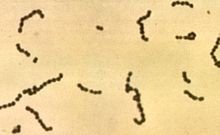
Several days later I decided, after meditating about my bout with strep and my reaction to it, to face my demons. I was wondering what the bacterium looked like. Could I look it in the eye? Could I just appreciate the power of the structure by looking at it? So like everything, I looked for a Google image. While I was at it, I thought I would also explore those who have perished at the hands of strep, making some connection with greatness and their suffering. Maybe, a poet had left some words of wisdom.

So first, images of streptococcus. Could this be less interesting? Really. This felled me? This is dangerous? Doesn’t this look like a figure from an introductory psychology clas220px-Streptococcis when the professor asks you what you see in the picture? For me, I see a smiling sheep or an elephant showing off his tusks in Paris. But, I certainly don’t see a bacteria that almost killed me.


So I looked for another image, a 3-D image. At least this one is purple and looks like a threatening pearl necklace that could strangle you. However, it still looks playful in some way. And in the the Pixarification of our lives which lets us see trees smiling at us, makes us fond of rats and ants and cars, and pushes us to grow appreciative of dirty old toys, this could be a friendly tropical worm just getting organized.

download

So if an image of a bacterium wouldn’t do it to help me confront this enemy, I would have to rely on stories of other humans who have also suffered from strep. Maybe, I would learn something from their experiences.

Two stories are important here. In my research, the most important person to die of strep is Mozart who died at 35 years old. In this picture, he does sort of look feverish. He was diagnosed with “heated military fever” and died quickly after falling ill. It appears that the infection led to kidney failure. Some accounts say that he infected many other people before he finally fell really ill. Had penicillin been available, mayimagesbe Mozart would have survived.


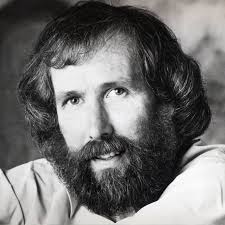
Jim Henson, creator of the Muppets, also died of strep, although he should have been saved by antibiotics. However, he had genes that predisposed him to very serious infection called toxic shock syndrome. I avoided that outcome but the world lost a wonderful man with Henson passed away.

download-1


A small percentage of people that get strep will get very seriously ill. So, my encounter was perfectly average misery. That is not much comfort, of course. But, the wonder of being so easily saved from a serious illness and possibly death, is the real news here. So, I can look at the bacterium with deep respect and worship the inventor of penicillin and other everyday miracle. When something happens so regularly, I suppose it is really not a miracle. But like flying at 30,000 feet, it certainly would seem like a miracle 100 years ago.

Dodging silver and other bullets

Today, I nearly walked into the path of a car that was entering traffic from a parking lot. The driver was edging into the road and had carefully scoped out his exit. I am certain that he had looked up the street and down. I was the surprise—a blind spot—in his field of vision. He was moving south; I was headed east. One half-second earlier and I would have gone sailing over the hood. I am a small woman, somewhat fit and maybe athletic. I saw myself arcing in a gymnastic tumble, except, unlike those tiny bouncy teenagers who would land on their tiptoes, I imagine that my head would have hit the pavement first, a non-sanctioned Olympic move called The Double Concussion Flip and Fall. Moby’s Wait for Me was playing in my earphones and I was over-dressed on this sixty degree spring day.

To break my fall, I stretched out my hands. This failed and my chest hit the hood of the car; my head whiplashed back. I tried to resettle myself: What was I doing before I slammed onto the hood of this car? Where were my thoughts?

The driver waved his hands in apology; I waved back. It was like a silent movie. All gestures, no talk. I wanted to dance a bit, maybe skip in front of the car as I left the scene, just like Charlie Champlin would have. It was a magic moment. A minute before we had been invisible to each other; now we separate with a little memory, a shared story, and maybe a wee lesson, depending on our temperaments.

This encounter put my mind on the path of other near misses—a series of events that could have led to some serious trouble. I have sped through a stop sign late at night, distracted and tired. I have twice driven the wrong way down a busy street at twilight.. Earlier in that day, I would have without doubt faced a series of quickly moving cars, zooming up the hill. I would have been like a little cat facing the running of the bulls. We could all have been seriously hurt.

I have been in cars that have spun out, flipping on their heads in slick Alabama clay. I have been held up in Texas on a little walk in the good part of town. The man who did this looked upset enough to hurt me. I have dodged so many medical scares, that I am pretty certain that my health insurance company thinks that I messing with their premium calculation algorithm. I have had so many tests and been diagnosed with so many wrongly accused major illnesses,there must be a office pool somewhere betting on my demise. I could go on and on here but it seems with every incident I recount here, I am feeling both dizzier and bolder. With so much good fortune, a karmic calculation would have me dead pretty soon. As they say, I may be running out of good luck. Or maybe in that cosmic computation, or my good fortune comes at the costs of another’s unearned bad turn of chance.

Which gets me into the meat of what is really on my mind. Earned and unearned good fortune. the movie Funny Girl when Fanny Brice finds early renown, she says to her lover and supporter that she can’t be famous yet because she hasn’t suffered enough. I understand this feeling. It is that sentiment that much of what we have is unearned. I have unearned good health, undeserved energy, unnatural optimism. I don’t know if others feel this way about the gifts they have. I think we mainly focus on what’s missing.

It seems to me that most of us have experienced good fortune we have neither earned nor merited and of course, the reverse is true. The Just World hypothesis suggests just the opposite, that what we get is what we have earned. People are rich for good reasons, not trumped up excuses. People suffer in poverty because of bad choices. When we think about who is rich and who is poor, who enjoys good health and who falls to early disease, we frequently resort to this idea. We typically see great justice in the way of the world. It is comforting and somewhat cruel to believe that we get what we deserve. This is especially true if we believe in the power of individuals more than we do that of systems and structures. If we believe that through individual pluck and drive that the poorest child who has gone through worst schools can make it to Harvard and lead the world, we tend to be judgmental when they don’t. If we cannot see the advantage that birth and family and neighborhood bring to us, we probably believe that we are playing on a level playing field.

Twentieth century philosopher, John Rawls, suggested that in considering systems of justice, we imagine that we don’t know where in a social system we may stand. When we are making rules for running the world, we should evaluate them outside of our own interests. We should create systems that don’t favor or disfavor individuals because of race, gender, social class, national origin, cultural differences and so so. If a thought experiment like this were possible and if it could influence social policy, we would have be to convinced that we actually could stand in someone else’s shoes and represent their position fairly and respectfully. Hale doubts this can be done because of what he calls the veil of opulence—the blindness that we all have to the privileges of birth and position. We fall victim to the comfort of believing that if we fell on hard times, we would work our way out of it. The veil of opulence works like the Just World Hypothesis. It creates that delusional narrative that we are self-made, deserving human beings whose unearned good fortune insulates from caring more deeply from others who we see as not as worthy or deserving of what we have. Lots of us dodge bullets thinking we are lucky and blessed; not imaging that the cards are stacked in our favor.

The tests fail us

When you receive a medical diagnosis that is serious, your mind moves out like a posse chasing a dangerous suspect. At first, the deputies fan out in all directions at once without much coordination. One team is off in the hills investigating where all this began, the very moment when your blood vessel bulged. A special team investigates the question: was it climbing up the stairs on the second to the last day of class in the winter session when the pressure behind your eyes pounded so hard that your brain seemed to have been invaded by a timpani orchestra? A squad of detectives inquires: was it that night when in your half-wake consciousness that you felt a sharp pain and colors swarmed in paisley patterns behind your eyes shut and you swear, your eyes opened as well? Members of the posse quickly tire of this chase, especially after learning from the Merck bible that the doctors have no idea of why aneurysms occur. You and the doctors have called back the search parties back from their assignments. So, after the news settles, the investigation begins to narrow and to focus. We find words clinging to diagnoses: we learn new vocabulary. A new word—idiopathic—flows into your conversation with friends. Idiopathic, in medical terms, means “of unknown or spontaneous origin.” Something has gone wrong; they don’t have an idea why. You think what a wonderful word. I can use this to explain relationships gone sour, missing cookies from the cupboard, and maybe, as well, unearned blessings. More about that later.

And, finally after lots of preliminary wondering about the sources of the problem, you understand that it is well beyond the point of wondering who did the dirty deed, it’s time to move to a conviction and begin the treatment. But, this neglects the long periods, or so it seems, of waiting. Every patient with a potentially troublesome diagnosis must feel that his is a cold case. The doctors and the laboratory technicians seem matter-of-fact, too measured, and taciturn. They process your case in turn as if you were ordering at the deli. In a few short weeks, I had two imaging tests and one consult with the neurologist and each encounter would have been enhanced by some training on my part in what Goffman, a favorite people-reading sociologist, calls the signals that we “give off” in impression management. Two weeks earlier, I submitted myself to a cerebral angiogram, a test where contrast is injected into your veins in order to trace your blood flow through the major arteries. The artery under suspicion was the carotid artery, specifically the choroidal artery, as the blood bearer that enters the head making its way from the heart and through the neck.   The technician was matter of fact, as disinterested in my case, as a character you would find in a tale by Kafka . Her voice modulated; her conversation as scripted as any cabin attendant warning you to fasten your seat belt and to turn off electronic devices for the first part of the flight.

The first part of the test is without the contrast, sort of to mark the ground, I suspect. Then the needle goes into your elbow crease at the opposite side of the elbow. I asked, “Will this be cold?” “No, it is warm” she replied. “For some women, it feels like they need to urinate, but that feeling will pass quickly.” I nodded and she returned to her station. The test lasted maybe ten minutes, maybe shorter. In a CAT scan machine, you enter a different time zone. One cannot be trusted to tell the time. It is suspended, in your own particular time zone, as you are when you are in the place where the long trail of medical diagnoses process.. And, that is the funny thing, I suppose. At the time of your life, when you should be most engaged, your brain recedes back and you stall. You begin not to make plans. Things are tentative.

“OK, that’s it. You can relax, Sandra.” She called my name and she was smiling sweetly and patiently. Her manner had changed and I thought, “Hmmm. I have moved or more accurately, my case has moved from “Worries-too-much-middle-aged-woman” to “Cerebral aneurysm. Too bad, she seemed like a nice person.” She helped me from the table and said that the results would be on my doctor’s desk on Monday morning. Surprisingly, the doctor called me later that day asking me to come in as soon as I could. It reminded when of crime dramas when the detective asks the unsuspecting person to come to the station and answer a few questions. Unlike a younger person with fewer medical miles under their belt, I have had plenty of health scares and I can’t tell yet which side of the equation this little medical issue will fall on. As statistics show us about tests, there are only four options:

The test could find something that really is there.

The test could correctly determine that there is nothing there.

The test could find something where there is nothing.

The test could miss something that is a problem.

With a minimal understanding of probability theory, you understand that the latter two outcomes are Type I and Type II errors, respectively. The challenge for those of us facing medical tests is that we have no idea of how accurate the tests are, how often they miss the problem or how frequently they identify problems that are not there. We assume that the tests are accurate with a certainty that simply doesn’t exist.

If I had the powers of reliable prediction, this would save me some wasted concern or it would propel me to get my affairs in order.

When this story happened, I had just one year short of sixty years old. That decade of my fifties had been a good period in my life. In fact, it is miserly and ungrateful to write “good.” These years have been wonderful and blessed. I see my left-sided brain losing its grip and see my right-sided brain coming to the rescue, allowing me to relish the beauty of the visual world. I think this is why middle-aged people find the young so lovely. The visual world begins to kick in and perhaps, in some cases, quiets that noisy interfering left side. It is the lesson of dwelling in the moment that comes with some aging. It is also the age where your contemporaries have survived medical crises. Heart attacks, breast cancer, skin cancer and others. Some close friends have died; our parents have passed away or may be in a steady decline. These incidents all line up and one hardly pays close attention until one takes her own turn. This is not to say that we are not sympathetic to the medical challenges of others but we don’t listen as carefully as we might. I think with deep shame of how not there I was when my mother was admitted to the hospital for emergency surgery. She seemed so intact, so independent, and so not needy of me. I did my duty but I probably was not that loving daughter that I am certain women dream of when they are carrying their children, hoping for a girl with whom to share the pains and promises of womanhood. One can be completely blind to one’s sins if convinced that duty is being done, especially if it is done out of obligation, and not out of love and the opportunity to love more generously.

During that episode, I wrote a question in my journal for consideration, “If you wrote a book this year and it would be the last thing or the most important thing you would write, what would it be about? Who would you want to read it? I have a lifelong friend who has been urging me to write this book for years and I have delayed doing this, believing that I have all the time in the world. I wrote in my journal that if this medical scare passed, I didn’t believe that I would change my life very much. Here is a quotation from that journal entry,

There are people who swear they will live every day to the fullest, that they will greet every day as a gift from God. I am not that sort of person. I am too programmed, too average, too much in my head. I would go on my way, thinking about squeezing in time and space here and there.

A few days later after that first troubling test, I visited the neurovascular surgeon. The doctor was very likeable and easy to speak with. He ordered an angiogram to further study the aneurysm. They are trying to locate the exact place of the aneurysm to determine if it is as dangerous as it looked in the image they had taken earlier. Another procedure. This reminded me of the stories in children’s books where the hero faces a series of challenges, running the gauntlet to slay this dragon or the monster until he is redeemed and can go home again a braver and more courageous person. And, in the same way, the hero is very much alone in this quest, even as the doctor says, “We will try this new procedure to see how we do.” The specialist reveals that discovering the aneurysm was an auspicious event because the original tests to chase down the cause of pounding head pain is completely unrelated to the suspicious blood clot in head. In other words, we are pursuing a villain for an unrelated crime. While potentially life-ending, the blood clot is completely innocent of the crime of throbbing head pain.

A few weeks later, I checked into the hospital for the cerebral angiogram. I took a careful look at the other patients in the waiting room to see if I could draw any conclusions about how sick I might be. I could draw no conclusions. A little girl. A ninety-five year old man. A middle-aged man who had to be lifted from his wheelchair to the hospital bed. I listened to the conversations between the patients, their caregivers and the nurses—all assuredly similar. We had to recite our names, our dates of birth, and the names of the procedures scheduled for us and had to point to the surgical site. I signed some paperwork, including the one document that warned me that the procedure could result in serious damage to my brain or death. I wondered if, perhaps, this was a good time to ask for a second opinion when mercifully, one of nurses brought me a heated blanket. This simple act of care and concern anchored me in a place of dispassionate observation where Buddhists hope to dwell. I was partially sedated and felt calm throughout the procedure as the doctors inserted a tube in my thigh where the dye would travel up to my brain to light up my blood vessels where more images would be taken.

After all the examinations and MRI, the angiogram revealed nothing suspicious. The MRI mistook a congenital bulge in my blood vessels for an aneurysm, sort of the like making a serious error in identifying the wrong suspect in a lineup. I learned that these malformations are common and most of them undiscovered. So, the average patient begins to wonder about these tests and their veracity. The first test that led up to the angiogram was wrong in that it concluded I did have one. The most recent test argued the opposite case. Who knows and should not the doctors tell us, like the pollsters do, about the margin of error? Shouldn’t there be a disclosure on these procedures, some clear labeling? This might read something like, “This MRI misses 15% of the tumors it is looking for and mistakes innocent cysts and congenital abnormalities for cancers/aneurysms 20% of the time. See your physician or a statistician for more information.”

A recent article in the NYTimes makes these points convincingly. Patients are typically not informed about the risks in treatment and tests and they typically over-estimate the benefits of procedures. We believe that each new procedure provides us with an invisible shield of protection when in fact the added benefits may be small. Without this information, we go blindly into the world of medical care. Some may argue that patients cannot understand this sort of information or that they are better off believing in good outcomes, even if these are not the most likely ones. There is a fruitful debate to engage here. But, that shouldn’t deter us from expecting more.

Someday I will write an article one day about my history with false positives tests and their effect on the psyche and the body and the spirit. Every time I receive one of these diagnoses (torn rotor cuff, pancreatic cancer, blocked carotid artery, heart attack, intestinal blockage, and leukemia) I could readily think the worst but these episodes have worn down my anxiety response. I used to think about my will. I fantasized about some lovely and noble ways for the managers of my family foundation to spend my fortune once I am gone, but no longer. With every test that releases me from my near-death sentence, I am reborn as the fool I am. Maybe, my brush with death is not close enough. Maybe, I am too suspicious of the field of medicine. I am growing cynical and suspect that when I die it will be of no cause at all. They will take an autopsy and find no grounds that led to my death–an idiopathic end. And, then I am certain the doctors will suggest to each other that they should have tried one more test or two more medications. I am going to take noncompliant patient to new levels of perfection.

Fifty shades of grey (hair)

I am just learning that some time in the last decade that I’d gone over to the other side. I don’t mean that I’ve had a near-death experience and glimpsed heaven. I mean that I now find myself on the other side of the cultural divide—those who can appreciate all that our media machines have to offer and those of us who are so out of it that we are turning off our TVs, opting out of Twitter feeds and locking our Google glasses in a dark room. Several indications line up and as the media commentators sometime say, “All the date is in and we are prepared to call the election.” I am officially out of the cultural mainstream.

Despite my best intentions and heartfelt efforts, I just don’t get it any longer. As evidence, I could cite my cluelessness at the Grammies (I don’t know how these people are or how they made their way to fame), my failure to be enchanted by most of the ads during the Super Bowl (That’s supposed to be funny?). I could go on and on here. But, perhaps, the conclusive event was my reaction to Vermont Teddy Bear’s Valentine’s Day promotion. First of all, I must admit my fondness for Teddy Bears and although I have never ordered anything from this company, I liked their support of NPR. I had imagined that the leaders of this organization were enlightened public-spirited men and women. And, perhaps, they are. I mean really what else would you imagine about a company that makes teddy bears AND is located in Vermont (although I don’t if the location is just a ruse; maybe they are located in communist Russia.)

What has thrown me for a loop is their promotion for their 50 Shades of Grey Teddy Bear. The ad reads,

Dominate Valentine’s Day. Give the one you want something that will obsess and possess them. With all of the trappings of a memorable gift–daring, passion, exciting next-to-skin touch–she’ll be desperate to get one. Bear seduces with silky smooth Grey fur, smoldering grey eyes, a handsome grey suit and silver tie. He even comes with a mask and handcuffs.

Now, it seems from reading the copy here that the writers are having fun, which is fine for them. Maybe, this is their way of adding some sexiness and spark to their own tame workplace. thHowever, the pleasure of having this bear join your household or book club or whatever will cost you $90. And, there may be other costs, as well. I am imagining the look on a mature woman’s face when she gets this bear from her new male friend after she has already complained to him about his dominating their conversations in mixed sex groups. This gift could make most situations worse, I am fairly certain. I would suggest to most couples that they stick to roses and chocolate and leave these aggressive bears to another demographic.

Because I am so out of the mainstream and because no one who is reading this is likely to take my opinion as the end of this important debate, I want to be clear and frank about my position. I like my bears cute and submissive and I like them with traditional teddy bear garb. If we are nominating bears for Valentine’s dates, my vote is cast in a tie ballot between Paddington and Pooh. I like the former for his erudition and the latter for his social networks and can’t choose between them. Taking on two bear lovers on may be frowned upon but I just can’t help myself.

We should put this issue in context. Toy companies have made lots of goofy moves and found themselves in the middle of media firestorms. The creative geniuses at Mattel may take the first prize for their lineup of Barbie kerfuffles. A website has conveniently put 24 of these missteps together for us in a slide show. There was Tokidoki, a tattooed, pink-haired Barbie with a skull and cross bone T-shirt and leopard leggings. There was Oreo Fun Barbie with an African American doll. There was Midge, a pregnant friend of Barbie whose flip-open stomach revealed a well-developed baby. There was Growing Up Skipper who developed breasts as your child turned her grow dial. There was Teen Talk Barbie who talked and said, “Math is tough”. There was Share a Smile Barbie who sat in pink wheelchair, which was too wide to get through the elevator doors in Barbie’s Dream House.

There are others. Doesn’t it seem that Saturday Night Live must have planted a confederate in the New Ideas for Barbies office, offering crazy schemes so that SNL could make fun of these later? I have worked in organizations where we have done some very dumb things that could only have been initiated by a sworn enemy of ours masquerading as a vice president of strategic strategy (or something like that.) There have also been products blowups associated with Legos and Mr. Potato Head. One has to wonder how tone deaf we all can be to make major mistakes like this. Or maybe, this is part of the plan. “Let’s do something that’s offensive and see how that turns out.” We can give people a break for silly mistakes but sexualizing an innocent bear, no way.

http://blog.sfgate.com/sfmoms/2012/01/25/barbie-dolls-that-have-stirred-up-controversy/#photo-45870

http://www.slate.com/articles/news_and_politics/chatterbox/2000/10/is_mr_potato_head_racist_part_2.html

http://listverse.com/2013/11/13/10-controversial-events-involving-lego/

Doggie diligence

My dog Rags died last week. He was old and feeble, blind, deaf, incontinent; his organs were failing. He had to put him down, and it was so sad. We had spent sixteen years together on long walks, running on the beach, going to the groomers, enjoying each SANYO DIGITAL CAMERAother’s cookies. He was a great dog—lots of people who knew Rags were genuinely fond of him. He was the sort of dog you want to like you. He was furry, easy to pet, desperate for human attention, and eager to please. He was that dog that truly looked well-turned out in doggie clothes; not all of them do, I feel. In the truest sense, I was really missing him.

Then, last night, I got a letter in the mail from his attorney. It seems that my impression that we had a wonderful life together is being challenged by a civil suit filed on his behalf. Amazing, right? He is being represented by one of those sleazy attorneys who solicit cases on late night TV. This one specializes in domesticated animals malpractice claims. His attorney is claiming that I am obligated to pay for years’ worth of doggie mistreatment, including emotional abuse.

As I review our many years together, it seems to me that, if anything, he was an indulged dog, which is not to say that he didn’t deserve the best of everything but there were some demands that could have been considered excessive. I mean how many dogs insist on a Tempurdic dog bed? He actually refused to sleep in ours.

We subscribed to a dog magazine on his behalf, although it was much more focused on dog consumerism than on the human experience of dog ownership. (It should be noted here that he absolutely despised the term “ownership” to reflect the relationship between domestic pets (he didn’t like that term either) and their human companions. Often enough at night, when I would bring him his slippers, (we shared household duties) I would find this magazine opened up to a page full of advertisements for gourmet dog food that was guaranteed to stave off doggie dementia. His right paw was placed right on the order blank for this stuff. When I tried to pull the magazine away, he lifted his right doggie eyebrow, I gesture I read as a not so veiled threat. If I didn’t buy this food, there would be repercussions. Enough said. I took his advice I ordered the food right away at $100 for 40 lbs. The stuff smelled like a dead cat (which I assume he found charming) and had the consistent of hot fudge sauce with gravely bits. And sure enough, he was right. He was in complete command of his senses till his last day on earth, thanks to that food.

With respect to all the doggie arrangements—food, water, cookies, walks, toys, access to furniture and leftovers—I felt that we had negotiated fairly with him. I thought I could read this affect very well and thought he was happy. In retrospect, I should have known better. We referred to him as a mutt; he, on other hand, made much of his hybridized pedigree, the result of planned pregnancy between a poodle and a Bichon Frise, which he argued made him French. I must note here that I did speak French to him on occasion. He seemed not to understand the “Sit” command any better in French than he did in English. Either he was faking his knowledge of French or simply disdained my accent, which it should be noted is more Canadian than Parisian, so I can understand the confusion.

There were other episodes and indications as well now that I look back on our time together. I ended up in the hospital a few times on his account. One a third degree rope burn. On another occasion, my partner tripped on his leash which Rags had tangled, and knocked out her front teeth. Yet another time, he ran away and caused another dog to burst out of his house, flying through the screen door to chase him. The owner (sorry) thfollowed, calling “Killer, come back.” He didn’t, meaning that I crossed several lanes of heavy traffic (courageously with no concern for my own safety) to rescue him. And there was another time, when he stared down a female pit bull, growled at her actually, causing the other dog to grab him by the neck, pushing me to the ground, where I nearly got mauled by this vicious animal and could have died right then and there, except that the other dog lost interest when his owner called him back. And, then another time, when he stuck his nose into a nest, which liberated a troop of hornets in attack him and me. I then hauled him out of the forest in a two-mile walk with a thirty-pound dog whining in my arms. I fixed up a special doggie sling out of twigs and my torn shorts to carry him. I was swollen for a week.

It occurs to me now that I am hearing from his lawyer that these were not casual accidents but instead something more ominous. Foucault and post-modern theorists may characterize his behavior as resistance to hegemony, which I accept and understand. And, I must say that I forgave him at each turn, attributing these events to immaturity and a failure to plan. But, what I am left with here? Could all these incidents be signs of aggression on his part, against me, the most devoted dog owner one could imagine? Or maybe he was passive-aggressive? My therapist doesn’t think dogs are smart enough to be passive aggressive, especially Bichons, but I think she has a personal issue with my dog. She felt all along that I was a little too indulgent with him. I do think she blames me for this turn of events, but no matter, this is my issue to fight.

Here is the real problem. I cannot find an attorney to take my case. They all expect that Rags must have a case otherwise he wouldn’t have contacted a lawyer. “No dog would do such a thing—they are much too loyal and adoring—unless they have been provoked.” I hear this over and over again. So, it seems that either I defend myself or settle out of court. And, if I defend myself am I really going to get a fair trial in any state in our dog crazy culture? I would stand a much better chance defending myself against a Vietnamese pot bellied pig. And, there’s another problem. The complaint insists that I located his siblings and his children (he claims he fathered six puppies before he was placed at the shelter for adoption) so that I can pass on the settlement to them. It seems of all the “sins” I committed this was the worse. I know the pains of adoption and should have been sensitive. Maybe, we could have arranged a monthly visitation program. I wish I could have told him the bitter truth—that he wasn’t a very good father after all. When we adopted him, he had his eyes on another lady dog—not the mother of his children. But, you know, we all live with regrets. And, even with this lawsuit hanging over my head, I am glad he went to his grave with this delusion that he could have been a good dad with a swarm of happy puppies. Let him rest in peace.

A final cautionary note. I can’t say that I would have treated my canine companion any differently had I know this would have been the outcome. We may have had more heart-to-hearts about whether he was happy. Maybe, I would have asked him if he wanted to go back to the shelter or maybe list himself on dogmatch.com to find a more perfect owner. Maybe, I could have indulged him less and made him watch videos of working dogs on sheep farms so he would have known how bad things could get. Or maybe, that was the sort of life he was dreaming of. I know that his favorite movies of all time were Wallace and Gromit series. He never was happier than when he watched Gromit, the super-intelligent dog with rectitude and grace, get the idiot human Wallace out of yet another scrape. In fact, that is only time I really ever heard him really laugh long and hard. I remember that now with such mixed emotions.


Social Security and Superheroes

Imagine what an unusual day it is when you file for Medicare AND apply to be a superhero all in the same 24-hour period. I am nearing my 65th birthday but for several months I have been thinking that I want to a hatch a plan for a spectacular retirement. Those ambitions could be the legacy of my overactive imagination, a charge my teachers leveled against me when I suggested we take up juggling as a class to learn physics or when I alerted my classmates every Friday afternoon that that I thought I heard the tornado siren go off just before our weekly math tests.

There are many claims already in place for the retired or pre-retired. We have to be as calm and happy as all those beautiful people in the investment commercials, as deliriously joyful as the energetic seniors having water fights with the grandchildren in the Depends ads and as sure-footed and culturally accepting as those elders walking the Great Wall of China in the Viking Cruises commercials. And, of course, we p305dancersimageare pressured to be inspired by big pharma ads, dancing the tango without stiffness, having inspired sex, and being cuter than we should be at our age. Besides all that, there is also trying to work through the maze of insurance options, end-of-life policies, estate and trust planning. Like all the life events that have faced the baby boomer generation, this one seems more overwrought and over-exposed than at earlier times.

The fact that “seniors” can account for anyone between 50 and 105 makes talking about the elderly an exercise in stereotype mongering. A person in this age group can find herself on a Road Scholar trip, enroll in a class designed for the retired or go to the doctors and see the impact of this careless demographic dumping. Road Scholar used to be called Elderhostel but that sounded too “old” and “hostel” inferred sharing a bathroom and maybe a bed with a under-resourced stranger, so they changed the name. If you are one of the younger people on these adventures, the people who are eighty or ninety years old will eventually consider you a “kid.” You will find yourself getting them coffee and helping them to cross the street in cities where the drivers can’t distinguish between a downtown neighborhood and the Grand Prix. If we are over 65 and go to the Minute Clinic or some other walk-in, you will confront this one-label-fits-all mentality. I visited the clinic for a sinus problem—a non-age related disability, it seems to me—and was questioned about my medicines—what did I take every day? What sorts of chronic conditions did I have? Was I under a doctor’s care? When I answered in turn “none,” “none,” “no,” the nice medical professional asked me if I was certain. I said I was. She said maybe I forgot. I said, “No, I am not taking any medication.” She offered to check my record just in case. I felt like an ex-convict hiding a shaky past. I countered that I wasn’t on my meds and had no plans to add some just because it would help a big company turn a profit. (This is exactly the sort of provoking behavior that makes the elderly peevish) In fact, I told her I would like to add just one drug—an antibiotic to help me with a chronic sinus infection that has plagued me since breaking nose in an encounter with a glass door (entirely my fault; the door had been in position; I was the moving party.) That accident happened in mid-morning as I was on my way to take a long bike ride after leaving my Aquatic Aerobics for the Elderly, Infirm and Arthritic class. See what I mean? You cannot disconnect that coupling of beliefs: “if it is old, it must be broken.”

We are being besieged to do something creative with our retirement. TV pundits keep repeating the same note—the baby boomer generation has changed everything as they have moved through the lifecycle. The generation that has made marijuana a legitimate drug, kept Mick Jagger cavorting on the stage after his seventieth birthday, and provided rebel icon Bob Dylan a nice spot on the cover of AARP magazine will recast retirement for its members. So, here is my plan.

Given my public-spirited nature, I want to give back to those who came before, as well as those who will follow. And I want to give back as well to those who got here when I did. I have decided to create a league of superheroes called Geez Squad Girls. Like the Geek Squad, we are there to address problems with technology. We can fix things that are not th-2obviously fixable with your phone, computer, tablets, TVs, remotes, alarms, refrigerators, monitors, and so on. We can tweak anything that beeps. But unlike Geek Squad which is overwhelmingly male, under twelve, white and snippy, the Geez Squad Girls will be made of up women fifty years of age or older, who are racially, ethnically, and dietarily diverse, and who are most importantly, kind and lovely.

The premise is simple. Whenever someone my age complains, “Damn this phone. Why does it ring when I want it to buzz?” or “What the hell is an app?” or “For God’s sake, why would I want to be on Facepage?,” we would swoop in with our capes on, take off our flying shoes on the porch, stroll into their houses and say, “On my gosh. We are so sorry stick_figure_superhero_anim_md_wmyou are frustrated. It is not your fault. But don’t worry.” We’d do take some quick measurements and make a big showy sweep with our special wands. We may separate the overly confused from their technology and replace it with something simpler, like paper and pen. Then we would do some magic that looks like magic to the naïve, smile widely, flex our muscles, tie an attractive cape knot and yell, “Geez Squad Girls to the rescue” and fly off to our next call for help.

I am totally excited about this idea for two reasons. The first is that it will provide a lot of help to millions of perplexed users; second, it will re-establish the position of the baby boom generation as a bunch of cool people who are really with it, man. We must not cede that ground.

In some instances, the Squad may use its superpowers to knock the teeth out of the mouths of patronizing salesmen when they try to pull the wool over our eyes. We may mount a campaign against those clerks who offer us senior citizen discounts when we would rather have to ask for them, praying that the clerk dismisses our request, saying, “Oh, you can’t possibly be 65.” We can do battle with the rows of age defying ointments at the drug store with some guerrilla labeling to expose them for the false promises they advance. There are lots of possibilities here for correcting the injustices in the world, just like all the superheroes are called upon to do.

I am also thinking of taking on a sidekick, a taller person, probably a young woman who actually knows something about all of this technology mumbo-jumbo. I would exploit her in that gentle way that Batman did Robin, but nothing devious here. I am looking for cleverness without a hint of snarkiness in my assistant. I can take sidekick applications, like they do on American Idol, make a big event, do a crowdsourcing kind of thing, and send out some letters. Well, maybe not. That is sort of old school.

But just imagine, a smart and attractive mature woman arriving at your house, just GJcapedetail-1moments before your adult son is about to say, “Motherearly cell phone, how many times do I have to tell that you that telling your phone to go to hell doesn’t actually execute that command?” or “If you call me one more time to ask what the difference is between apps and appetizers, I swear that…” In fly the Geez Squad Girls to your immense relief and satisfaction. “Never mind, honey,” you say, “I got it figured out.”

Are you there, Fitbit? It’s Me, Sandra

I don’t mark my birthdays, even the big ones, with any élan or flash but I do note other occasions like anniversaries of when I met my partner or when I joined VISTA or when my parents passed away. One event that I have recently celebrated was the first anniversary with my Fitbit. We have been together for one year; it has been a wonderful relationship—a little one-sided but I think I speak for both of us when I come to this conclusion.

simple.b-cssdisabled-png.h4eb3e8d9303ef6871a4973b19fa8ad11.packI have the Zip model which tracks your steps like a pedometer, translates those into miles and keeps a calorie count which has nothing to do with how much you eat just whether another day has dawned on the planet so every day my calorie count is about the same whether I have feasted on an oversize Thanksgiving meal or have fasted to protest the colonialist travesty which is Thanksgiving.

More sophisticated tools can do all of this, of course, but I worry that the insurance companies are capturing all this information and my lazy napping days are being recorded in some big file and when I claim to be an active senior citizen, the Fitbit may betray me. Maybe, I am just a bit paranoid. Last week, the NSA came to my house to ask me I was walking by that house on Broad Street where someone who was binge watching Homeland the week before. Did I suspect anything? I guess some patterns of TV watching are significantly suspicious to those paid to be worrying on our behalf.

The Fitbit is truly interested in our welfare, I suppose. It imposes a ruthless regimen; it wants you to take10, 000 steps a day. It doesn’t care if you do this at one mile per hour or twelve. It doesn’t matter if you do this in a meditative trance or if you are breaking a world record for power walking. 10,000 steps is 10;000 steps to the Fitbit. You can imagine my surprise when I received my annual report and found I had walked over two and a half million steps or 1100 miles.   If I had been more strategic, all these steps could have taken me from my home in Rhode Island to St. John’s, New Brunswick in Canada (where I have a friend actually) instead of just around my block and across campus to teach over and over again. Now that I see all those steps taken in such a small space, I feel I lack ambition and big thinking.

The Fitbit also reported that my most active day of the year was in mid-March (I think I was on vacation or doing a stress test at the doctors) and the least active day was at the end of January when I hospitalized. I feel that I owe the Fitbit an explanation about my activity levels: I don’t want it to be unnecessarily worrying or thinking that somehow the Fitbit is at fault. I do worry that if I walk 10,000 steps every day that eventually the Fitbit will want more from me and I am afraid to disappoint it. At age 65, I am wondering how to calculate how far I have walked all my life without the Fitbit calculating my steps and thinking about some serious sitting down for a while, except that the Fitbit has other plans for me.

Like so many of us, the Fitbit can be distracted and restless. I come back after a hard run on the treadmill and it chirps, just 3,000 steps to go to reach your target. At 11:00 p.m. undressing for bed, it reminds me, just 2603 steps to go. Seriously? Can you tell that I have my pajamas on, Fitbit? Where the heck I am going to walk in the next hour, around my bed, like a dog spinning in circles before he lies down? Are even if that is the best possible strategy to log on steps, do we really want to encourage that sort of behavior?

I mean I understand the technology and I understand the principles of behavior management here as well. I am all for it. I like to be reminded but I don’t like to be nagged. This is the reason why we ask Fitbit to keep track of our steps and not our spouses. With the success of Fitbit, I have thought of several other possible applications. In this “innovate or die” culture, I want to be at the cutting edge. So, here are my suggestions for the next generation of Fitbit-like devices.


Fit-to-be-with-bit

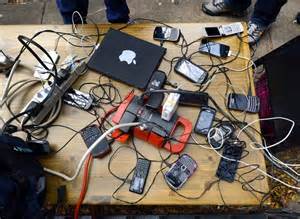
This little device would indicate to the wearer that they are such a bad mood that they ought to stay in their room. Maybe meditate or medicate (depending on one’s treatment philosophy.)
th-2

This could be done with a little jolt or vibration or maybe a whining noise that would grow louder as the wearer nears others. Better yet, it would wail if the provoker of that bad mood comes into the room, asking what’s for dinner. It is the sort of gift you want to give others actually but that would need to be done carefully.


Throw-a-fit-bit (or more commonly known, as Snit-bit)

There is a school of thought that proposes we are spending entirely too much time on our screens. This app directly addresses this issue. Throw-a-fit bit allows us to take the little device and when we are mad enough to toss it wherever you’d like. Of course, as we’d tell our children, don’t hurl this in the direction of innocent others.

th-3This app will measure the length and force of your throw and mark the where the device lands when you toss it so you can find it and throw it again, if you would like. Thanks to a sophisticated algorithm, the app reports how angry you are based on projectile velocity and force and calculates how this compares to your records last week when your partner was such a jerk about the holidays. It also manages chance encounters with other toss throw-a-fits so that you and another user don’t fight over whose device belongs to whom.

 Nitwit-bit

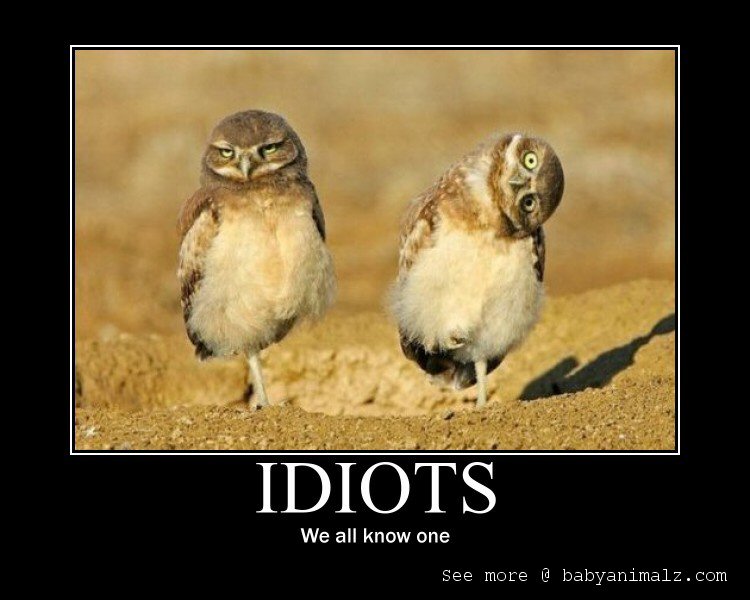
Designed especially for those of us who are susceptible to whacky ideas and get-rich-quick or reversing-aging scams, this app is the perfect complement to late night TV watching or to spending time with your sketchy in-laws.  idiots-motivational-posterFor this to work successfully, all you have to do is send those emails and phone calls you get from Nigerian princes, Ukrainian marriage brokers, penis enlargers, your brother-in-law and other questionable sources to this site, and the app will separate out the wheat from the scams. If, however, there is a great idea among the charlatan proposed offer, Nitwit-bit will take a small percentage of the killing you will make. The app does not work with proposals made by politicians, which brings to the next app, Mittbit.
Mittbit

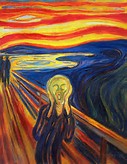
For every one of us on the planet, we reach a point where our civic responsibility to be an informed citizen eventually drives us to drink and worse. Here is where MittBit comes in. Based on your TV viewing habits, your age and gender, whether you have stickers on your car bumper, your voting record, your GI (gullibility index), your AFATT score (All Fox All The Time news watching)

th-1which measures how welcome you are to new ideas, the MittBit blocks all messages that it knows you will ignore because you have heard them for a million times, because the message is so patently a lie or because there is no way that this message will do anything to advance world peace. In other words, the Mittbit assures that you won’t change your conviction the world is made up of givers and takers and that you are in the first group and detest the second.

Sitbit

Sitbit is perhaps the perfect app for the meditation set. A few times a day, this app would remind you that you haven’t given an iota of thought or sliver of attention to the cosmic truths of the universe, to the wonder that is you. Once you activate Sitbit, it will start breathing deeply. It will keep this up, growing louder and louder until you join in. If you begin to masitbitimageke your way quickly to Starbucks for a three shots of espresso and a RedBull, it will stop you dead (not exactly dead) in your tracks by sending out a little digital shock. Sitbit wants you to relax, to calm down, not speed up. It wants you to do less, not more. Other features of the Sitbit include the Stress Manager which shuts down all your other apps and communications and erases contacts and emails that seem to be troubling to you. Sitbit can also be placed in trance mode inducing hypnotic tones, new age music and a simulated scent of those gauzy Indian shops wherever thing smells like the shop owners are trying to mask the smell of marijuana.

 Quitbit

Most of us have habits we want to dump (cigarettes, nail biting, singing out loud when we don’t mean to, swearing in front of our saintly grandmother.) Many of us have partners we need to leave (discretion leaves this point undeveloped.) Quitbit is the perfect app. It tells us when things should end by carefully listening to our conversations on the phone, scanning our photos, reviewing our texts and considering our Facebook postings and friends. And, not only does it understand when the end should be near, its helps hasten that end. It quitimageposts things for you, like announcing the end of a relationship. It will clean up your language and make it impossible for you to pay for another bottle of vodka with your credit or debit card. It will play the least popular song on iTunes at full volume if it finds you lighting up, even if you are in a non-smoking area.
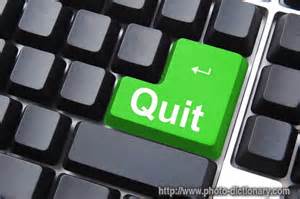
As the app becomes more popular, it will identify for you, people in your circle of friends and contacts who are dying to dump you as well. It will also find people who will pay you to quit your lousy habits. A note of caution: It offers no help at all when you find yourself in a situation like the lovers in Broke Back Mountain, when Jack said. “I wish I knew how to quit you, Ennis.” The Quit Bit is clearly outmatched here.

Nitpickbit

For several years, human resource departments have offered a half-day workshop called something like, “Dealing with Difficult People.” It was quite a daring offering. Suppose the most difficult person in the company showed up for this workshop along with all of his hapless victims? You can also imagine that this person, let’s call him Ernest, found everyone else in the office immeasurably dull-witted and thin-skinned. He found this as difficult as other people found him. A situation like this leads to my final idea.
nitwitNitpickbit reminds that we are constantly driving other people (most likely our partners and other family members) crazy by our need to make things perfectly clear and orderly. Those of us who have a bit more power over others are especially prone to this behavior, as are older siblings. The Nitpickbit can be adjusted for several occasions and multiple relationships. For example, you may notice that you have brought to husband’s attention that his favorite shirt is missing two buttons and has stained underarms for about 100 times. Or you may have corrected your adult child’s use of ‘irregardless’ on many occasions in speech and writing. (Irregardless is not really a word, the Oxford dictionary says so; no matter how often George Bush says it in a speech and no matter if that child has an MFA from a fine university.)

Or you may grow frustrated at hearing the same tedious story from your best friend about the challenges of filling a prescription over the phone from someone she swears is a deaf Pakistani robot. Every time she tells this story, you remind her that she has already related this remarkable tale. After years of this careful guidance on your part, you finally reach the apt conclusion that none of this nagging does any good. Your husband has put that old shirt in his private safety deposit box to keep your hands off it. Your child refuses to speak with you except in monosyllabic phases. Even news about your grandchildren arrives in an Instagram message with an inscrutable text. And, your best friend accuses you of trying to put her in an Alzheimer’s unit with all your harping about her memory.

Nitpickbit addresses all of these issues. It disables your brain’s auto-correct function; it lets things be. It puts a smile on your face, no matter how untidy, unkempt, unswept, or uninformed your family and friends are. It makes you, in many respects, a much more pleasant person to be around, although somewhat of a dimwit. Like the Fit-to-be-with-bit, you may want to think carefully about gifting this app to others.

All the apps that fit-bit

In the new economy, we are all supposed to be our own creative geniuses. We are supposed to be buddying up with personal coaches and developing a life plan. We are urged to self-publish, grow our own food, be our own person, be hypnotized by our own mantra. So, I see clearly that I cannot in good conscience just suggest these as good ideas without developing them myself. I need to do some market research, code and test these apps, sell them on the App store and see how much money I can make.  I need to find an App to help me with all that.
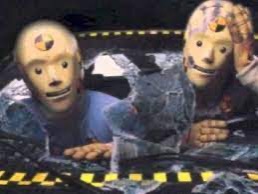
Are you there, Fitbit? It’s Me, Sandra